

I design for a living https://nitter.gq/t.co/DOLCWaBAHl / Boutique Design Agency https://nitter.gq/t.co/XMFwez7AkE / Framer Agency https://nitter.gq/t.co/hmqhFJsJ82 / AEO SaaS
Dubai
Joined January 2022
- Tweets1.7K
- Following110
- Followers310
- Likes869


I beg of you to not build a custom stack website.
→ ur marketing team can't change a headline without a ticket
→ campaign pages wait while the deadline passes
→ developer leaves & nobody can read the code
→updates, hosting & builds need maintenance

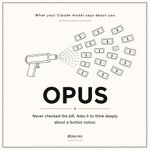
Forget star signs. Tell me your Claude model and I'll tell you your whole personality.
🤖 Made with AI


You're burning your AI limits on tasks a cheaper model does just as well.
Most beginners use the biggest model for everything. That's like hiring a senior architect to change a lightbulb.
Here's the simple guide to when to use what 👇
🟢 Small or fast models (Claude Haiku, GPT mini, Gemini Flash):
• Fixing grammar or rewriting a sentence
• Summarizing an email or a doc
• Renaming files, formatting tables, cleaning data
• Quick questions you could Google
• Yes/no checks, tagging, sorting
🟡 Mid models (Claude Sonnet, GPT's standard model, Gemini Pro):
• Writing a first draft
• Everyday coding: small fixes, one file at a time
• Brainstorming ideas
• Turning notes into a plan
🔴 Frontier models (Claude Opus, GPT's top reasoning model, Gemini's Deep Think):
• Big decisions with lots of context
• Planning a whole project or architecture
• Debugging something the smaller models already failed at
• Long, multi-step agent work
• Anything where being wrong costs you real money
Bonus: for pure yes/no decisions inside your apps, tiny decision models like Jev do it in half a second for almost nothing.
The rule I use as a non-techy guy who builds his own tools:
Plan with Opus. Build with Sonnet. Check with Haiku.
Since I started doing this, I hit my limits way less, and nothing got worse.
Bookmark this for the next time you open a new chat on autopilot.
What's your default model right now? ⏬
Clients ask me "Webflow or Framer?" every week.
Wrong question.
The right one: who updates / uses the site after we leave?
Most of my clients have zero tech team. If their marketing lead can't change a headline without calling us, we failed, no matter which tool we picked.
Pick the tool your team can actually run. The rest is preference.
What’s your approach? ⏬
Hot take: most of your AI bill is wasted on questions a cheaper model answers better.
On our agency's internal tool, I don't ask Claude "is this project healthy?" anymore.
A small decision model (Jev) answers yes or no with a confidence score in half a second, for a fraction of a cent. Same for my CRM: does this deal need attention today?
Claude still does the thinking and the writing. But the next AI wave isn't one model that does everything. It's specialists.
I wonder how apt this becomes for human skills.
Generalists vs. Specialists. Which one are you?
Should we make this interesting?
Online design-to-dev race. Same Figma file. Team Webflow/Framer vs team code (Git, Astro, whatever you swear by).
Fastest to a live, client-ready site wins. You judge.
Who's in?
Comment below on which team you want to be in ⬇️


If someone has to ask "so what are you building?", your booth, your homepage and your pitch all have the same bug.
Walked @DubaiAIFest with a designer's eye. The fix:
→ one sentence: who it's for + what it does. no adjectives
→ one visual of the product actually working, not your logo
→ one thing you're better at, not 14 features
→ a palette that isn't blue and orange
Same test applies to ChatGPT now. If it can't say what you do in one line, it won't recommend you either.