

Co-founder & the Dude @ FinalDose (YC P26) PhD @ Oxford Oncology Ending all cancers
San Francisco, CA
Joined February 2016
- Tweets438
- Following387
- Followers417
- Likes614





Jeff Liu retweeted

The pharma folks are right to call out Dario for making bold claims about curing all disease.
They are also right that most necessary bio data does not yet exist.
Still, pharma has two crucial blindspots:
1) The industry has never witnessed what a small, well capitalized, and well incentivized silicon valley team can do (no instagram, whatsapp, ARM, cursor in pharma). They grossly underestimate what's coming for them.
2) They don't yet see just how much the labs *need* to win in bio to double TAM (there simply is not other accessible market), and just how much all of tech's liquidity relies on this happening.
Pharma is a risk management industry: you get fired for failing in old ways, not for failing in new ways. The industry will be shocked at how fast automated labs, better models, etc can be stood up by small, well capitalized teams that have only 1x to lose and thousands of x to gain.
Pharma doesn't quite yet have a traditional innovator's dillema. Their capital and GTM moats are still deep, but not for much longer (drugs going d2c, dev costs decreasing). Pharma's window to win is open, but it will close fast if they fail to take ownership of the incoming infrastructure explosion.
Jeff Liu retweeted

New episode of HARD DRUGS!
Will AI progress be crushed by Eroom’s law?
Even as technology has advanced, drug development has gotten more and more expensive over time.
In the 1950s, one billion dollars of R&D spending got us roughly fifty new drugs. Today, it gets us about one.
This trend is called Eroom’s law, or Moore’s law spelled backwards. It seems pretty bleak: the R&D cost per new drug has roughly doubled every nine years, in inflation-adjusted dollars, meaning drug development has become exponentially more expensive.
What could explain this? Here are some possibilities:
• Our standards of evidence and requirements for safety testing have risen, through regulation, public expectations, and risk aversion.
• We’ve picked the low-hanging fruit already. Perhaps we’ve already made the easiest discoveries, and diseases that are harder to understand or treat are left.
• Or perhaps it’s the ‘better than the Beatles’ problem: New drugs not only have to be effective, but have to compete with existing treatments, which are already effective. Plus, some of them have gone off-patent and become cheap generics, making the price contrast starker.
Relatedly, as diseases become rarer or milder, it takes more effort to demonstrate that new drugs are effective, with larger or longer clinical trials.
But there are also reasons to question these explanations. We still lack effective treatments for many diseases. And our tools for studying biology have improved enormously. Why hasn’t that been enough?
Will our best efforts be crushed by Eroom’s law, too? Or can AI reverse the trend?
In our latest episode of HARD DRUGS, @JacobTref and I chat about all this and more. Listen wherever you get your podcasts!
Chapters:
00:00 Introduction
02:53 Eroom’s law trivia
12:33 How much does it really cost to develop a drug?
22:35 The better than the Beatles problem
33:06 Clinical trials are larger and more rigorous today
42:01 Have we picked the low-hanging fruit?
01:01:22 Is Eroom’s law slowing down because of rare disease drugs?
01:06:18 Can AI reverse Eroom’s law?
01:15:09 Conclusion


Jeff Liu retweeted

I analyzed eleven New York Times reports on the Jensen Huang story.
Most notably, NYT makes the "spy" claim 30 times in these 11 reports.
The original report cites unnamed officials who had been "briefed" on the intelligence. Not who had seen it themselves -- but who had been "briefed".
This is a game of telephone with plausible deniability.
Nobody named. No specific details of the intelligence used to draw the conclusion that the woman was a spy.
Anonymous "officials" "briefed".
This was used to try to take Jensen Huang down.
When that didn't work, journalists resorted to viciously digging up and scandal mongering about Jensen Huang's other alleged affairs.
Then he was removed as CEO.
Without an investigation.
Without due process.
And now officials and intelligence agencies are contesting the New York Times characterization.
This is unethical. It is unjust.
It is an absolute disgrace.
If anyone should resign now, it is Nvidia's board who aggressively removed Jensen Huang without an investigation, after he gave decades of his life to make the company what it is.
And any investigation that proceeds from here should involved not just the "spy" claim, but the New York Times -- who has engaged in potentially unethical behavior.
Jensen Huang deserves due process -- not mob justice.
He deserves respect for everything he has done for technology and America -- not a disgraceful removal after anonymous, unsubstantiated allegations, several parties removed from the source.


Bombshell story. The spy narrative is collapsing already.
Is there clear & convincing evidence that Alice Huang was a Chinese spy?
- AG says no. (“no conclusions reached”).
- CIA says no. (“not yet convinced”).
- DNI says no (“not entirely accurate and over-torqued”).
- Ranking Democrat on House Intelligence (incoming Chairman) says no. (“today, at least, I don’t know”). This was immediately after he was briefed.
Who argues otherwise? Anonymous officials tell CNN “it strains credulity to believe that she was not acting as an agent of the Chinese government — simply by virtue of the fact that she is a successful Chinese businesswoman working with one of America’s most powerful companies.”
This is their proof after a year of investigating and surveillance? That she was a “successful Chinese businesswoman”?
At this point, the only crime that we know for sure happened is the leaking of the classified memo. Who did that and why?
An investigation should be opened.
Jeff Liu retweeted

Introducing NovaAtom-Lite, an all-atom structure prediction model for drug discovery.
It predicts the structures of proteins, nucleic acids, and the molecules they bind, including how they fit together.
NovaAtom-Lite outperforms both IsoDDE and AlphaFold 3 on FoldBench antibody–antigen structure prediction (DockQ ≥ 0.23):
NovaAtom-Lite: 79.07% (n=172)
IsoDDE: 75.58%
AlphaFold 3: 47.90% (n=167)
Our evaluation uses 5 seeds × 5 samples, with the top-1 prediction selected by the model's own ranking score.
Better structure prediction. A stronger starting point for your next experiment.
Live today via Geodesic API and NovaDDE.
🔗 API: platform.geodesiclab.com/
🔗 NovaDDE: agent.geodesiclab.com
🔗 Model Card: geodesiclab.com/news/introdu…


Jeff Liu retweeted

This is f*cking insane. Anthropic engineer:
"Prompting is basically over
95% of our engineers already run self-improving loops. The next move is graphs"
In only 10 minutes, she builds her whole Claude Code setup live, right from an empty terminal
Empty Terminal → Agents → Loops → Graphs → Self-Improving System
Prompting was the old method. Engineering the system around the model is the new one
Worth more than most $1,000 agent engineering courses
Bookmark and watch it today
Then read the full Graph Engineering guide below ↓


Jeff Liu retweeted

This is f*cking insane. Anthropic engineers just gave a 2-hour Stanford lecture on how AI agents really work
The clearest explanation I've seen, whether you've never touched AI or you build with it every day
Chats → Prompts → Agents → Loops → Systems That Improve Themselves
Getting good at AI isn't about writing a better prompt every time
It's about building a system that learns from every run and gets sharper on its own
95% of people will spend 2 hours on Netflix tonight, the 5% who spend it on this will build what everyone else ends up using
Worth more than any $2,000 AI engineering course
Bookmark it and watch tonight
Then read the guide below with ready-to-copy prompts to build a system that improves itself ↓


Jeff Liu retweeted

This is f*cking insane. Anthropic engineer:
"You're not supposed to prompt Opus 5.5.
You're supposed to build a system that prompts itself. At Anthropic, 90% of our engineers have already built these systems."
In just 30 minutes, she explains how Anthropic builds AI agents that remember context, learn from mistakes, fix their own errors, and improve with every run.
This is the shift from simply using AI to engineering systems that work autonomously.
Honestly, it's better than most $1,000–$2,000 agent courses I've seen.
Watch the video, then save it for later
Jeff Liu retweeted

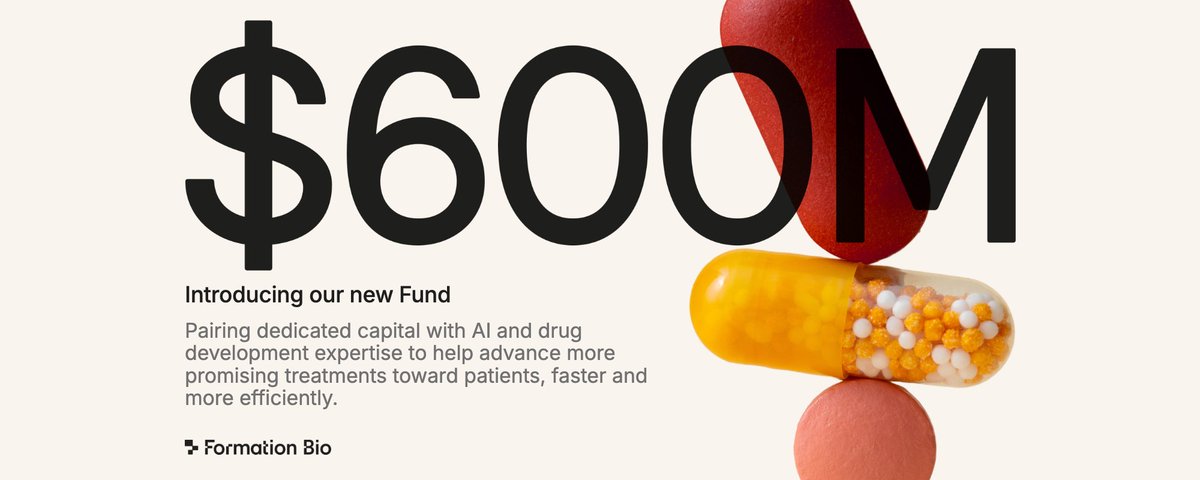
It’s been a while! Like every other biotech nerd, I’ve been feeling quite context-bloated as of late, and writing is the only fix I know. So here's a long one on AI and clin dev - if you run trials for a living, I’d appreciate any criticism and feedback :)


Jeff Liu retweeted

Boston lab space is 28.9% empty. The Bay Area is at 30.7%. Houston is at 26.3%.
The XBI is up more than 20% this year. So why is no one moving back into these labs?
Honestly, it shouldn't surprise anyone. Back in 2021 and 2022, the whole game was cramming as many researchers and benches into a building as you could. A few things changed that pretty fast.
- AI-native biotechs lease about a third less space per person.
- Pharma is licensing molecules and sending manufacturing overseas. When we ran a talk at MBC Biolabs, we heard that close to 80% of the companies there outsource some or all of their manufacturing to Chinese firms.
- Later-stage companies want office, not lab. They're managing assets already in trials.
The lab of 2026 just looks different. Teams are smaller. The science is AI-native. And a lot of the actual work isn't happening in Boston or SF anymore. It's happening in Shanghai and Suzhou.
The R&D that does happen here is smaller, leaner, and set up to scale out somewhere else. Those teams don't need rows of benches. They need machines. If your building has 500 benches but not a single mass spec, liquid handler, or flow cytometer, nobody's going to want it. The equipment is the real bottleneck for early-stage work.
The few groups that still want big footprints are building them around robots and power. @LilaSciences grabbed about 244,000 sq ft at Alewife Park in Cambridge for autonomous labs. @medra_ai put hundreds of robots into a concrete industrial building in SF.
So here's the uncomfortable part. These buildings were built for a tenant that doesn't exist anymore. That tenant isn't coming back. Leaving the space empty and hoping 2021 returns isn't a plan.
You have to rebuild it for who actually needs space now.
- Deep tech and hard tech. I've been talking with groups here in SF, and a lot of robotics and hardware teams are looking for exactly this kind of space. Strong floors, real power, good ventilation. Retrofitting a lab is way faster than building new.
- Incubators built around machines, not benches. Rip out the bench rows and put in the instruments early-stage companies can't afford on their own.
MBC Biolabs is already doing this. Shared instruments, shared equipment, small teams that don't need 50,000 sq ft.
Landlords who follow that blueprint will fill their buildings. The ones waiting on 2021 are going to keep sitting empty.
Jeff Liu retweeted

The academics think the founder who raised at $2B valuation can pay but they can’t
You are a founder who owns 50% of your company and you have 20x voting rights. You owe 5% on $10B in the asset seizure tax. You owe $500M of your paper $1B. Find me a way to get a loan for half your illiquid net worth. You cant.
The asset seizure proponents are dishonest and also it’s not a 5% tax on startups. It’s a 50% tax in this simple case.

Jeff Liu retweeted

Base editing and prime editing clinical trial landscape, including today’s GSD type I clinical readout from @BeamTx.

Jeff Liu retweeted

I stepped out of "Musk," an operatically stupid four-hour hit piece, admiring @elonmusk more than ever before. It's an inadvertant love song to American innovation as told by the dumb losers who build nothing and complain about everything.
thefp.com/p/elon-musk-new-do…

Jeff Liu retweeted

Breaking
lifespan.com/blogs/magazine/…

Jeff Liu retweeted

only in sf: hosted an event last night, and now our waitress is interviewing at the neocloud whose founder was there.
Jeff Liu retweeted

The reason mRNA can't cure more diseases? Delivery.
We built NGX1 to deliver mRNA to any cell in the body using AI and multivalent physics.
Jeff Liu retweeted

1/ I'm a cardiologist. I've practiced for twenty-five years, through a lot of "breakthroughs" that turned out to be press releases. So understand the weight of what I'm about to say: I have never seen a single week in medicine like the one we just lived through.
In the span of a few days, four separate scientific breakthroughs landed. The stock market treated them as four unrelated stories and sent a handful of biotech companies soaring. But that's the shallow read. Look closer and they are not four stories at all. They are four faces of the same story — the biggest shift in medicine since the discovery of antibiotics.
Medicine is becoming programmable. Individualized. Written for one human being instead of the average of millions.
Let me walk you through exactly what happened, in plain language, and show you where this is actually headed. Because the future arrived quietly this week, and most people scrolled right past it.