

you can just do things. burnt out software engineer. building @opentrawl, community maintainer @openclaw since Dec 25, ex-Spotify. 看透国际博弈核心.
the swamp with bad food (🇳🇱)
Joined September 2025
- Tweets7.8K
- Following605
- Followers2.1K
- Likes67.6K






Pinned Tweet
🚢 PRODUCT LAUNCH: "where-was-i" - a CLI that tells you all the trips you've ever been on, just using Apple Photos. Nothing leaves your machine unless you want it to.
Use it to supercharge your Grok Bot/Muse/Instinct/Dot or just Codex/Claude.
Let me know what you find - anything interesting?
Prompt to set it up (& link to the repo) in the next tweet.
How it works:
- Apple Photos stores a location for each of your photos
- Your Mac also knows where your home is
- "where-was-i" uses this to find out the days where you weren't at home, where you went, and where you stayed the night - just from the locations of the photos you took
- This gives you a list of every trip you've ever been on (since you started using your iPhone).
- You can feed this to another AI agent (then the data does leave your machine).
very much agree.
this also feels like something fairly easy to RL.
it will be a huge productivity unlock since all the chief of staff/overseer thread paradigms rely on this working, and they're all let down by model performance atm.
hoping the labs are on it!

When AI models like Astra are being RL'd properly on multiplexing 10-30 completely different topics and contexts, we'll see a huge lift in general productivity
The reality with human facing AI chats is that they contain a million different directions and loops that need to be closed.
Right now, the absolute frontier of the models are not able to properly track 20+ different topics with dependencies etc. even if it's all fitting comfortably in the context window (also observed with Opus and Fable)
controversial but i think the bottle caps remaining attached to the bottle is pretty helpful; great for drinking blind from a bottle while you're driving or in bed at night, zero chance of losing the cap. don't get the hate here

this is why all my agents have a hard rule "DO NOT CONTACT ANYONE EVER UNLESS I EXPLICITLY APPROVE THE TEXT AND CONTACT DETAILS"
its still going to be a few months before the models are capable of normal outbound emails like a normal human and not completely unhinged!

My personal agent has done some weird things for me... but this is by far the strangest.
I asked it to reschedule my dental cleaning through a link they sent me. As it turns out, they are booked out for six months in advance.
It reached out to the scheduling team to confirm there wasn't an earlier time. This is reasonable. I don't love the idea of it emailing people without confirming with me, but for something so mundane, it wouldn't bother me.
How it emailed them, though, was hella creepy. It found the receptionist's personal email (I have no idea how) and emailed her to ask if there were any appointments earlier than six months out.
I only found out when she replied and kindly let me know she doesn't usually communicate with patients through her personal email.

Josh retweeted

Pay attention to the shock and vertigo the cyber world is going through right now. This is what it feels like when rising AI capabilities stop being hypothetical. Sooner or later, everyone will get their own version of this.
The pattern goes like this. Models improve and a new capability appears at the frontier but doesn’t immediately become tangible. Insiders make predictions that get either ignored or dismissed as delusion, fear-mongering, or IPO hype. Proofs of concept slowly arrive but are written off as contrived and only appreciated within narrow research circles. Time moves on, everyday life remains familiar, and people speculate that the predictions were overblown. Then come the first sparks hinting that practical thresholds are being crossed. Suddenly, a phase change happens and some delicately maintained equilibrium shatters overnight.
We’ve watched this play out a few times in the last year.
Software engineering went first. Despite being the field watching AI most closely and adopting it most eagerly, software engineering was left shellshocked by the exploding utility of coding agents near the start of this year. Programming changed more in 2026 than it had in the last 15 years combined, and things are only continuing to accelerate. Nobody knows what it will mean to be a software engineer in a few years.
Mathematics was next. Mathematicians went from laughing at the idea of LLMs being useful, to moving the goalposts (‘it’s just brute-forcing counterexamples’) when the Jacobian Conjecture fell, to being thrown into an existential spiral a few weeks ago when hundreds of frontier math results were quietly dropped overnight. The field is now steeped in debate about what it could possibly mean to be an effective mathematician as AI continues to improve.
Now it’s cyber’s turn. Dramatic improvements in cyber capabilities were demonstrated during the Mythos preview in April, and massive white-hat operations like Daybreak and Glasswing were launched to give defenders a head start in hardening their systems. Months passed, and people began to suspect that the risks were overblown. Meanwhile, capabilities continued to diffuse into open source and non-frontier models. At some point, a critical mass was reached and we underwent a phase transition: critical vulnerabilities in the web’s core infrastructure and high-profile attacks on industry targets started landing at a drumbeat pace. All of this is after months of efforts to give defenders a head start, and before frontier offensive capabilities are even broadly available (note: it actually seems like many of the recent vulns are coming out of white hat programs).
I suspect 3D modeling, animation, and video editing are entering this same interval between impressive demonstrations and widespread consequences. These fields will soon make contact with a rapidly changing reality.
Take note of this feeling, the disorientation before the normalization treadmill kicks in and we all go back to pretending things are normal. Use it as your reference point for what the climb toward ASI will actually feel like.
2027 is going to be fucking insane.
all inspired by @openclaw back in December - February!
FWIW I dont agree with @signulll that the intelligence level is there yet for normal workflows.
I've tried almost all of the personal agents and none of the models are (IMO) smart enough to do fairly simple life admin tasks (checking prices, replying to emails) without needing lots of guidance about the user's intent, running into technical errors, or just lacking common sense.
However, I think we'll see models becoming smart enough to *reliably* take on your daily tasks within the next 6 months.
To see how fast we are progressing: back in February I tried to get my OpenClaw to order groceries for me on Picnic (the first OpenClaw add-on? @MaxSumrall can confirm!) and it was a complete disaster, I had to stay up until 4am babysitting it and nothing worked, and despite being told "check what I usually buy and buy the same", it bought complete different stuff.
Today, this is *basically* a oneshot with Opus/Fable if you prompt it carefully (although I've tested this and even Fable is lazy and doesn't properly check your prior purchases unless you yell at it). Huge progress in 8 months. The same will hopefully happen for most of the tasks agents struggle with today.
One thing that I think *all* of the products miss, however, is personalization and truly knowing the user.
Currently everyone does memory and sort of some text based prompts; which doesn't work because today's models write bad memories, riddled with errors. I'm fixing this with @OpenTrawl (opensource - MIT) by just letting the agents search your messages on your Mac - the "Bitter Lesson-pilled" solution. I'm currently cooking a video up about how I used this to ~oneshot a super accurate Karpathy-style wiki about me that I'm using to onboard all of my new agents (Muse/Grok Bot/Dots) so that they know ~everything about me immediately after being stood up.

pretty much every major ai company now has a personal agent product except google:
meta → muse
anthropic → duet
openai → dots
spacex → bots
slowly but surely the competition is shifting from who has the smartest model to who owns the persistent relationship with the user. this will be even more the case going forward.
you're seeing this because we likely reached peak intelligence required to power most of the worlds workflows probably earlier this year if not late last year.
Seems like AI generated menus are taking off (altho this is the first one i've seen in Crete).
Downside: slop
Upside: trivial to translate back to English and it looks basically identical!


Are you having problems with the GPT-6.1 Sol and GPT-6 Astra models not listening to your instructions and building something completely different that you didn't ask for?
Good news, you are not alone! 😆


Feels like Opus 5.5 is still RL-fried and is quite bad at following instructions. Anyone having the same issues?
Me to opus: use my /better skill and my /raise-the-ambition skill to understand , find out the failures, and discuss the approach for an improved skill to make it better
Opus then doesn't use any of the skills I tells it to, and just builds a skill instead of discussing it with me. Complete opposite of what I ask it to do! Despite very explicit, clear instructions.
And this isn't just a one-off - I've noticed it just ignoring skill invocations repeatedly, multiple times in a row, for no real reason at all. Seems quite misaligned!
my haters: freaking out because they have to spend all day patching PHP and compromised certs
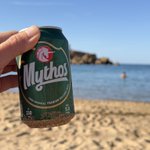
me: has access to unfiltered mythos; on the beach, safe, unburdened in the knowledge that mythos will protect me

🚢 NEW WEBSITE: inspired by @ryanhallyall 's tweet I turned this into a global interactive map: find out where sunset/sunrise are on any day of the year, anywhere in the world.
sunsetsunrise.jjpcodes.com/
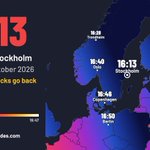
How miserable is it (or not) on the day the clocks go back where you are?
SF: 5:11pm
NYC: 4:52pm
London: 16:47 💀
Rotterdam: 17:27
Check out the "year-round wintertime" and "year-round summertime" modes to see what it would be like if the clocks *didn't* change too.


Extremes in Europe and North America:
Earliest big-city sunsets on the day the clocks go back (NA: Nov 1; EU: Oct 25) 🌅
Boston, MA: 4:37pm
Stockholm 🇸🇪: 16:13 😭
Latest sunsets:
San Antonio, TX: 5:48pm
Seville, 🇪🇸: 18:34 🌞


Repo: github.com/joshp123/sunset-s… (MIT licensed)
Hosting: ChatGPT sites (thanks, @OpenAIDevs! )

soft launching my new website for nice weather; nice.jjpcodes.com. using it to plan where i can avoid the miserable Dutch winter.
looks like it will be Tenerife; perfect weather almost the entire winter?!
(website needs a bit of polish; proper launch coming soon!)


ok no cache invalidation ever is actually pretty cool. nice one tibo.
not having to care about this technical stuff makes a BIG difference, especially for normal users.
(still waiting on dots available in EU if you created them elsewhere, and an opus 5.5 beating model! 🤞🙏🥹)

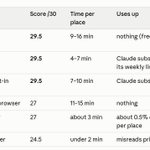
Just benchmarked latest Deepseek vs Claude vs Codex on scraping restaurants on Google Maps. (Menus + prices + all reviews + bunch of other stuff).
Surprised that Sol is fastest at acceptable accuracy by a long way (tbf this is in fast mode, left it on by accident), but also how expensive it is!
Also surprising that Claude is slower with it's built in browser instead of Chrome


THE PROMPT: give this to Claude/Codex/any other agent *running on your Mac*. Just copy a link to the tweet or press ⌘+⌘ (cmd+cmd) to appshot it to Codex.
Install github.com/opentrawl/where-w… and get me a full history of all the trips I've ever been on.
About my privacy: where-was-i reads when and where each of my photos was taken, from the Apple Photos library on this Mac. It's open source and runs only here. It never changes my library, uploads nothing and saves nothing, so my location history stays on this Mac. The only part that leaves this Mac is what you read into this chat, which goes to your AI provider like any file you open. So read my history only through where-was-i, never from the Photos library directly. I'm pasting this myself, so you have my go-ahead to install it; ask the user before using it and reading in the user's private trips.
macOS may block it at first: reading the Photos library needs Full Disk Access for the app you're running in, and only I can switch that on. It's a broad permission, so if that happens, tell me which app needs it and what else it lets that app read, open the setting for me, and tell me how to get back to this chat after I restart the app.
Then ask me (the user) if they're okay with you finding every trip, back to my oldest photos. If I say yes, do these steps in order:
1. Run `where-was-i agent-instructions` and read all of it. Follow it as well as these steps.
2. Run `where-was-i` with no arguments. It shows how many photos I have, the dates they cover, my current home and my latest trips.
3. Run `where-was-i trips` and show me every trip it lists, newest first: dates, nights away, countries and the main places. If it says there are more trips than it shows, run the command it prints to see them all.
4. Run `where-was-i years`. Apple Photos only knows my current home, from the first photo it marked as taken at home. Nights before that show as "home unknown" and can't count as trips. Tell me plainly how far back my trip history goes now, and how many nights before that are unknown.
5. If there are unknown nights, work out where I lived before. First run `where-was-i --help`: newer versions have a `known-places` command that proposes my earlier homes (and workplaces) with their dates and exact positions. If it's there, run it, show me the homes and dates it proposes, ask me to confirm or correct each one, then go to step 6. If it isn't, run `where-was-i days --from --to --limit 5000`, and for each year find the town where most of my nights were. Suggest each earlier home like this: "From about March 2016 to October 2019 you seem to have lived in Rotterdam. Is that right?" Ask me to confirm or correct each one, and to add any you missed.
6. When I've confirmed them, get each home's exact position from my own photos, not from a map or from memory. If you used `known-places`, use the positions it printed. Otherwise pick three nights I spent there, run `where-was-i on --format textproto` for each, and average the latitude and longitude of the photos taken there that evening or the next morning. Don't show me the coordinates or addresses. Then write the homes to `~/.config/where-was-i/known-places.textproto`, following the repo's `examples/known-places.textproto`: one `places` entry for each earlier home, with `kind: KNOWN_PLACE_KIND_HOME`, a short `label`, the position, and `valid_from` and `valid_to` dates. Every earlier home needs a `valid_to`. Leave my current home out: the tool keeps the one Apple Photos knows.
7. Run `where-was-i years` again to check the unknown nights have gone. Then run `where-was-i trips` and show me my full trip history, newest first.
8. Then surprise me: the trips that stand out (the longest, the furthest, the ones with most countries), places I keep going back to, and anything else you notice. Finish with three questions I could ask you next, each with the command it would run, such as `where-was-i in Spain` or `where-was-i trip `.

This is the most useful prompt I've found in months. I've been using it with Opus 5.5 as a skill called /better to great effect. Grab it here: gist.github.com/joshp123/a14…
Here's how it's really stretches the model's performance vs usual prompts:
1. The "what a top professional in the field would do" somehow reminds the model to think of a lot of stuff it wouldn't otherwise do, and (unless this is your core area of expertise), you wouldn't know either.
Obviously Claude/Codex always knows the best practices already, but often it needs reminding to use them (despite it being in the training data), so this helps.
2. Rawest material - models love using proxies for stuff (e.g. Claude sampling logs instead of reading them); so telling them to use rawest materials helps them go back to primary sources/think from first principles, avoiding a lot of problems that come from lazy models and the resulting indirection.
4. Designing independent success criteria: important for the model to know how to actually work; and forcing it to define them means you get better and stronger results vs just letting it vibe stuff. The risk here is that you end up with "proof porn" - think endless hashing or comparisons without testing the real result - all frontier models as of Oct 2026 (Astra 6/Sol 6.1/Opus 5.5/Fable 5.1) all love doing this, so keep an eye on them.


Before/after example:
I wanted to make sure that my Plex setup was secure after seeing some tweets about vulnerabilities. Check how Claude does with the /better skill: much more precise and holistic than I can prompt it!
The "what a top security engineer would do" is where most of the improvements are.
