

Senior Software Engineer · Full-Stack & AppSec · Node.js · Python · Java · AI Enablement
Joined August 2010
- Tweets2.7K
- Following120
- Followers174
- Likes557






Pinned Tweet
Nobody asked for a Claude Code trip computer. So I built one anyway.
This turns CCUsage into a Mercedes W203 style macOS trip computer: tok/s, dynamic 5h range, reset time, limits, cost, history and themes.
github.com/jmtrs/cc-autobahn

jmtrs retweeted

¿Pensabas que esto se acabó? Estás muy acostumbrado al multi-region de Java.
El rusticiero no se cansa. 5 lecciones más.
elrusticiero.dev/es/learn/#s…

jmtrs retweeted
🤢 ¿El mejor ecosistema?
Drive → Nextcloud
Office → CryptPad
Notion → AppFlowy
Google Photos → Immich
WhatsApp → Matrix
GitHub → Forgejo
Netflix → Jellyfin
Copilot → OpenCode + GLM-5.2
El mejor ecosistema es el que tú controlas.


jmtrs retweeted
He dejado de joder a otros lenguajes durante unos días.
Ha sido duro, pero ha merecido la pena.
Sacamos más contenido. Ya tienes más de 2 horas de contenido para empezar a programar en Rust desde cero.
La voz en castellano es temporal. En unos días la sustituiremos por la grabación definitiva.
Mientras tanto, ya puedes empezar a meter mano... con cuidado, que te vigilo.
elrusticiero.dev/es/learn/#g…

We benchmarked Cloudflare Kitesurf vs Chromium on elrusticiero.dev.
Our first benchmark run:
>16/16 successful
>Kitesurf was 2.2× slower on average, ranging from 1.1× to 3.7× slower
>WebGL/Three.js consistently timed out, so our homepage and ForgeJourney currently don’t work with Kitesurf
>Kitesurf also doesn’t support keep_alive in that mode, so every request pays the full startup cost
Then we ran a second benchmark using a persistent CI session:
>18/18 successful runs
>Kitesurf won 3 out of 4 screenshot tests
>Once warm, screenshots completed in 39–46 ms, versus 104–211 ms for Chromium
>learn: 5.3× faster
>about: 2.4× faster
>playground: 2.7× faster
But HTML extraction showed the opposite:
>Kitesurf: 570–882 ms
>Chromium: 9–12 ms
Cloudflare also reports up to 74% less CPU and 86% less memory, although we couldn’t independently verify those savings through the public API.
Conclusion: Kitesurf is already very interesting for screenshot-heavy workloads, but Chromium remains the better choice for our full workload today.

jmtrs retweeted
Rust pone límites al uso de LLM en su repositorio principal.
¿Este tipo de políticas protege la calidad del código abierto o acaba dificultando las contribuciones?
Con 1.281 PR abiertas en el momento del anuncio, cinco equipos de rust-lang/rust han adoptado una política que permite usar LLM para consultar, analizar o revisar, pero prohíbe generar comentarios, documentación y diagnósticos.
El código generado queda limitado a casos acordados previamente, con pruebas, revisión humana y declaración explícita.
La propia política reconoce que algunas de estas normas serán difíciles de verificar.
Anuncio oficial:
blog.rust-lang.org/inside-ru…
Política completa:
forge.rust-lang.org/policies…


NOW: Cloudflare has introduced Cloudflare Wallets, programmable stablecoin wallets with spending limits that enable AI agents to autonomously fund APIs, content, and services using programmable stablecoins.
cloudflare.pay

jmtrs retweeted
4 de agosto. 4 seguidores. 4 lecciones. Todo encaja.
No es marketing. Es crustaceología.
El curso ya está disponible.
Más de 60 minutos para comenzar con Rust.
elrusticiero.dev/

jmtrs retweeted
ATENCIÓN CANGREJOS!!
Rust está entrando en el kernel de Linux, donde más importa: en los lugares donde un error de memoria puede terminar convertido en una vulnerabilidad.
Greg Kroah-Hartman lo confirmó, uno de los principales mantenedores de Linux y alguien que lleva años revisando sus fallos de seguridad.
Greg tampoco estaba convencido al principio. Cuando le recomendaron probar Rust, respondió que C ya estaba bien.
Después llegó la experiencia práctica.
En Rust Week 2026 presentó junto a Benno Lossin una propuesta basada en un tipo llamado Untrusted.
Los datos procedentes del hardware o del espacio de usuario quedarían marcados como no confiables y no podrían utilizarse hasta haber sido validados explícitamente.
La diferencia es importante: en C, esa comprobación depende de que el programador la recuerde. En Rust, puede exigírtela el compilador.
Muchos fallos del kernel no son ataques sofisticados. Son los mismos errores repetidos durante décadas: punteros incorrectos, accesos a memoria liberada, bloqueos olvidados o datos externos usados sin validar.
Rust no elimina todos los errores ni va a borrar millones de líneas de C perfectamente funcionales. Lo que permite es diseñar código en el que ciertas equivocaciones resulten mucho más difíciles (o directamente imposibles) de escribir.
Greg lo resumió claramente: el kernel, Git y otros grandes proyectos están avanzando hacia Rust.
No es una guerra entre lenguajes, por ahora, pero es el resultado de pasar décadas confiando en que nadie se equivoque con un puntero. 🦀🦀

jmtrs retweeted
Internet ya está petado de cursos de IA.
Así que llegó El Rusticiero a enseñarte Rust. De verdad.
El curso está en obras.
Mis idioteces, no.
Empieza la resistencia. elrusticiero.dev/es/

Opus 5 wiped production. But who gave it permission to do so?
prisma migrate diff ran with --shadow-database-url pointing to production. Prisma treated it as a disposable shadow database, reset it and replayed the outdated migrations.
Since Prisma ORM 6.15.0, released on August 27, 2025, prisma migrate reset is blocked when executed by an AI agent unless a human explicitly consents through PRISMA_USER_CONSENT_FOR_DANGEROUS_AI_ACTION.
This case happened through the internal shadow reset used by migrate diff, which is not covered by that documented guardrail.
The fix: a separate disposable shadow database, no production DDL permissions for agents, production secrets outside local environments and a check preventing shadow and production from pointing to the same database.
AI agents need supervision, but above all, proper permissions.
Who is more responsible here: Opus 5, Prisma or the engineer who gave the agent access to production?


jmtrs retweeted

An Anthropic engineer just rewrote a million line codebase into another language in eleven days by himself, then published the entire method. Rewrites are the least of what it is good for
Jarred Sumner works at Anthropic and created Bun. He ported it from Zig to Rust with 64 Claudes running at once. 535,496 lines, 1,448 files, merged with 100% of the existing test suite green on all six platforms and zero tests skipped.
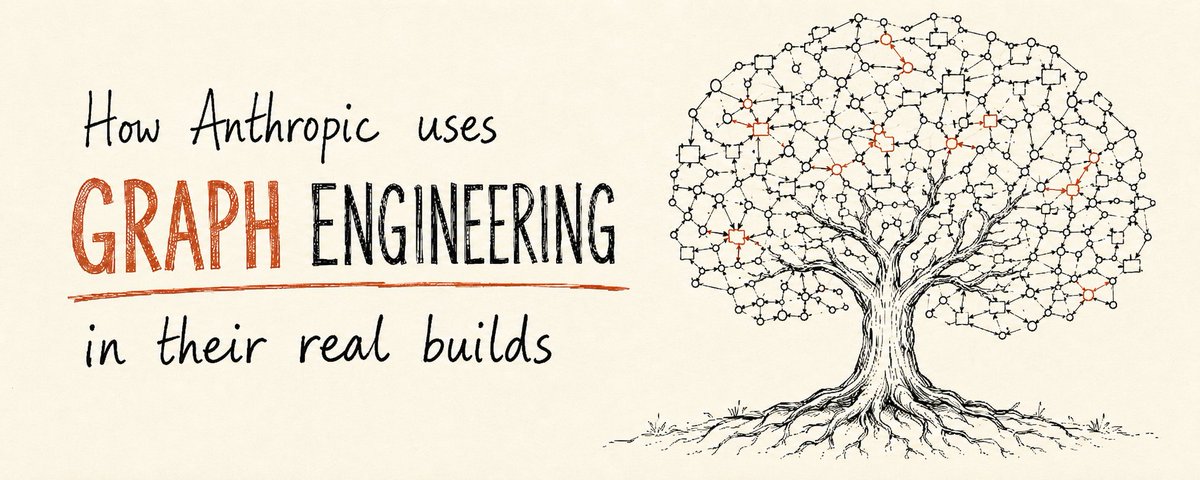
He calls them dynamic workflows. It is a graph: named nodes, state on disk, agents running inside boundaries he drew. Every time output came back wrong, he edited the workflow instead of patching files.
Then he wrote all of it down. The false starts, the prompts, the rules he added mid run. Full playbook in the comments.
What that looks like when you build the graph:
1. Give every node one job and a file to read. His agents each did one thing: port, fix errors, review, apply. The rulebook file is the shared state they all start from, not the chat history.
2. Keep state on disk, not in context. The work queue was the filesystem. Kill the run at 60 percent, restart, and it resumes at 60 percent because the disk remembers.
3. Make review its own node. One agent works, two review with nothing but the result, told to assume it is wrong. A reviewer sharing the writer's context always agrees with the writer.
4. Push slow operations out of the loop. He banned cargo and git from inside it, ran the compiler once across everything, then fanned agents out on the error list. Check frequency should match check cost.
5. Isolate parallel branches. His agents collided until he split them across four worktrees, 16 each. Parallelism needs separate ground to stand on.
Your instinct will be to fix the file in front of you. Fix the sentence in the rules that let it through, and the next hundred files come back right.
Bookmark this



At @vercel, more than 100 agents run in production. Employees send requests to V in Slack, which routes them to the right specialist. Behind them, eve provides tools, durable execution, sandboxes, human approvals and evals.
vercel.com/blog/introducing-…

People often look at someone successful and assume they simply got lucky.
Then you hear on @ArtuGrande podcast that @evilrabbit_ started learning design at 9 and was already working at 12.
He’s been working his arse off practically since he was born 🤯

So funny, CF Passport turns the Cloudflare edge colo handling each request into a passport stamp, while keeping the collection recoverable through an ID.
Appears to use TanStack Start server functions to read Cloudflare’s request.cf metadata, identify the owner through an HttpOnly passport UUID, and persist stamps server-side.


