John Hemming (@johnhemming4mp) profile picture

Entrepreneur, investor, biohacker and Techie, Jazz pianist, campaigner against injustice.

Birmingham
Joined January 2010
Photo by John Hemming (@johnhemming4mp)Photo by John Hemming (@johnhemming4mp)Photo by John Hemming (@johnhemming4mp)Photo by John Hemming (@johnhemming4mp)Photo by John Hemming (@johnhemming4mp)Photo by John Hemming (@johnhemming4mp)Photo by John Hemming (@johnhemming4mp)Photo by John Hemming (@johnhemming4mp)Photo by John Hemming (@johnhemming4mp)Photo by John Hemming (@johnhemming4mp)
"The longevity industry exists to exploit humanity, not to save it." - Seamus O'Mahony writes @TheLancet Or, as he puts it, "the longevity industry is a goldrush without gold." Talk about throwing out the baby with the bathwater! Of course, the field is drowning in hype and commercial interests pushing unproven interventions. But that doesn't detract from the fact that slowing human aging - even if slightly - would have enormous health and medical benefits. Manipulating human aging may prove harder than many in the field currently promise. But aging is no doubt malleable, so let's not lose sight of the field's long-term transformative potential. The challenge is to tell hype from science, not to dismiss the science because of the hype.
23
17
6
114
43,389
John Hemming retweeted
9 in 10 drugs fail in trials. Most fail because the target was wrong. At Gero we built and now open sourced a tool to score any target list against the only ground truth there is: clinical trial outcomes. Paper out in Bioinformatics (see the refs below, the code is open). A few things we found: – The famous “genetic support = 2.6x more likely to reach approval” reproduces, with open data, no Citeline needed. – More clinical data makes the benchmark worse. Pool every open registry and 2.6x collapses to 1.5x. Curated beats aggregated. We use this on our own models. Use it on yours. pip install ct-validation More info on my substack peterfedichev.substack.com/p…. – this is a bit more reliable way to get updates like this. As usual, please follow, like and repost - more interesting stuff to come.
6
5
1
42
1,997
This is an interesting paper which is further evidence for ageing and development being in part linked to splicing isoform fate decisions. (including NMD)
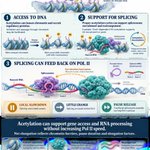
Our paper is out in @NatureAging. We looked for factors that make old cells' gene expression young without erasing their identity. SRSF1 came out as a promising rejuvenation target that reduced aging hallmarks in human cells and extended median lifespan of aged mice by 14%. 1/4
1
9
390
John Hemming retweeted
Our paper is out in @NatureAging. We looked for factors that make old cells' gene expression young without erasing their identity. SRSF1 came out as a promising rejuvenation target that reduced aging hallmarks in human cells and extended median lifespan of aged mice by 14%. 1/4
8
39
5
132
7,053
The Book "Protocols", by Andrew @hubermanlab is a good investment of reading time. Not a job to be delegated to an LLM. It is also a good price. (at the moment).
1
3
65
19,575
🎉 The BSRA has a new Chair! Bradley Elliott (@Brads_science) has been appointed to lead the Society. Former chair @dweinkove will remain as a Trustee focusing on policy and partnerships. Congratulations Bradley, and thank you David! 👏 bsra.org.uk/bradley-elliott-…
1
4
4
337
Congratulations @ARDD_Meeting , the best one yet. 🧪🚀⚕️
3
11
1,711
Cailin McGurk (Morgan Stanley) moderating "Therapeutic Assets & Licensing (Late Stage)" at #ARDD2026 -- Mark Cobbold (AstraZeneca) and Phil McGurk (Takeda) on dealmaking for longevity assets. The BD infrastructure is finally catching up to the science. agingpharma.org/program2026
1
8
1
25
2,897
such a malignant force
Tucker saying he wishes Hitler had won World War II was absolutely on my 2026 bingo card
2
29
4,865
Insilico has nominated ISM1354, an AI-designed GIPR antagonist, as a preclinical candidate for obesity. Reported animal data include 75-104% oral bioavailability and 18x plasma exposure vs a benchmark. Human efficacy remains untested. drugtargetreview.com/news/in…
2
4
45
2,028
One of Day 2 highlights of #ARDD2026 was the tall by Kevin Duffin of Eli Lilly on the effects of Tirzepatide on aging clocks (make sure to check out poster #13 today). Today, everyone is anticipating the Novo Nordisk presentation on Semaglutide. And I want to thank Andrew Adams and Lotte Bjerre Knudsen who opened the door last year. This is the first ARDD when the clock data is presented - this is the new world!
5
11
30
2,173
Fiona Marshall (Novartis) on stage at #ARDD2026, Harvard. "Reimagining Drug Discovery Through the Lens of Aging Biology." Day 2 highlights from the world's largest aging research and drug discovery meeting. agingpharma.org/program2026
2
8
22
1,585
Given the recent interest in organ transplantation and aging, I thought I'd mention our 2018 paper on the topic, where we analysed human data on donors and recipients of different ages and how age affected survival. In a nutshell, older donor age was a poor predictor of survival in liver, kidney, pancreas, heart and lung transplants, although this varied considerably between organs. Link to paper: sciencedirect.com/science/ar…
2
10
30
1,775
An interesting preprint on mtDNA. biorxiv.org/content/10.64898… What to me is important is that different mtDNA mutations have differert effects simply because they change different things in the ETC. Generally deletions are worse than transversions and transversions worse than transitions. The mutator mice generate lots of transitions which have a small cumulative effect that adds up. However, a transition in a tRNA can be pathogenic. Fusion can hide particularly deleterious deletions.
1
3
308
This preprint has had some attention biorxiv.org/content/10.64898… However, the question is how this fits with the research more generally on transplants. I asked chatGPT Astra for a summary: chatgpt.com/share/6ab7c2a8-1… The conclusion really is that the ageing process is shared between donor organ and recipient with the donor organ continuning to retain much of the ageing process from the donor although there is a sharing process to some limited extent.
208