
Co-founder @ Reticular (YC F24). CS & Math @ MIT
San Francisco, CA
Joined November 2020
- Tweets195
- Following3K
- Followers536
- Likes1.6K



Pinned Tweet
If you’ve ever
- thought AI protein folding is magical ✨
- wanted more than a pLDDT score 🔎
- or just think mech interp in bio is cool 🤓
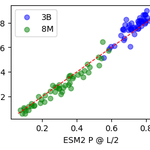
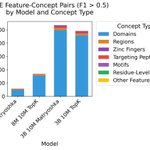
then read the 🧵 👇 on our first paper towards interpretable protein structure prediction just accepted to workshops at ICLR

A First Step Towards Interpretable Protein Structure Prediction
With SAEFold, we enable mechanistic interpretability on ESMFold, a protein structure prediction model, for the first time.
Watch @NithinParsan demo a case study here w/ links for paper & open-source code 👇
the 21st century will be slopwrangled

this reveals the existence of a new human skill: slopwrangling
as you work w/ ai on any complex problem, it generates endless slop.
most quit in the face of such a mountain of slop. others fall victim to ai psychosis.
only the few can wrangle the slop to achieve breakthroughs
74

therefore, compressing two datasets learns advanced shared features from both datasets.
similarly, an LLM trained on text and proteins will learn shared features that enable better downstream perf. for both domains.
1
62
ilya lecture linked here. great watch.
youtube.com/watch?v=AKMuA_TV…
66
John Yang retweeted

Our colleague Eva Yi Xie, a Princeton neuroscience PhD student, was detained by ICE at Reagan National Airport on her way home from SfN, where she’d just presented her poster. She’s being held in Chantilly, VA. Please help us bring her home. 📷


text compression - bits/sentence
dna compression - bits/genome
same math for both

There has been some rather impressive progress on the Hutter prize for text compression recently (~10%; a huge trend break). Interestingly, it's all based on the idea of training / overfitting a small transformer on the data to be compressed. This model will assign high likelihood to the data, and consequently arithmetic coding (using said model) will assign short code lengths to the tokens. Because the model itself is not known by the receiver, its weights must be compressed and included in the code length as well, and so you train with a loss that includes that cost as well.
All the way back in 2020/2021 when I was working on generative models for compression, we explored this idea for video compression: take a pre-trained video compression model (discrete-latent AE), and overfit it on one video using a loss L = coding cost of weight-delta + coding cost of data given model (i.e. log likelihood). We used a spike-and slab prior on the weight delta so that it is cheap to encode "no change" to the pre-trained weights.
We found it to be very effective, but needing to train a model at encoding time + inferencing it at decoding time is kind of a hassle, so we didn't pursue it further. It still feels like a long shot, but given how competitive such approaches now appear to be, and how robust (quantization-aware) training techniques have gotten, it may be worth another look. Especially for cases where encoding compute is not a major concern but code length is (i.e. content on any platform with lots of users, where you encode once and transmit + decode many times).
Incidentally, compression is also an excellent task for research on coding / AI research agents. You have essentially infinite training data, an un-hackable reward, and according to Kolmogorov / Chaitin it will never saturate.
References
@tivaro @IamHuijben Cohen, Overfitting for Fun and Profit: Instance-Adaptive Data Compression arxiv.org/pdf/2101.08687
@OriYoran The KoLMogorov Test: Compression by Code Generation arxiv.org/abs/2503.13992
Hutter Prize (Marcus Hutter, @mhutter42): prize.hutter1.net/
Matt Mahoney, Large Text Compression Benchmark: mattmahoney.net/dc/text.html
Hutter prize SOTA over time
epoch.ai/data/hutter-prize?v…
Recent entries
fx2-cmix-transformer, Vladimir Ivanov (the award winner; offline-trained transformer, 4-bit weights shipped): github.com/astOwOlfo/fx2-cmi…
zmix, James Byrne (adds the coded size of the weights to the training loss): zmix.frostbyrne.io/v1.0/writ…
cmix-neif-beehive, Vladimir Malinovskii (differentiable rate term on the weights, with ablation): github.com/galqiwi/cmix-neif…
cmix-neif 2.0, Marcus Wölk (best entry so far; entropy-coded weights with bits-back): github.com/marwoelk/cmix-nei…
tufazip @tufalabs, Tommy He / Tufa Labs (shipped prior plus online adaptation; analysis of model bits vs. data bits): tufalabs.ai/research/tufazip…
DNA-4, Ao, Sun & Sun (RWKV-7; arithmetic-coded 4-bit weights, then online fine-tuning): github.com/ziq-ao/DNA4-RWKV
112
sequencing a human genome now costs ~$100 in raw reagents at scale.
at these prices, the billion-dollar prenatal genetic testing industry is about to change dramatically.
and whole-genome sequencing will unlock breakthroughs in what AI can predict about disease. 🧵
2
6
362
why now? why hasn't this been done yet?
- genetic data hard to access. i could only get bc of nature paper i co-authored in HS
- 1M+ whole genomes got released in the last 2 years
- good GPUs only became available on the biobanks last year
1
1
27
mit ai for bio 🚀🚀🚀

We’ve raised $110M to bring AI-powered biomolecular design to every scientist!
Boltz’s Series A is led by @BessemerVP, following 50-fold growth in molecular token usage from our users since June and partnerships with 6 of the world’s 20 largest pharma companies.


alphagenome 2 is great work. but surprisingly it only ever sees one genome
predicting who gets heart disease or prostate cancer requires training on millions of genomes
hoping alphagenome 3 trains on more than one

AlphaGenome 2 is live! A step change in performance and new capabilities over AG1! @adamgayoso's thread covers the key results.
Manuscript: storage.googleapis.com/deepm…
Blog: deepmind.google/blog/alphage…
API: github.com/google-deepmind/a…
A few notes under the hood & what's next: