
CEO/Founder of Imagine it AB. Creative dreamer, hacker and restless spirit.
Sweden
Joined August 2009
- Tweets476
- Following226
- Followers75
- Likes9.5K

Jonathan B Olivegren retweeted

How about a European country - the UK, Poland or Denmark - immediately gives a massive incentive package to @DarioAmodei and @AnthropicAI to move the company to Europe:
➖10–20k H100-equivalent GPUs guaranteed for 5–10 years
➖€1–2bn co-investment in next round
➖72-hour visa turnaround + 7-year flat 25% expat tax for all senior staff and AI talent
➖0% tax on startup stock options until exit
➖Massive public procurement option
➖Fast-track data centre permits (<6 months)
Yes yes yes some people will bleat but the overall impact on economic growth, geopolitical positioning and Europe’s AI ecosystem will be net positive.
@Keir_Starmer @donaldtusk @Statsmin
Jonathan B Olivegren retweeted

I'm about to do something I think I've never done before, which is assert every bit of whatever authority I have as the person who discovered and wrote down the rules of open source.
After ten years of drama and idiocy, lots of people other than me are now willing to say in public that "Codes of Conduct" have been a disaster - a kind of infectious social insanity producing lots of drama and politics and backbiting, and negative useful work.
Here is my advice about codes of conduct:
1. Refuse to have one. If your project has one, delete it. The only actual function they have is as a tool in the hands of shit-stirrers.
2. If you're stuck with having one for bureaucratic reasons, replace it with the following sentence or some close equivalent: "If you are more annoying to work with than your contributions justify, you'll be ejected."
3. Attempts to be more specific and elaborate don't work. They only provide control surfaces for shit-stirrers to manipulate.
Yes, we should try to be kind to each other. But we should be ruthless and merciless towards people who try to turn "Be kind!" into a weapon. Indulging them never ends well.
Jonathan B Olivegren retweeted

In today's Vatnik Soup, I'll discuss extensively why the West is losing the information war. The format is a bit different from earlier ones, but here goes:
The West is losing the information war
Countries like Russia and China have spent years turning disinformation into a central pillar of statecraft. They don’t just lie—they lie loudly, constantly, and across every available platform. They’ve mastered the art of sowing confusion, undermining trust, and deepening political divides inside democratic societies. This isn’t done by accident—it’s done through well-funded, highly coordinated campaigns that blend state media, covert troll farms, social media influencers, and manipulated algorithms.
At the same time, they maintain an iron grip on their own information environments. In Russia, independent media is silenced, dissenters are jailed, and the internet is censored through so-called “sovereign” infrastructure that can block or throttle unwanted content. In China, the state filters all online speech through the Great Firewall, bans platforms like YouTube and Twitter, and floods domestic social media with tightly controlled propaganda. Algorithms are not tools for engagement—they are instruments of obedience.
That’s the key to their advantage: they control what their citizens see while exploiting the openness of our societies. We can’t inject truth into theirs—but they can inject lies into ours. Their disinformation can reach our phones in seconds, while our facts can’t even get past their digital borders. It’s a deeply asymmetrical fight, where authoritarian states operate with speed, scale, and impunity—while democracies struggle to respond without undermining our own values of free speech and transparency.
These regimes don’t wait around for approval. They don’t worry about press freedom or public debate. If they want to launch an influence campaign, they do it—quickly and quietly. They have entire networks producing and spreading their messages in dozens of languages, 24/7.
Worse still, they’ve gotten very good at grabbing attention. They use social media superspreaders, conspiracy influencers, and flashy TikTok videos to package their propaganda into something that feels exciting, rebellious, or funny—even when it’s completely false. They tell simple, emotionally charged stories that spread like wildfire. And all this is supercharged with AI.
And what do we counter that with? Dry press releases from EU officials. Long reports. Monotone statements from diplomats. Detailed debunking articles hidden behind paywalls, or buried deep in PDF reports that almost no one reads. Good intentions—delivered with all the flair of a tax form. Most of it never reaches the people actually being targeted by disinformation. It’s not that we don’t have the facts—it’s that we’re terrible at making people care about them.
Meanwhile, the information battlefield has already shifted. In Finland, half of teenagers between 13 and 18 now get their news from TikTok. And it’s not just influencers and entertainment—even North Korea is now publishing propaganda on the platform. That’s the level of reach and adaptability we’re up against. Authoritarian regimes are speaking directly to the next generation, using their language and their media. And we’re still whispering from behind paywalls and official podiums.
We’ve already seen how devastating information warfare can be when left unchecked. In January 2014, 60% of Russians had a positive view of Ukrainians. Then the Kremlin launched a relentless defamation campaign on national TV and social media—painting Ukrainians as Nazis, traitors, or puppets of the West. By 2015, the numbers had flipped: 60% of Russians now had a negative view of Ukrainians. This is how propaganda works. And when you control the entire information ecosystem, it works terrifyingly well.
But at the same time, Ukraine learned to fight back. Since 2014, and especially after Russia’s full-scale invasion in 2022, Ukrainians have treated information like a front line. They’ve built partnerships between government, civil society, and creative communities. They’ve used humor, memes, music, and viral videos to expose lies and boost morale. They work around the clock—not because it’s trendy, but because they understand just how destructive these manipulation campaigns can be. In Ukraine, disinformation isn’t an abstract threat—it’s a weapon that softens targets before the bombs fall.
Take Russia: it’s spending nearly $2 billion a year on state propaganda. China’s media operations are even more extensive and opaque. Meanwhile, the European Union is spending a tiny fraction of that trying to defend the truth.
It’s not just about money—it’s about mindset. We’ve been playing defense, trying to fact-check lies after they’ve gone viral. That’s not enough. We need to get ahead of the problem.
And we can’t just focus on short-term fixes. Both Russia and China plan their information strategies decades ahead—and we should too. That means giving more resources and support to modern media creators—influencers, podcasters, digital artists, futurists, analysts, visionaries. These are the people shaping how millions think and feel. We need to invest in the platforms, voices, and formats that actually reach people today.
We also need to build long-term resilience. We need to build a vaccine against online disinformation. And that vaccine is education.
That means warning people before the lies start spreading. It means teaching media literacy in schools, so young people know how to spot manipulation. It means putting clear, truthful, engaging content in the places where people actually spend time—YouTube, TikTok, Instagram—not hiding it away on obscure government and EU websites.
But defense alone won’t win this war. We must take the fight to the adversary’s doorstep. Authoritarian regimes have real vulnerabilities—corruption, repression, inequality, and elite hypocrisy. These are pressure points we should be targeting with truth-based messaging that empowers dissent, exposes abuse, and undermines their control over public perception. This isn’t about regime change—it’s about using facts to challenge the myths they rely on to stay in power. Just like they exploit our openness, we must be willing to expose their rot.
This isn’t about copying authoritarian tactics. It’s about defending the values we care about—freedom, transparency, democracy—with creative and bold strategies.
Do we really need to wait until Russia is sending drones and troops across our borders to finally take this seriously?
The information war is here. We don’t get to choose whether we’re part of it. But we can choose to stop losing.

Is this the ”free speech” you’re rooting for @dhh?

In today’s Vatnik Soup, I’ll introduce how the Elon’s Election Interference Machine™ (EIM) works. Since Musk & his broligarch allies won the presidency for Trump, they’ve now harnessed the machine to interfere in European elections, including the ones in Germany & Romania.
1/23

70


Jonathan B Olivegren retweeted

And there you have it.
From the guy who says elections are rigged AND wants to stay in power forever.

Jonathan B Olivegren retweeted

Pam Bondi is disbanding the Foreign Influence Task Force - the FBI team that is charged with combatting foreign meddling in US elections.
Worth asking how this makes us more safe in any way, shape, or form.
Jonathan B Olivegren retweeted

I had a look at the party program of the AfD, that's the party that Musk supported. They're old-fashioned climate change deniers of the most idiotic kind. They still claim (in 2025!!) that the "The question for the human contribution [to climate change] is not settled."
We left the "science not settled" phase 25 years ago!
Fact is, that we know the contribution of various sources to climate change well, and that of humans is dominant, though of course the exact values have error bars.
They go on to claim that "the alleged consensus for "human-made climate change" has previously been politically fabricated"
And claim support from a declaration that has been signed by 2000 supposed experts. This statement has been debunked hundreds of times, is full of falsehoods, most of the people who have signed it have nothing to do with climate science, many have ties to the fossil fuel industry and in any case, just because some people have signed a nonsense statement doesn't make it true.
(Oh yeah, and one of the signatories is John Clauser who claims he has fixed climate change with his self-made cloud model but can't tell a stratocumulus from a cirrus cloud.)
This isn't a matter of debate, you can check for yourself that the predictions from climate models from the 1970s were in fact remarkably accurate. Even the fossil fuel industry, which developed their own climate models (probably hoping to get a different result), confirmed the climate model predictions.
This has been so widely documented that to go around in 2025 and write -- in a party program no less! -- that climate models don't work or carbon dioxide isn't the issue, demonstrates that these people are either deliberately lying or don't have the faintest clue what they are talking about and also don't care. (Probably the latter.)
It is one thing to have opinions about what, if anything, we should do about climate change. Mitigate or adapt? How much, how fast, how urgent? How much risk are you willing to accept, how much of a burden are you willing to put on future generations? These are all value positions that are up to discussion and can go into a party program.
Scientific evidence is not a matter of opinion. This is a party which bases its so-called strategy on fabricated facts.
It is hugely distressing to me that not only do brainless people like this sit in the German parliament but that a whopping 20% of Germans support this drivel. And that ladies and gentlemen is what your hero Elon Musk stands behind.
(There's more rubbish in their program but for me this was the worst part.)


Jonathan B Olivegren retweeted

Millions of heat pumps have been installed in the Nordics with almost all new individual heating systems installed being heat pumps today.
How have these countries achieved such a remarkable transition?
More in my piece for @CarbonBrief 👇
carbonbrief.org/guest-post-h…

To have a functioning democracy we need functioning democratic media. In this day and age, that means democratic social media.
25


Jonathan B Olivegren retweeted

I Sverige går utvecklingen i diametralt motsatt riktning. I augusti minskade antalet elbilar med 31 procent. Förklaringen är att regeringen slopat stöder till elbilar och istället lagt 17 miljarder på att göra fossila bränslen mer konkurrenskraftiga.

Jonathan B Olivegren retweeted
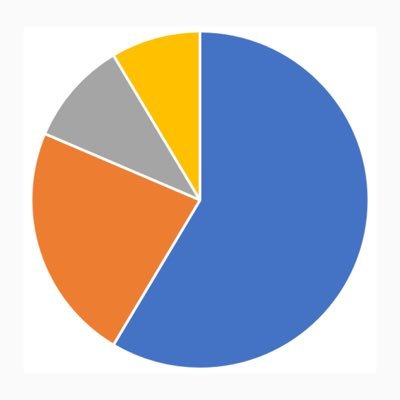
Press freedom ranking:
1. Norway 🇳🇴
2. Denmark 🇩🇰
3. Sweden 🇸🇪
4. Netherlands 🇳🇱
5. Finland 🇫🇮
6. Estonia 🇪🇪
7. Portugal 🇵🇹
8. Ireland 🇮🇪
9. Switzerland 🇨🇭
10. Germany 🇩🇪
~
13. Lithuania 🇱🇹
14. Canada 🇨🇦
16. Belgium 🇧🇪
18. Iceland 🇮🇸
21. France 🇫🇷
23. UK 🇬🇧
30. Spain 🇪🇸
32. Austria 🇦🇹
38. South Africa 🇿🇦
39. Australia 🇦🇺
46. Italy 🇮🇹
47. Poland 🇵🇱
49. Romania 🇷🇴
55. USA 🇺🇸
62. South Korea 🇰🇷
66. Argentina 🇦🇷
67. Hungary 🇭🇺
70. Japan 🇯🇵
82. Brazil 🇧🇷
101. Israel 🇮🇱
111. Indonesia 🇮🇩
112. Nigeria 🇳🇬
121. Mexico 🇲🇽
126. Singapore 🇸🇬
139. Algeria 🇩🇿
141. Ethiopia 🇪🇹
151. Cambodia 🇰🇭
152. Pakistan 🇵🇰
156. Venezuela 🇻🇪
158. Türkiye 🇹🇷
159. India 🇮🇳
160. UAE 🇦🇪
165. Bangladesh 🇧🇩
166. Saudi Arabia 🇸🇦
169. Iraq 🇮🇶
170. Egypt 🇪🇬
172. China 🇨🇳
175. Turkmenistan 🇹🇲
177. North Korea 🇰🇵
178. Afghanistan 🇦🇫
179. Syria 🇸🇾
According to Reporters Without Borders
Jonathan B Olivegren retweeted

How can we reframe the debate over divisive topics like like capitalism?
Here's an experimental video format that tries to bridge that gap.
It's part of a series called "Faces of X" that tackles hot culture wars issues like gender, race, abortion etc by steel-manning the various conflicting views to see if more productive synthesis perspectives emerge.
Lmk what you think! 👇 #FacesofX
Actually, it functions quite well under coercion. That’s what laws are, and most businesses stay within the law while being very innovative and productive. Think of it like the rules of a board game.

I believe the endless potential of human ingenuity, but it doesn’t function well under coercion, especially the coercion out of an ideological fantasy. If left alone, I am sure we will invent new materials to replace ABS, but it will be because of cost effectiveness, function, etc. Not because of plastic ban. Try to run a hospital without plastic!
33

Jonathan B Olivegren retweeted

The findings were not "terrifyingly bad." The average decrease in employment was 15 minutes per day. And that average hides the fact that childless adults and those over age 30 didn't work any less than the control group. More in this thread:
nitter.gq/scottsantens/status/18…

Okay, everyone, here it is. I know many of you have been curious to read my take on @sama's basic income pilot results for about two full weeks now. Here's my take.
scottsantens.com/did-sam-alt…


Jonathan B Olivegren retweeted

Claims that the US might become Nazi Germany if Trump is elected may seem a little far-fetched (though the analogy is striking), but not nearly as far-fetched as @elonmusk's claims that the US nay turn into Venezuela if @KamalaHarris is elected.
I'd say it's more likely that the US will become just a little bit more like Norway: very high income, universal healthcare, free public higher education, lots of oil *and* lots of Teslas.


