

A Springer Nature partner journal.
Chengdu
Joined June 2022
- Tweets890
- Following131
- Followers242
- Likes435





Anesthesiology and Perioperative Science retweeted

More on perioperative neurocognitive disorders #PNDs, and the possible use of #dexmedetomidine in this #BJA #editorial
bjanaesthesia.org/article/S0…

Anesthesiology and Perioperative Science retweeted
In the RSI trial involving critically ill patients undergoing intubation in EDs or ICUs, the use of ketamine for the induction of anesthesia did not lead to significantly lower in-hospital mortality than etomidate. Full trial results and Research Summary: nejm.org/doi/full/10.1056/NE…

ALT The New England Journal of Medicine Ketamine or Etomidate for Tracheal Intubation of Critically Ill Adults A Research Summary based on Casey JD et al. | 10.1056/NEJMoa2511420 | Published on December 9, 2025 Visual representations of the patients in the trial and the treatments they were assigned. Read the full Research Summary at NEJM.org.
Anesthesiology and Perioperative Science retweeted
#Sevoflurane reduced internalisation of #GABAAreceptors in this #murinemodel, contributing towards #cognitiveimpairment in aged mice
bjanaesthesia.org/article/S0…

Anesthesiology and Perioperative Science retweeted
Can we predict severe postdischarge #pain after ambulatory #gynaecological surgery?
This new #BJAOpen article identified younger age, pre-op pain, preop #opioid use, and high pain expectancy as key predictors.
Read full article here: bjaopen.org/article/S2772-60…

Anesthesiology and Perioperative Science retweeted

🧠Does anesthesia choice during C-section matter beyond the OR?
📚A study of 735K+ births suggests neuraxial anesthesia is linked to lower long-term neurodevelopmental risk vs general anesthesia. Exploratory—but thought-provoking.
🔗 doi.org/10.1136/rapm-2025-10…
@Ryan_S_DSouzaMD

Anesthesiology and Perioperative Science retweeted

How do you manage hypertension in the peri-operative period?
Checkout this new flowchart for the management of pre-operative adult blood pressure!
#anaesthesia #WSM2026 #MedTwitter
doi.org/10.1111/anae.70082

Anesthesiology and Perioperative Science retweeted

👨⚕️New RCT: Sugammadex cut postoperative urinary retention to 5.1% vs. 17.9% with neostigmine in lap chole patients—plus faster extubation & discharge anesthesiologynews.com/a/JTI… #Anesthesia #ERAS #Surgery


Anesthesiology and Perioperative Science retweeted
🔍 Regional anesthesia does not impair recovery after adolescent ACL reconstruction. Most patients reached good–excellent function by 6 months; recovery was driven more by age, pain, and psychology than nerve block choice.
🔗 doi.org/10.1136/rapm-2025-10…
#RegionalAnesthesia #RAPM

Anesthesiology and Perioperative Science retweeted

By 2050, chronic kidney disease (CKD) is projected to become the fifth leading underlying cause of death worldwide.
A new Seminar provides a simple approach to CKD diagnosis, staging, and management that can be applied in most clinical settings: hubs.li/Q03Zll-z0

ALT Figure showing specialist nephrology management of chronic kidney disease. Copyright: 2025 The Author(s). Published by Elsevier Ltd. CC BY 4.0.
Anesthesiology and Perioperative Science retweeted
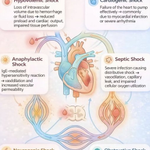
The causes of cardiogenic shock can be divided into groups on the basis of etiologic factors: acute myocardial infarction; factors not related to myocardial infarction, such as new or acute-on-chronic heart failure; or secondary nonmyocardial causes and postcardiotomy shock (seen in first image). For decades, ventricular failure after acute myocardial infarction was the most frequent cause of cardiogenic shock, with mechanical complications related to the infarction representing a rarer cause. Because treatment strategies for acute myocardial infarction have advanced with improved prevention and early revascularization, the relative proportion of cardiogenic shock events attributable to myocardial infarction is steadily declining, and non–infarction-related cardiogenic shock now outnumbers infarct-related cardiogenic shock (seen in second image).
Learn more in the Review Article “Cardiogenic Shock” by Holger Thiele, MD (@thiele_holger), and Christian Hassager, MD, from Heart Center Leipzig at Leipzig University, Leipzig Heart Science, Rigshospitalet, and the University of Copenhagen (@koebenhavns_uni): nej.md/49ohKyV

ALT An illustrated diagram of the causes of cardiogenic shock

ALT An illustrated diagram of medical and mechanical circulatory support.
Anesthesiology and Perioperative Science retweeted

Revisit the October 2025 Infographic in #Anesthesiology - Two Anesthetics Go HEAD-to-HEAD: Does Sevoflurane-Sparing Anesthesia Impact Neurodevelopmental Outcomes? 🎨 ow.ly/u2HZ50XNPOc

Anesthesiology and Perioperative Science retweeted
A scarcity of pharmacokinetic data limits widespread use of pediatric lumbar plexus blocks. Concerns about absorption and consequent toxicity promote low doses, resulting in frequent episodes of breakthrough pain.
Read a new article on this topic: ow.ly/cRry50XNM6Y

Anesthesiology and Perioperative Science retweeted

Damage-Associated Molecular Patterns in Perioperative Anesthesia Care: A Clinical Perspective
CCR Journal Watch
criticalcarereviews.com/late…

Anesthesiology and Perioperative Science retweeted
New meta-analysis of 9,272 patients shows that peripheral nerve stimulation can provide large meaningful pain relief lasting up to 24 months. These findings support broader clinical adoption and payer coverage.
FREE ARTICLE👉 doi.org/10.1136/rapm-2025-10…
@Ryan_S_DSouzaMD @nasir418

Anesthesiology and Perioperative Science retweeted

Obstructive sleep apnea in adult ambulatory anesthesia: navigating guidelines and evidence for safe home discharge - Canadian Journal of Anesthesia - rdcu.be/eTkqp

Anesthesiology and Perioperative Science retweeted
Visual Abstract in #Anesthesiology - Effect of S-Ketamine on Postoperative Delirium in Elderly Patients Undergoing Arthroplasty: A Randomized Controlled Trial 🖌️ ow.ly/EEi450XKwQo

Anesthesiology and Perioperative Science retweeted

ECMO in Pregnancy: Analysis of Indications, Management and Outcomes
• 🤰 VV vs VA: choose by indication; VV often shows higher maternal survival
• 🧪 Pregnancy physiology alters anticoagulation & drug handling (placental transfer matters)
jcvaonline.com/article/S1053…
Figure 1:


Anesthesiology and Perioperative Science retweeted
📱💊 Can a smartphone app help surgical patients manage pain & cut opioid use?
In the Nov 2025 #RAPMFocus podcast, David Provenzano, MD chats with Megan Rolfzen, MD & Karsten Bartels, MD, PhD about their SMART-APP trial.
🔗 LINK: rapmfocusbmj.podbean.com/e/e…

Anesthesiology and Perioperative Science retweeted
Why does pregnancy make hypoxia so dangerous? 🤔🫁
• BMR ↑ up to 15%
• O₂ consumption ↑ ~20%
• FRC ↓ ~20% at term
The result: rapid desaturation at induction and during cardiac arrest.
bjaed.org/article/S2058-5349…
