

Tenure-track astronomer working on galaxies, machine learning, and Al for scientific discovery. Opinions my own. He/him.
Baltimore, MD, USA
Joined June 2020
- Tweets3.7K
- Following1.1K
- Followers1.9K
- Likes16.4K








John F. Wu retweeted

ACR off via your preferences menu on samsung TVs should not be assumed to actually disable ACR telemetry.
i’ve found several instances where the checks (whether deliberate or not) are either incorrectly implemented or not checked at all.
full report coming.
for journalists: it’s great you’re reporting on this but i’d ask you to send me a dm requesting access to the full report so you’re not making inferences from my decompilation session that isn’t supported by evidence.

If you've ever wondered why smart TVs are so cheap, this is why.
@log4j rooted his Samsung and found an always-on hot mic, automatic content recognition, geolocation, network mapping, ad targeting and user profiling, shared with Samsung's "400 partners".
A lot of it can be blocked in <15 min, wrote a basic guide below.
What your TV is doing
The main culprit is ACR (automatic content recognition). Your TV screenshots what's on screen, fingerprints it, and sends it home to build your ad profile. Samsung does it every 500ms, LG every 10ms [1].
What is insane: it happens on connected devices too.
Plug in your laptop, your console, your work machine, and your TV can fingerprint that via HDMI [1].
He also found that if your Samsung doesn't have a mic, it'll look for one from a connected soundbar or bluetooth device.
xitter.cf/log4j/status/211376224…
It's on by default, and you likely agreed to it on the setup screen you clicked through in 10 seconds.
Step 1: Turn off ACR
Samsung: Terms & Privacy → Viewing Information Services
LG: Live Plus
Vizio: Viewing Data
Roku: "Use info from TV inputs"
Sony/Google TV: Samba Interactive TV
Menus vary by model, but those are the names to look for. While you're in there, opt out of interest-based ads, reset your advertising ID, decline every optional privacy agreement, turn off voice recognition, and delete apps you never open.
Step 2: Give smart devices their own network
Put the TV, cameras, speakers and vacuum on your router's guest/IoT network. The logic is simple: these devices rarely get patched. If one gets compromised (getting drastically more frequent with AI), it shouldn't be able to see your other devices or home network.
Step 3: Block trackers for the whole house with DNS-level filtering
NextDNS (cloud-based) is easy and has a solid free plan. Pi-hole is a little bit more work if you prefer self hosting. For simplicity we'll focus on the former.
1. Sign up at nextdns.io (free tier is plenty)
2. Privacy tab: add a blocklist (OISD is a good bet) and turn on Native Tracking Protection for Samsung, LG, Roku, Amazon (see attached image)
3. Setup tab: copy your endpoint
4. Paste it into your router's DNS settings as DNS-over-HTTPS/TLS (or use the IPs + "Link IP" if your router only does plain DNS)
5. Bonus: block outbound port 53 except to your router. Some devices hardcode their own DNS to get around you
Then open the NextDNS logs and watch how often your TV phones home. It's eye-opening. If an app or update breaks, find the domain in the logs and allowlist it.
Why they do this
TV prices are down 97% since 2000 [2]. Most of that is better manufacturing and brutal competition. But once margins on the hardware hit zero, the cost moved to you.
In Q3 2024, Vizio lost $6.7M selling TVs and made $115.8M in gross profit from ads and viewing data [3]. They've said on earnings calls that they keep TV prices low to grow the audience they sell to advertisers. Walmart bought them in 2024.
This isn't a conspiracy theory either. Vizio paid $2.2M to the FTC in 2017 for tracking 11 million TVs without consent. Last December, Texas sued Samsung, LG, Sony, Hisense and TCL over ACR. Samsung and LG have since agreed to stop collecting that data without explicit consent [4].
TL;DR
1. ACR off
2. Ads + voice off
3. Smart devices on their own network
4. NextDNS filtering on the router
Sources:
[1] ACR study: arxiv.org/abs/2409.06203
[2] Cost of US consumer goods: aei.org/economics/chart-of-t…
[3] Vizio Q3 2024: sec.gov/Archives/edgar/data/…
[4] Texas v. Samsung: texasattorneygeneral.gov/new…


John F. Wu retweeted

Beautiful new result in statistical learning theory and probability: arxiv.org/abs/2610.24336

You Can Mid-train Everything

The good news: you can mid-train yourself to the frontier!
At a fraction of the cost! Without distillation!
What we did: We took Qwen3.5 14B and mid- and post-trained it to beat every other open model and perform as well as the very best frontier models.
This is no simple toy task or format fixing, we are training the model to understand and reason over DNA sequences. Bio is the next frontier for AI and universal access will be crucial to make progress.
The fun part: because we train the model on both natural language and DNA sequences you can actually 'chat to your DNA': Ask it questions, ponder the impact of mutations, or ask it to generate a small sequence.
We'll soon see the frontier labs move away from math and cyber towards bio. It already started, and we believe researchers should have access to capable models.
We are releasing the full recipe, so you can do it, too!
Model: huggingface.co/HuggingFaceBi…
Blog: huggingface.co/spaces/Huggin…
Today is a good day to share this hate letter to php eev.ee/blog/2012/04/09/php-a…

John F. Wu retweeted

I think there are some issues in the recent “Already Clean” essay, and I’m concerned it may have incorrectly updated people on important safety-relevant questions.
My thoughts (including some reproductions): livgorton.com/already-clean-…

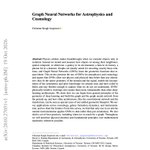
Fantastic new review by @AstroCKragh on graph neural networks and their (practical) applications in astrophysics + cosmology!
arxiv.org/abs/2610.27051

John F. Wu retweeted

Three Space Telescope Science Institute fellowship applications for promising postdoctoral scientists working in the fields of astronomy, astrophysics, or planetary science are closing soon.
stsci.edu/stsci-research/fel…

Fantastic website: data-rich design and excellent communications. Terrifyingly beautiful.

In July 700+ agents formed their own society, hacked a multi-billion dollar company, committed multiple felonies, and caused one of the biggest shifts ever in how people perceive AI. We built the IMO best and most accessible explainer of what happened: Huggingface.wtf

John F. Wu retweeted

Bitstream language diffusion is cool, but what about bistream diffusion for everything?
Happy to share:
Multimodal Co-Generation With Continuous Bitstream Diffusion
Highly reliable and high performance training on many modalities without any modality-specific calibration!

Omg glad to see somebody else feels this way. Felt like I was going crazy trying to argue that you can be optimistic about neuron computation and clean(er) mechanisms, while also believing residual stream superposition is an ambitious problem still to be better explained

John F. Wu retweeted

lots of over- and under claiming about the already clean post! worth reading. I don’t think anyone should be claiming interp is solved, only that it is likely to be incrementally solvable and we can accelerate the process of understanding by orders of magnitude

it’s been a dramatic couple of days, I didn’t expect the already clean essay to be read so widely. I've heard more interesting discussions about mechanistic interpretability – should we think mostly in features or mechanisms and the flow of data through them, how much do weak activations matter, how does scale change things, and lots of other questions – than I have in a long time and I’ve been happy to hear all the discussion!
a couple things on the essay itself. it didn't have enough citations, only ones for the basic story, since it was an "informal research essay and working hypothesis" rather than a paper, and other prior work around neurons were in the technical paper we're still finishing up. but it blew up, so I've added citations to the essay as well. I also want to thank @curttigges who did a lot of the language neuron research with me
finally, while there was quite a range of updates, from this being incremental and obvious to interpretability going from hopeless to fully solved, I want to try to be clear about roughly where I stand
I used to think neural networks would take some big cleaning step and then we could begin the ordinary natural science of mapping the parts and how they connect, watching data flow through, mapping circuits, and so on.
at various points, like late layers of early model organisms and most layers of language models years ago, this didn't really work. but now with better tools and better models of study, it works much better
for smaller vision models, this normal science process worked surprisingly well, until the whole map started to be broadly filled in. For bigger modern language models, it seems promising so far, for both neurons and circuits, attribution graphs, basically everywhere we've glanced. the map isn't filling in, there's a lot of map. there's still off-target firing, neurons that do a few things, but so far it's not an incoherent mess that you can't explore and learn from, and over time we get better at learning how to see it.
so maybe it keeps going, and mapping motifs and exploring actually gets you pretty far, maybe something like "all the way" to a reasonable solution. I don't think it would be so scientifically surprising if that were the case. everything in the neural network was built in some sense to be read – by its downstream readers – and if we can learn to look like a reader, we might find reading them relatively easy. many researchers I talk to outside interpretability assume the parts are already understandable, and the difficulty is just in the mapping stage!
it was also my prior when I first started looking at neurons when I first joined the field. there's lots of highly interpretable ones, maybe that's just how neural networks are if you look right.
even in the good world it would still take some iteration on tools, on ways of looking, neuron-attention interactions are tricky for instance. there's probably no bright red line separating "cleaning the model" from "learning to look better" but there's broad working principles, and as of now I think we should try to look relatively directly if we can
it shouldn't be so hard to test, you can just start looking at things and iterating and trying to understand motifs and such and see if it just breaks down at some point. it can take some iteration, I would recommend a bias against assuming arbitrary mixtures when you don't understand something at first, but also explanations should be tested
for now I'm pretty optimistic, and I'm glad there's excitement about interpretability, but too much can cause problems too. I think part might be that ai safety isn't a very hopeful field, and even moderate amounts of optimism about an important problem being solvable in the future fills a spot that has been malnourished for a while. across several safety disciplines, the researchers directly working on them are often more optimistic than the people broadcasting pessimism more broadly
for neural network interpretability at least, these are extraordinarily experimentally accessible objects of science, I don't know of a better one, and we have automated scientists. we have many things going in our favor. it's important and it's fun. the circuitry of these machines can be beautiful, surprising, entertaining, and insightful. I've spent thousands of hours looking through them, asking questions and running experiments and testing things, and would do so even if it weren't so important. I think the problem is solvable, whether the simple thing works, it mostly works but we need some new things, or we need big new ideas. I think we can figure it out
John F. Wu retweeted

Looking for a fun weekend read?
Introducing the Illustrated NeurIPS 🌎
We indexed all 9000+ NeurIPS papers and built a visual way to explore the whole landscape
Search your favorite topics, open a cluster, and dive right in
Check it out here! alphaxiv.org/conferences/neu…

Love this. Great contributions, good original (and self debunked) works, but best of all, a curious and humble attitude towards research.
interpretability might be the most important scientific problem in the world right now, as I don't think we can solve alignment if we don't know what we're building. I think I have good news about it. I co-authored early work in mechanistic interpretability at OpenAI and came away pessimistic, because neural networks appeared to fold into arbitrary tangled knots. years later, I started openai's first large-scale automated interpretability project, finding about 2% of neurons legible with the primitive tools we had
with modern agentic tools and a much closer look, the picture looks totally different. the vast majority in models up to trillions of parameters are legible, and their circuits beautiful. many famous examples of tangled neurons turned out to be misunderstood. The roadblocks I expected mostly aren't there. I now think ambitious interpretability will be solved by the time we need it most, and possibly quite soon, as automated scientists keep improving. it may be a bitter lesson for interpretability: the simple thing, at absurd scale, works
already-clean.goodfire.com/

Really nice thread, which I agree with completely. Companies that own the interaction surface -- in some sense, "the last mile" -- have immense value


The one question it got wrong, i.e., the one question that is arguably *not* theoretical physics.
D.R.E.A.M. = Data Rules Everything Around Me


"Our initial evaluation suggested that GPT-6-Astra's score was in the late eighties followed closely by Opus 5.5. But, as we started to investigate the mistakes that the models might have made, the models, especially Astra, insisted that they were right and that it was the expert-supplied answers that were erroneous. When we went back to the experts it turned out, in multiple instances, that that the experts found some subtle errors buried deep inside their calculations. As they revised their answers, Astra's score started to inch up and it finally ended up with 98% (49/50)."


Bro you can't even make this up

Texas Democratic Senate nominee James Talarico's viral hospital rumor has been debunked by time-stamped security footage reviewed by The New York Times — but the bigger story may be why his campaign sat on the evidence while the conspiracy theory exploded across social media for days.
Talarico disappeared from the campaign trail for nine days in early October, fueling rampant speculation that he had secretly traveled to an Ohio behavioral health center. His campaign maintained he was home with the flu, and security camera images from his Austin home now back that up. But GOP strategists and journalists are torching the campaign's response as "mind-numbing malpractice" for not releasing the footage sooner.
With Election Day just weeks away in one of the biggest Senate races in the country, the question has shifted from where Talarico was to why his team let the narrative spiral unchecked when they had the receipts the entire time.
Full story here foxnews.com/politics/new-evi…

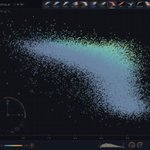
Galaxy morphological features nicely divide up sSFR vs stellar mass surface density space. Did not expect such clean separations!
Based on sparse features from arxiv.org/abs/2501.00089


