

Currently trying to understand planet formation as a professor of astronomy @UWMadison; previously a #51PegasibFellow @Caltech; PhD from @michiganastro
Joined April 2019
- Tweets526
- Following326
- Followers848
- Likes747


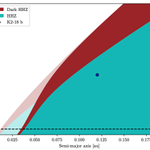



In Nick Marston's first first-author paper (accepted now to ApJ, and available here: arxiv.org/abs/2606.11330) he asks the question: do *all* super-puff exoplanets defy the expectations of core accretion? He modeled the interior structures of 34 cold super-puffs...

...and found that most can be explained within standard core accretion pathways. But 6 planets remain difficult to reconcile even after accounting for system age and internal heat from either impact or radiogenic sources.
Nick will presenting his work at DDA (dda.aas.org/node/184) in a couple of weeks - if you are attending, make sure to stop by his poster and learn more about these super-puffs that require novel explanations, including one REALLY weird super-puff!
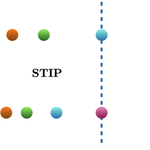
New first-author paper from Adam Distler, now accepted to ApJ, evaluates whether the inner edges of peas-in-a-pod (PIAP) multiplanet systems are affected by secular resonance crossings driven by the rotational evolution of the host star....
He finds that PIAP geometries are not susceptible to such secular resonances, and thus will not experience the same redistribution of angular momentum deficit that can drive the emergence of mutual inclination in systems with larger (/non-equal) period ratios....
This could explain why we don't often see PIAP with highly misaligned inner planets! Read more here: arxiv.org/abs/2606.06230

New paper led by University of Wisconsin-Madison undergrad alum Coleman Nelson finds TOI-700d is robustly habitable, while TOI-700e sits on the edge: iopscience.iop.org/article/1…
New ApJ paper: Can inner planets survive when a giant becomes a hot/warm Jupiter via high-eccentricity tidal migration? Usually no. Survival requires the giant’s periastron to stay >14 mutual Hill radii away. Observed systems with hot Jupiters + inner planets are inconsistent...
...with high-e migration, but warm Jupiters may be a narrow sweet spot. iopscience.iop.org/article/1…

AbSciCon will be in Madison, WI in May 2026! Please consider submitting an abstract to session 39, Dynamical Environments of Habitable Worlds, led by Joseph Livesey.
Hope to see you all there!

Mean motion resonances (familiar from planetary systems) also govern how stellar-mass BHs migrate and merge in AGN disks. Marguerite Epstein-Martin (applying to postdocs THIS FALL) has a new paper “Mean Motion Resonances in AGN Disks” (arxiv.org/abs/2510.12895v1).

Some hot Jupiters might not have traveled far.
New simulations by UW-Madison recent undergrad alum Devansh Mathur show that if enough solid material is funneled inward, both a hot Jupiter and its inner companions could form in situ. Accepted to PASP: arxiv.org/abs/2510.13527v1
Published this week in ApJ by UW-Madison undergraduate Eva Stafne: General relativity might save life on planets orbiting white dwarfs.
GR-driven orbital precession can suppress tidal heating that would otherwise trigger a runaway greenhouse. arxiv.org/abs/2509.26421
I also wrote a blog post with a level of detail in between this post and the paper itself: becker.astro.wisc.edu/2025/1…
When stars die, could life begin? White dwarfs could possibly host planets with oceans, making them worth considering in the search for life.
I wrote about the science (and surprises) of white dwarf planets at @ConversationUS theconversation.com/earth-si…

At the University of Wisconsin–Madison, we are excited to host 51 Pegasi b Fellows in the Department of Astronomy! Applications are due October 3, 2025. This was the fellowship that I had as a postdoc, and I’d be happy to chat if you think you might be interested in applying!
Find more information and the application here: hsfoundation.org/programs/sc…

Two weeks until abstracts (and requests for travel support) are due for this fall's GLEAM! gleam.astro.wisc.edu/overvie… I hope to see you here!

We’re so happy to host GLEAM 2025 at UW–Madison this Fall, Nov 6–7! gleam.astro.wisc.edu/ Join us for two days of exoplanets & community with a view of the shores of Lake Mendota. No registration fee. Travel support available. Abstracts & Travel Support Requests due Sept 5th.

We’re so happy to host GLEAM 2025 at UW–Madison this Fall, Nov 6–7! gleam.astro.wisc.edu/ Join us for two days of exoplanets & community with a view of the shores of Lake Mendota. No registration fee. Travel support available. Abstracts & Travel Support Requests due Sept 5th.