

Student of yoga. Keanu Reeves fan. Muddling through.
Rome, Italy
Joined November 2010
- Tweets2.3K
- Following401
- Followers504
- Likes4.3K


This helps explains why grocery bills feel so painful . . . #SOFI2025

Higher food prices are affecting whether and what people can afford to eat. #SOFI2025 shows 28% of the global population, or 2.2B people, struggled to access food last year. Among women, a 10% rise in food prices was linked to a 4% rise in hunger.

90
Leigh Prezkop writes: Even Sesame Street teaches my child to embrace differences. We may all look different on the outside, but on the inside, "we are the same." So why do we expect food to look all the same and be "perfect"? @WWFLeadFood @WWFBetterBiz link.medium.com/kkqbyofuuDb

1
86
Why you should care about grasslands by @cbnatphoto
worldwildlife.org/blogs/sust…

2
104
Thank you, but shouldn't @FAO also mention policy change as the most important solution to save our ocean? Eating mussels instead of tuna and not throwing out plastic bottles are great, but it's not going to save our ocean. You've got to regulate industrial fishing.

Take a minute to think about our oceans...
🌊Oceans act as the largest carbon sink in the 🌍
🌊Oceans host 80% of life on the 🌍
🌊Oceans provide half of the 🌍’s oxygen
The health of our oceans affects us all.
#BlueTransformation #SaveOurOcean #WorldOceansDay
65
Today is #WorldBeeDay. What harms them harms us, too, because our fate is interlinked with theirs. A wonderfully researched, thoughtful piece by @cbnatphoto.
thehill.com/opinion/energy-e…

51
"By 2026, ESG will account for more than one-fifth of all assets under management worldwide."

My latest op-ed argues that African leaders must urgently get in on the global #ESG standardization process: Africa’s red light on eco-investing businessdailyafrica.com/bd/o… via @BD_Africa

91
Experience is a competitive advantage, which can only be gained with time. We should value it.

"Without stronger legal protection for older workers and changing business models so they value work experience as a competitive advantage, older workers will face fewer opportunities, resulting in higher rates of poverty in old age," writes Katrin Park. usatoday.com/story/opinion/2…


I didn't know this but am not surprised.

Constantly threatened by North Korea with 'sea of fire,' South Korea has developed one of the world's most potent artillery systems and they are proving to be a boon for exports bloomberg.com/news/articles/…
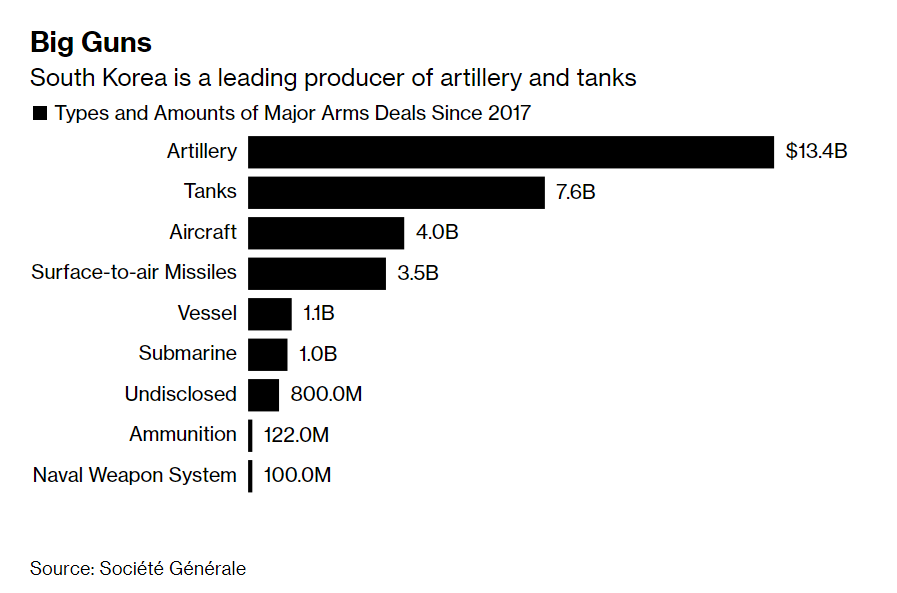
Cool database. Happy to see my country's emissions has declined over the years, albeit slightly.
Many of us know that growing and transporting food generates 1/3 of global greenhouse gas emissions. But what about food-related emissions beyond the farm gate? @FAO's new database quantifies them, by sector, for each country during the 2000-2020 period. fao.org/faostat/en/#data/EM/…
Join me today at 12:30, 2 Nov, for the launch of #SOFA2022. We look at case studies from around the world, representing different stages of technology readiness and actions needed to make agricultural automation inclusive. Register here: https://nitter.gq/t.co/RyyMTKbafe
2
There’s good news, too!

My first in-person meeting with my dear friend @MichaelKovrig since he was released from his wrongful detention in China. So good to see him healthy, strong - and free!

When will the government earnestly begin to work on improving gender equality and accepting more immigrants? Great headline, by the way! By @samkimasia bloomberg.com/news/articles/…
"The cold chain is the invisible backbone of our food system, a perpetual mechanical winter that we have built for our food to live in." newyorker.com/magazine/2022/…
Global food inflation has peaked barring any weather extremes, according David Labrode of @IFPRI youtu.be/0PVQ86cS8Xg
"Most salads are nutritional and environmental losers," writes @TamarHaspel
washingtonpost.com/food/2022…
1
People working in international development really need to stop saying the word "catalytic." Banish it from your vocabulary. You won't be any less effective, and the world will be better for it.
1