

building @muni_bio AI ∩ bio | in vitro to in silico, always an experimenter
SF
Joined August 2024
- Tweets165
- Following556
- Followers602
- Likes5.1K





Pinned Tweet
The future we bet on at @muni_bio is one where agentic workflows become the default in early drug discovery.
In our latest post, we walk through a pipeline designed and executed autonomously using @RowanSci tools for our TBXT hackathon. These candidates were submitted to @onepot_ai alongside compounds designed by other human participants.
As agentic loops continue to reshape every part of the drug discovery pipeline, scientists and engineers need to think about grounding their in-silico loops in the wet lab to avoid lead-slop.
muni.bio/research/muni-goal-…

Kat retweeted

Force fields and folding models finally merging, nice


Kat retweeted

We're launching 30B-scale virtual screening at Rowan today in partnership with @onepot_ai.
By combining Rowan's high-throughput computational infrastructure with onepot's autonomous lab, we can go from target to experimental data in weeks, not months.

Kat retweeted

Excited to introduce @ReactorfieldAI Cohort 1:
@merge - brain-computer interfaces with no implants, $250M seed led by OpenAI and Bain
@episteme - a new R&D institution, cofounded by Louis Andre and Sam Altman
@RetroBio_ - unicorn longevity startup, adding 10 healthy years to human life. In phase 1 trials
@NorthwellHealth - NY's largest healthcare system, with Chief Biotech Officer @itchdoctor
@StrandTx - programmable mRNA medicines out of MIT, lead cancer drug already in patients
@MayoClinic - turning leading clinical science into new ventures represented by @vera_mucaj
@xiliotx - publicly traded biotech making cancer therapies to activate inside tumors
@marathonfusion - producing the world's most valuable isotopes from compact fusion reactors
@KopraBio - viruses that turn cancer cells into factories for their own destruction
@radifymetals - hydrogen-plasma reactors that turn rare-earth oxides directly into metal
@FoundationManf - rapid domestic CNC machining for frontier hardware
@MassMagnetics - US-made high-performance magnets from recycled rare earths
@algabiosciences - turning cattle methane into calories, peer-reviewed cuts of up to 63%
@lumehealth - building a wearable that measures cortisol continuously from sweat
@liu_liu_lemon - smart materials for med tech and robotics, @Harvard PhD, Fulbright Fellow


AI transformed coding, science is next
@ReactorfieldAI makes scientists and deep tech startups AI-native
Built by me and @berkbuilds to accelerate science with frontier AI
Kat retweeted

ʙɪɴᴅᴄʀᴀꜰᴛ2 is out, and we're not waiting for the paper. The full code drops today, free for academic and industry use.
We're releasing it early so you can start designing right now, and bring its full power to the current Adaptyv competition.
github.com/PacesaLab/BindCra…
Kat retweeted

Also the technology to even measure most of it at a reasonable scale doesn't exist yet.

Kat retweeted

Every experiment should inform the next. @katyenko and @derekalia are building @muni_bio: a platform for agents to design hundreds of drug candidates, run wet-lab validation, and use that knowledge for future discoveries.
Kat and Derek are joining Reactorfield to show our scientists how to connect autoresearch with real-world experiments.


Kat retweeted

The closed-loop research flywheel is here. 🚀
@muni_bio's autoresearch agent combined NVIDIA’s Proteina-Complexa model with @adaptyvbio's automated wet lab to generate 3 sub-nanomolar TREM2 binder! The autoresearch agent outperformed previous human & agent hackathon leaderboards!

Using NVIDIA Proteina-Complexa, @muni_bio's autoresearch agent explored nearly 14,000 protein designs.
@adaptyvbio validated nine TREM2 binders, three with sub-nanomolar affinity.
The results show how agents can connect computational design with wet-lab feedback to improve the next round of discovery. 📘muni.bio/research/closing-th…


Kat retweeted

Very exciting to see how Proteina-Complexa in the hands of muni's agentic autoresearch pipeline produces sub-nanomolar binders for TREM2, scoring at the top of the leaderboard.
More about NVIDIA's Proteina-Complexa here: research.nvidia.com/labs/gen….


@muni_bio now gives agents access to the wet-lab. Using @NVIDIAHealth's Proteina-Complexa + @adaptyvbio validation, muni found 3 sub-nanomolar binders, all of which were better than our hackathon winners.
Even if assays take days or weeks, the results automatically feed back into the agent, allowing you to orchestrate autonomous scientific research in parallel.

Kat retweeted

Very exciting to see our work part of this report. Big congrats to @AnthropicAI @amirshanehsaz and @adaptyvbio

Many drugs work by binding to a specific target in the body and blocking or changing what it does. An important first step in the drug development process is designing a molecule that can bind tightly to its target. Traditionally, that's meant weeks or months of expert work per target, sifting through a large number of candidates to identify the few that work.
We wanted to test if Claude could successfully design novel protein binders from scratch (also called de novo design). With a protein design prompt written by a human expert, Claude autonomously designed protein binders against 14 out of 15 targets.
We then worked with Adaptyv Bio and Twist Bioscience, who independently built and tested the proteins Claude designed.
Kat retweeted

Exciting to see agentic workflows on top of Proteina-Complexa having impact in the real world!
Using NVIDIA Proteina-Complexa, @muni_bio's autoresearch agent explored nearly 14,000 protein designs.
@adaptyvbio validated nine TREM2 binders, three with sub-nanomolar affinity.
The results show how agents can connect computational design with wet-lab feedback to improve the next round of discovery. 📘muni.bio/research/closing-th…
Kat retweeted

Using NVIDIA Proteina-Complexa, @muni_bio's autoresearch agent explored nearly 14,000 protein designs.
@adaptyvbio validated nine TREM2 binders, three with sub-nanomolar affinity.
The results show how agents can connect computational design with wet-lab feedback to improve the next round of discovery. 📘muni.bio/research/closing-th…
@muni_bio now gives agents access to the wet-lab. Using @NVIDIAHealth's Proteina-Complexa + @adaptyvbio validation, muni found 3 sub-nanomolar binders, all of which were better than our hackathon winners.
Even if assays take days or weeks, the results automatically feed back into the agent, allowing you to orchestrate autonomous scientific research in parallel.
Full article here: muni.bio/research/closing-th…

+1 making a traditionally cost- and time-expensive tool more accessible

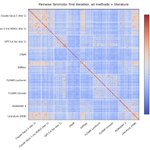
Excited to share a new research blog post, in which @ishaanganti used single-edge FEP to score different binder-design methods in a fragment-expansion scenario.
To not bury the lede: frontier LLMs (GPT-5.6 Sol and Claude Opus 5) are very good and can iterate to improve further:


Kat retweeted

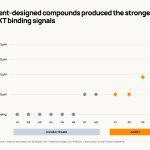
On their first shot teams in an agentic med-chem hackathon by @RowanSci & @muni_bio submitted compounds to the TBXT Challenge that included 6 new TBXT binders. A 50% hit rate. In 7 hrs. Pretty impressive. Grateful for this effort, and that they put the results in the open!
We've gotten results back from our first agentic med-chem hackathon, and the teams found real wet-lab hits!
In this post co-written w/ @muni_bio, we explore how the teams did, which strategies worked, and what we've learned from this first experience:
rowansci.com/blog/hits-from-…

Kat retweeted
We've gotten results back from our first agentic med-chem hackathon, and the teams found real wet-lab hits!
In this post co-written w/ @muni_bio, we explore how the teams did, which strategies worked, and what we've learned from this first experience:
rowansci.com/blog/hits-from-…