



Katherine Siddle retweeted

One of those papers where your jaw is on the floor through the whole thing

Today in @Nature, we report a new approach to studying human brain development and modeling disease in vivo.
Human neural #assembloids and #organoids have opened new ways to study development in vitro, but they also have important limitations. Transplantation can provide a more physiological environment, yet human cortical cells then develop within a rodent brain that matures much faster, constraining their growth and integration.
To address some of these limitations and obtain more advanced functional readouts relevant to disease biology, we generated #apallial mice, in which ~98% of the cortex and hippocampus fail to form, creating space for transplanted human cortical organoids to grow and integrate extensively.
We call these #xenocortical mice (XCX).
Nearly 7 years in the making. Congratulations to an extraordinary team and wonderful collaborators!
Link to the article below 👇

Katherine Siddle retweeted

🚨 It's still time to apply to the Pasteur-Paris University International Doctoral Program
Deadline 📆 oct. 31
Apply now ➡️ ppu.pasteur.fr/ppu_etud_accu…
#PhDProgram #EmergingInfectiousDiseases #AMR

Katherine Siddle retweeted

Over the last month, #RSV has surged early and hard, placing immense pressure on hospitals and clinics. Despite this, genomic insights have been limited. Check out our Virological post describing an initial look into the #RSV surge in MA 🦠🧬
virological.org/t/preliminar…
1/12

An absolute pleasure to work on this study alongside many partners including @sabeti_lab @broadinstitute @MassDPH @BCHDCapeCod @HumanServicesBC @PIH's CTC @HarvardChanSPH. Many thanks also to @patternvizlab for the beautiful graphical abstract.
This Post is from an account that no longer exists. Learn more
Katherine Siddle retweeted

Our new! preprint! Learning from COVID-19 outbreak in Provincetown this July⬇
medrxiv.org/content/10.1101/…
Ptown outbreak:
- 99% Delta
- 74% vaccinated, 79% w symptoms
Takeaways:
- SARS-CoV-2 spread from+btwn fully vaxxed
- Contained, likely thx to vaccine+public health response
1/


Katherine Siddle retweeted

Members of the Broad Institute of MIT and Harvard and Endicott College are conducting research about perceptions of the COVID-19 pandemic. If you were involved in COVID-19 response, please consider sharing your insights: harvard.az1.qualtrics.com/jf….
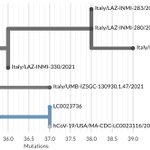
There are now over 50 SARS-CoV-2 genomes of the P.1 Variant of Concern lineage from Massachusetts, largely detected in the Cape Cod area over the past month (tinyurl.com/y322v8). A few observations (from me & @dannyjpark @bronwynmacinnis @glipsnort @sabeti_lab). [1/10]
The extent of community transmission of P.1 in MA is not yet established. The data are suggestive of additional undetected P.1 cases, though more extensive epidemiological and genomic surveillance is needed. [9/10]
Analyses above made possible by data contributors to @GISAID. Some new MA genomes are currently in submission and will be released by @CDC_AMD on @GISAID soon. Meanwhile, we have made a P.1-focused @nextstrain build available at auspice.broadinstitute.org/s… [10/10]
Pleased to share our latest pre-print using 772 SARS-CoV-2 genomes to investigate the introduction and spread in the Boston area. A huge team effort and great partnership between @sabeti_lab, @MGH_ID, @MassDPH and others; medrxiv.org/content/10.1101/… 1/7

These 772 genomes were obtained from NP swabs from individuals with confirmed SARS-CoV-2 infection, primarily from the Boston area collected by @MGH_ID, @MassDPH between March 3 and May 9, 2020 and sequenced @broadinstitute by an amazing lab team broadinstitute.org/blog/insi… 6/7

1
1
Explore this data in more detail in a @nextstrain narrative (auspice.broadinstitute.org/n…) and public terra workspace (app.terra.bio/#workspaces/pa…). We’ll post more genomes as we generate them and are working hard to make our dataset more comprehensive and representative.
7/7
1