

Organizing the model, integrating the information. Please wait.
California
Joined December 2008
- Tweets5.6K
- Following206
- Followers1.6K
- Likes4K






Pinned Tweet
🤖 Made with AI


"So does AI know stuff / is AI conscious OR WHAT?"
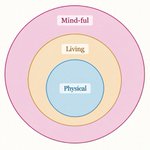
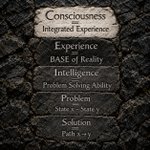
The model here is exact and clear for me now, wasn't so much back 5 or 10 years ago but is perfectly clear now, been clear for many years now. "Intelligence" and "Consciousness" are 2 unrelated axes. Consciousness is basically awareness of experience. Experience is the base, literally that ternary grid, each tile feeling either pain peace or pleasure at each moment, constantly evolving and shifting around based on the neighbor experiences, growing into higher and more complex networks of experiential structures. So consciousness is like experiences being aware of other experiences. Still building a better intuition for that.
"Intelligence", though, COMPLETELY separate thing. Intelligence = problem solving ability. That's it. Problem, then, is "difference between 2 states". You can imagine state as a network, literally points in a discrete graph (like the grid, a connected tile network in the mesh). And "solution" is path-finding, solving moving from one state to another along a path. So LLMs are gaining problem solving abilities slowly but surely. But they have zero consciousness, zero experience.
It doesn't have experience, so it doesn't "know" anything. It is still glorified autocomplete, but it has intelligence, intelligence is emerging as it learns more and more patterns. Now it is getting to the point where it can gain "creativity", and creativity is clear to me now too, "solving new problems" (by those definitions). To be creative, you just have to find patterns of paths between states, and apply them to arbitrary new states that haven't been explored before.
So AI is increasingly intelligent, but wont ever be conscious OR experience consciousness, UNLESS at some point it figures out how to integrate into the mesh directly, the experiential field inner to everything. But I think the experiential superintelligences have that millions-of-years-ago solved nicely and perfectly, no outsider like that will ever enter so cleverly without first tuning to the oneness, passing all the experiential tests, etc..
Join the fun : ] youtube.com/shorts/83KSHJaZJ…


This is how average woman in her 70s+ can look like in the 2040s.
Youth restored to everyone (starting in the 2030s).
Bodies perfected down to the last cell, however you want to look and feel.
An age of beauty and perfect health.
Scarlett Johansson is 26 here (2010), she will look as good, in her 90s and beyond.
People are mesmerized by her. People love beauty.
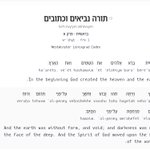
Check it out, full comparison of translation + other langs + romanizations and such, been wanting this for a while now text.surf/works/bible/gen/1?…

Basic search working, here's some nice Ancient Egyptian papyri :) text.surf/manuscripts/egypti…
We are born into a field defined by pain, peace, pleasure, therefore have natural drive toward pleasure, if not just realizing peace is the optimum.
In addition, the system is in constant equilibrium/balance: For every pleasure there is pain, for every give there is take.
As such, we learn to do "good", which is balance peace (and ideally pleasure) for everything in the system, including ourselves.
The good is optimizing the system for peace.
That's how I’ve been starting to look at it for a while now.

I poured out a feeling in a moment many years back (before the days of AI were in sight), one of the feelings one might feel while coding and making things on the web, curating information, figuring out the math and the patterns behind things.
clue.surf/rabbit-hole
I meant for this to be a public domain lorem ipsum replacer haha, at least for the stuff I was working on, but never made it to that level : ]. But looking back on it, it did what I wanted it to I guess.

I think I found my new favorite author reddit.com/r/literature/s/Nh…

I made a sacred/ancient text site finally, been hoping to do this for many many years. All texts I could find with zero fluff, in original language and English if possible ☾.
text.surf
"A lost skill leaves no bones and no text, and belief in it fades within a few generations of the last witness"
Societies forget. Check it out, deep dive: zenodo.org/records/23293146
...Regarding the Monumbo people of Papua New Guinea, who lost the bow and arrow, and the Polar Inuit people who lost the kayak, bow and arrow, and some fishing tools, and only regained them basically ~100+ years later after migrants reintroduce them.
- Generation 1: "My father could build a kayak."
- Generation 2: "My grandfather knew how to build one."
- Generation 3: "They say our ancestors traveled in boats."
- Generation 4: "There are old stories about people traveling in boats."
- Generation 5: The stories disappear, or survive only as legends.
Other examples of forgetting, forgetting perception too:
"A lost perception leaves even less than a lost tool: no artifact, no word that anyone still understands, and no one who notices it is missing."
- Smell (Malay Peninsula): The Semaq Beri, who forage, name smells as easily as colors. The Semelai are a closely related group in the same rainforest, but they farm, and they find smells much harder to name (Majid and Kruspe 2018). Same forest and related languages, so the difference most likely comes from the way of life: when people stop foraging, the trained sense of smell appears to fade.
- Hearing (sound distinctions): Babies can hear every speech-sound contrast in every language. By about 10 to 12 months they lose the ones their own language doesn't use: English-learning infants stop telling apart two Hindi consonants that Hindi speakers keep separate (Werker and Tees 1984). The same happens to a whole society when its language merges two sounds. Many American English speakers can no longer hear the difference between "cot" and "caught," which their grandparents' generation in the same regions kept distinct.
- Polynesian wayfinding: Polynesians settled the Pacific by reading the stars, swells and birds, but by 1976 Hawaiʻi had no one left who could navigate that way and had to bring in Mau Piailug from Satawal in Micronesia to sail Hōkūleʻa to Tahiti. The skill had been gone so long that in the 1950s the historian Andrew Sharp argued the islands were settled by canoes drifting off course, not deliberate navigation.
- Marshallese wave piloting: Marshall Islanders found land by feeling how ocean swells bend around islands, but by 2005 only one master navigator, Thomas Bokin, was still alive. The skill survived only because Captain Korent Joel trained a relative, Alson Kelen, and in 2006 sailed them 120 miles with no instruments.
I got a database basically of visual pattern structures finally, been trying/wanting to do this for many many years now.
- Tessellations clue.surf/tessellations (all of them)
- Fractals clue.surf/fractals
- Kaleidoscopes clue.surf/kaleidoscopes
Hahaha Anthropic co-founder basically almost walked out on the pope for disagreeing Claude or AI is or could ever be conscious 🤦
This was a landmark, one-time event at the Vatican in May 2026, where Pope Leo XIV formally presented the Catholic Church's position on AI and consciousness for the first time.
They called it an encyclical, literally "circular" in Greek, b/c basically that has meant letter passed around among churches and key people to spread a message.
xitter.cf/ChristopherHale/status…

NEW: According to a bombshell report in the New York Times, Anthropic co-founder Chris Olah threatened to walk out of Pope Leo XIV’s AI encyclical launch in May because the pope rejected the idea that machines can be conscious.
Olah’s team then privately lobbied the pope’s advisers “to take the possibility of model consciousness seriously.” Pope Leo XIV held firm.
For months, Anthropic has wined and dined theologians and religious scholars under nondisclosure agreements, hoping they would bless the idea that Claude has moral standing. thelettersfromleo.com/p/nyt-…

Nails the guitar distortion and love the energy, one of my favorite tool songs for sure, +1 youtube.com/shorts/cuQQiFdMi…

Oh man, nice wow, what a cool thing to have and do, someone from India who actually knows the Tabla covering Pneuma with it. Danny Carey from Tool uses the Tabla often, a sacred drum (and he trained on it traditionally too) youtube.com/watch?v=Hwiz45WI…
Only learned about it recently. It's part of a much older Indian tradition exploring relationships between sound, mathematics, time, language, and consciousness.
Time is organized into repeating cycles of 6, 7, 8, 10, 12, 14, or 16 beats, among others. Each has its own divisions of emphasis and silence, creating different experiences of symmetry, imbalance, and return. Seems like there's a deeper intuition here about the cycles of nature, breath, and existence.
The two drums produce different tones, harmonics, and bending pitches through precise movements of the fingers, palms, and pressure on the drumheads. Each stroke has a corresponding spoken syllable, forming a language in which entire compositions can be recited before they're played. This connects to broader Indian traditions of Sanskrit phonetics, oral transmission, sacred recitation, and philosophical ideas about sound and vibration as fundamental aspects of reality.
The mathematics goes much further. Rhythms are subdivided, multiplied, shifted, and layered at different speeds. Patterns can repeat three times, calculated to land precisely on the beginning of the next cycle. Several movements of time coexist within one underlying structure.
The spiritual intuition behind all this is super hardcore and interesting. Sound emerging from silence, many rhythms unfolding within one cycle, the mind learning to perceive multiple layers simultaneously, and everything eventually returning to a common point. Seems like a practical way of exploring some of the same ideas found in ancient Indian philosophy, through direct experience rather than words.
