

https://xitter.cf/t.co/vFh60Redy3
Virginia, USA
Joined June 2026
- Tweets136
- Following77
- Followers219
- Likes11




Keir Wenham-Flatt retweeted

Continuing the @learntotackle series:
Coaches throw around buzzwords like timing and coordination in tackle training, but what do they mean? Timing and coordination in relation to what? We can't define these terms until we've linked them to our perception of the outside world.
Perception and action are inextricably linked and we can't optimally train for skill by training one without the other. This is one reason why I think bags and sleds are wholly incomplete solutions for tackle training.
Today, we continue our critique of the OODA look, examine the relationship between perception and action using real-game examples of missed tackles, and discuss three practical changes you can make to better preserve the relationship between perception and action when you coach the tackle.
Key learning points
-Timing and coordination only matter relative to an external result, so you need something real to time against
- Perception changes the landscape of affordances: narrow focus means fewer movement options
- Action changes perception: head position and movement shape the information you take in
- Feel matters just as much as sight: pressure and tension give valuable information about our opponent
-Why stationary bags and sleds conflict with perception-action coupling
- Why tackling often regresses in the off-season
- Three vital coaching changes: game-like sensory information, coupled perception-action drills, and training with breadth
Chapters
0:00 Welcome and series intro
0:19 Recap: critiquing the OODA loop
1:18 Perception and action are inextricably linked
1:53 How perception changes affordances
2:10 A real-game example: Blake Grupe's ACL injury
3:00 Common missed tackles: feet, QB, blockers
3:19 How action changes perception
3:41 Feeling the ball carrier: pressure and weight distribution
4:49 What good timing and coordination actually look like
6:17 Why sleds and bags conflict with perception-action coupling
7:10 Off-season regression and the FUD problem
7:36 Three changes to how we coach the tackle
8:43 Wrap-up
🏈 Wrestling for Football programming drops 1st December. Subscribe to this channel for a special discount when it drops.
👉 Subscribe to the channel and switch on notifications so you don’t miss a video.
#LearnToTackle #TacklingFootball #FootballCoaching #TackleTechnique #FootballTraining #SkillAcquisition #TimingAndCoordination #SportsScience #CoachingFootball #SafeTackling
Keir Wenham-Flatt retweeted
The OODA loop is a fantastic decision making framework, but it has some inaccuracies, specifically: the brain is not a computer, skills are not like pre-planned programs, and sporting skill is not the conscious, top down phenomenon we think it is.
In this @learntotackle video, I'll explain why skill is actually an emergent, self-organized relationship between athlete, task, and environment, and what this means for you and how you coach skills like the tackle.
🏈 Wrestling for Football programming drops 1st December. Subscribe to this channel for a special discount when it drops.
KEY LEARNING POINTS
- The brain isn’t a computer. We can’t process all perceptual information, run simulations, and control every degree of freedom in a tackle.
- Skills aren’t programs we select and “push play” on. Strategies overlap, scenarios are endless, and we have to cope with novel situations.
- Elite decision-making is largely autonomous, not a top-down, conscious process.
- Ecological dynamics frames skills as self-organized, emergent patterns that arise from interacting with the environment.
-Athletes are pushed toward one affordance over others by the interaction of individual, task, and environmental constraints.
-Context and individuality matter. One technique or system can’t fit every athlete, position, and situation.
- Practical approach: build breadth of movement options, nudge athletes toward better options with carefully designed scenarios, then use repetition and depth to refine timing, coordination, and adaptability. Let the environment provide the feedback.
CHAPTERS
0:00 Recap: the OODA loop and tackling
1:23 Why the OODA loop has problems
1:34 Problem 1: The brain is not a computer
2:07 Problem 2: Skills aren’t computer programs
2:43 Problem 3: Skill isn’t a top-down conscious process
3:12 Ecological dynamics: a better lens
3:45 What “self-organized” means
4:41 Affordances and constraints
5:04 Example: how a cornerback decides how to tackle
6:49 Why context and individuality matter
7:47 What this means for coaching tackling
8:25 Wrap-up and what’s next
▶️ Subscribe and switch on notifications so you don’t miss the next video in the series. Head over to the @learntotackle YT for the full course playlist.
#LearnToTackle #TacklingTechnique #FootballCoaching #CoachingFootball #AmericanFootball #SkillAcquisition #EcologicalDynamics #OODALoop #TackleTraining #FootballTraining #DefensiveCoaching #SportsCoaching
Keir Wenham-Flatt retweeted
Latest instalment of @learntotackle for American football.
Great tackling in football isn’t just about size, speed and strength. The best tacklers are those who best exploit these attributes while making fast, high quality decisions under pressure. Great athletes are great problem solvers.
In this video, I break down the OODA loop, the decision-making model developed by Colonel John Boyd of the US Air Force, and show how it applies to tackling in American football. You’ll see how observation, orientation, decision, and action play out in every tackle, and more importantly, what this means for how we coach sporting skill.
Key learning points:
- Tackling is a complex problem with no single “right” technique, only better or worse solutions in context
- The OODA loop (Observe, Orient, Decide, Act) and why whoever closes their loop first wins
- Observation- take in the environment, pay attention to what matters
- Orientation- analyse the intent of the opponent, synthesise your response
- Decide- select the best action to achieve your goal
- Act!
- Implications of the OODA loop for training and coaching
Chapters:
Intro
Recap: tackling as a movement-based solution
Why tackling is a complex problem
The best tacklers are the best decision-makers
Introducing the OODA loop
Colonel John Boyd and the origin of the model
The four phases: Observe, Orient, Decide, Act
Orientation: inferring the ball carrier’s intent
Decision: choosing and modifying the response
Action: carrying out the tackle
Five coaching implications of the OODA loop
Experience: the one word linking it all
Final thoughts
🏈 Wrestling for Football programming drops 1st December. Subscribe to this channel for a special discount when it drops.
👉 Subscribe to the channel and turn on notifications so you don’t miss the next video in the series.
#TackleTraining #FootballCoaching #LearnToTackle #OODALoop #TacklingTechnique #FootballCoach #DecisionMaking #AmericanFootball #WrestlingForFootball #SportsCoaching
RT @RUGBY_STR_COACH: The best tackler isn't just the biggest, strongest guy on the field. It's not even the guy with the cleanest technique…
Keir Wenham-Flatt retweeted
Why is a heavier ball carrier harder to tackle? Why shouldn't you dive horizontally into a tackle? Why are vice tackles the easiest way to halt forward progress? One word: stability.
In this video we'll discuss what stability actually is in clear biomechanical terms and how coaches can manipulate stability to halt forward progress, ground a ball carrier by contact, or drive them out of bounds.
You'll learn:
- What stability is
- How centre of mass, base of support and orientation influence stability
- How to increase stability
- How to create instability
- Strategies for halting forward progress
- Strategies for grounding by contact and driving out of bounds
This video is part of the @learntotackle course for American football, a free YouTube-based course. Head over to the Learn to tackle Youtube channel to start from the beginning.
🏈 Wrestling for Football programming drops 1st December
Do you have any feedback or pointers for me on these materials? Tell me in the comments, positive or negative.
CHAPTERS
0:00 Quick Recap
1:05 The Three Tackle Outcomes Defined
2:40 The Common Thread: Ball Carrier Stability
3:13 What Is Stability?
3:22 The Table Analogy
4:17 Newton's Laws Of Motion
4:48 Increasing & Decreasing Stability
5:34 We Intuitively Understand Stability In Football
6:26 Increasing Stability to Halt Forward Progress
7:38 Decreasing Stability to Ground or Drive Out of Bounds
8:47 Complicating Factors
10:14 The Mental Discipline Of Coaching
#football #footballcoaching #tackling #biomechanics #learntotackle
Keir Wenham-Flatt retweeted
What is the essence of effective tackling in American football?
If you're a coach and you cannot answer this you have no objective criteria to evaluate a tackler, no end point to coach backwards from and no reference point to compare one technique or tactic to another.
In this video we'll distill tackling down to its indisputable core using first principles thinking and biomechanics.
As you'll learn, every tackle, whether it halts forward progress, grounds the ball carrier, or forces them out of bounds, works by manipulating the ball carrier's stability.
In this video we'll cover:
- Why its impossible to train for every scenario, and how heuristics and breadth of training will get you the 99% of the way there
- Biomechanical definitions for our 3 tackle events
- How interaction between the line of gravity, center of mass, and base of support determine whether a ball carrier stays up or goes down
- Defining terminal instability and why it matters to tackle
- Why manipulation of stability needs to be the governing principle of all tackle training
This video is part of the @learntotackle course for American football, a free YouTube-based course. Visit the @learntotackle channel to start from the beginning.
🏈 Wrestling for Football programming drops 1st December- watch this space
Do you agree or disagree that stability is the essence of tackling? Tell me in the comments, positive or negative.
CHAPTERS
0:00 What es the essence of tackling?
0:26 Recap: First Principles and complexity
1:35 Stop forward progress, ground by contact, or drive into bounds
2:20 How should coaches approach a problem with no right answer?
2:41 Categorize different versions of the same problem, then use heuristics
4:00 Distilling tackling down to its biomechanical essence
4:36 Halting Forward Progress = Stability
5:41 Grounding by Contact = Instability
6:54 Instability alone isn't enough
7:24 Forced Out of Bounds = Instability
7:59 The Essence of Tackling: Manipulating Stability
8:34 How to Use This as a Coach
#football #footballcoaching #tackling #biomechanics #learntotackle
Keir Wenham-Flatt retweeted
Most football coaches treat tackling like a simple problem which can be solved with 100% effectiveness as long as they pick the best technique and execute it perfectly enough.
This is a fool's errand.
Tackling is NOT a simple problem and there is no optimal solution. The Cynefin framework, teaches us that tackling is actually a complex problem. Let's talk about that this means for you and how you coach the tackle.
In this video you’ll learn about:
- The four Cynefin problem types: simple, complicated, chaotic, and complex
- Why tackling against a live, resisting opponent can only be complex in nature
- Why “We’re an X team” statements are a trap, and why the most adaptable teams are the hardest to beat
- Why there’s no perfect technique, only better or worse solutions in the context of stated objectives
- Why coaches must create both breadth and depth in training, and why hitting bags or compliant partners simply doesn't reflect the nature of sporting problems.
This video is part of the @learntotackle course for American football, a free YouTube-based course.
🏈 Off-season Wrestling for Football programming drops 1st December
Subscribe and switch on notifications so you see each video in the series in order.
Have feedback, questions, or requests? Leave a comment. Positive and negative are both welcome.
CHAPTERS
First Principles From From Winning Championships to Tackling
Sport Is Simple, But Not Easy
Are All Problems Created Equal?
The Cynefin Framework
Simple Problems
Complicated Problems
Chaotic Problems
Complex Problems
Why Tackling Is Complex
Remove “We’re an X Team” From Your Vocabulary
There Is No Perfect Technique
We Need Breadth AND Depth in Training
Wrap-Up
#football #footballcoaching #tackling #tacklingdrills #cynefin #learntotackle
Keir Wenham-Flatt retweeted
First Principles Thinking for Tackling in American Football.
Beware blindly copying other teams. When you copy, you also copy their errors in judgement.
Instead start from first principles thinking, which we'll talk about in this video. Using this mental model we can draw a direct line from making tackles on the field to winning championships, and to distill the complex act of tackling down into 3 simple objectives.
In this video you’ll learn:
- What first principles thinking is and how it can help you
- The first principles of football performance and how it relates to tackling
- The only three ways to stop the rush: halting forward progress, grounding by contact, and forcing out of bounds
- The value of always adopting first principles thinking in football
🏈 Off-season Wrestling for Football programming drops at the start of December. Follow me to be notified when it is released.
📅 I'll be releasing new videos on tackling for football on a regular basis moving forwards. Subscribe and hit the bell so you don’t miss them.
If you found this video useful, share it with a coach or athlete who’d benefit, and tell me in the comments what you’d like covered in future videos.
0:00 Intro and announcements
2:13 What Is First Principles Thinking?
3:03 When you copy, you copy errors in judgement
3:31 First principles beats analysis paralysis
4:03 Let first principles act as the North Star
4:44 Applying first principles to football
5:05 Win championships, nothing else matters
6:04 Score more points than the opposition
6:31 Stop the opposition scoring points
7:52 We make tackles to turn the ball over
8:29 Get proximate, get connected, impose your will
9:08 Drawing the line from tackles to championships
9:57 Wrapping up
#football #tackling #footballcoaching #firstprinciples #wrestlingforfootball
Keir Wenham-Flatt retweeted
A NEW RECORD in the tackle report for @fsufootball vs @louisvillefb.... unfortunately it's the record for lowest tackle completion percentage of any game I've tagged via @learntotackle.
FSU came out the gate hot and were up 14-0 at one point, with the tackle stats to prove it. This was followed by a total implosion in the middle two quarters, followed by a final somewhat competitive quarter.
The sheer volume of misses from the side, in the penetration phase (fingertip tackles) combined with the number of clean gaps Louisville were able to find points to severe problems with positioning.
We know that the more you're able to get directly in front of ball carriers and make contact closer to the mid line of your body, the more likely you are to make tackles. FSU rarely found themselves in such a position.
What is the cause? Scheme, speed, agility, information processing, potentially intent. Teasing out the real culprit would require a deeper look at the available data, but what is clear is that no amount of bags, sleds or hitting stationary targets is going to fix this.
Keir Wenham-Flatt retweeted
Guys, Saban was a beast of a coach.
But don't let a nostalgic documentary fool you into thinking that the 4th quarter bullshit is why they won.
A million copycats did it too and they sucked.
Alabama themselves got rid of it in 2020, went undefeated, won a natty and were healthier in the process.
Saban is the common denominator.
A lack of free market in the NIL era is too but that's a conversation for another day 👀
Keir Wenham-Flatt retweeted
Blocking, tackling, hitting, you name it.
If you are giving or receiving contact in football (or rugby or any other collision sport for that matter), hyper lordosis and arching like an IG thot is almost never the solution to maximise torso stiffness and force transmission between upper and lower body.
The hips are indeed a huge source of power, but you allow it to leak when you transmit it through a spine with an exaggerated arch like this.
I'm just a rugby guy though. Have at it in the comments.
Keir Wenham-Flatt retweeted
MASSAGES FOR EVERYBODY! @deshaunwatson and @Browns put belt to ass on Thursday. Let's take a look at the @learntotackle tackle report.
Keir Wenham-Flatt retweeted
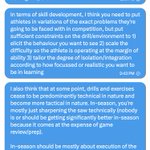
To be clear I think there is absolutely a place for sleds, but IMO it's not enhancing athletes ability to problem solve in sport, especially not high level ones.

Keir Wenham-Flatt retweeted
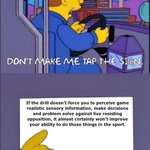
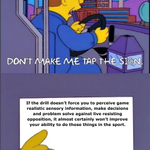
Drills make you better only 4 ways
1. Tactical
2. Technical
3. Physical
4. Psychological
If it's not stressing you in one of those four ways, it's probably eyewash.
Tactical- movement in isolation, no opposition ❌
Technical- no game realistic decision making or sensory information ❌
Physical- 300lbs can do this all day. Eh
Psychological- no cognitive or emotional qualities are being stressed ❌
Could this be a warm up and just going through the motions? Sure, but that's all it'll be to these athletes
Keir Wenham-Flatt retweeted
Ask yourself "If I positioned them correctly, could a blind person do this drill to the same level of competency?"
If the answer is yes, how does the drill prepare athletes to perform in an environment which a blind person couldn't hope to compete in?
Keir Wenham-Flatt retweeted
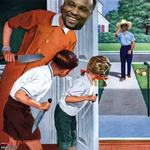
Question for the 🏈 coaches:
If everyone on your team wore the same sized clothing, would the equipment manager be doing a good job?
If the answer is no because they all have different needs, is it okay for everyone on the team to practice the same set of tackling drills?
👀
Question for the 🏈 coaches:
If everyone on your team wore the same sized clothing, would the equipment manager be doing a good job?
If the answer is no because they all have different needs, is it okay for everyone on the team to practice the same set of tackling drills?
👀
Fine margins of sport but going head on front side and maximally accelerating into the hit instead of gathering his feet prior to the hit didn't help.


