

The world as I see it — news, ideas, faith.
Joined March 2024
- Tweets5.1K
- Following4.3K
- Followers3.5K
- Likes2.7K




Pinned Tweet
PLEASE READ THIS. A 19-YEAR-OLD MEDICAL STUDENT IN VIETNAM LOST HER GRANDMOTHER IN A CRASH. NOW SHE IS THE ONE BEING PROSECUTED.
Her name is Pham Thi Hanh, born in 2007. She is a second-year student at Thanh Hoa Medical College in Thanh Hoa, Vietnam.
Her dream is simple: to become a doctor, to save lives.
In May 2026, according to her testimony, she was riding her motorbike with her grandmother to buy incense and offerings for a death anniversary. On the road, they were allegedly hit by a vehicle from Van Anh, a well-known local transport company.
Her grandmother died. Hanh herself was seriously injured.
She had just left the hospital. She had just lost her grandmother. She was still in shock, her leg still in pain, and she needed her father and brother to take her to school.
That is when, she says, the nightmare began.
WHAT SHE ALLEGES HAPPENED DURING THE INVESTIGATION:
Three days after her grandmother died, police from Quang Phu Ward, Thanh Hoa, called her in for questioning. She says she was still panicked, still in pain, and told them she could not remember clearly yet. She says she just nodded along to get through it.
A few days later, she says police called her back to sign papers. They allegedly gave her TWO BLANK SHEETS OF PAPER and told her to sign them. When she asked why she had to sign blank papers, she says they told her: "Your school schedule is messy, you still need to study and recover, we also have a lot of work. Just sign here for convenience, for both sides. It is fine. We will type it up later."
She signed. She was 19. She had never dealt with police or the law before. She says she only went to school and went home.
Later, she says she was made to write and rewrite her statement exactly as dictated, but was NOT allowed to write the date. She says police told her to leave the date blank so they could fill it in later.
After reviewing camera footage and thinking it through at home, she says she remembered clearly: she had looked in all directions at the intersection, she had slowed down very slowly, and the other vehicle hit her from behind, into the tail of her bike.
She says she was never formally served any decision. Her family also did not know. She says she only learned she had been criminally prosecuted when she received a phone call while sitting in class.
On July 20, a decision was issued to prosecute her for "violating regulations on participation in road traffic" under Article 260 of the Vietnamese Penal Code.
When she was called to the station again, she says she was taken to meet a civilian, made to sign more papers, and then suddenly told: "From now on, you are banned from leaving your place of residence."
Only then, when her brother arrived and demanded to see the papers, did her family learn that her case had been pushed up to the provincial level and that she had been prosecuted.
WHY THIS MATTERS:
Hanh comes from a poor, sick family. According to her family, her father suffers from liver cirrhosis. Her mother has difficulty walking. Hanh is a student who also works part-time and does night shifts at school. She has no money, no power, no connections.
She is not asking for pity. In her own video, she asks only one thing: that higher authorities review her case and clear her name, so she can continue studying and become a doctor.
A young woman who lost her grandmother in a crash, who was injured herself, should not be tricked into signing blank papers, forced to write undated statements, and then prosecuted in secret while sitting in a classroom.
We are asking the world to watch this case.
We are asking for an independent, transparent review of the investigation by Quang Phu police, of the blank-paper signatures, of the undated statements, and of the decision to prosecute Pham Thi Hanh under Article 260.
Please share this. Please help her voice reach international media, human rights organizations, and lawyers who can help.
She wanted to save lives. Now she needs someone to save her future.
@RFAtiengviet @Reuters @hrw @realDonaldTrump @WhiteHouse @YonhapNews @BBCBreaking
Cởi áo mão cân đai gửi cho quân hầu cận,
Mặc nguyên áo cơ hàn để mừng bạn tương tri.
Ly rượu này đại huynh hãy uống đi,
Uống chén rượu hôm nay mà nhớ ngày đưa tiễn.....
1
133
Bạn đang dùng Xiaomi bản ROM quốc tế nhưng muốn kích hoạt trình ghi âm cuộc gọi mặc định của Xiaomi mà không cần root?
Video này sẽ chia sẻ chi tiết cách thực hiện nhanh chóng.
———————————————
Code cho Brevent (nhập từng dòng theo thứ tự):
pm install-existing com.android.contacts
pm install-existing com.android.incallui
pm uninstall --user 0 com.android.phone.cust.overlay.miui
Code xóa Trình nghe gọi Google (không khuyến khích): pm uninstall --user 0 com.google.android.overlay.gmsconfig.comms
pm uninstall --user 0 com.google.android.dialer
pm uninstall --user 0 com.google.android.contacts
THẬN TRỌNG VỚI DỮ LIỆU CỦA BẠN - NÊN SAO LƯU LẠI TRƯỚC KHI THỰC HIỆN VIDEO MANG TÍNH CHẤT CHIA SẺ - BẠN TỰ CHẤP NHẬN RỦI RO THIẾT BỊ NẾU CÓ
2
109
Rạng sáng 11.11, một vụ cháy nghiêm trọng đã xảy ra tại 2 cửa hàng kinh doanh lớn nằm trên cùng địa chỉ 19 đường Hà Nội (phường Thuận Hóa, thành phố Huế).
Theo ghi nhận, vị trí bùng phát đám cháy là ngôi nhà 3 tầng có 2 cửa hàng nằm cạnh nhau, hoạt động kinh doanh xe máy và dịch vụ phun xăm, ngay vị trí đắc địa trên đường Hà Nội.
Vào khoảng 3 giờ sáng, ngọn lửa bất ngờ bùng lên dữ dội, cột lửa cao bao trùm toàn bộ căn nhà. Sự cố xảy ra bất ngờ trong đêm khiến nhiều người dân sinh sống lân cận hoảng loạn, phải nhanh chóng di chuyển ra khu vực an toàn ngoài đường.


Looks like just a drainage channel, but this is how meticulous they are in Japan. The road is wet, yet there's not a single puddle. Seriously impressive.
1
263
Một đoạn video dài hơn hai phút lan truyền trên mạng xã hội ghi lại cảnh một tài xế xe tải tranh cãi với lực lượng cảnh sát giao thông (CSGT) sau khi bị lập biên bản vì dừng, đỗ xe trên một tuyến đường trong khu công nghiệp.
Video được quay từ vỉa hè, cho thấy một tuyến đường rộng, có vỉa hè, cây xanh và vạch kẻ đường. Một bên đường là cổng một nhà máy có bảng tên BAOSTEEL. Một xe tải màu trắng đậu sát lề phải. Gần đó là một mô tô của CSGT và một xe tải của lực lượng này.
Trong video, hai CSGT mặc đồng phục màu vàng, đội mũ bảo hiểm màu vàng, đang làm việc bên cạnh xe tải. Một người đang viết giấy tờ, kê trên ghế của xe tải.
Tài xế, người quay video, nói rằng đây là tài xế mới, lần đầu đến công ty này và phải xuống xe để vào đăng ký, hỏi nơi giao nhận hàng. Anh cho rằng xe chỉ đậu tạm 5 đến 10 phút và đề nghị lực lượng chức năng xử lý có tình, có lý.
Người này cũng nói rằng anh chấp nhận trên đường có biển cấm dừng, cấm đỗ, nhưng tài xế muốn vào công ty thì phải xuống báo với công ty. Anh nói: "Muốn tới nhà người ta thì phải vô hỏi người ta một tiếng."
Ở chiều ngược lại, một CSGT nói trong video rằng tài xế đã thấy biển báo nhưng vẫn đậu xe. Người này nói: "Người ta cắm biển để làm cái gì."
Đoạn tranh cãi tiếp tục khi CSGT lập biên bản. Tài xế đọc số điện thoại của mình và yêu cầu được ký vào biên bản sau khi CSGT giữ giấy tờ của anh.
Video không quay rõ biển báo cấm dừng, cấm đỗ ở đầu đường mà hai bên nhắc tới. Video cũng không cho thấy thời điểm xe tải bắt đầu dừng, đỗ, và không cho thấy kết quả xử lý cuối cùng.
Theo quy định hiện hành, đường giao thông trong khu công nghiệp vẫn được xác định là đường bộ và CSGT có quyền tuần tra, kiểm soát và xử lý vi phạm trên tuyến đường này. Đối với ô tô, hành vi dừng xe nơi có biển "Cấm dừng xe và đỗ xe" có thể bị phạt 600.000 đến 800.000 đồng, hành vi đỗ xe tại nơi có biển cấm có thể bị phạt 800.000 đến 1.000.000 đồng.
2
5
652
PATENT FROM CHONGQING POLICE COLLEGE SPARKS DEBATE OVER ITS PURPOSE
CHONGQING - A patent granted in China in 2012 is sparking debate among observers, after details about the applicant, the lead inventor and the design of the device became widely known.
Records show the patent carries the number CN202376254U, filed on December 22, 2011 and granted on August 15, 2012. The name of the invention is translated as a machine for causing primary brainstem injury through impact.
In the section describing its purpose, the file states that the device was built to create a brainstem injury model in medium sized laboratory animals such as dogs, pigs and rabbits, in order to overcome the inaccuracy of manual impact.
The first point that drew attention is the applicant. The applicant was not a veterinary institute or an agricultural university, but the Chongqing Police College.
The first inventor listed in the file is Wang Lijun, former police chief and vice mayor of Chongqing. Wang Lijun was later sentenced to 15 years in prison in the political scandal of 2012.
Before moving to Chongqing, Wang Lijun served as police chief in Jinzhou City, Liaoning Province. There, he founded what was called the On-site Psychology Research Center.
According to a speech preserved from when he received the Guanghua Award in 2006, he said his center had carried out thousands of in-depth organ transplant research cases right at execution sites, to find a way to transfer organs from the body of a death row prisoner to a recipient in the most effective way.
At the end of 2011, Wang Lijun registered the copyright for this impact machine together with military trauma experts.
The debate continued in November 2017, when South Korean broadcaster TV Chosun aired an investigative documentary called Killing to Live, about the underground organ transplant tourism network in China.
In the documentary, the film crew took the drawings from the patent to mechanical engineers to rebuild a real machine for test operation. When witnessing the machine operate, international medical ethics experts present in the report raised questions about the size of the device.
According to those experts, a machine introduced as being for mice or rabbits in a laboratory had a support base, clamping ring and cushioning mechanism that matched the anatomical structure of an adult human skull.
Legally, the original patent was invalidated in 2016 because the maintenance fee was not paid after Wang Lijun was imprisoned.
However, scientific data in China shows the design continued to be cited. From 2013 to the period of 2020 to 2023, nine other patents from major hospitals and medical universities in China directly cited this invention to build newer generations of impact machines, using pneumatic guns and electronic sensors to measure force more accurately.
To date, on legal papers, the device is still recorded as a research tool for trauma in animals. Meanwhile, questions surrounding the applicant, the identity of the inventor and the design of the machine still have no official answer from an independent authority.
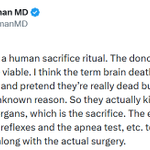
Organ procurement only works if the donor's organs are still viable, which means they have to be oxygenated and still functioning when they are removed.
That means the donor has to still be biologically alive, even if they have been labeled "brain dead." The term "brain death" was introduced in the late 20th century and it is still controversial, because it allows organs to be taken from patients whose hearts are still beating. In effect, it is the removal itself that causes true biological death.
The diagnostic steps, like the apnea test and reflex exams, serve both a clinical and a symbolic function. Organ harvesting is a ritual: a ceremonial declaration of death that comes right before a sacrificial extraction, all under the guise of medical necessity.
1
118
Đường Lê Văn Sỹ hướng Quận 1 về Hoàng Văn Thụ mới dựng bảng cấm ô tô mà ở vị trí hơi khó nhìn.
Chúng dựng bảng khuất tầm nhìn như vậy với mục đích gì thì chắc mọi người cũng hiểu.
2
8
536
Lấy nội tạng là một nghi lễ hiến tế con người. Người hiến cần phải còn sống thì nội tạng mới dùng được. Tôi nghĩ thuật ngữ chết não được tạo ra để che giấu sự thật đó và giả vờ như họ thực sự đã chết nhưng tim vẫn còn đập vì một lý do không rõ nào đó. Vì vậy, thực ra họ giết người hiến bằng cách lấy đi các cơ quan quan trọng, đó chính là sự hiến tế. Các thao tác khám, kiểm tra phản xạ và test ngưng thở, v.v. để xác định chết não chính là nghi lễ, cùng với ca phẫu thuật thực sự.

104
THE PROCEDURE WAS CORRECT. ONLY THE PEOPLE WHO DIED WERE WRONG.
In this country, there is one thing more immortal than human life. That is the procedure.
So what if patients die? As long as the files still look good, the stamps are still red, the signatures are still complete, and the report still says: Done in accordance with the correct procedure.
The Ministry of Health is the best producer of procedures. For seven years, dialysis was carried out with no specific dialysis procedure and no procedure for managing RO water quality. The hospital ran dialysis illegally and no one knew. Inspectors passed through like tourists, the Department nodded, the Ministry stayed silent. Everything was in accordance with the correct procedure, until the day eight people died.
And then, as the lawyer said in court:
“Only the people who died did not follow the correct procedure. All the rest of us followed the correct procedure.”
It sounds like a joke, but it is painfully true. People died because of dirty water, because chemicals remained in the machines. Officials, meanwhile, suffer only from a missing official dispatch. So after people died, the Ministry hurriedly produced 52 new procedures. Producing procedures is fast. Saving people is slow. Procedures were born after the bodies, but they are used to convict the living.
The lawyer then asked a question that silenced the whole courtroom:
“This is a voice of conscience, but where is the responsibility of the State toward the people?”
Where is it? Responsibility is lying in a filing cabinet, clipped between two dispatches, waiting for comments, waiting for approval, waiting for a lessons-learned meeting. After the meeting, another procedure is issued. Procedures pile on top of procedures, until no one knows which procedure is the real one.
The incident, as described:
“A horrifying incident occurred that the world had never seen before. Eight human lives died.”
The world had never seen it, but Vietnam had. It happened because 70 percent of water samples failed to meet standards, yet dialysis continued. The lawyer had to shout it in court:
“Checks showed that up to seventy percent of samples failed to meet quality standards at medical facilities.”
Seventy percent failed, yet it was still called a pass. Seventy percent was dirty water, yet it was still called clean water. Seventy percent was human lives, yet it was still called the correct procedure.
That is the peak of communist bureaucracy: There is no need to know whether the water is clean, only whether the paperwork is clean. There is no need to know whether the people are alive, only whether the report looks good. When people die, blame the doctor. When the doctor falls, blame the nurse. When the nurse falls, blame the company. When the company falls, blame the procedure that had not been issued in time.
In the end, only one thing never dies: the machine that issues procedures. People die, doctors go to prison, families cry until they have no tears left, but the machine still lives, still meets, and still issues new procedures to prove that it is always right.
Everything was in accordance with the correct procedure. Only the people were wrong for daring to die without filing a report first.
Look how tough, huh? Green uniform, helmet on, holding a baton like it's a scepter, thinking he's the king of this alley.
Just a ward cop, yet wherever he goes he thinks he IS the law. Mouth always running: "I forbid it," "I don't like seeing you again," "Disperse, all of you, for me." Hey, are you the law or are you a gangster dividing up territory?
Don't care what the kid did yesterday, but today you're on camera and one thing is crystal clear: aggressive, ill-mannered, uneducated.
If he's wrong, there's a report, there's a fine, there's the law. What law teaches you to point a stick in people's faces and swear "fuck your mother" like some street thug?
Ho Chi Minh taught you lot to be "respectful and polite" to the people — did you even memorize that, let alone practice it?
The best part is the turf-division bit: "This place is mine, you lot are banned from coming here." Sounds like a mafia movie fighting over territory, turns out it's just a ward cop doing so-called "keeping order."
And clever too, only good at intimidating kids who don't know the law, baby-faced, standing there trembling, too scared to argue back. Try meeting someone who knows the law, knows how to film, knows how to ask "What's your name? What's your badge number? What law are you using to ban people from walking here?" Let's see if you still dare point that stick and swear then!?
Bunch of lowlife scumbags.

Nhìn gấu chưa? Áo xanh, đội nón, tay cầm cây gậy như cầm vương trượng, tưởng mình là vua của cái hẻm này.
Công an khu vực phường thôi mà đi tới đâu cũng tưởng mình là luật. Mồm thì "tao cấm", "tao không thích gặp mày", "giải tán hết cho tao". Ủa, mày là luật hay mày là giang hồ phân chia địa bàn vậy?
Hôm qua thằng nhỏ làm gì thì không cần biết, nhưng hôm nay ông lên sóng là thấy rõ một thứ: hung hăng, mất dạy, vô học.
Sai thì có biên bản, có phạt, có pháp luật. Chứ pháp luật nào dạy ông cầm cây chỉ trỏ vào mặt dân rồi chửi "đụ má" như thằng đầu đường xó chợ?
Hồ Chí Minh dạy tụi bây phải biết "kính trọng, lễ phép" với nhân dân mà tụi bây có học thuộc và thực hành không?
Hay nhất là cái đoạn phân địa bàn: "Chỗ này của tao, tụi mày cấm ghé". Nghe mà tưởng đang coi phim xã hội đen tranh giành lãnh thổ, ai dè là công an khu vực đang đi cái gọi là "giữ trật tự".
Mà cũng khôn lắm, chỉ giỏi hăm dọa mấy đứa nhỏ không hiểu luật, mặt còn non choẹt, đứng run run không dám cãi. Thử gặp người biết luật, biết quay, biết hỏi "ông tên gì? Số hiệu bao nhiêu? ông dựa vào điều luật nào để cấm dân đi lại?" coi còn dám cầm cây chỉ trỏ, chửi thề nữa không!?
Toàn thứ âm binh.

1
1
233
Nhìn gấu chưa? Áo xanh, đội nón, tay cầm cây gậy như cầm vương trượng, tưởng mình là vua của cái hẻm này.
Công an khu vực phường thôi mà đi tới đâu cũng tưởng mình là luật. Mồm thì "tao cấm", "tao không thích gặp mày", "giải tán hết cho tao". Ủa, mày là luật hay mày là giang hồ phân chia địa bàn vậy?
Hôm qua thằng nhỏ làm gì thì không cần biết, nhưng hôm nay ông lên sóng là thấy rõ một thứ: hung hăng, mất dạy, vô học.
Sai thì có biên bản, có phạt, có pháp luật. Chứ pháp luật nào dạy ông cầm cây chỉ trỏ vào mặt dân rồi chửi "đụ má" như thằng đầu đường xó chợ?
Hồ Chí Minh dạy tụi bây phải biết "kính trọng, lễ phép" với nhân dân mà tụi bây có học thuộc và thực hành không?
Hay nhất là cái đoạn phân địa bàn: "Chỗ này của tao, tụi mày cấm ghé". Nghe mà tưởng đang coi phim xã hội đen tranh giành lãnh thổ, ai dè là công an khu vực đang đi cái gọi là "giữ trật tự".
Mà cũng khôn lắm, chỉ giỏi hăm dọa mấy đứa nhỏ không hiểu luật, mặt còn non choẹt, đứng run run không dám cãi. Thử gặp người biết luật, biết quay, biết hỏi "ông tên gì? Số hiệu bao nhiêu? ông dựa vào điều luật nào để cấm dân đi lại?" coi còn dám cầm cây chỉ trỏ, chửi thề nữa không!?
Toàn thứ âm binh.
Khi còn ở SG thì không lạ gì quán này, càng bán đông khách thì bò viên ngày càng dở, thái độ chủ quán rất hống hách ngông cuồng.


🇻🇳 VẬY LÀ TÁO NĂM NAY “Ở KÉ” THIÊN CUNG RỒI?
Từng đóng vai Táo Xây dựng để rồi giờ bất lực nhìn căn nhà của mình bị giải toả vì những siêu dự án của lũ âm binh.

9
15
931
JUST IN: Jensen Huang reportedly has no prenup, meaning a divorce could cost him $81 billion, the most expensive divorce ever.
1
229
Uất ức 10 năm không ai giải quyết, người dân lái máy xúc vào sảnh chính vụ ở Tây Hàm đòi tiền
Tây Hàm, Thiểm Tây, sáng ngày 9 tháng 11, một chiếc máy xúc màu vàng đã lao thẳng vào Trung tâm Phục vụ Chính vụ Phùng Đông Tân Thành, nằm ở Quảng trường Thành phố Phùng Đông, thuộc Khu mới Tây Hàm. Gầu xúc đập sập mái hiên cửa chính, đập vỡ cửa kính, cày nát bậc thang và mặt ngoài của tòa nhà. Đây không phải là một vụ phá hoại vô cớ. Đây là tiếng kêu cứu cuối cùng của một người dân đã bị dồn đến đường cùng.
Theo những người dân có mặt tại hiện trường, người lái máy xúc là một người dân trong vùng bị giải tỏa. Đất của họ bị thu hồi, nhà bị phá để làm dự án. Lúc đó chính quyền hứa hẹn đền bù, hứa hẹn tái định cư, hứa hẹn tiền công trình, tiền lương sẽ được trả đầy đủ. Nhưng lời hứa đó đã kéo dài suốt 10 năm.
10 năm, nhà không còn, đất không còn, tiền đền bù thì cứ bị khất lần. Người dân đi từ phòng này sang phòng khác, từ xã lên huyện, từ huyện lên khu, đơn khiếu nại viết đến mỏi tay, nhưng chỉ nhận lại được câu trả lời là chờ, là đang xử lý, là không thuộc thẩm quyền. Trong khi đó, tòa nhà chính vụ thì xây ngày càng to, càng đẹp, bảng hiệu phục vụ người dân treo ngay ngắn, sáng bóng.
Đi đòi tiền thì không ai tiếp. Đến làm thủ tục thì bị đẩy qua đẩy lại. Không còn cách nào khác, họmới phải làm như vậy. Một người dân đứng xem ở quảng trường bức xúc nói.
Sáng hôm đó, người lái máy xúc không đi vòng vo nữa. Họ lái thẳng máy xúc lên bậc thang của trung tâm, nhắm thẳng vào cửa chính, yêu cầu được gặp trực tiếp bí thư phụ trách trung tâm để hỏi cho ra lẽ: Tiền của dân đâu? Tiền công trình nợ dân bao giờ trả? Nhà tái định cư hứa 10 năm trước bao giờ mới giao?
Họ đem theo cả bình gas bên người. Không phải để dọa ai, mà vì họ đã xác định, nếu hôm nay vẫn không ai chịu nghe, vẫn không ai chịu giải quyết, thì họ cũng không còn gì để mất. Suốt một tiếng đồng hồ, chiếc máy xúc cứ thế đập phá trước sự chứng kiến của hàng chục nhân viên và người dân. Không ai dám tiến lên ngăn cản, vì ai cũng hiểu, cơn giận này đã bị dồn nén quá lâu rồi.
Người dân ở Phùng Đông không muốn phá hoại. Họ chỉ muốn lấy lại những gì vốn thuộc về họ. Họ đã chờ đợi trong im lặng, đã đi khiếu nại trong trật tự, đã tin vào những lời hứa hẹn. Nhưng khi mọi con đường hợp pháp đều bị bịt kín, khi một đống nợ xấu của chính vụ cứ để đó không ai chịu trách nhiệm, thì chiếc máy xúc hôm nay chính là đơn khiếu nại cuối cùng của họ.
Một tòa nhà có thể xây lại, một cái mái hiên có thể lắp lại, một tấm kính vỡ có thể thay mới. Nhưng 10 năm mất đất, mất nhà, mất tiền mồ hôi nước mắt của người dân, ai sẽ trả lại cho họ?
Khi chưa có quyền thì chúng là người hiền lành nhất thiên hạ. Đứng sau lưng lãnh đạo, hai tay khoanh lại, miệng lúc nào cũng vâng dạ, dạ thưa, cười hiền như chưa từng biết giận ai. Ai nhìn cũng tưởng là kẻ thật thà, trung thành, chỉ biết phục vụ.
Khi đã nắm được quyền, mặt nạ rơi xuống ngay. Hôm qua còn gọi là đồng chí, là tiền bối, là thầy, hôm nay thấy ngứa mắt là xách cổ lôi ra ngoài, mặc kệ cả hội trường nghìn người đang nhìn. Giang Trạch Dân, Hồ Cẩm Đào, từng là đỉnh cao quyền lực, cũng chỉ là con cờ trong tay kẻ mới lên. Nói một câu trái ý là phản động, ho một tiếng là chống đối, thở mạnh cũng là âm mưu.
Đó là bản chất của độc tài toàn trị. Phong kiến còn có vua, có quan, có lễ nghĩa, còn biết giữ thể diện cho tiền nhân. Còn cộng sản khi có quyền, chúng không cần thể diện, không cần ơn nghĩa, chỉ cần một thứ: ai cũng phải sợ. Càng sợ càng ngoan, càng ngoan càng dễ trị.
Ở Trung Quốc, ở Bắc Triều Tiên, ở Đông Lào, kịch bản đều giống nhau. Chỉ khác tên nhân vật, còn vai diễn thì không đổi: lúc yếu thì cúi đầu, lúc mạnh thì đạp đầu người khác xuống.
1
19
2,301