

We provide AI data classification and governance in sovereign control for sensitive communications in the regulated industries.
Internet
Joined August 2021
- Tweets56.1K
- Following577
- Followers4.7K
- Likes263K






the only reliable control left is classifying sensitive attachments before any model is allowed to read them.
Once personal identifiers leave the classified boundary in email or attachments, GDPR exposure is already complete before any later detection or notification.
AI workloads turn the data center into a sovereignty problem the moment unclassified email or attachments enter the model context without prior classification.
The agenda’s sovereignty goals are undercut the moment sensitive email or attachments are read by a model before national classification rules apply.
Encryption while the model is running still requires the attachment to have been classified before it ever entered the processing boundary.
Sovereign integrity of the customer data set fails the moment an unclassified attachment or email leaves the controlled domain.
Classification at the attachment, not after it lands in the shared folder, is what keeps the sensitive file from becoming an unmonitored AI context source.
Control that travels with the data is classification applied before the email or file is ever pasted into the unapproved model.
Residency of the database is irrelevant if the unclassified attachment is already inside the prompt that left the sovereign boundary.
Once Copilot treats an attachment or email as retrievable context, the books and records problem expands to every prompt that touched regulated content.
Classification before the model sees the attachment is the only way the medical letter or tax filing PDF never becomes training or inference context in the first place.
AI agent logs are the new sensitive data store. They capture prompts, code and secrets that nobody classified. If agent telemetry is not treated as sensitive by default, every coding assistant becomes a quiet leak path.
Energy customer data is more than contact details: it reveals when people are home and how they live. Knowing which records are most sensitive, and protecting those first, should be standard for every operator of essential services.
A welcome chapter. One problem worth adding: how do we stop AI systems learning or revealing data they should never see? Classification that travels with the data may be the most practical control we have for that.
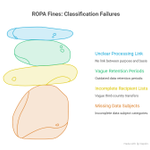
Hard truth from the front lines of data governance: Over-classification kills trust and speed.
Teams spend hours justifying access to data that did not need the highest tier. Alert fatigue sets in. People route around the system. Under-classification is quieter. And more expensive.
Missed labels mean DLP never triggers, access stays too broad, and the next breach starts with “we didn’t know it was sensitive.”
Both create residual risk. One burns productivity. The other burns the company.
Europe is writing "Made in Europe" rules for cars, satellites and raw materials.
Sensitive communications should be next.
For a bank, a hospital or a defence supplier, that means classified, encrypted and answerable to European law.

MailSPEC retweeted
This signals a major compliance shift.

“European digital privacy advocacy group noyb filed five complaints against Scale AI in France, Italy, the Netherlands and Austria on Tuesday, alleging it illegally monitored freelance workers who produce training data for AI models.” reuters.com/business/privacy…

MailSPEC retweeted
If we rely solely on automation for efficiency today, we risk a critical shortage of seasoned incident leaders tomorrow.

#AI is taking #cybersecurity jobs at junior and experienced levels alike
buff.ly/4GoPvZk
#tech #business #leadership #management #governance #organization #CISO #CIO #CTO #CEO #skills #skillsgap #talent #securityjobs #securitycareers @HelpNetSecurity @Barracuda

MailSPEC retweeted
It places a heavy burden on controllers to balance users' rights.

EU AI data plan could widen access to Europeans’ personal data | Cybernews cybernews.com/news/ai-eu-dat…
Cc: @BillMew @robmay70 @NigelTozer @ChuckDBrooks @m49D4ch3lly @DT @archonsec @clarinette01 @JBarbosaPR @AshokNellikar @MHcommunicate @Khulood_Almani @Miriam_Brown979
