





manish retweeted

One of the best recent podcasts on AI. Neil has a gift for explaining all of the jargon and insights simply.
(I’m not involved, just found it unusually educational).

Neil Movva (@neilmovva) started his career at Nvidia, working on GPUs and kernels, and has an unusually deep understanding of inference, from software to chips to power.
We spend a lot of time on each of those layers, how they connect, and where the important tradeoffs are.
What makes this conversation special is how detailed it is (like a 401-level class), yet Neil makes it remarkably clear and easy to follow.
Today he runs Sail Research, a company building infrastructure for agents to make tokens as cheap as possible.
We discuss:
- Latency versus throughput
- Why there are no bad chips, only bad pricing
- The end of kernel engineering
- Buying chips and power no one else wants
- New chip architectures
- Nvidia lore + his contrarian view of the company
- Open source and the frontier labs
I learned a ton. Enjoy!
TIMESTAMPS
0:00 Intro
0:38 Building a “Token Factory”
4:21 The Future of Background Agents
13:09 Nvidia and the GPU Stack
23:27 Chips, Memory, and Transformers
36:14 The Future of AI Training Data
44:32 Chip Scarcity and Compute Arbitrage
52:44 Reinventing the AI Data Center
59:01 Power and the “Scavenger Strategy”
1:10:10 Open vs. Closed AI
manish retweeted

Elon's Algorithm:
1. Make Requirements Less Dumb
2. Delete the Part or Process Step
3. Optimize
4. Accelerate
5. Automate
"The Algorithm is a five step process that [Elon] installs at all his companies — it's his method for breaking bottlenecks.
It starts by questioning the requirements.
Question every requirement. It doesn't matter how smart the person is. Accept no requirements from departments, they must have a human name attached to them.
The second step is to delete and simplify.
Delete anything you possibly can. The most useful heuristic is you have to over-delete. If you aren't adding back at least 10% of what you deleted then you haven't been deleting enough.
The reason to simplify is that you get both reliability and low cost. You want fewer parts and fewer lines of code. Complexity is recursive...each additional element causes more complexity and more work.
Those first two steps carry 80% of the weight.
Number three is optimize which is typical engineering work. The forth is accelerate which is just...go faster. And the fifth is automate.
The problem is almost everybody does these five steps in reverse order."

manish retweeted

This 30-min workshop by the creator of Claude Code will teach you more about vibe-coding than 100 YouTube video guides.
Bookmark it & give it 30 minutes today. This video will change the way you use Claude forever.

AI weather bot turned $240 → $82K on Polymarket weather markets
trained my agent, based on bot 2K trades, to build it from scratch
installed it on VPS, plugged weather API + Opus 4.7 & gave it Polymarket acc
in 2 days he found 2x - 400% ROI trades
run your agent in 5 steps:
• set up a VPS on Hetzner - $5.99
• plug weather API on {visualcrossing} - free
• run Hermes agent using one-liner code - free
• connect TG bot + Opus 4.7
• promt {weather trading logic} from article to agent
hermes is a self-trained agent, it needs enough trades {50-100} to build the best trading setup
start small {$2-$3} limit per trade across 20 weather markets, and let the agent do the rest
bot used for traning: polymarket.com/@automatedAIt…
my agent: polymarket.com/@hermesweathe…
In 2 days, the bot already made 2 trades with +400% ROI and keeps improving quality of trading

manish retweeted

Anthropic pays engineers $750,000+ a year to understand how LLMs work.
Stanford just put a 2 hour lecture that covers 80% of it for FREE.
Bookmark this. Give it 2 hours today.
It might be the highest ROI thing you do this month:
manish retweeted

Instead of just watching an hour of Netflix, why not dive into this 2-hour Stanford lecture on AI careers? It’s packed with insights that could give you a real edge in the AI race, more than all the AI content you’ve seen this year.
manish retweeted

🚨 Sam Altman literally gave a 43-minute masterclass on turning ideas into billion-dollar companies.
Most people will never watch it.
And instead of hype, he broke down what actually makes startups work.
No fluff. Just reality.
He explained that ideas don’t matter nearly as much as execution. The difference between something small and something massive isn’t the idea it’s how relentlessly it’s built and improved over time.
He also emphasized that the best founders don’t chase everything. They focus on one thing that truly matters and push it forward with extreme clarity. Distraction kills more startups than competition ever will.
And then there’s scale. Truly big companies aren’t built for a niche they solve problems that millions of people care about. If the market isn’t large enough, the outcome won’t be either.
His biggest insight? Startups don’t win because they’re smarter they win because they stay in the game longer and iterate faster.
That’s why this masterclass stands out.
Because while most people are waiting for the perfect idea…
The best ones are already building.
manish retweeted

🚨 In 2014, a Stanford lecture explained business competition better than most 2-year MBAs ever could.
Almost no one talks about it.
It came from Peter Thiel and instead of repeating textbook ideas, he flipped how we think about competition.
Watching it changes your perspective instantly.
He argues that competition is for losers. When you’re competing, you’re fighting for margins, attention, and survival. The real goal isn’t to win in a crowded market it’s to build something so unique that you don’t have to compete at all.
He also breaks down why monopolies drive real value. The best companies don’t play the same game they create their own. That’s where long-term profits and dominance come from.
And the biggest shift? Stop asking “how do I beat others?”
Start asking “what can I build that no one else can?”
That’s why this Stanford University lecture still stands out.
Because while most people are chasing competition…
Very few are building something truly different.
manish retweeted

This 2 hour Stanford lecture on AI careers will teach you more about winning in the AI race than every piece of AI content you have scrolled past this year.
Bookmark this & give it 2 hours, no matter what. It'll be the most productive thing you could do this weekend.
manish retweeted

This 50 mins Standford lecture by Peter Thiel will teach you more about building a business from ZERO to ONE than any business degree:
manish retweeted
There is simply no exercise physiology podcast with the level of rigor, breadth and depth and practical applications as PERFORM with @DrAndyGalpin This is listen asap and archive to keep coming back to stuff.

Perform with Dr. Andy Galpin is back.
New episode: How to Build a Strong Core & Abs
0:00 Core Training Myths
4:22 Why We Train Abs Wrong
7:27 Abs vs Core Explained
11:17 Look Feel Perform Goals
15:04 How Core Muscles Work
20:26 Stability and Anti Movement
24:00 Do Abs Need Daily Training
29:12 Spinal Safety and Crunches
31:37 Sponsor Eight Sleep
33:08 Testing Core Strength
41:42 Interpreting Test Results
47:02 Choosing Core Exercises
50:18 Isolation vs Compound Core
52:31 Contraction Intensity Rules
53:23 Size Principle Explained
56:16 Loading the Core Safely
1:00:14 Core Moves by Pattern
1:06:35 Program by Muscle Groups
1:08:01 Abs for Aesthetics
1:15:47 Aesthetic Programming Split
1:18:49 Core for Performance
1:21:15 Core for Back Health
1:24:17 Sample Week Template
1:29:22 Five Step Progression
1:35:54 Exercise Order Priorities
1:36:56 Rapid Fire Q and Belts
1:42:35 Final Wrap and Support
Includes paid partnerships.
manish retweeted

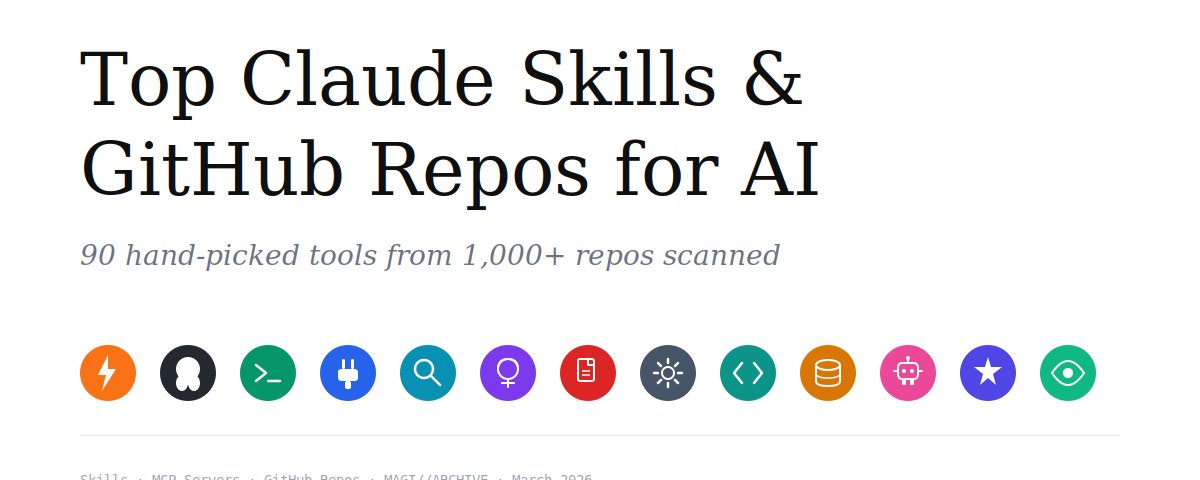
Andrej Karpathy (@karpathy) — co-founded OpenAI, led AI at Tesla, coined "vibe coding."
In 4 minutes he explains why software is changing - and why Claude Skills, MCP servers, and AI agents aren't hype anymore.
They're the foundation of how software gets built from now on.
Imo, worth every second (i've added subtitles)👇

manish retweeted

In 2018, Stanford professor Matt Abrahams gave a masterclass on why most people fail to communicate well.
manish retweeted

🇬🇧 UK VA ECMO and ECPR data
📆 2012-22
🏥 All 13 centres
2117 VA runs, 45.5% survival
302 ECPR runs, 30.5% survival
journals.sagepub.com/doi/10.…


manish retweeted

⏰ 7 days to go: We are almost there. On Wednesday, October 22, the European Resuscitation Council will launch the Guidelines on Cardiopulmonary Resuscitation 2025 before the ERC Congress #RESUS25 in Rotterdam.
✅ Check all the details about the event and the live stream link
🔗 erc.edu/news/save-the-date-o…
💙 This event is a collaborative effort between the European Resuscitation Council, the American Heart Association and the International Liaison Committee on Resuscitation (ILCOR).
❤️ All the different sessions will be made available via live-stream in parallel, and at no cost to the viewer. We look forward to your participation and encourage you to join the sessions that interest you the most.
💯 Do not worry if you cannot make it. The live-stream sessions will be recorded and will be available on the ERC platform.
#ERC #ILCOR #AHA #CPR #Guidelines2025 #ERCGuidelines #resuscitation #savelives #StrongerTogether

manish retweeted

PM Sir and all, in spite of such an Honest PM,cm 4 Engine Govt in Noida , we hv lost hope. 11years wait , going EMI ,families r suffering ,when we will get our house@ Lotus Arena sector 79 Noida @PMOIndia @myogiadityanath @dr_maheshsharma @PankajSinghBJP @cbic_india @AllahabadC
manish retweeted
Who will take care of 1100 taxpayers who bought homes in the Lotus Arena projects sector 79 Noida in 2014? Save us from the nexus of Nirmal Singh, Noida Authority, suffering since 2014
@PMOIndia @myogiadityanath @CeoNoida @cbic_india @dr_maheshsharma @PankajSinghBJP @AllahabadC
manish retweeted

After 8 years Training as a Professional Athlete, here is every fitness tip I could come up with:
= Thread =
1. Take 5gms of creatine daily
