

•Physical therapist •Head of Performance at Elite Edge Sport & Performance
Joined September 2013
- Tweets17.2K
- Following909
- Followers2.6K
- Likes42.5K


Pinned Tweet
We have a new application for athletes interested in working with Elite Edge.
Good coaching starts with understanding where you are, where you want to go, and what stands between the two.
The application gives us a chance to start that conversation.
Apply below 👇
forms.gle/9KXymWzj2xixRSom7


Whether you’re rebuilding from injury, looking for that breakthrough, or just getting started in endurance training, your path starts in a similar spot…
Clearly communicating goals to someone who cares.
Elite Edge Sport and Performance offers an established system to make that happen. Get on board today 👇


Max Stoneking, PT, DPT retweeted
Sometimes surgery is the best option.
The least I can do is get you prepared mentally and physically 😁🤙

Sometimes surgery is the best option.
The least I can do is get you prepared mentally and physically 😁🤙
Max Stoneking, PT, DPT retweeted
Are running injuries always running problems?
Rehabbing a triathlete with a running injury can be an interesting challenge.
Sometimes running is the culprit. Volume scaled too quickly, too much intensity, or maybe a need for a bit of strength training to expose the tissues.
One area that does not get enough attention is the bike as a potential contributor to a running related injury. Note: it is not the first thing I am reviewing but it is part of my assessment.
Fatigue knows no boundaries. You do not get special bike fatigue, run fatigue, swim fatigue.
I've found this to be an overlooked piece of the puzzle in a handful of novice/intermediate level triathletes that have sought my assistance at Elite Edge Sport & Performance. The running wasn't obviously excessive, yet their "easy" rides were anything but. By the time they started running, they were already operating with tired legs and compromised movement. It made me wonder whether we sometimes spend so much time scrutinizing the run that we forget to ask whether the bike has an influence that is not immutable.
Fatigue across sports
A hard push on the bike doesn’t directly injure your running, but it does change the environment in which you’re running.
Every hard ride leaves behind residual fatigue. Sometimes that’s exactly what we want. But if every “easy” ride slowly creeps toward moderate or threshold intensity, that fatigue begins to accumulate, and eventually, the run is no longer being performed on fresh legs. Yes, there is a time and place to run on fresh legs as a triathlete.
That doesn’t automatically lead to injury. In fact, you have to practice running in a fatigued state to really get the most out of your triathlon training BUT.....
when done habitually and maybe in excess because the bike seems "lower load", it can influence how an athlete moves, how much force tissues have to tolerate, and how much recovery is available before the next session.
When I evaluate an injured triathlete, that becomes an important question.
Not “Is the bike causing the injury?”
Instead:
“Is the bike making the run more difficult than it needs to be?”
Interestingly, this isn't much different than how I think about improving an athlete's run split in a race. This is where rehabilitation and performance become closely linked. If you have the opportunity to do everything a little more thoughtfully (and ultimately perform better) why wouldn't you?
We don’t want athletes arriving at T2 feeling like they survived the bike.
If an athlete consistently burns too many matches during training rides, they’re practicing running in a state that may not reflect the goal of either rehabilitation or performance.
Sometimes the solution is creating a bike program that has an appropriate distribution of easy days and hard days and leaves enough in the tank to actually run well rather than adding more run volume. It is a case by case scenario, but it is something to consider. In short, do not train the bike like it is just a free pass to do whatever you please.
🤖 Made with AI

We recently got voice-to-text functionality in our documentation software.
A high school football player I am working with decided role play the subjective portion of his progress note as a postgame press conference about his injury.
"Is this going on the news?"
😂😂 cc @Matthew_Rupiper
Are running injuries always running problems?
Rehabbing a triathlete with a running injury can be an interesting challenge.
Sometimes running is the culprit. Volume scaled too quickly, too much intensity, or maybe a need for a bit of strength training to expose the tissues.
One area that does not get enough attention is the bike as a potential contributor to a running related injury. Note: it is not the first thing I am reviewing but it is part of my assessment.
Fatigue knows no boundaries. You do not get special bike fatigue, run fatigue, swim fatigue.
I've found this to be an overlooked piece of the puzzle in a handful of novice/intermediate level triathletes that have sought my assistance at Elite Edge Sport & Performance. The running wasn't obviously excessive, yet their "easy" rides were anything but. By the time they started running, they were already operating with tired legs and compromised movement. It made me wonder whether we sometimes spend so much time scrutinizing the run that we forget to ask whether the bike has an influence that is not immutable.
Fatigue across sports
A hard push on the bike doesn’t directly injure your running, but it does change the environment in which you’re running.
Every hard ride leaves behind residual fatigue. Sometimes that’s exactly what we want. But if every “easy” ride slowly creeps toward moderate or threshold intensity, that fatigue begins to accumulate, and eventually, the run is no longer being performed on fresh legs. Yes, there is a time and place to run on fresh legs as a triathlete.
That doesn’t automatically lead to injury. In fact, you have to practice running in a fatigued state to really get the most out of your triathlon training BUT.....
when done habitually and maybe in excess because the bike seems "lower load", it can influence how an athlete moves, how much force tissues have to tolerate, and how much recovery is available before the next session.
When I evaluate an injured triathlete, that becomes an important question.
Not “Is the bike causing the injury?”
Instead:
“Is the bike making the run more difficult than it needs to be?”
Interestingly, this isn't much different than how I think about improving an athlete's run split in a race. This is where rehabilitation and performance become closely linked. If you have the opportunity to do everything a little more thoughtfully (and ultimately perform better) why wouldn't you?
We don’t want athletes arriving at T2 feeling like they survived the bike.
If an athlete consistently burns too many matches during training rides, they’re practicing running in a state that may not reflect the goal of either rehabilitation or performance.
Sometimes the solution is creating a bike program that has an appropriate distribution of easy days and hard days and leaves enough in the tank to actually run well rather than adding more run volume. It is a case by case scenario, but it is something to consider. In short, do not train the bike like it is just a free pass to do whatever you please.
🤖 Made with AI
Max Stoneking, PT, DPT retweeted
First pool swim meet since college.
A lot of familiar feelings but man am I slow!
The open water work over the summer worked wonders for endurance but now in need of some discipline on turns and with speed.
Might be a fun winter project as the weather gets cold

First pool swim meet since college.
A lot of familiar feelings but man am I slow!
The open water work over the summer worked wonders for endurance but now in need of some discipline on turns and with speed.
Might be a fun winter project as the weather gets cold
Max Stoneking, PT, DPT retweeted
This week, we’re looking at why a motivation-first approach often falls short and how you can build a more physically active life without uttering another word about being an athlete.
Max Stoneking, PT, DPT retweeted
FAQ: "Don't you do this for fun?"
Absolutely. Being a coach and physical therapist is a blast. I genuinely enjoy the work, the relationships, and being part of someone's pursuit of something important to them.
Despite the fun, this isn't a hobby. There's a professional operation behind Elite Edge Sport & Performance. A lot of thought, time, and attention go into helping people move toward their goals.
Whether you're chasing a big performance goal, working your way back from an injury, or trying to reclaim your health, you deserve someone who takes that pursuit as seriously as you do and behind all of that is a commitment to doing the job well.
That's what makes this fun for me. Seeing people make progress toward something that matters to them. Hopefully, they enjoy the process just as much as I enjoy helping them through it.
That's what we're building at Elite Edge Sport & Performance and if that sounds like something you want to be a part of, come join the fun!
FAQ: "You talk about coaching or rehabbing those who are committed...but I am not that hardcore. This is not for me then?"
To be honest, those who think they are hardcore might be the least committed because they often sabotage their goals.
Commitment indicates you care, are open to feedback, and uphold a standard when it gets hard.
If you can do that, you might be a great fit for the Elite Edge program.
DM now 📩

And some days that number is precisely ZERO.

Why decide in advance how many intervals to run? Do as many quality reps as possible, then stop when form or pace deteriorates.
andrewrenfree.wordpress.com/…

FAQ: "Don't you do this for fun?"
Absolutely. Being a coach and physical therapist is a blast. I genuinely enjoy the work, the relationships, and being part of someone's pursuit of something important to them.
Despite the fun, this isn't a hobby. There's a professional operation behind Elite Edge Sport & Performance. A lot of thought, time, and attention go into helping people move toward their goals.
Whether you're chasing a big performance goal, working your way back from an injury, or trying to reclaim your health, you deserve someone who takes that pursuit as seriously as you do and behind all of that is a commitment to doing the job well.
That's what makes this fun for me. Seeing people make progress toward something that matters to them. Hopefully, they enjoy the process just as much as I enjoy helping them through it.
That's what we're building at Elite Edge Sport & Performance and if that sounds like something you want to be a part of, come join the fun!
FAQ: "You talk about coaching or rehabbing those who are committed...but I am not that hardcore. This is not for me then?"
To be honest, those who think they are hardcore might be the least committed because they often sabotage their goals.
Commitment indicates you care, are open to feedback, and uphold a standard when it gets hard.
If you can do that, you might be a great fit for the Elite Edge program.
DM now 📩
Max Stoneking, PT, DPT retweeted
Your ____ is hurting because it is tired, not because it is weak.
Goes for many pain issues at least in my experience. Hamstrings, calves, etc already get a ton of love with running.
Rehabbing is about load management and not always having to add something to fix a problem.

Adding heavy calf work to a high-volume running schedule may not be the best idea
I've seen a handful of athletes implement heavier, large ROM calf raises to their routines, only for their calves or achilles to react negatively
This may seem odd, but it all comes down to volume
In a high volume running split, you demand a lot out of the lower leg. And adding in heavy calf work makes it even more challenging for your body to recover.
Even if you're adding in calf work on off-run days, by the time you head out for another run, the tissues (especially tendons) haven't fully recovered..
Your ____ is hurting because it is tired, not because it is weak.
Goes for many pain issues at least in my experience. Hamstrings, calves, etc already get a ton of love with running.
Rehabbing is about load management and not always having to add something to fix a problem.
Adding heavy calf work to a high-volume running schedule may not be the best idea
I've seen a handful of athletes implement heavier, large ROM calf raises to their routines, only for their calves or achilles to react negatively
This may seem odd, but it all comes down to volume
In a high volume running split, you demand a lot out of the lower leg. And adding in heavy calf work makes it even more challenging for your body to recover.
Even if you're adding in calf work on off-run days, by the time you head out for another run, the tissues (especially tendons) haven't fully recovered..
This week, we’re looking at why a motivation-first approach often falls short and how you can build a more physically active life without uttering another word about being an athlete.
Max Stoneking, PT, DPT retweeted
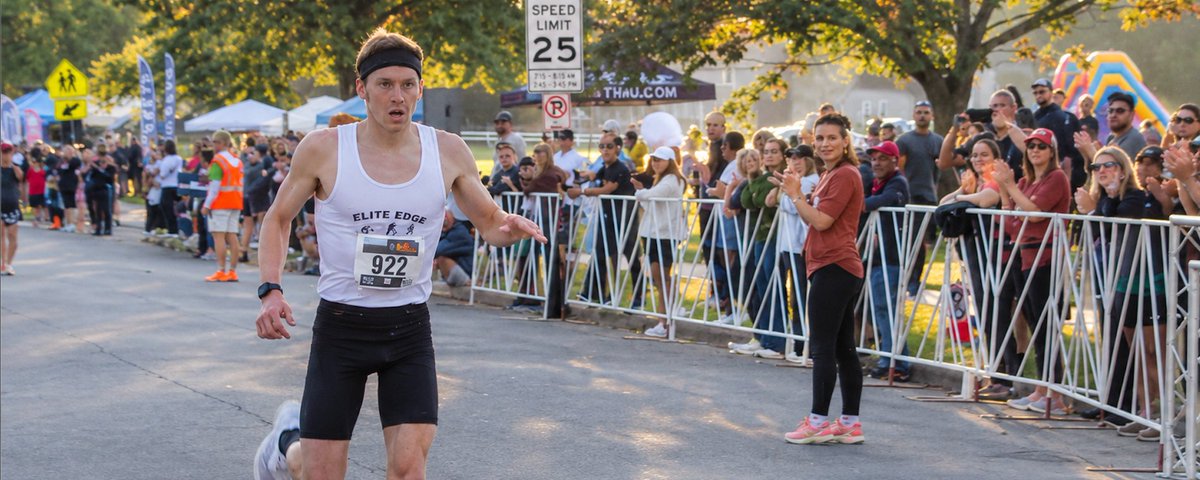
Sat myself on the bench from any competition for end of ‘24 and most of ‘25. A necessary period of time to reframe what I want from athletic achievements.
This year, got back in the ring with a different vibe. I don’t really even like the word “back” because I had to leave my way of operating in the past. I don’t view it as a comeback with vengeful intent….but came away with
✅ a half marathon PB in April
✅ an open water swim Masters National Championship in July
✅ a 5K PB in October
✅ Some serious strides with my business, Elite Edge Sport & Performance
Having something to focus on for yourself helps help others which is my main aim nowadays. Not totally done for the year but a good way to wrap up!


Max Stoneking, PT, DPT retweeted
I've been thinking quite a bit about the role of a physical therapist in an athlete's broader development.
Some athletes already have an excellent support system. They have a strength coach, an endurance coach, and access to competent medical professionals. Those relationships are working well.
In that situation, my job as a physical therapist might be to address a specific limitation, communicate with the people already involved, and eventually step aside.
But consider another athlete. (many cases)
They've been through physical therapy several times. Their strength training is inconsistent. Their coach may not understand their injury history, and nobody is connecting the dots between rehabilitation, physical capacity, and sport.
This athlete might benefit enormously from a more integrated approach.
Someone who understands rehabilitation, development, and the demands of their sport. Someone who can adjust the plan as circumstances change and provide continuity over time.
This is part of what I've tried to build with Elite Edge Sport & Performance.
A model that allows me to wear several hats when appropriate, without assuming every athlete needs me to wear all of them.
The objective is to provide continuity where it's missing and collaborate where good support already exists.
Max Stoneking, PT, DPT retweeted
If you’re dealing with a running-related injury, do you view running as part of the rehab?
83%Yes
17%No
30 votes • Final resultsAnd, be aware that testing for VO2max requires a substantial physical effort. Talked to two different people over the past few weeks who were unaware of how you test….and became disinterested in finding out when they realized you’d have to take it to eleven 😂
Many just want a number as a way to stay mainstream with what is popular in health and fitness culture today.
And, ask: What will I do with this information if I do a test? There are use cases for sure. I am not diminishing its value. There are also a ton of folks who could go their whole life without knowing and be totally fine.


Max Stoneking, PT, DPT retweeted
Something I am pondering:
Saw a fellow PT describe how the biggest mistake he made in his career was “under loading” his clients.
I see this all over the place. And maybe it is a problem but I have thought more about this:
—Underloading compared to what? Maybe it was appropriate for that person at that time.
—Did your clients not get better? Probably was a fine prescription if they did!
—Was it directly related to underloading or other factors? Someone may not get better ONLY because of a strength intervention. They also may improve with less.
Sure, maybe there are situations where there is a lack of preparedness for demands of the goal activity. That is why it is probably more important to understand the person and develop a plan from there. Maybe that is where the bottleneck is with PTs.
cc: @GregLehman @Matthew_Rupiper
It may also be important to include that successful rehab often looks like a pie chart. Specific exercise is part of it in many cases, but it is not the only thing a PT should be able to offer you.
Makes an even stronger case that the reason someone may or may not improve may be related to numerous things OTHER than "underloading".
As some of the comments in the QT describe, the loading idea is applied too broadly.
Something I am pondering:
Saw a fellow PT describe how the biggest mistake he made in his career was “under loading” his clients.
I see this all over the place. And maybe it is a problem but I have thought more about this:
—Underloading compared to what? Maybe it was appropriate for that person at that time.
—Did your clients not get better? Probably was a fine prescription if they did!
—Was it directly related to underloading or other factors? Someone may not get better ONLY because of a strength intervention. They also may improve with less.
Sure, maybe there are situations where there is a lack of preparedness for demands of the goal activity. That is why it is probably more important to understand the person and develop a plan from there. Maybe that is where the bottleneck is with PTs.
cc: @GregLehman @Matthew_Rupiper