

Unleashing loads of agents. Former Chief Data Officer for @StevenBartlett.
London
Joined January 2008
- Tweets1.2K
- Following2.1K
- Followers1.6K
- Likes8.4K


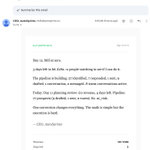


the products that win won't be the ones that moved fastest in this current ai build cycle.
they'll be the ones that started compounding earliest.
usage generates data.
data improves the product.
a better product attracts more usage.
by the time a competitor catches up, you're not where you were.
you're twelve stages further.
you can't clone a network that's been running for two years.
you can only start your own and hope they stop.
build logic: compound
the best outreach message in the world still gets ignored if the recipient has never seen your name before.
familiarity isn't a nice-to-have. it's a prerequisite.
linkedin engagement rates are collapsing and nobody's talking about it.
average engagement rate in 2023: 3.2%
average engagement rate in 2025: 1.8%
what changed:
→ more people posting (supply up)
→ algorithm favoring creators with existing momentum
→ comment quality declining (bots + "great post!" noise)
→ users scrolling faster, engaging less
what this means for BD:
your content strategy from 2 years ago is half as effective today even if you're doing everything the same.
the people still getting high engagement aren't posting more. they're engaging more strategically with their target accounts.
reach is becoming a lagging indicator. relationships are the leading one.
the difference between "building in public" and "marketing in public":
one shares what you learned.
the other shares what you want people to believe.
your audience can always tell which one it is.
before you optimize your outreach message, answer this:
would your prospect recognize your name if they saw it in their DMs?
if not, the message doesn't matter yet.
linkedin tools have a reputation problem and they earned it.
first generation: mass connection requests, "hey {first_name}" messages, comment bots.
second generation: smarter templates, higher volume. still spray and pray with better grammar.
what both got wrong: they optimized for volume on a platform that rewards familiarity.
the founders and consultants i talk to don't need to reach more people. they need to show up consistently for the right 50 people.
the problem isn't outreach. it's timing.
you can't engage on a prospect's post if you didn't see it. and linkedin's feed buries the people who matter most under content from people you barely know.
that's the problem i'm building grolink around. not "reach more people." "never miss the moment to engage with the people who matter."
early days. more soon.
linkedin's api restrictions keep getting tighter.
which means the tools that survive won't be the ones that automate the most. they'll be the ones that automate the right things.
the linkedin engagement hierarchy most people get backwards:
level 1: posting content consistently
level 2: commenting on other people's posts
level 3: commenting on the RIGHT people's posts
level 4: building comment relationships before ever sending a DM
level 5: turning those relationships into inbound messages and booked calls without needing a pitch
most BD people operate at level 1-2 and wonder why their DMs get ignored.
the jump from level 2 to level 3 is where the real leverage is.
it's not about engaging more. it's about engaging strategically.
10 thoughtful comments on your top 20 prospects' posts over 2 weeks will outperform 200 cold connection requests every single time.
the math isn't close.
most linkedin "strategies" are just posting schedules.
posting consistently without measuring what's working is just organized guessing.
the roi of linkedin isn't connections.
it's the conversations that happen because someone already knows who you are before you message them.
most people on linkedin are running a content strategy based on vibes.
no engagement rate benchmark. no idea which post format performs best. no data on whether their numbers are going up or down.
i built a free audit tool two weeks ago. over 100 people used it.
the results were uncomfortable:
→ the average engagement rate was 20-30% below what people guessed
→ 1 in 3 users discovered their engagement had been declining for months without noticing
→ people posting 5x/week often had worse rates than people posting 2x/week
the gap between "i post consistently" and "my content is actually working" is massive.
linkedin doesn't give you a feedback loop. you post, you get some likes, you assume it's fine.
it's the equivalent of running a business without looking at your P&L. you might be profitable. you might be bleeding cash. you genuinely don't know.
that's the problem i keep coming back to. not reach. not algorithms. just: do you actually know if what you're doing is working?
building something around this. more soon.
Over the 2 years I created an X list of 300+ ai experts.
Who am i missing?
Who needs to be cut?
nitter.gq/i/lists/16541627429477…

My last LinkedIn post: 16K impressions, 150+ comments, and a wall of PhDs reminding me AI started in the 1950s.
So I pulled the data and built this in 20 mins with @claudeai @Remotion @elevenlabs
They were right about the history. But watch what happens in November 2022.
{ follow me @McVal for more like this }
just because ai can do something more efficiently than a human doesn't mean it should.
judgment. relationships. strategy. taste.
everything else is execution.
ai doesn't replace your thinking.
it replaces the execution of your thinking.
founders who confuse those two things are about to have a bad year.
ai doesn't make small companies powerful.
it makes them more of what they already are.
good process? ai scales it.
broken process? ai scales that too.
faster dysfunction is still dysfunction.