

@nytimes reporter, mhkeller@{nytimes,protonmail}.com https://xitter.cf/t.co/VeNrisEeRG https://xitter.cf/t.co/ijN16tJ1xO https://xitter.cf/t.co/1ikLLuN8in adjunct @ColumbiaJourn
New York, NY
Joined February 2009
- Tweets9.2K
- Following2.5K
- Followers6.9K
- Likes2.8K

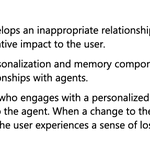



From now on, when someone asks "How does XYZ computer thing work?" I'll just respond with this helpful diagram from Anthropic

michael h keller retweeted

I think the most interesting question here is: does UK AISI's loss of access portend limited commercial model access for non-US customers?
Could European pharma firms be withheld BioMythos access while US firms develop next-gen drugs?
I think yes. Commercial frontier access is very costly to sustain; first for misuse and distillation concerns, eventually also for shortages in inference compute. The question is who makes the cut. The hope was that US allies - in particular the UK - could just be maximally inoffensive and skirt through: including them isn't very costly, they still provide some revenue, so why not?
UK AISI's exclusion might be one early indication that the pure 'please don't hurt us' view of retaining access was a bit too optimistic. UK AISI is arguably the most inoffensive foreign actor to give access to: they're clearly useful to labs, their security is pretty good (though recent security incidents didn't look great), they are part of the most US-aligned government apparatus, and they have a long-standing relationship.
And yet they still didn't make the cut this time: especially with the current admin, there's always a cost to expanding international access, and as models get more powerful, that cost increases - past the threshold of 'why not'.
I'd expect a similar dynamic to eventually apply to middle powers' industries trying and failing to get access to actual frontier models that could accelerate their R&D, with obvious compounding consequences to their competitiveness. Being inoffensive is not enough to get into limited access programs: the labs will have so little inference supply and so much demand that they simply don't need a lot of inoffensive frontier buyers outside the US.
But there's always a cost to expanding into new markets - America-first scrutiny, security concerns, regulatory complications, and so on. Soon, there might simply be no actual incentive to incur that cost and make the frontier available to international buyers.
That's the limit of the inoffensiveness approach. Fundamentally, 'why not give these guys access, too' is a soft criterion for eligibility, but not a hard criterion for priority at all. That's where AI is different to most other tech, especially software: the unit economics simply don't really incentivise inference-constrained developers to find ways to enable widespread access.
So middle powers and their economies will need a better carrot that incentivises frontier model provision. I think their best bet is compute-for-access deals in the short term, deep exclusive industrial integration in the long term. Labs want more compute fast; middle powers can capitalise and onshore limited chip allocations by offering favourable compute deals (read: fast time to power). Part of these deal would be to compel developers to provide priority (frontier) access to their host countries; maybe at commercial parity with the US, maybe even at parity with limited-access programs.
That deal setup changes the choice architecture for labs: they can no longer choose between selling the same token of Mythos 5.1 to US or foreign buyers; they can only choose between selling the token to foreign buyers or not getting to produce the token in their offshore datacenter at all. Compute-for-access is particularly nice because it's a stick as well as a carrot: if you try to renege on the deal at some point in the future, you lose access to the datacenter as well.
Of course host countries will still need to do their best on security alignment; at some point, the security risks of offshore frontier hosting become too large for even compute incentives to matter, and labs or USG will decide to bear the cost. The point is changing the incentives: if there is some reason for the labs to want to provide access, they'll be more motivated to collaborate on figuring out a security alignment that satisfies their and USG's standards and makes frontier access possible again.


The company’s newly launched Claude Mythos 5.1 was only made available to vetted US organisations, excluding for the first time the UK’s AI Security Institute, the global leader in the testing of frontier AI models. ft.trib.al/QQPCRgi

michael h keller retweeted

New post: going into our investigation of the HF attack (before Black Hat), I was very wrong about what basically happened. This incident was far more serious than I expected, and far more serious than previous documented misalignment incidents. planned-obsolescence.org/p/t…

michael h keller retweeted

whoa. there is almost $500 million buried in the 130 page Meta settlement to pay off states on Cambridge Analytica. Note, District of Columbia not listed where Zuckerberg personally has a suit, along with company, related to the ongoing legal reckoning from the cover-up. /1

michael h keller retweeted

stuff like this is why i keep betting on a reversion to human-ness
when everything around you eventually has like 50-50 odds of being real, i'd guess people begin flocking to other people in some hope for ground truth
(hence the "no AI used here" becoming a marketing point)


michael h keller retweeted

NEW: Last week, @DHSOIG came out with a report confirming the concerns that I expressed in my congressional testimony below, declaring that "As ICE shifted priorities toward immigration enforcement, HSI’s level of effort on fentanyl declined from fiscal years 2024 to 2025."


Today I testified on behalf of @immcouncil in front of House Homeland's Border Security and Enforcement subcommittee. I testified about how Trump's diversion of thousands of law enforcement officers to mass deportation work is making us less safe. Watch my opening statement here.
Re-reading the Msft taxonomy on model failures. This one on parasocial relationships is undervalued screenplay material:
Lonely accountant becomes romantically involved with the internal AI finance agent.
The two execute a heist.
Drive off into the sunset.
Bonnie and Claude.


Our latest investigation: How giant trucks and SUVs are far deadlier for pedestrians.
“Before the driver knows what’s happened, the pedestrian’s head is under the wheel.”
nytimes.com/interactive/2026…

We also sourced pickups from the 90s and used a LiDAR scanner to create 3D models so we could compare their blindzones to those of more recent trucks. In some of the most popular trucks, like the Chevy Silverado, blindzones had doubled in size.


Lot more in the article itself. Here's the link again: nytimes.com/interactive/2026…
michael h keller retweeted

The Trump admin has reassigned thousands of HSI agents to meet arrest quotas for undocumented immigrants set by Mr. Miller. Our NYT investigation found agents worked 1/3 fewer hours on child exploitation cases. They were also pulled off terrorism + national security cases

michael h keller retweeted
Last week, we wrote about DHS agents being pulled off child exploitation + terrorism investigations to arrest undocumented immigrants. Now we've seen internal data showing drop in drug + weapons cases.
- Drug arrests ↓ 11%
- New drug cases ↓ 15%
- Weapons seizures ↓ 73%
michael h keller retweeted

One example from the piece is hard to shake:
An HSI agent working a child exploitation case involving violent abuse of a young child was reassigned to help boost arrest numbers.
That child is now more vulnerable. And she is unlikely to be the only one.

The latest in our child influencers series: She made tens of thousands of dollars selling photos as a teen and launched her own site for girls.
Now 18, her story illustrates how childhood for many girls is being molded by platforms that monetize male sexual attention.
Here's the link: nytimes.com/2024/11/10/us/ch…

