






Pinned Tweet
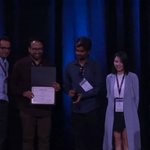
Honored and humbled to receive the "𝐁𝐞𝐬𝐭 𝐑𝐞𝐬𝐨𝐮𝐫𝐜𝐞 𝐏𝐚𝐩𝐞𝐫 𝐀𝐰𝐚𝐫𝐝" 🏆 at #EMNLP2024 for our work on KidLM.
A heartfelt thank you to everyone who supported and encouraged me along this journey—it truly means the world! 🙏✨
#NLProc #AI #Research @emnlpmeeting


I will be in Miami at #EMNLP2024 to present our work on KidLM! 🌟
📜 KidLM: Advancing Language Models for Children (aclanthology.org/2024.emnlp-…)
📅 Nov 13 (Wed) | 10:30-12:00 📍 Riverfront Hall
Come by and say hi! 🏖️ @emnlpmeeting
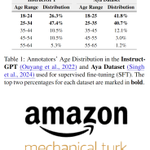
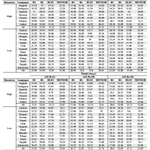
Work w/ my advisor @DavoodRafiei. Key details 👇

Mir Tafseer Nayeem retweeted

A PhD is becoming less scarce. That does not*mean great researchers are becoming common.
I’d roughly split PhDs into four groups:
1. Credential holders
They finished the degree.
That’s the achievement. The work itself never became distinctive.
2. Reliable executors
They can run experiments, publish papers, and finish projects. Valuable, but mostly inside problems someone else defined.
3. Productive researchers
They publish consistently and know their field well, but their work is often incremental.
Strong execution, weak differentiation.
4. Research owners
They know which problems are worth five years before everyone else does.
They say no to mediocre projects, attract collaborators, survive long periods with no validation, and eventually become associated with a problem rather than a degree.
That last group is where the real scarcity sits.
The biggest mistake I see PhD students make is optimizing for more output instead of better research taste.
If you’re investing 5–7 years into a PhD, ask yourself every few months:
What am I becoming unusually good at?
What problem could people eventually associate with my name?
Which projects am I doing only because they are easy to publish?
Would my work still be impressive if the university logo disappeared?
The credential is getting cheaper. Distinctive work is not.
Mir Tafseer Nayeem retweeted

Jensen Huang resigned as Nvidia's president, CEO, and a member of the board, effective immediately.
CFO Colette Kress is interim CEO, and the search for a permanent successor includes internal and external candidates.
earlier this year, on the A Bit Personal podcast, he was asked who was the smartest person he'd met.
"People who are able to see around corners are truly, truly smart, and their value is incredible."
He said that sits at the intersection of being technically astute and having human empathy, the ability to infer the unspoken, "the unknowables."
"To be able to pre-empt problems before they show up, just because you feel the vibe."
That vibe, he said, comes from a combination of data analysis, first principle, life experience, wisdom, and sensing other people.
"And that person might actually score horribly on the SAT."
#ICLR2027 is an eye-opener for our research community.
We criticize LLM-written papers for being convoluted, full of jargon, overly defensive, and difficult to understand.
But did LLMs create this writing culture, or did they learn it from us?
And now LLMs reproduce that defensiveness:
"We investigate A, not B."
"Our claims are implicitly narrower."
"We do not claim X. Rather, we focus on Y."
Instead of explaining what we discovered, we spend more words explaining what we are NOT claiming.
1
1
46
Maybe #ICLR2027 is a chance to reflect on more than AI-generated writing.
What kind of science have we been rewarding?
LLMs are, in part, a mirror of our scientific culture.
If we want better writing from AI, we should start by valuing better writing from ourselves!
1
81
Mir Tafseer Nayeem retweeted
Mismatch between people's training and identity as CS/ML researchers and what 90% of impactful LLM work actually is (data, evals, policy, applications).


Based on what I see at #NeurIPS2026, @openreviewnet needs a cross-conference score for "responsible reviewing"
Reviewers who fail to maintain minimum standards should temporarily lose submission privileges, like a driving-license point system. Reviewing requires accountability.
Mir Tafseer Nayeem retweeted

Thrilled to share our #ACL2026 paper “Lost in Translation: Do LVLM Judges Generalize Across Languages?”
We introduce MM-JudgeBench — the first large-scale multilingual + multimodal benchmark for LVLM judges (25 languages, 60K+ preference pairs). Even SOTA models show big cross-lingual gaps; size & architecture don’t predict robustness. We also release a large multilingual training set with 100k preference instances to support domain adaptation.
Paper: aclanthology.org/2026.findin…
Dataset: huggingface.co/datasets/tahm…
Code: github.com/tahmedge/mm-judge…
The paper will be presented in person by @Enamul_Hoque at ACL 2026 on Tuesday, July 7, 9:00 AM PT, Grand Hall.
@SaidulI38926695 @mtnayeem @Mizanur10107462 @JotyShafiq


Mir Tafseer Nayeem retweeted

This may be a controversial take, but I think it needs to be said: the gap between computer vision research in academia and industry is widening with every conference.
A huge fraction of @CVPR papers—especially those that boil down to "we tweaked/fine-tuned/RL'ed large-scale model X to improve on task Y"—will become obsolete with the next model release. That's not where academia creates lasting value. PIs should adapt much faster to this changing reality.
Academia should focus on fundamentally new ideas, new problem formulations, explaining emergent phenomenology, or uncovering blind spots that industry can later solve with scale, compute, and data.
Mir Tafseer Nayeem retweeted

I don’t agree. A PhD student should not prioritize work-life balance.
Getting to do a PhD is a privilege. You are paid to think. There is no pressure for you to be economically useful. It is a unique opportunity to push the boundaries of human knowledge and produce something ground breaking.
And nothing great ever happens without complete devotion. Look at everything that moved and shaped the world. Every single person who created anything meaningful, in science, in arts, in music, in movies, devoted their lives to their craft.
Extraordinary outcomes require extraordinary inputs and some degree of sacrifice. Sure, have work-life balance during your PhD. But be content a mediocre outcome.

Yesterday, I was giving an intro talk to our dept's new PhD students. Technical things aside, my number 1 suggestion has remained the same over the years: Treat your PhD like a job.
- Avoid 1.5h lunch and three tea breaks.
- Avoid gossiping and loitering at work.
- Lab at 9 am and leave at 6 pm. Being productive till 11 pm in the lab is a lie people till themselves when their day starts at 1 PM.
Everything worth doing can be done with high intensity focus during work hours. And having fun in life is the secret to being productive in a marathon.
Mir Tafseer Nayeem retweeted

Day 1 afternoon keynote talk given by Max Welling @wellingmax #ICLR2026
From Physics to AI to Materials; A Journey from Foundations to Impact
"Do we reward strange new, potentially paradigm-shifting ideas or do we focus on engineering, scaling and bold numbers?"

Who will use Opus 4.7 if all developers lose their jobs? lol 😇

Introducing Claude Opus 4.7, our most capable Opus model yet.
It handles long-running tasks with more rigor, follows instructions more precisely, and verifies its own outputs before reporting back.
You can hand off your hardest work with less supervision.

ALT Claude Opus 4.7 Benchmarks
1
137

*ACL authors: Remember to comment out
%\usepackage{times}
You are welcome! 📝🚀

The COLM abstract deadline is approaching fast --> March 26!
Full paper deadline is March 31
Verify using the COLM template (and font!) to avoid silly desk rejections. Careful of copy-pasting from other venue submissions, because it often overrides our template

ALT Generate an image of a llama nearing the finish line, just to realize the real finish line is a bit later... Oh, chatgpt, what is going on?!
