

Chief AI & Technology Officer, AWS
Seattle, WA
Joined January 2007
- Tweets7.8K
- Following810
- Followers26.6K
- Likes967




Your Last Hardware Decision Shouldn't Decide What You Build Next.
aws.amazon.com/blogs/aws-ins…


New! I’m launching Dead Men Ship No Code, a fundraiser for Seattle’s Resilient Hearts Animal Sanctuary in the run-up to re:Invent 2026. 🏴☠️
If you’ve worked with me at Amazon, visited one of my offices or joined a Zoom call, you may have spotted the pirate flag behind me. I first hung one up in 2023, at the start of this AI renaissance. It was a reminder to our teams to think and act like small, agile pirate crews: move quickly, explore, change course as we learn, and bring a little swashbuckling spirit to the work.
Since then, pirate-flag emojis have become a recurring feature in comments, and our internal team Slack room is currently called the Pir-ai-ate Crew. You may groan.
Now I wanted a way to share some of that spirit with you all, while raising money to help rescue dogs here in Seattle.
You can choose a shirt or hoodie in one of three designs: a flaming skull, Blackbeard’s flag or a very good pirate dog. Shirts start at $30. The higher tiers include signed hardback copies of my book, which has a nautical theme of its own, and a handful of signed pirate flags. I’ll sign one of those flags in person with its new owner at re:Invent.
I’m donating the books, and all profits go to Resilient Hearts Animal Sanctuary to support puppy rescue.
The artwork comes from real, runnable pirate ASCII art. You can explore it in your terminal or browser, and I’ve included free animated pirate scenes and screensavers for macOS and Linux, with installation instructions on the site. Have a play!
If you’re coming to re:Invent, I’d love to see you wearing yours around the event, especially at my keynote on Thursday morning.


mza retweeted

Today we’re unveiling Odyssey-3, a big step forward for foundation world models.
It can control robots, power humanoids, drive cars (on the roads of India!), train AIs, pilot drones, and even play video games.
We can’t wait to see what intelligent systems it enables.
mza retweeted

I love reading Werner's blog because of how he is able to break things down to their essence. In his use of Kiro Crew he picked out patterns in its memory architecture around how it decides what to keep, what to compress, and what to prune. While the team did this for practical reasons, he notices similarities to how the brain works. Specifically he compares Kiro Crew's memory architecture of distinct memory types, background consolidation, and decay to what Hawkins describes in A Thousand Brains. Memory is what lets an agent earn the autonomy to work unattended. You review less over time not because you check less, but because it remembers your rules.
That memory architecture is core to the personal Kiro Crew system I have described in recent tweets. You should try it.

Since launch I've been spending time with Kiro Crew, and its memory system is what holds my attention. What it keeps, what it compresses, what it lets go. Our engineers started from pure engineering constraints and landed where evolution did long ago: the brain. allthingsdistributed.com/202…


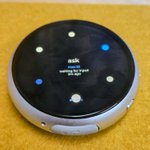
New side quest: Little Bird 1. A tiny prototype puck to communicate with my agent collective. Babybel for scale.

Couple of updates to For Your Information (FYI), my personal knowledge graph (where you can read or subscribe your agent to my stream of attention on AI).
1️⃣ First! Thank you to everyone who has interacted, searched, or sent me feedback. Response has been great so far, and I'll take that as signal to keep going.
2️⃣ Second! AI doesn't stand still, and so that means no only to keep posting, but also improve the agent experience. FYI now scores 100% on two useful measures of agent usefulness: is-agentic, and accept markdown evals. The site is now available as a REST API with markdown formatting in all cases, and has the interfaces and responses agents need to be successful in understanding and interacting with the content and relationship graph on the site. That will mean your agents can do more with the data, more cheaply and efficienctly.
I used both evals in an optimization loop and asked Kiro to just keep making improvements until we hit the perfect scores. Took about an hour all in.
3️⃣ Third! I added a new 'Themes' section. This is an AI-curated wiki of themes and ideas, based on the recent WikiSkill paper (link is on FYI, and in description). They collect together recurring themes in FYI, becoming a compounding synthesis of the items, sources, and connections on that topic. New items are folded into these pages as they’re posted. It's pretty cool.
mattwood.fyi

Fun fact: a year ago, inspired by @OmarchyLinux, I started experimenting with my own distro (okonomi - 'as you like it'), which allowed run time alteration of any app. Just hit SUPER-TILDE, and it would jump into edit mode, accept a prompt, and update the software in place. It was... not good. Turns out, run time is actually the worst place to make changes! You have to stop, pause, change mental model, right when you are trying to get work done.
A 'build' phase is actually super valuable not just to build, but to figure out what and why you want something to work the way it does (it's why specs are such an important part of development today).
Omarchy's plugins solve the same problem in a much, much cleaner way. Love it! Congrats @dhh and team on Quattro!

Congrats, @mattsgarman!

Initially, I resisted giving agents access to my Obsidian vault. It was my space, and I didn’t want it changing under my feet. But how I use Obsidian has changed enormously over the past year.
Today, my agents have permission to read and write. Multiple agents work across the vault several times a day, keeping notes up to date, connecting dots, expanding links, finding relevant context, and generally tending to the space alongside me.
At first, I found it difficult to share what had always felt like my private thinking space. Now the opposite is true. It feels oddly lonely to write, explore, or think without that additional context and support around me. And it feels strange to imagine my agents not being up to speed on what I’m thinking, learning from it, and becoming more useful to me as a result.
I thought I might miss the solitude. I don’t. What I would miss now is the expansion: having ideas challenged, connected, rewired, and rewritten as I work through them.
I also wondered whether I would eventually abandon the shared vault as a kind of machine space and retreat to a new, isolated, private one. That hasn’t happened either. The vault still feels like mine. It just no longer feels like I’m alone in it.
That’s a pretty significant shift in mindset in a remarkably short period of time.