Systems thinking behind agent-ready Knowledge Graphs Founder of @atomgraphhq
Copenhagen, Denmark
Joined March 2009
- Tweets10.5K
- Following3.9K
- Followers2.9K
- Likes54.3K
Pinned Tweet
Most web applications shouldn't need their own codebase.
They're CRUD interfaces over domain-specific data models. The same functionality, implemented over and over with different schemas.
The application logic can be generic. The domain-specific parts can be declarative.
I've spent 15 years building LinkedDataHub on that premise.
First Principles of the Web derives the architecture from the Web's specifications: RDF, SPARQL, XSLT and CSS.
Definitions, propositions and observations you can check. Free to read.
firstprinciplesoftheweb.org


The Atlantic called this back in 2017
theatlantic.com/technology/a…


You may have noticed I haven't posted much since July.
When Claude Fable came out, things I'd wanted to implement in LinkedDataHub for years suddenly took days. It was also the first model I trusted with platform-wide refactoring. So I spent my time building.
- Apps supply their own XSLT stylesheets, running on the server and in the browser.
- Bootstrap 2 is gone. The new design system supports light and dark modes.
- Every dataspace serves /AGENTS.md, so agents can discover how to work with it.
The agent didn't design the architecture. That came from ten years of building Linked Data and Knowledge Graph apps for different use cases, identifying what they had in common, and turning that into a domain-independent platform.
LinkedDataHub 6:
atomgraph.com/blog/linkeddat…
A lot of this has been on my list for years. It is in now.
xitter.cf/atomgraphhq/status/211…

LinkedDataHub 6 is out.
The application is data: classes, forms, views, charts and access rules are RDF documents. You deploy an app by pushing a directory of RDF documents and the files they use, and an agent can write one.
What changed:
atomgraph.com/blog/linkeddat…

A good day to be running a Java stack 😌
bbc.com/news/articles/cmly0l…

Jev's founder makes two good points.
"Data matters way more than compute." Coming from a company that sells models, that's worth paying attention to.
He also wants models to be "a new primitive, more like databases and APIs rather than facsimiles of co-workers."
Jev separates judgement from generation, so a decision becomes a typed value instead of an instruction in a prompt.
I want the same for applications. What the data model can guarantee shouldn't have to be reimplemented in code or restated in prompts.
Diogo Almeida (@CompleteSkeptic), AI Council, "AI: Too Good to Be True, Too Bad to Be Useful".
Data vs compute: 11:44. Models as primitives: 36:16.
youtu.be/o-y1HJ6buGQ


Martynas Jusevičius retweeted

The President of the United States has announced, with obvious pride, that he phoned Vladimir Putin and asked him for fuel. He calls it a great success. It is the richest country on earth going cap in hand to the man who bombs Ukrainian cities every night, because diesel became expensive before an election.
For four years Europe paid more for its energy, housed millions of refugees and emptied its arsenals so that Putin would not be rewarded. Washington has now concluded that all of it matters less than a cheaper tank for a truck in Ohio, and has told Ukraine to stop hitting the refineries that pay for the war.
This used to be the country others measured themselves against. Its remaining admirers are in Moscow and Pyongyang, and it has become exactly the kind of shithole it used to sneer at.

Martynas Jusevičius retweeted

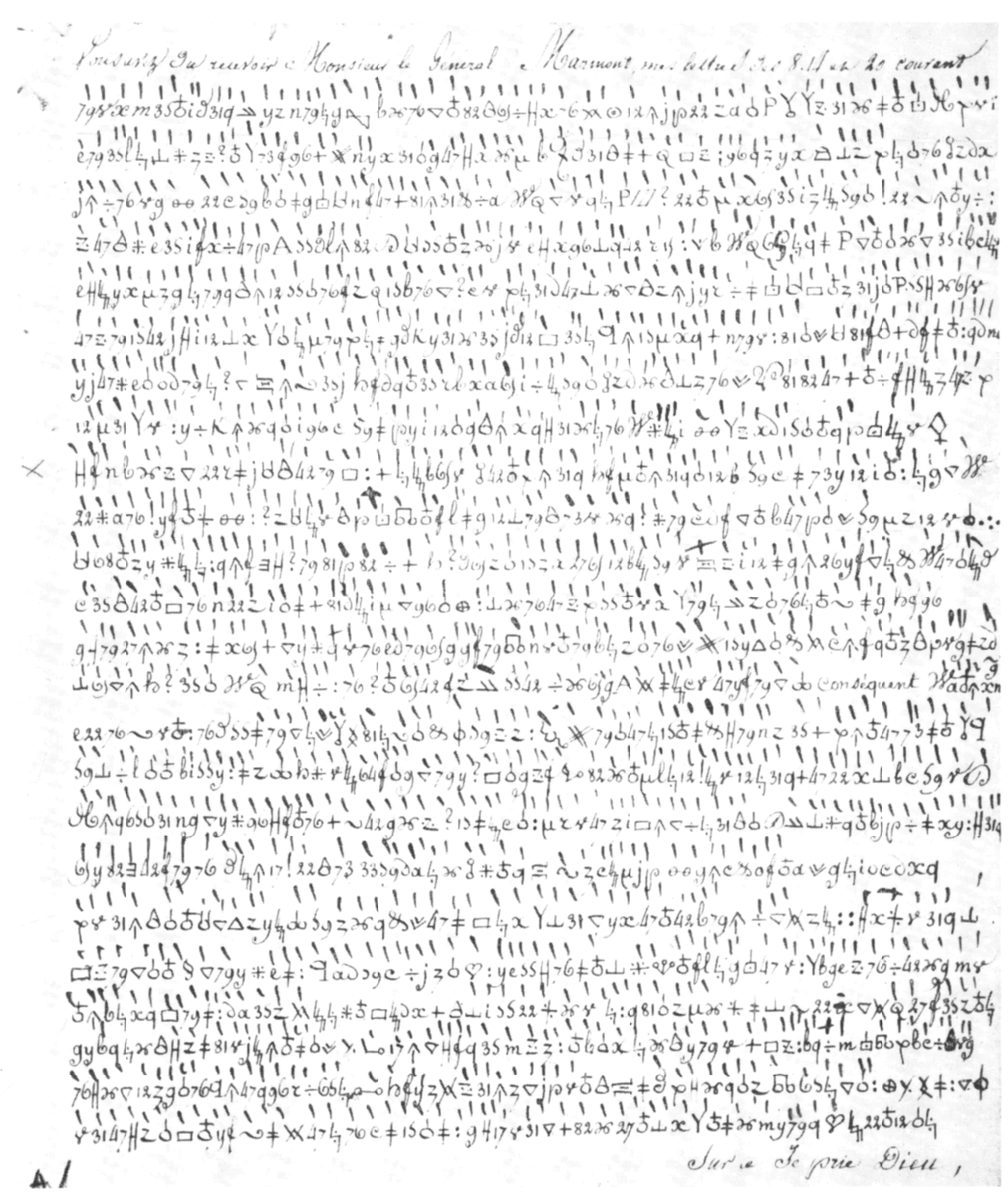
I used GPT-6 Astra to break an unsolved cipher to one of Napoleon's generals that had gone unread for 217 years.
What makes this impressive isn't actually the codebreaking, but that Astra completed the entire multi-modal workflow in ~6 hours from a single image and goal.
1/6🧵