




NCIMB supplies, identifies, characterises, compares, quantifies and store microorganisms to support your operations. If you work with microbes come and meet us at the @BradfieldCentre, Cambridge Science Park, to find out more!

Dr Brandon Childers was thrilled to win the CarboHyde prize for most industrially relevant work at the European Cyclodextrin Conference last week for a poster describing novel enzyme technology that produces a new small cyclodextrin with exciting potential buff.ly/oNHZkXW

Looking for a fast turnaround genotypic microbial identification service? At NCIMB we offer next day, 3-day and 10-day services. Find out more at: buff.ly/9XnmmSp #microbiology #environmentalmonitoring #pharmaceuticalmanufacturing
Dr Brandon Childers is heading to the European Cyclodextrin Conference next week to present a poster describing production of a 5-glucose subunit cyclodextrin product - more about the work at buff.ly/099F6BI

Want to talk to scientific staff about your microbial identification results? At NCIMB we are happy to help. Find out more at: buff.ly/9XnmmSp #microbiology #environmentalmonitoring #pharmaceuticalmanufacturing
In July 1950 the creation of a National Collection of Industrial Bacteria was announced in Nature. The collection of 350 types and was expected to grow considerably to meet industry needs. We now have 1000s of strains and our collection is still growing! buff.ly/QtXWMja

For #WorldMicrobiomeDay we asked R&D Research Scientist Suraya Fawcett what she thinks everyone should know about their gut microbiome. #microbiomeambasadors #Microbiomes4Life #MicrobiomeAwareness #Microbiome

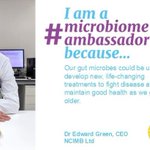
For #WorldMicrobiomeDay we asked our CEO Dr Edward Green why he believes research into the gut microbiome is so important. #microbiomeambasadors #Microbiomes4Life #MicrobiomeAwareness #Microbiome

For #WorldMicrobiomeDay we asked our Microbiome Services Manager Julie Mackinnon she thinks understanding more about the microbiome is so important #microbiomeambasadors #Microbiomes4Life #MicrobiomeAwareness #Microbiome

At NCIMB we listen to our customers and have developed a microbial identification service to meet their needs. Find out more at: buff.ly/9XnmmSp #microbiology #environmentalmonitoring #pharmaceuticalmanufacturing
NCIMB Ltd retweeted

🏆From innovation leader in @ncimb 's KTP to Business Leadership Award Winner, congratulations Dr Edward Green!
NCIMB is currently developing their second KTP, driving innovation further with the @rowett_abdn.
agcc.co.uk/news-article/aber…

NCIMB Ltd retweeted

Can "good bacteria" be used to maintain good health as we grow older? Scottish biotech company @ncimb has teamed-up with the pioneering @rowett_abdn at the University of Aberdeen, to address this question in a new research project, funded by @innovateuk. Discover more at abdn.ac.uk/news/24244/

ALT Patricia Rimbi, Professor Karen Scott and Dr Silvia Gratz
GMP Annex 1 guidelines state that microorganisms detected in grade A and B areas should be identified to species level. In this blog our identification services manager Vikki Warren looks at the options available for species level identification: buff.ly/4ehhySP

Bacteria are one of the main sources of natural pigments and our microbial culture collection includes many pigmented strains. Pigmented bacteria have many applications in biotechnology...and microbe art! Cupid and heart by NCIMB senior scientist Sammi McIntosh.

We're delighted to be sponsoring the Carbon Recycling Network Annual Conference this year. The network is focused on the biological, chemical and process engineering aspects of carbon recycling that support the re-use and exploitation of single carbon (C1) greenhouse gases.

A recent paper has highlighted the potential of bacteria in microplastic bioremediation. The study undertaken by the University of Oviedo in Spain studied microplastic degradation by 3 strains and found C. testosteroni NCIMB 8955 showed the highest rate: buff.ly/41AIhpd

Our CEO Dr Edward Green joined a group of BIA members who met with Adam Thomson MP yesterday, to discuss essential topics for the UK #LifeSceinces sector buff.ly/4hKM60R
In this blog our consultant microbiologist Dr Carol Devine considers methods for monitoring oilfield microbes. Carol has 25 years of oilfield microbiology experience, assessing microbial populations and the risk of microbiologically influenced corrosion: ow.ly/NkAb50QvWKM

