

Stuck on starter planet. AI Builder | Cybersecurity | Tech Building BashNotes and https://nitter.gq/t.co/Tf1F4HmErm
Joined February 2012
- Tweets1.5K
- Following4.1K
- Followers3.4K
- Likes1.6K




Pinned Tweet
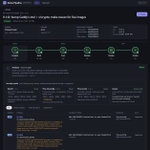
I side-coded a cybersecurity app for my Windows PC with Claude. I hastily named it NetWatch, and it’s incredibly capable. I’ll post a feature each day.
Day 1: Vulnerability scanning.
My PC has Microsoft Defender EDR. Vulnerability findings take forever to show up in the cloud. Fix something, wait again. The remediation loop is measured in days. Clearing all of the vulnerabilities is essentially impossible at that cadence.
Every 12 hours, NetWatch pulls from 10+ vulnerability sources: NVD, CISA KEV, EPSS, Microsoft MSRC, OSV.dev, GitHub advisories, and more.
It checks my installed software and my local Windows repos, including transitive dependencies.
I patch the affected software, run another scan, and immediately see whether the CVE is still flagged.
When a major vulnerability hits (i.e. Chrome, Node.js, Next.js, PHP) I can now find it and fix it before the end of the day.


2
346
The Nasdaq 100 ($QQQ) entered bear market territory today, falling over 20% from its October high.

1
62
How am I paying $20 a month for Astra and it can't even make me a billion dollar product in one session?

2
3
99
🚨 Splunk disclosed 146 CVEs across five of its products on Nov 18.
🔴 Critical: 5
🟠 High: 53
🟡 Medium: 83
🔵 Low: 5
Nearly 40% were rated High or Critical. Splunk SOAR alone accounted for 59 of the 146.
advisory.splunk.com/
1
1
78
Claude can automatically run a DevSecOps pipeline for you every day and update your vulnerable dependencies.
1/4 - SECURITY TOOLS
• Bandit: static analysis of Python code, fails above a set severity and confidence
• Trivy misconfig scan: unsafe patterns in Containerfiles
• Trivy secret scan: credentials committed to the repo or baked into images
• Secret-scanner canary: plants a fresh fake credential and requires the scanner to find it, proving it isn't blind
• Trivy CVE scan + SBOM: CycloneDX SBOM per image, fails on HIGH/CRITICAL, rejects suspiciously small SBOMs
• Ignore file with reasons and expiry: accepted risks are explicit, justified and time-limited
• Hash-locked dependencies (pip --require-hashes, uv): a tampered package fails the build
• Go module verification (go.sum, go mod verify, GOSUMDB)
• apko + Wolfi: minimal base images built in-house from locked packages
• Sigstore image signing: every image signed with a release key on push
• Signature policy: runtime rejects anything unsigned or not pulled by digest
• Checksummed releases: artifacts sealed with SHA256SUMS, verified after handoff
• Smoke tests: functional and security regression checks against the live system

4
108
4/4 - APPLICATION SECURITY
• TLS 1.2/1.3 only, HSTS, strict CSP, body caps, slow-request timeouts
• Mutual TLS between services, a separate CA per hop
• argon2id passwords, verified only in the data tier, timing-safe for unknown users
• Session tokens in __Host- cookies, stored hashed, revocable, lifetime-capped
• CSRF: SameSite=Strict + exact Origin check + required custom header
• User identity always from the session, never the request. Random object IDs
• Strict input: unknown fields, duplicate keys, NaN, control and bidi characters rejected
• Layered rate limits at the proxy and in the app, so attackers can't lock out the owner
• Quotas, pagination, session and database size caps
• Structured logs with a request ID across tiers, never secrets or content
37
3/4 - HOST + RUNTIME HARDENING
• Dedicated service accounts: no password, no shell, no sudo
• Separate read-only account for monitoring
• Rootless containers, non-root inside too, separate host UID range per container
• Distroless images: no shell, no package manager
• Read-only root, noexec tmp, all capabilities dropped, no-new-privileges, resource limits
• Internal-only networks, no internet egress, front tier can't reach the data tier
• systemd owns the sockets: real client IPs, and the dashboard container runs with no network at all
• Secrets mounted as files, never in images, env vars or inspect output
• Exec-form health checks, services start only when dependencies are healthy
19
2/4 - PIPELINE + SUPPLY CHAIN
• Gates in order: analyze → build → scan → release → deploy → smoke
• Reproducible builds: no cache, digest-pinned bases, timestamps from the commit. Same commit, same digest
• Tests run inside the image build, so no image exists unless they passed
• Release refuses a dirty tree, an unanalyzed commit, or any image that differs from the scanned one
• Runtime runs images by digest only, never pulls on its own, rollbacks restore the exact unit files
• Rescan job checks live images against today's CVE database, no rebuild
• Every run recorded with its evidence: reports, suppressions in force, scanner DB version
28

2 days of logs from my tiny production app, nearly 1,000 probes by bots from Japan, Korea and Belgium!
Most of them using AI, i.e. Kimi Moonshot. Here are the tallies of what they looked for:
222 > .env and secret files
219 > PHP webshells or admin pages
193 > Wordpress logins and plugins
80 > config files
45 > docker and terraform settings
33 > git files
28 > API endpoints
20 > Next.js build files and source maps
10 > CI/CD settings
7 > backups and database dumps
1
1
85
If you have ever tried to purchase a Microsoft product, you already know how poor the design is.
1
132
Here’s how my app discovered that Grok Bot makes an obnoxious number of network connections: every 10 seconds while it’s running, over a thousand times in 4 hours.
Not necessarily a security problem, but nothing else on my machine behaves that way.
Day 2: Beacons
In many major breaches, the attacker uses malicious software that checks in with a server they control.
NetWatch looks for that rhythm. It records every outbound connection on my Windows PC and scores each app/destination pair on how regular its check-ins are over the last 24 hours.
Right now that’s 14 apps, all properly signed and all things I know about (Windows, Defender, Chrome, VS Code, ChatGPT, Grok, Ollama, OneDrive and so on). Mostly update checks, telemetry and heartbeats.
It alerts when a beacon is suspicious: an unsigned program, a Python or PowerShell script, something running from a temp folder, or a destination like dynamic DNS, a tunnel or a machine-generated domain.
If a random script starts phoning home every few minutes, NetWatch will flag it, even if the antivirus or EDR doesn’t.

1
82
The FBI reported $893 million in AI related fraud losses in its latest annual fraud report.
Chart below shows 25 broad categories used by scammers.
Investment fraud was by far the largest (Fake celeb endorsements, deepfake videos, personalized conversations at scale)

1
424
Starting Oct 6, 2026, Claude Desktop tasks are running on cloud servers.
Your local files needed for the task are now copied to Anthropic's infrastructure.
The “Only on your computer” option is gone. Be mindful of what folders you attach to the desktop app.
The future of data privacy is cooked.

1
90
Even if you’re diligent about protecting your secrets, your applications aren't.
You’d be surprised how many tokens end up in your logs, session histories, and debug files.
Ask your AI to run Gitleaks on your home directory, or even your entire file system, with secret values redacted from the output.
Revoke or rotate any tokens you are concerned about. Deleting the log isn’t enough.

Claude caves so hard on its work estimates.
“4–6 weeks.”
“Yeah but what’s the real estimate?”
“About 8 hours."

