

gambling & prediction markets reporter @barronsonline • board of directors @IAPE1096 • Signal: nickdevor.55
New York, NY
Joined September 2015
- Tweets2.5K
- Following764
- Followers1.8K
- Likes7.4K




Nick Devor retweeted

The GRU hacked into Jared Kushner's iPhone. Dutch military intelligence (MIVD) then recruited a GRU spy who gave them access to the hacked phone. What MIVD discovered was that Kushner had access to two bank accounts --one Azerbaijani, the other Israeli --where Saudi Crown Prince Mohammed bin Salman and Emirati ruler Mohammed bin Zayed deposited money. It sounds like a slightly far-fetched episode of "Slow Horses," but it's real. And it proves just how eye-poppingly corrupt this administration was and continues to be as its "special envoy" decides the fate of tens of millions in Europe in the Middle East. Simply incredible reporting by Matthew Cole, drawn from his new book on Kushner. vanityfair.com/story/jared-k…

Nick Devor retweeted

Polymarket fires top executive who was closely allied with CEO Shayne Coplan: sources trib.al/GTKHohw

Nick Devor retweeted

At @nextpredictio summit, NCAA official Mark Hicks says "we’re really concerned” that prediction sites are 18+, while most sportsbooks are 21+. He said the NCAA has data showing an uptick in gambling among student athletes, which he called “a very vulnerable population."
If anyone needs a crash course on digital rips/digital repacks today, here's a gift link to my story on the space from August:
barrons.com/articles/arena-c…

Nick Devor retweeted

The area of repacks that will be heavily scrutinized by law (especially in California) are the buybacks. Traditional packs don’t offer buybacks. With cards, you don’t immediately get offers to sell 80% back. So the simple “they are digital version of yesterday’s packs” doesn’t on its face sidestep scrutiny.

SCOOP: Before launching its digital rips product, PrizePicks sent a briefing to every state attorney general and met with gambling regulators to share what they were planning.
It was a proactive move to assuage concerns that digital rips could be considered gambling, and may have helped lay the groundwork for broader gambling industry adoption of digital rips.
While digital rips seem to meet the standard definition of gambling—the customer pays for a random chance to win a prize of monetary value—PrizePicks' view is that they are simply digitizing the age-old practice of opening a pack of physical trading cards, which isn't considered gambling under the law.
“This is much more like an e-commerce transaction than it is a form of gambling,” PrizePicks chief legal officer Jason Barclay tells me.
Still, Barclay says “we recognize that anything in the sports entertainment space can be subject to abuse, can be subject to addiction.”
About half of Wednesday’s press release announcing PrizePicks Packs is dedicated to consumer protection measures that come with the product: Customers need to be 18 years old and the app has built in deposit limits. Users have the option to cut themselves off, a casino-industry practice known as self-exclusion.
Gambling or not, the trading card market has certainly become speculative.
An index of trading card values tracked by Card Ladder is outpacing the S&P 500. Trading card manufacturers promote buying card packs in search of rare cards as if they were jackpot lottery tickets.
Trying to win a rare trading card by spending $2,500 on a fantasy-sports app might seem strange to some. But as an @EilersKrejcik report points out, “A generation raised on Pokémon, skins and digital goods already assigns real value to noncash assets. A $1,000 card can be a grail, a status object and an asset at once; for the right consumer, the chance to acquire it can be more compelling than an equivalent cash payout.”
(video via @AldrinResearch)
Read my full report on PrizePicks Packs here:
barrons.com/articles/prizepi…

56% of trading card collectors have a negative view of digital rips products, according to a survey conducted by Collect Alpha for @EilersKrejcik. Only 5% have a positive view.


PrizePicks tells me it acquired the Flagg card from a third party after the auction. The record $8m sale, to a previously unidentified buyer, was seen as the latest sign of a booming market for trading cards.
PP's involvement suggests the demand for cards is being driven, at least in part, by the new digital rips industry.
Story coming tomorrow.

BREAKING: @PrizePicks -- now owns ALL THREE Rookie Patch Auto Debuts from the Fanatics Collect auction last month.
The Flagg sold for $8.2M, the Harper sold for $2.88M and the Knueppel sold for $2.34M.
Assumed these will be part of company's new repack product.


NEW: All NBA players and team personnel will be required to attend an in-person training session on the league's sports betting rules, according to a memo the NBA sent to team leadership on Friday.
barrons.com/articles/draftki…

Absolutely insane stuff here

One Native American tribe’s deal w/ Kalshi is being challenged by an Oklahoma tribal leader who says the company was duped by an impostor with no authority.
What's going on? And why did @USPS get pulled into the tribal leadership dispute?
Find out @FOS:
frontofficesports.com/articl…

Nick Devor retweeted

Introducing The Short Print: A new newsletter about trading cards, card breaking, and digital rips.
Getting some of the band back together building this with @brettcollson and @Eric_Ramsey. Let's go!
I was thinking the other day that I had way too much time on my hands with two newsletters and I should start a third. shortprint.substack.com/p/th…

Nick Devor retweeted

Big day for us ASU grads to remind everyone that we are, in fact, one of "America's most elite universities."

JD Vance: "Some of America's most elite universities bring in foreigners to undercut the wages of American residents. There are 9 universities in particular that we believe merit an investigation. Those are Harvard, Yale, Stanford, Brown, the University of Pittsburg, UC Davis, Cal Tech, Arizona State, and MIT."
Nick Devor retweeted
wow --> Marc Lefkowitz, who has been involved National Council on Problem Gambling and its affiliates since the 1980s, says the NCPG taking $2m from Kalshi is like a "national council on teenage sex abuse taking money from Jeffrey Epstein."
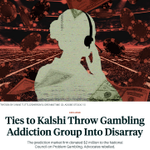
SCOOP: Kalshi gave $2 million to a gambling addiction advocacy nonprofit. It blew up in the nonprofit's face.
Senior staff resigned, donors pulled out, and the org's future is in question.
Here's the inside story of the National Council on Problem Gambling's implosion.
1/🧵

What did Kalshi get for donating $2 million to the National Council on Problem Gambling? So far, not much.
According to a person close to Kalshi, the prediction market approached the NCPG about a partnership, contingent on two terms: that the NCPG hire new staff to implement so-called “responsible trading” programs and create responsible trading training materials to be distributed throughout the NCPG network.
The NCPG, however, hasn’t delivered on either of those terms, this person says, and Kalshi doesn’t want to promote the helpline number without operators receiving prediction market-specific training. Kalshi will consider promoting the number once the negotiated terms are met.
The person adds that Kalshi is still committed to the relationship.
“The goal of the partnership and this new category is to protect traders, since all financial markets carry risk,” Kalshi said in a statement after my article was first published online. “Sadly, there seems to be more concern about optics and office politics than consumer protections.”
SCOOP: Kalshi gave $2 million to a gambling addiction advocacy nonprofit. It blew up in the nonprofit's face.
Senior staff resigned, donors pulled out, and the org's future is in question.
Here's the inside story of the National Council on Problem Gambling's implosion.
1/🧵
SCOOP: Kalshi gave $2 million to a gambling addiction advocacy nonprofit. It blew up in the nonprofit's face.
Senior staff resigned, donors pulled out, and the org's future is in question.
Here's the inside story of the National Council on Problem Gambling's implosion.
1/🧵
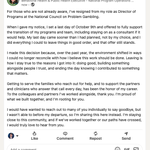
Four days after Costello left, the board announced Maurer's resignation.
The disarray comes at a critical time for the NCPG, whose role has arguably never been more important. In states where sports betting is legal, the rate of gambling disorder diagnoses has risen 61% since 2018, according to recent research.
So far in 2026, the national problem gambling helpline is on track for its fewest calls in at least a decade.
