
Data scientist & designer with 20+ yrs experience. Cancer survivor & left-handed. 8 yrs of IP expertise. Let's mitigate risk together! DM Me 😊
Joined February 2020
- Tweets16.3K
- Following4.8K
- Followers8.3K
- Likes9.7K


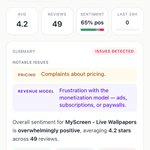
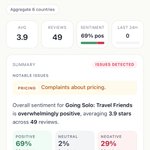

Pinned Tweet
Observe my metrics below; I consistently achieve atypical level of organic visibility, year after year, in ways that you don't.
This should be a matter of concern for you, not something to be dismissed in a rush to adopt advertising like everyone else.
Your inclination towards using ad networks indicates that you need to address your shortcomings in organic growth first.
It's important not to merely cover up a significant problem with a superficial solution, akin to putting a bandaid on a gunshot wound.
You are required to match and then exceed the entire market in both product value and distribution.
Since your competitors are available via search when the TAM is searching and you are not, you are neither matching nor exceeding anyone in your organic distribution; your competitors are. You need to change this.
Every renowned company maintains a strong brand affinity and safeguards their brand assets through intellectual property (IP) protection.
Apple
Google
Microsoft
IBM
Similarly, I protect my IP.
The reason why you and most others can't operate like large companies is not because of a lack of organic visibility, which is crucial for generating billions in revenue and millions of installs.
It's because you struggle with organic distribution of your app, an issue that doesn't just concern your product's value; it begins with your brand assets.
For example, you've developed apps like “Reely” without owning any IP and, unknowingly, you might be infringing on existing IP laws.
This approach doesn’t reduce risks; it leads towards financial ruin.
You aren't operating within a framework that mitigates these risks.
Instead, you're hastily pursuing performance marketing, a strategy used by 69% of venture capital-backed startups for their apps.
As 43% of VC funding goes toward performance marking costs.
However, there are dangers in investing heavily in marketing an unviable product.
As you are paying to absorb unhealthy metric trends and that will leave your binary is a far worse state.
Since the focus is primarily on revenue, you risk developing problematic practices similar to those of bad actors as they only care for revenue growth and use ads to achieve this #1 objective.
A revenue-centric approach is unsustainable in the long run.
Eventually, you'll find that this model is unviable as you won't be able to compete, and your costs will escalate while your revenues stagnates.


X2 on Google Ads
In January, we stopped advertising on Facebook and TikTok. We couldn't make the economics work on those advertising platforms. Additionally, we realized that relying solely on organic traffic, in a couple of months, would lead us to bankruptcy.
That's why we spent the entire February conducting advertising experiments with Google Ads. I can't disclose all the details, but I can attach a screenshot from the last week of February. You'll see that for one of our apps, we managed to earn nearly twice as much as we spent.
Our conclusion is simple - there's simply no better option for Android apps today than Google Ads. I hope nothing breaks for us, and we can successfully scale our advertising campaign.
#bbuildinpublic #androiddev

Don’t do this unless you have an app with authority.
Don’t use custom product pages if you lack brand affinity.
Don’t use them if you have no idea what I’ve just said above.
This matters because the negative outcome here is statistically likely to happen to you too, but it won’t happen to Netflix, Snapchat, Myfitnesspal and others who meet these basic requirements.
Their success is tied to key variables you can’t measure or control, and above all the #1 use of custom product pages is for ASA, so if you’re not discussing this tied to ASA you’re already using them incorrectly.


“Why 100? If I were wrong, one would have been enough.” - Einstein
If I were wrong, a single tweet from you would have been enough to disprove me. Instead, the only tweets you’ll ever produce will continue to reinforce the validity of my assertions.
😆
So the only thing I’ll get from discussing this publicly is founders of non-viable & questionable apps flooding my DMs with immature messages, unwilling, and frankly unable, to have an actual intellectual conversation.
I repeatedly challenged him to publicly share the metrics he claims to have that refute my points.
I asked him to stop speculating and simply prove me wrong.
Instead, it devolved into name-calling and deflection, calling me “slow” to shift the conversation away from his product, his brand, and his execution.
To what end, exactly? The data I shared comes directly from Apple, it’s just aggregated. A symptom of his own execution.
Established founders won’t engage this way. They’ll simply block me, and honestly, that’s preferred.
But anyway, you all know Apple provides this data to developers. I’ll only continue pulling it back if there’s genuine interest, so I’ll leave it to a vote. If you want to see more, you’d need to vote or use the app yourself.


This quoted post is unavailable.
Hear My Baby Heartbeat represents a Multi-Decade Scam That Is Sadly Never Going to Stop: rev.omniiii.com/s/d5xnpc
So how is it a scam?
The answer is in what the app actually does, which is nothing.
There is no heartbeat detection occurring.
There is no signal being read, no frequency being emitted, no fetal cardiac activity being measured.
The app opens a microphone, amplifies ambient abdominal sound, and in many documented cases plays back audio that has no relationship to anything happening inside the body. For that use case, you can use the built-in app on your iPhone to accomplish the same inaccurate task.
Non-pregnant women have found heartbeats. Sofas have found heartbeats. What is being sold & exploited is not a tool, It is a feeling.
Peace of mind tied to pregnancy, as millions of pregnant woman, at every income level, is apart of this market, and because the app produces sound, something rhythmic and warm that a desperate mother can hold her phone to her belly and hear, the feeling of reassurance is delivered whether or not anything real produced it.
That is not a feature. That is the mechanism of the scam. The category they are in says everything.
This app is listed under Medical on the App Store. Not Entertainment. Not Lifestyle. Medical.
The developer’s own disclaimer says it is “not a medical device and not for diagnosis.” Those two things cannot both be true.
The moment accountability enters, they will legally retreat behind the entertainment defense.
That is not an oversight. That is deliberate, occupy the Medical category for credibility, disavow it the moment anyone asks hard questions.
Here is what the science actually says.
A smartphone microphone is a passive acoustic receiver. It captures ambient sound. It does not emit calibrated ultrasonic frequencies into tissue.
A clinical Doppler does, requiring specialized equipment and trained personnel. Every peer-reviewed study on smartphone-based fetal detection found results only in the second and third trimesters.
There is no study anywhere supporting detection in early pregnancy! The app’s own listing confirms this in fine print buried past the emotional hook: “best from around 16+ weeks, clearest at ~27 weeks.”
It's also why there's little incentive for them to change this as customer lifetime value and atypical purchasing behavior would decline rapidly, making a better-informed customer less commercially attractive.
As the #1 buyer is a mother in her first trimester.
A one-star review describes a mother who detected what appeared to be a fetal heartbeat, correct BPM and rhythm, and was later told a baby had never formed. Non-pregnant women reported the same. The developer pointed to the FAQ. That is not consumer protection. It is a liability shield for a product that should not exist.
Roughly 70% of the world lacks reliable access to clinical ultrasound. A false signal is potentially what a mother in a low-access environment acts on instead of seeking care. The scam persists not despite the global access gap in prenatal care but because of it.


Google Health:
rev.omniiii.com/s/nka7xk


First night with the Fitbit Air, very disappointed with the accuracy when it comes to sleep stages, it’s way off.
The first two images are data from Fitbit Air from the Google Health app.
It’s showing I only got 2 hours and 4 minutes of sound sleep. And shows 1 hour and 38 minutes of REM, 1 hour and 22 minutes of Deep.
My WHOOP MG shows I got double the amount of restorative sleep, with Deep Sleep of 2 hours and 43 minutes and REM of 2 hours and 12 minutes.
I can tell you, if the Fitbit Air was right, I’d be a zombie today, this would be my worst sleep numbers in years. But it’s not, I feel rested and ready for the day, the WHOOP MG is definitely right.
If the data continues to be this bad for the next couple of weeks, I’m returning the Fitbit Air, honestly, this is shockingly inaccurate.


An inconvenient truth:
“Every free trial and social app has these patterns” is not a defense, it’s a confession, and it's intelectual laziness, because producing revenue with dark patterns is easy, obtaining and sustaining viability is remarkably difficult to do.
Saying everyone does it is exactly the reasoning the FTC pre-empted: being commonplace doesn’t make a practice lawful or healthy.
Three-quarters of subscription apps using at least one dark pattern isn’t your alibi, it’s the indictment of the category. “I’m normal for the category” is not “I’m healthy.”
Now the substance, because you’re naming real phenomena and drawing the wrong conclusion from each.
Banned users leaving bad reviews, trial-forgetters, refund cases: every one is a symptom your own model & execution produces & what I am highlighting.
You charge people via a recurring subscription model, they retaliate. People forgetting to cancel, get charged, leave angry. That’s not noise contaminating your data, that’s your funnel generating predictable dissatisfaction at predictable points.
The fact that you can even name exactly where the negative sentiment comes from means it’s systemic, not random. And “refund anyone who asks” proves the point: if the trial-to-charge were clean and consensual, you wouldn’t have a meaningful volume of people asking.
Now the “100x” claim, the weakest thing in this exchange:
“The most upset customers leave 100x more negative reviews than satisfied ones leave positive” is not math.
It’s a vibe with a number bolted on. There’s no stable 100:1 ratio in review behavior, yet if satisfied users rarely review while upset users reliably do, then a 4.7 isn’t explained by satisfaction, it’s explained by prompting for reviews before value is exchanged, harvesting easy positives early while organic negatives accumulate later.
You can’t argue “happy people don’t review” and “my high rating proves people are happy.” That's not how we measure health it is holistic and sentiment data is one of many metrics tied to measuring the health and viability of any product.
When your explanation for every negative data point is “that’s an exception caused by my own process,” you’ve described a self-protecting system that resists the measurement that would expose it ,and demand both reflection and revision.
We have a shift away from healthy products isn’t a capability problem, it’s a choice we keep making while claiming to oppose it.
Again it is not you, you are one of majority statistically it's why even your competitors also having issues here too:
Tripbff:
rev.omniiii.com/s/n9vcft
Hostelworld:
rev.omniiii.com/s/s2gyrg
Couchsurfing:
rev.omniiii.com/s/zzr6yi
Going Solo:
rev.omniiii.com/s/whffnj


👏
Nomadtable’s sentiment data:
rev.omniiii.com/s/gh5aaa
If you want to compete with them and others, this analysis shows you exactly where the user frustrations are, and how to match and then surpass them.


A speculative reaction is blinding you from running this same analysis on your competitors, and it’s costing you in ways you remain remarkably closed off from.
That refusal to look is itself the trait of a bad actor: someone whose only mission is maximizing revenue regardless of the cost, where viability and value come second.
Did you run this analysis on your competitors?
Because established players show far better sentiment, while the worst sentiment, on par with your average, sits with the newer players.
If you’d done this work, you’d see quantitatively whether they’re improving in value and exactly where you stand against them.
That comparison matters in a quiet but critical way, and right now you’re choosing not to see it, because your own analysis didn’t come back in your favor.
First, it means the game theory tied to diminishing returns will hit newer, smaller, non-viable players far more significantly & more often than it hits established ones, that can be measured, and it can be mitigated.
So yeah your rebuttal proves the point.
The users complaining the app isn’t free aren’t noise. They’re your price elasticity data, and that matters more than you think.
Price elasticity means: how sensitive is your market to what you charge?
When a meaningful share of people who want your product refuse to pay for it, the market is telling you your price sits above what a large segment believes it’s worth.
That’s not a complaint to dismiss, that’s your market speaking, and it reveals the real ceiling of your current model. You can have genuine demand and still have pricing the broader market won’t support at scale. Both can be true.
So yes, those aren’t your paying customers. But they are your market.
The gap between who wants your product and who’ll pay your price is one of the most important numbers in your business.
Dismissing it is how founders hit retention and growth ceilings they never saw coming.
On the industry context, this is the regulatory record, not my opinion:
In a 2024 review of 642 subscription apps across 26 countries, nearly 76% used at least one dark pattern and nearly 67% used multiple. 
The FTC has already brought actions against Adobe, Amazon, and Publishers Clearing House, NGL app, under this framework.
You said users sign up before onboarding begins. That sequence is exactly what regulators scrutinize: whether material terms appear before a consumer commits, if dark patterns are being used, before and after. That’s the line.
I am not attacking your founder story. 140K users in six months is real execution, no dispute.
What’s in dispute is whether strong top-of-funnel and a loyal converted base prove the economics are sustainable. Your own data says that question is still open.
I’ve documented these structural issues publicly for six years. The founders who engaged with the analysis instead of the emotion built better businesses for it.
You don’t have to work with me. But the market and regulatory forces I’m describing don’t care either way.
I did it for you…here are 4 of your competitor’s:
Guitar Tuna:
rev.omniiii.com/s/4yw4ou
SimplyTune:
rev.omniiii.com/s/vqi36a
Fender:
rev.omniiii.com/s/xacng4
Guitar Tuner:
rev.omniiii.com/s/mwcra4


This is one of the most idiotic posts I've read all year.
1) "Apple's sentiment data shows paying customers are unhappy" -- You say my paying customers are unhappy what they are paying for. This is just not true whatsoever. Nearly all of these negative reviews you showed are people complaining that you have to pay. People upset that they would have used to product if it was free. They ARE NOT my paying customers. They are people who want to use the product, but are upset they can't without paying.
To continue with this, the app has been live for 50 days and we have 1,320 reviews; 1,140 of those are 5-star reviews, good enough for a 4.7 average rating.
2) "The core problem is my pricing and LTV assumptions"
You have no clue what my LTV even is? This is yet another assumption based on absolutely 0 evidence. You say I have a problem with my pricing and LTV assumptions. What are my assumptions???
3) "Matching competitor LTV on paper doesn't mean you earned it" Again, you do not know my LTV, neither do you know my competitors LTV. This statement shows me you have no clue what you're talking about -- we do not have competitors. We are a completely unique product in what we do.
4) "Relying on aggressive acquisition tactics and dark patterns"
Dude, I made an app that I had a problem for as a guitarist. I began documenting that on TikTok, and people loved the product. I am friends with hundreds of my paying subscribers. I post on TikTok and Instagram about how the app works and sometimes run paid ads. There are no dark patterns in this, and if you think there are, you need to wake up to the real world.
5) "Onboarding flows optimized to maximize signups rather than informed purchase decisions"
People sign up for my app before they even begin onboarding, so good to know this whole thing is a bunch of BS and you didn't even check out or download my app, lol. Again, just proves this is a massive article based off of 0 evidence assumptions.
Either way, our onboarding literally optimizes for informed decisions. We give the user an entire demo of the sole feature our app has IN THE ONBOARDING. Before they can possibly make any purchases. Clearly you didn't do your research.
6) "The question isn’t whether the tactics generate revenue, it’s whether you’re building something viable and sustainable, or something that only looks successful because it’s optimized for revenue extraction."
I built a product for a problem I FACED as a guitarist, and in 6 months we have 140,000+ registered users. But sure, infer that I am building something that is not successful, or viable or sustainable.
I could go on a refute nearly every single line in this post.
This feels like something I shouldn't be responding too and just ignore it, as it's just ignorant noise and ai slop. But this honestly pissed me off. Not because you are pointing out our REAL bad reviews, which every company with over 140,000 users will have, but because you made countless assumptions based on 0 evidence. Because nearly every line in this post is either inaccurate, misleading, or just not even true.
Oasis Isn’t the Story. The System That Creates Oasis Is.
Why do products like Oasis continue to emerge and thrive in the first place?
The answer may be simpler than most people think: they exist because they address a massive market opportunity created by unmet needs.
Millions of people struggle with nutrition, weight management, and health outcomes, yet despite decades of products, programs, and marketing, many consumers still feel underserved. The more important question isn’t why Oasis exists, it’s also why the food and beverage industry failed to solve these problems in the first place, or are the cause of their existence.
Since Oasis is also not alone in exploiting customers here: As the data doesn’t just show isolated complaints. It reveals recurring patterns that should concern anyone building consumer software.
Across customer reviews, the dominant themes are subscription issues, paywalls, pricing complaints, billing concerns, customer support failures, and problems with core functionality.
The sentiment data is overwhelmingly negative, with only a small minority of users expressing positive experiences.
Recent reviews show worsening sentiment trends, not improvement.
Customers repeatedly mention being charged unexpectedly, struggling to obtain refunds, encountering paywalls, and feeling frustrated by subscription mechanics rather than finding value in the product itself.
The most revealing insight isn’t that some users are unhappy. Every product has unhappy customers. What’s notable is what customers are unhappy about.
People aren’t primarily complaining about calorie tracking.
They’re complaining about billing.
They’re complaining about subscriptions.
They’re complaining about pricing.
They’re complaining about support.
When discussions about a health product become dominated by payment disputes rather than product outcomes, that’s usually a signal worth paying attention to.
The uncomfortable reality is that Oasis did not invent this playbook.
The incentives already existed.
If the fastest path to generating hundreds of thousands of dollars per month is aggressive influencer marketing, subscription funnels, free-trial optimization, recurring billing mechanics, and maximizing conversion rates, many founders will follow that path. The market rewards it.
Oasis is not an isolated anomaly.
It’s a symptom.
The deeper question is why founders continue to be rewarded for optimizing growth metrics while customer trust becomes a secondary concern.
I don’t believe most founders wake up intending to deceive customers. But there is a meaningful difference between building a product customers love and building a funnel customers struggle to escape.
The sentiment data suggests a gap between how Oasis is marketed and how a significant portion of paying customers experience the product after purchase. That’s not an allegation; it’s simply what customers themselves are communicating through the sentient data statistically.
What concerns me most isn’t whether Oasis deserves the label “scam.”
It’s that we’ve reached a point where consumers increasingly expect hidden subscriptions, difficult cancellations, aggressive upsells, and dark-pattern design. Many people have become so accustomed to these tactics that they barely question them anymore.
The conversation should be bigger than Oasis.
Why are founders incentivized to build products this way?
Why do investors continue rewarding these behaviors?
Why do customers keep encountering the same complaints across entirely different industries?
And what would happen if companies competed as aggressively on trust, transparency, and customer outcomes as they currently compete on acquisition and monetization?
Those are the questions worth asking.
Because if the data is telling us anything, it’s that Oasis isn’t the root cause. It’s merely another example of a much larger problem.
Hear from their own paying custoemrs:
rev.omniiii.com/s/nfbftq


Thanks to the @oasishealthapp I’ve switched from poisonous FairLife Protein Milk to Bourbon and I can’t even begin to explain how much healthier I feel.


Here are a few of their competitors. Interestingly, only one appears to have earned the trust of its paying customers.
Hmm I wonder what they’re doing differently…
( It’s easy to know what it is if you’re not a bad actor & you are thinking of the customers perspective & empathizing )
Yuka:
rev.omniiii.com/s/ixkbos
Olive:
rev.omniiii.com/s/m8jehg
Think Dirty:
rev.omniiii.com/s/8qgyc7
Fig:
rev.omniiii.com/s/x5g4nu
EWG:
rev.omniiii.com/s/jankee


Absolutely here is Cal Ai:
😬🤯🥲
rev.omniiii.com/s/g6jmmg


Congrats, Kyan, it’s impressive you’ve built a recurring subscription business that appears to run with ease. But Apple’s sentiment data raises a concern: a meaningful portion of your paying customers are unhappy with what they’re paying for, which points to issues rather than a product success story.
The core problem looks like your pricing strategy and LTV assumptions.
Achieving an LTV that resembles your largest competitors on paper doesn’t mean you’ve earned it through equivalent value delivery, and the sentiment data shows a disconnect between what customers pay and what they receive.
You can engineer metrics that look like industry leaders, but if satisfaction, retention, and sentiment don’t support those numbers, the market eventually exposes the gap, this is to help you fix issues that will impact your economics as well.
Since recurring revenue with healthy economics leads to significant compounding, just do not scam consumers to inhibit this.
I’m not making the claim independently, your own data supports it.
Consistently high dissatisfaction among paying subscribers raises the question of whether founders are being taught to build products optimized for acquisition and monetization rather than long-term customer value, which is why posting revenue screenshots alone is misleading.
The broader issue is that many founders are being taught to rapidly launch AI-generated subscription apps relying on aggressive acquisition tactics and dark patterns rather than sustainable viability.
Ask yourself: if your app required an upfront payment equal to the LTV you’re extracting through weekly recurring subscriptions, would customers still purchase at the same rate?
Or are those conversion rates only possible because pricing is fragmented and supported by onboarding flows optimized to maximize signups rather than informed purchase decisions?
If the answer is no, because you haven’t even measured that, the market is telling you something about perceived value & your care of ux and not just ui that helps to serve a corporate interest only driven by how much you can extract from a customer.
The more your business depends on pricing psychology and conversion optimization rather than genuine demand, the harder it becomes to argue growth is driven by product value and brand affinity.
If dark patterns were removed from onboarding and billing flows, would conversion rates hold?
Many founders never run that experiment because revenue becomes the primary objective and customer value becomes secondary.
Aggressive monetization is often legal in a capitalist market, but that doesn’t make these healthy businesses.
The question isn’t whether the tactics generate revenue, it’s whether you’re building something viable and sustainable, or something that only looks successful because it’s optimized for revenue extraction.
If customers churn at elevated rates and sentiment stays unhealthy, the success isn’t being driven by quality, satisfaction, or brand affinity, it’s being driven by convincing people to pay for something they don’t continue to find valuable.
Vanity, viability, or both, the choice is yours.
ToneAdapt’s Sentiment Data:
rev.omniiii.com/s/rumcpm


This quoted post is unavailable.
This is a clear path toward bad-actor behavior because it mirrors how bad actors operate & is the fastest way to get your app removed by Apple.
The uncomfortable truth is that refund rates for recurring subscriptions are typically very low, often under 7%, and for some cohorts and categories, below 1%. Health & fitness is one of the lowest-refund categories. Bad actors know this and are empowered by the fact that most customers will never request a refund.
That reality is why tools like Rev exist: to expose this data to both consumers and founders. Too often, companies focus only on App Store Connect sentiment metrics rather than the underlying quantitative outcomes.
The sentiment data comes directly from Apple, making it difficult for scammers to manipulate, even when they incentivize reviews or use bots to inflate ratings. The objective sentiment signal remains measurable and quantifiable.
This is why apps like Somi, and many others using $19.99 weekly recurring subscriptions, raise concerns.
The mindset often mirrors the same flawed logic: optimizing around what users will tolerate rather than what creates sustainable customer value.
Instead of thinking this way, companies should think the way regulators such as the FTC expect them to think: proactively mitigate consumer harm.
That starts with measuring price elasticity, validating that the product, brand, and market genuinely support a recurring subscription model, and ensuring the value delivered justifies the resulting LTV.
If customers are not receiving sufficient ongoing value to support that subscription, the model becomes extractive rather than sustainable.
When that happens, the truth eventually shows up in the data, especially in objective sentiment and retention metrics.
Somi’s sentiment data:
rev.omniiii.com/s/ka3wxs
Helpful links:
techcrunch.com/2024/07/10/ft…
ftc.gov/reports/bringing-dar…
ftc.gov/news-events/news/pre…

The second simple step to reduce your refund rate: switch to weekly plans.
The logic is straightforward. If your default is annual with a trial, most users pick annual with a trial. Set weekly with a trial as default > they buy weekly.
And here's where the magic happens.
A low price feels easier psychologically. Users request refunds far less often.
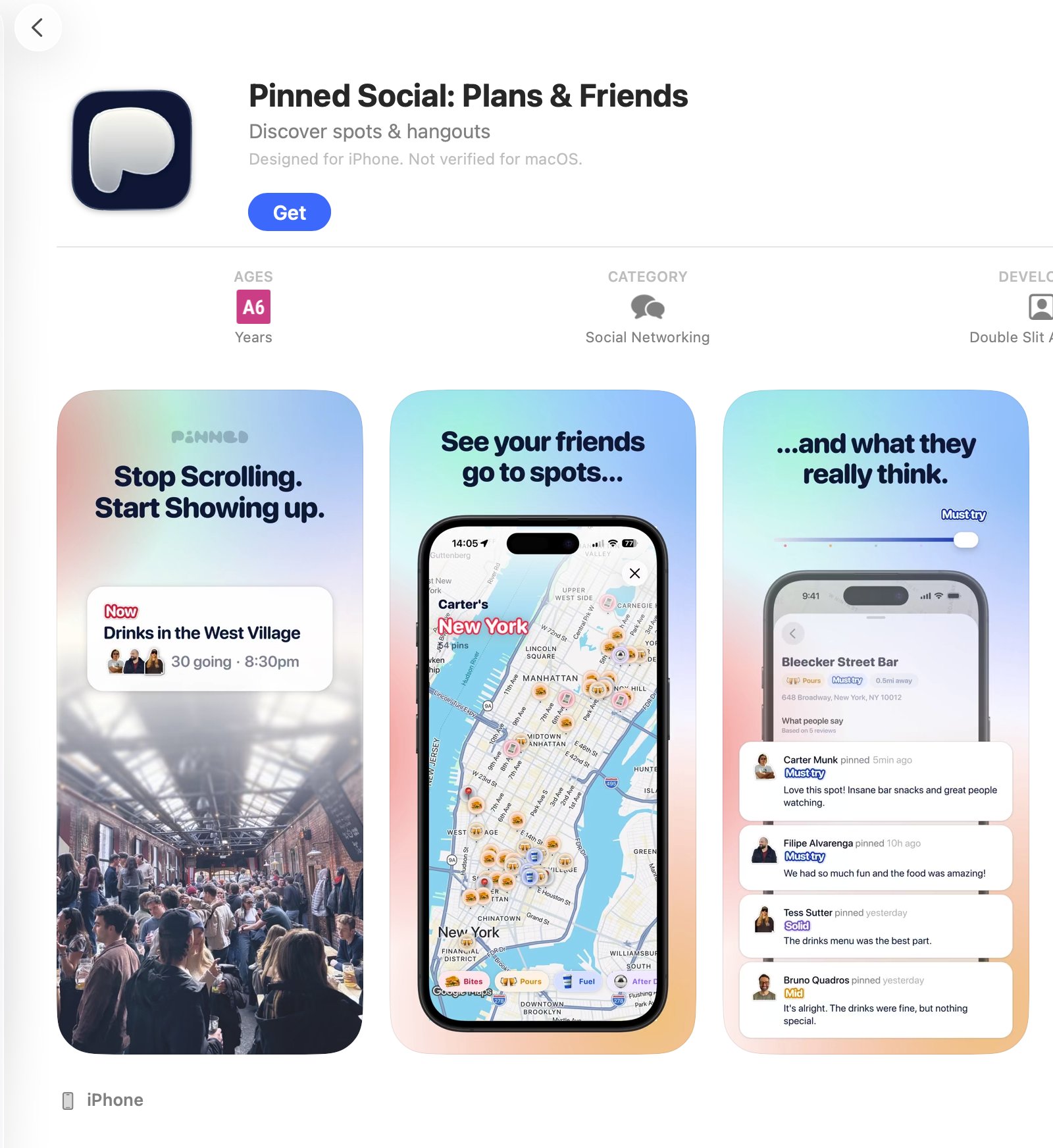
Hey Alva, I'd treat "Pinned" as if it's radioactive. Forget about that dead competitor....Pinterest will litigate here.
The longer you stay branded as "Pinned," the more radiation ( risk ) exposure you're accumulating that you are unable to mitigate.
Being litigious here doesn't benefit you even if you could afford it, because neither you nor the infringer actually own rights to this word mark, and it's difficult to own key rights here.
Over a dozen other companies do, and one of them is trying to monopolize it. They will sue you, especially as you unintentionally increase your app's visibility, because all that does is indirectly increase your risk exposure.
The legal framework here matters. IP laws in this country, including trademark (Lanham Act, 15 U.S.C. § 1114) and copyright (Copyright Act, 17 U.S.C. § 106), protect against the likelihood of confusion and dilution, not solely against direct similarities. Courts use a multifaceted test that considers factors like intent, actual confusion, and substantial similarity. That means even if the likenesses aren't identical, IP can still be infringed if there's a likelihood of confusion or dilution.
I wrote more about this and about effective branding in a tweet I'll reference below.
Also there is centuries of information on all of this:
techcrunch.com/2014/01/02/pi…
techcrunch.com/2025/05/07/te…
techcrunch.com/2025/05/08/so…
reuters.com/legal/litigation…



Here’s why you shouldn’t brand the way your gut is pushing you to, because there are real consequences for doing so:

Here’s why the strongest brands say nothing about what they do - On Purpose:
There’s a foundational principle in brand strategy that gets almost universally misunderstood by people commenting on brand from an aesthetic or speculative lens rather than an IP and business architecture lens: the less your brand name describes your product, the more legally and commercially powerful it is!
This isn’t opinion. It’s codified in U.S. trademark law, validated by every major consumer valuation index, and demonstrated by the most valuable companies in human commercial history.
They follow the correct blueprint while many founders operate as if it’s the 14th century in how they brand, following their gut and personal opinions.
U.S. trademark law (governed by the Lanham Act) classifies marks on a distinctiveness spectrum. Where your mark falls on that spectrum determines the scope of IP protection you can actually acquire and enforce:
Fanciful marks:
invented words with no prior meaning. Kodak. Xerox. Häagen-Dazs.
Arbitrary marks:
real words applied to unrelated goods. Apple (computers). Amazon (retail). Shell (oil).
Suggestive marks:
hint at a quality without describing it. Netflix. Greyhound. Coppertone.
Descriptive marks:
directly describe a feature or characteristic. Weak. Remarkably difficult to acquire without proof of acquired distinctiveness & over time statstcially create litigation nightmares.
Generic marks:
the common name for the product itself. Completely unprotectable. You own nothing.
The U.S. Patent and Trademark Office will refuse to register a mark that is primarily merely descriptive of the goods or services it represents.
The policy rationale is explicit: competitors need to use descriptive language to compete.
Granting one company ownership of the word “Fast” for a shipping service, or “Clean” for a cleaning product, creates an anticompetitive monopoly on language itself, which the government will not permit!
This is not a technicality. It is the structural reason why the most valuable brands in the world are statistically fanciful or arbitrary, not because a naming agency thought they sounded cool, but because their founders understood that a non-descriptive word mark is the foundation of a defensible, appreciating IP asset!
You know the assets that are direct tied to a companies value, regardless if you win or die in a market.
In 1976, Steve Jobs and Steve Wozniak registered Apple as their company name, an arbitrary mark.
The word apple has nothing to do with computers, software, or consumer electronics. That was the entire point!
Because “Apple” bore no descriptive relationship to technology, the USPTO granted it extraordinarily broad protection.
Over the following five decades, Apple was able to build an entire brand architecture around that mark, the wordmark, the iconic bitten-apple logo (a design mark), the distinctive retail environment (trade dress), the product packaging aesthetic, the typography system, the UI design language, all of it legally defensible as a unified brand identity because the anchor mark was fanciful in its category.
Apple has successfully litigated against companies using similar-sounding names in technology contexts because its mark is strong. A descriptive mark, say, “Personal Computer Co.”, could never generate that kind of IP protection.
You simply cannot own the generic language of your category.
Why set up a foundation in which all of your brand affinity doesn’t belong to you and can be legally taken any anytime, by anyone?! Only a fool would do this, yet it is a remarkably prevalent issue.
Just look at the end result:
Apple’s brand has been valued by Interbrand and Brand Finance consistently between $300–$500 billion That is not a marketing metric.
That is a balance sheet asset, and it flows directly from the IP architecture of the mark!

Jorge, you published this in October 2025, which is key because organic visibility in the dental market was largely flat at that point.
For you to benefit with a generic brand, you'd have needed a product riding the entire market growing exponentially. That growth is what we can clearly see across Q1 and Q2 showing signs of regression to the mean.
Several types of search intent control this market, but your product isn't part of any of those yet. So while market growth explains why dozens of apps are growing, it didn't explain why "Yellow Teeth" is gaining ground algorithmically?
Going one layer deeper to commercial search intent, the question is whether you're competitive there.
The #1 brand commercially is "Invisalign," which everyone wants visibility around, and the majority of apps competing for it end up de-indexed indefinitely. You were one of those from last year through April 2026.
For the past few weeks you've sat at #91. What matters isn't the ranking itself, it's that you for the first time has stability here. You no longer rank today and get de-indexed tomorrow.
That highlights a positive bias allowing you to onboard a TAM in a way that's atypical for mobile.
There's immense bias tied to anything in health and wellness, especially around appearance, and oral care sits at the top of that list. It's a category that hasn't yet been empowered by startups until now.
You can compete here because the consumer is uniquely price sensitive and the benefit has been commoditized. Invisalign serves a specific psychographic, leaving a growing TAM untouched. But if you can grow, so can everyone else, so expect the competitive landscape to shift. By "expect" I mean mitigate now, so you're not adversely impacted when it does.


“It Works” Is Not Risk Mitigation & It Might Cost You Everything:
The Argument You’ve Heard a Thousand Times
Someone shows you a dark pattern. You flag it. The room goes quiet for a second before someone says: “But the data shows it works.”
That sentence has ended more conversations in tech than any other. It sounds empirical. It sounds pragmatic. It’s actually a confession dressed up as a metric.
Also beyond being wrong on principle, it’s a bet that could wipe out everything you’ve built.
How?
Well Apple….They Already Told Us This. In Writing:
The App Store Review Guidelines don’t hedge. The language is blunt:
“If you attempt to cheat the system - for example, by trying to trick the review process, steal user data, copy another developer’s work, manipulate ratings or App Store discovery, your apps will be removed from the store and you will be expelled from the Apple Developer Program.”
Read that last clause again: removal from the Apple Developer Program.
Not a warning. Not a slap on the wrist. Your account. Gone.
Every app you’ve ever shipped, every review you’ve accumulated, every subscription your users are on, all of it, gone. And it doesn’t have to happen today.
It might happen six months from now during a routine audit.
It might happen when a competitor reports you.
It might never happen at all.
That uncertainty is not safety. That’s the risk you’re absorbing and not everyone can and not everyone should.
Google Documented the Exact Playbook and Banned It!
The AdSense case is the most instructive real-world example of this principle, because the violation is almost embarrassingly specific.
Publishers figured out that matching your ad background to your site background, white site, white ad block, same font, no border, dramatically increased click-through rates. And they were right. It worked. The data was real.
Google’s official response, verbatim from their AdSense policy FAQ:
“You can choose the appropriate ad size, color, and background to match with the design of your page, but never try to format the ads in such a way that makes them indistinguishable from the other content on the page where they appear.”
The enforcement test is deliberately user-centric: would someone visiting the page for the first time be able to tell the difference between an ad and content?
If not: violation.
The line was made explicit: blending your color scheme is fine. Matching fonts, removing borders, embedding ads inside navigation, “is not blending. It’s deceptive.”
Publishers who ran this play saw strong short-term numbers.
Some of them also lost their AdSense accounts permanently.
No appeal. No reinstatement.
And here’s the brutal part, the ones who didn’t get caught yet aren’t safe. They’re just pending.
The clicks went up because users couldn’t tell they were clicking an ad. That’s not a UX win.
That’s the absence of informed consent producing a metric.
The conversion lift wasn’t earned by a better offer, a clearer value proposition, or a more relevant placement.
It was manufactured by removing the user’s ability to make a deliberate choice.
The effectiveness and the violation are not two separate things. They’re the same thing. The mechanism that drove the result is the mechanism that broke the rule.
This is what “it works” actually means in these cases: it works because the user didn’t know what they were doing. And if that’s your growth strategy, you’re congrats a bad actor.
Here’s the question no one asking “but does it work?” ever finishes: work toward what, exactly, and at what cost?
Besides it’s not a gray area, it’s a bad trade dressed up as a growth hack. And “it worked until it didn’t” is not a post-mortem you want to write.
Educate yourself / this was 10 years ago: techcrunch.com/2016/04/12/go…


Here’s why the strongest brands say nothing about what they do - On Purpose:
There’s a foundational principle in brand strategy that gets almost universally misunderstood by people commenting on brand from an aesthetic or speculative lens rather than an IP and business architecture lens: the less your brand name describes your product, the more legally and commercially powerful it is!
This isn’t opinion. It’s codified in U.S. trademark law, validated by every major consumer valuation index, and demonstrated by the most valuable companies in human commercial history.
They follow the correct blueprint while many founders operate as if it’s the 14th century in how they brand, following their gut and personal opinions.
U.S. trademark law (governed by the Lanham Act) classifies marks on a distinctiveness spectrum. Where your mark falls on that spectrum determines the scope of IP protection you can actually acquire and enforce:
Fanciful marks:
invented words with no prior meaning. Kodak. Xerox. Häagen-Dazs.
Arbitrary marks:
real words applied to unrelated goods. Apple (computers). Amazon (retail). Shell (oil).
Suggestive marks:
hint at a quality without describing it. Netflix. Greyhound. Coppertone.
Descriptive marks:
directly describe a feature or characteristic. Weak. Remarkably difficult to acquire without proof of acquired distinctiveness & over time statstcially create litigation nightmares.
Generic marks:
the common name for the product itself. Completely unprotectable. You own nothing.
The U.S. Patent and Trademark Office will refuse to register a mark that is primarily merely descriptive of the goods or services it represents.
The policy rationale is explicit: competitors need to use descriptive language to compete.
Granting one company ownership of the word “Fast” for a shipping service, or “Clean” for a cleaning product, creates an anticompetitive monopoly on language itself, which the government will not permit!
This is not a technicality. It is the structural reason why the most valuable brands in the world are statistically fanciful or arbitrary, not because a naming agency thought they sounded cool, but because their founders understood that a non-descriptive word mark is the foundation of a defensible, appreciating IP asset!
You know the assets that are direct tied to a companies value, regardless if you win or die in a market.
In 1976, Steve Jobs and Steve Wozniak registered Apple as their company name, an arbitrary mark.
The word apple has nothing to do with computers, software, or consumer electronics. That was the entire point!
Because “Apple” bore no descriptive relationship to technology, the USPTO granted it extraordinarily broad protection.
Over the following five decades, Apple was able to build an entire brand architecture around that mark, the wordmark, the iconic bitten-apple logo (a design mark), the distinctive retail environment (trade dress), the product packaging aesthetic, the typography system, the UI design language, all of it legally defensible as a unified brand identity because the anchor mark was fanciful in its category.
Apple has successfully litigated against companies using similar-sounding names in technology contexts because its mark is strong. A descriptive mark, say, “Personal Computer Co.”, could never generate that kind of IP protection.
You simply cannot own the generic language of your category.
Why set up a foundation in which all of your brand affinity doesn’t belong to you and can be legally taken any anytime, by anyone?! Only a fool would do this, yet it is a remarkably prevalent issue.
Just look at the end result:
Apple’s brand has been valued by Interbrand and Brand Finance consistently between $300–$500 billion That is not a marketing metric.
That is a balance sheet asset, and it flows directly from the IP architecture of the mark!

Coca-Cola was created by pharmacist John Pemberton in Atlanta in 1886. The name was suggested by his bookkeeper, Frank Robinson, who also hand-lettered the now-famous script logo.
“Coca-Cola” was a fanciful construction, it gestured at two ingredients (coca leaf and kola nut) but was not a functional description of the beverage. No one could look at “Coca-Cola” and understand what the product was. It required learning. It required brand-building to improve the brand affinity.
Because the name was distinctive, The Coca-Cola Company was able to build one of the most aggressively protected brand identities in trademark history, including the iconic contour bottle, which was registered as trade dress in 1977 and remains one of the most famous examples of three-dimensional trademark protection ever granted.
Today, Coca-Cola’s brand alone is valued at approximately $35B by Interbrand (2024). The formula is secondary. The IP is the asset!
Had Pemberton named it “Caramel Carbonated Beverage,” he’d have owned nothing. The USPTO would have denied registration on descriptiveness grounds, and every competitor could have described their product using the same language from day one!
A brand is not a wordmark.
That’s a critical misconception the original comment implicitly relies on.
Brand identity as a legal and commercial construct includes:
Word marks:
the name itself (Apple, Google, Gap)
Design marks:
logos and graphic elements (the bitten apple, the Google “G,” the Gap box)
Trade dress:
the overall commercial image of a product, including shape, color, packaging, and store environment (the Tiffany blue box, the Apple Store layout, the Hermès orange, the Louboutin red sole)
Sound marks:
(the Intel chime, the MGM lion’s roar)
Color marks:
when a single color has acquired distinctiveness in a category (UPS brown, T-Mobile magenta)
All of these protections compound. A company like Apple doesn’t just own the word “Apple”, it owns an IP portfolio; a multidimensional brand universe that is legally fortified at every consumer touchpoint.
The more distinctive and non-descriptive the foundational wordmark, the broader the halo of protection that can be built around it.
Descriptive marks cannot anchor this kind of system because they are perpetually at legal risk of cancellation & narrowed enforcement.
“Cool” Is Not a KPI
Branding is not a cultural exercise. It is a business architecture decision with measurable downstream consequences:
Trademark registration scope:
can you register the mark in your primary class? In adjacent classes? Internationally?
Litigation defensibility:
if a competitor encroaches, do you have standing to enforce?
Brand equity valuation:
what do your brand assets contribute to enterprise value?
Consumer recall and mental availability:
how efficiently does the mark activate transactional intent?
Licensing potential:
can the mark generate royalty revenue as a standalone asset?
None of those are measured by “coolness.”
Coolness is subjective, cultural, and not measurable definitively.
A name that reads as cool in 2024 can read as dated by 2026. The IP moat built by a fanciful mark does not expire on a cultural cycles!
The protection strengthens over time as the mark acquires secondary meaning and consumer recognition that we call brand affinity.
When someone says a brand name “sounds cool,” they are offering an aesthetic reaction, which has no utility in a brand strategy framework.
The correct question is: where does this mark sit on the distinctiveness spectrum, and what IP rights can it anchor?
That’s how an IP attorney will think about it, how the greatest founder of the last century approached branding, and how every founder should think about it as well.
Brand the way the conglomerates have. Not because it sounds cool, but because your brand value will naturally compound over time.