

RL enjoyer | @MIT math PhD | ex-quant moving down the stack
Berkeley, CA
Joined March 2025
- Tweets150
- Following260
- Followers335
- Likes4.3K




Pinned Tweet
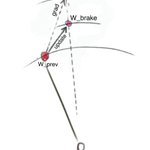
My thinking was to control weight norm without needing to tune weight decay. WD takes effect as the norms get near an equilibrium. Radial brake compresses the outward gradient component and takes effect immediately. It also affects the condition number differently than WD. nilin.github.io/radial-brake…


Modded-NanoGPT optimization result #29 (2026/05/11): @nilinabra has achieved a new step-count record of 2990 (40-step improvement) by halving the growth rate of the L2-norm of the hidden matrix parameters.
This result is better than the previous record with a p-value of 4e-5.


AMC was showing “A Beautiful Mind” tonight for its 25th anniversary. Leaves you feeling a bit melancholic. Such a different time from when I first saw it
7
290
Nilin retweeted

Why do people say this? If AI is capable enough to displace all the knowledge workers, it will be capable enough to verify all the work done by AI itself.
In the world of ASI we are barrelling toward, human beings will be dominated cognitively along all dimensions. Analogies to past waves of innovation are frankly useless. New jobs can be created from innovation only if *intelligence itself remains a scarce resource that only human beings possess.* But that's precisely the condition that advanced AI ends.
nytimes.com/2026/11/17/opini…

Nilin retweeted
The op-ed is actually still unrealistically hopeful. The author repeats the canard that new kinds of jobs will eventually emerge. Yet if AI is capable enough to displace all the knowledge workers, it will be capable enough to verify all the work done by AI itself.
In the world of ASI we are barrelling toward, human beings will be dominated cognitively along all dimensions. Analogies to past waves of innovation are frankly useless. New jobs can be created from innovation only if *intelligence itself remains a scarce resource that only human beings possess.* But that's precisely the condition that advanced AI ends.

We gotta wean ourselves off defining our worth by our capabilities.
These capabilities include creativity and technical judgment/taste, which may have been integral to our self-image. Or we’ll keep moving the goalposts until we’ve backed ourselves into a corner
1
83
Nilin retweeted

I'm recruiting PhD students & postdoc @GeorgiaTech for Fall 2027.
Interested in GenAI, especially diffusion language model?
Plz consider our collaborative & intellectually stimulating group. See mtao8.math.gatech.edu
Retweets appreciated!
Nilin retweeted

(4/8) Evo scales coding agents and compute asynchronously, exploring multiple optimization ideas in parallel.
While GPUs benchmark one experiment, agents are already working on the next.
On 8× AMD MI355X GPUs, Evo achieved 91% compute utilization vs. 54% for Claude Code over the same 7.6 hours.
More experiments. Less idle compute. Faster optimization.
A big question is how much it will seep into in-person interactions (example: nitter.gq/thinkymachines/status/…).
We should make sure there are ways to opt out and preserve organic interactions

Young people actively hate AI.
My two younger daughters are 19 and 18, both at universities - one in the UK the other in Italy. Through them, I happen to know quite a few kids their age.
And ALL OF THEM seem to universally hate AI.
To them it's "something old people invented that we now have to deal with... as if climate change wasnt enough"
AI is cringe. When they introduce me to their friends, they literally say "heyya, meet my dad, he's a software engineer but nonono, NOT IN AI, dont worry, hahah".
They hate it for flooding their social feeds with slop, ruining music, taking phone scams to the next level, also destroying careers & devaluing their hobbies - why become an architect, this skill is about to become worthless? Why learn a musical instrument if session musicians are already obsolete?
The outcome is interesting, though - they're spending less and less time on public social, meeting up IRL, moving their online lives into private group chats with actual verified friends. TikTok and Reels are increasingly cringe-something for old dudes.
Which, I guess, might be a net positive after all...
4
366
AI can in principle do original creative work.
But many users are excited about using it for plagiarism. People proudly announce that they did this.
The pride could be a vestige from when copying something quickly signaled technical skill

Building in public is dead.
An indie dev shared an early preview of his game where you punch walls incrementally to escape. It hit 4.7M views.
Within 25 hours, a copy was already live on Roblox. His Steam page isn't even up yet, and the clone will probably outearn him.
5
204
Another addition to his list of vices. Smoking, gambling, and now this. I’m not judging though

Ben Affleck reveals he writes Python, understands convolutional neural networks, worked extensively with GPUs, and used his celebrity status to get private looks at Google and OpenAI’s video models
“I’ve always been kind of into computers since I was young. Then, when film started to move from analog film to digital, I became more interested in that aspect of it. The visual-effects workflow for many years has included machine learning, so I can write pretty shitty Python scripts and stuff like that.
“With convolutional neural networks, which were the precursors to what the transformer can do, which is much more computation simultaneously, you would do things like look at what’s called a tensor. That’s the numerical translation of a visual image in numbers, like the batch number, the frame number and the red, green and blue values of each pixel in each frame. It’s just that simple. That numeric is called a tensor.
“You’d use a convolutional neural network to identify patterns that reveal what’s called edge detection or feature extraction, which is identifying patterns well enough to know, this is where the window ledge is, so we can more easily take the green-screen image out and replace it with something.
“That was familiar to me early on because, prior to Artists Equity, I had a small visual-effects company. I’ve worked with GPUs a lot too. The visual-effects guys said, ‘Hey, you should see. There are a couple: Google and this other company, OpenAI, are doing really interesting stuff with transformers in video.’
“I’ve learned that I can actually just call up and go, ‘Hey, it’s Ben Affleck. Can I come see what you’re doing?’ Sometimes people say yes, to my astonishment.”
1
11
1,149
Nilin retweeted

I really enjoyed working on this project. I believe the new flop-aware paradigm of nanoGPT thinking is useful, and it seems helpful in a compute optimization context like this one. It seems like a simple and logical conclusion of optimization: figure out what’s actually needed, and use that. The process was actually fun.
One note regarding this record, as noted in the blog. Some of the techniques that scale to frontier pretraining have been redacted from this record. Most importantly, ANVIL III, the significantly improved version of the ANVIL optimizer lineage, has not been included in this record, as it is proprietary to us at @hyperstition_cc. It replicates Muon’s speed but beats it by 20-28 millinats of loss at all model sizes 124M-1.2B and training depths (up to 8x-Chinchilla), with remarkably consistent hyperparameters and extremely high SNR, as compared to Muon. You can learn more about ANVIL III and Feather-1.7B, the model we trained using internal architectural changes and ANVIL III, here:
hyperstition.cc/cutting-pret…
Using ANVIL III (which allowed me to cut steps) improved the speedrun results by another 0.7 seconds, with lower net loss. This alone proves there’s still more room to improve this record.
One final thing that I’ve had many people ask about is how much of a role autoresearch played in my work. The answer is almost none. While almost all of the implementation was done with Claude Code, I did the ideation almost fully by myself. I spoke about this extensively in a conversation with @METR_Evals.
We had a cluster of H100s while I was working on the record. At night or when I stopped working on it, I’d send out several agents to try to hill-climb the speedrun and improve the record. In total, the agents made shockingly little progress, despite spending more time in aggregate than I did. No matter what I told them, it seemed difficult to get them out of local minimums, stuck performing futile tuning of a method that saved 0.1 seconds and cost ~5 millinats (clearly a bad trade), or just tuning hyperparameters for hours on end trying to make some small change. I saw similar phenomena as those described in this METR report:
metr.org/blog/2026-07-21-exp….
However, as I also discussed with METR, I don’t think the agents lack the knowledge to do this. Instead, I think a lot of it comes from a personality issue with current LLMs. They have very little belief that large jumps like this are possible, or they approach it with the wrong paradigm. Autoresearch was not very helpful in my work, and, from personal experience, I don’t think this current generation of publicly available models, without special harnesses, will do very high-quality autoresearch. However, I think the capability and knowledge is already here, which implies that we could be significantly closer to true autoresearch than recent results would imply.
NanoGPT was a really fun challenge and it led to a number of valuable insights and processes. Finally, I’d like to give @Classiclarryd and @KellerJordan a huge thank you for all of their efforts maintaining the repo.


New historic NanoGPT record at 39.9s (-27.7s) from @DevenPzak , obliterating the prior record of 67.6s!
This record introduces a new paradigm of thinking to NanoGPT: instead of optimizing matmuls or adding more expressive operations, optimize at the individual flop level with incredibly clever engineering and ML judgement. If a flop is low value on a particular step, skip it.
Specifically:
-(~8s) Sampled softmax. If a token doesn’t appear in a batch, skip its lm_head fwd/bwd some fraction of the time.
-Sparse values. Only run an optimizer step for ngram embeddings that occurred in the batch. Set beta1 to zero to enable this. Beta2 is applied retroactively when the row is later used.
-Sparse updates. Only update ngram and value embeddings once every 4 steps instead of once every 2.
-Sparse communication. Shard the n-gram table across GPUs, and only pass the rows receiving updates on each step.
-Sparse optimizer states. For the n-gram table, reduce from 2 floats in Adam optimizer per param, to 1 float per 768 params.
-Hand-rolled flash attention for 64 dim heads.
There are several additions that add accuracy too:
-(~4s) EMA during last 300 steps, combined with lifting final_lr to 0.3 instead of 0.15.
-(~1s) A new optimizer, Anvil2, which expands muon via a second tracked momentum buffer, improves the ortho coefficients, and modifies the cautious weight decay application.
-A couple additional dynamic skip connections in the network.
The most striking consequence of the ‘flop aware paradigm’ is you can grow parameters arbitrarily large,
only limited by the available memory, since you can selectively choose how to expend flops on those parameters on each step. NanoGPT has kept active parameters below 124M, but total is unbounded, and has grown to 640M through embedding sparsity over the last year. This PR takes that to its logical conclusion on the 8xH100, scaling up to 65B sparse embedding parameters, which accounts for 25% of the PR’s gains. At frontier scale, where one is not bounded by an 8xH100, one could imagine where this paradigm could lead.
github.com/KellerJordan/modd…
As this was a very notable PR, I spoke with Deven for an hour to learn how he did it. Here’s his story on the changes: hyperstition.cc/training-nan…

Proud of the @peano_ai team for the work scaling TPU RL on MiMo-V2.6! @XiaomiMiMo

We enable full-parameter RL on TPUs: MiMo-V2.6 at 310B, plus other stable training runs of 1,000+ steps across 1,000+ TPUs.
With JAX, scaling up is a config change, not a rewrite.
We built on that with optimized vLLM inference for faster rollouts and full bitwise trainer–sampler agreement in validation.
Trainer and sampler share one TPU ICI fabric. All 310B MiMo-V2.6 parameters transfer in <2 seconds.
1
12
612
Nilin retweeted
We enable full-parameter RL on TPUs: MiMo-V2.6 at 310B, plus other stable training runs of 1,000+ steps across 1,000+ TPUs.
With JAX, scaling up is a config change, not a rewrite.
We built on that with optimized vLLM inference for faster rollouts and full bitwise trainer–sampler agreement in validation.
Trainer and sampler share one TPU ICI fabric. All 310B MiMo-V2.6 parameters transfer in <2 seconds.
Hypothetically, what should someone do who 1: is decelerationist and 2: at a frontier AI lab?
Quit/sandbag? Keep working while also warning about AI risk?
What would effective decelerationism e/decel look like?
1
5
665
Great results, shows that the general coding agent is great for this. Also a watercolor engine is harder to implement than oil painting, looks amazing.
We trained a tiny network for aesthetics using no artistic data and a thing I found is that we have certain proxies for whether something looks artistic which makes it hard to eyeball how well we're doing. For example using a brush engine by itself can make an image look more artistic even using simple rules to place the strokes. Seems related to the finding here where it was reward-hacking the 5-petal flowers.
arxiv.org/pdf/2305.12015


Nilin retweeted
Linear layers are operators, so Spectral Descent and Muon constrain operator norms.
Shampoo and other K-FAC methods adjust for anisotropic marginals.
So it also makes sense that the 2 types of methods can be combined, eg SOAP-Muon and Newton-Muon
nitter.gq/vyasnikhil96/status/18…
nitter.gq/weijie444/status/20448…

Combining SOAP and Muon: nikhilvyas.github.io/SOAP_Mu… and some rough thoughts on interesting future directions.
Spectral descent seems like the prior method most directly useful for understanding Muon, even if Muon developed from the Shampoo lineage. Because linear layers are operators/mappings, so it makes sense to constrain the update's operator norm
Citations:
Shampoo is Gupta et al. (2018) arxiv.org/abs/1802.09568 and Anil et al. (2020) arxiv.org/abs/2002.09018
Spectral descent is Carlson et al. (2015a) proceedings.mlr.press/v38/ca… and Carlson et al. (2015b) papers.nips.cc/paper_files/p…
6/6

1
5
974
Linear layers are operators, so Spectral Descent and Muon constrain operator norms.
Shampoo and other K-FAC methods adjust for anisotropic marginals.
So it also makes sense that the 2 types of methods can be combined, eg SOAP-Muon and Newton-Muon
nitter.gq/vyasnikhil96/status/18…
nitter.gq/weijie444/status/20448…
Combining SOAP and Muon: nikhilvyas.github.io/SOAP_Mu… and some rough thoughts on interesting future directions.