

researcher @UCBerkeley Epistemic Cycles Lab lead @longnow editor Artificial Humanities @UExeterPress
Berkeley, CA
Joined June 2011
- Tweets6.3K
- Following1.9K
- Followers3.5K
- Likes7.1K





Pinned Tweet
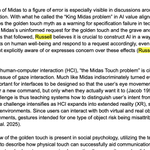
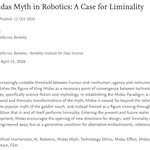
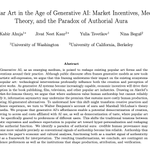
Siblings are finally united!
What is writing and reading in the time of AI?
Ted Chiang, Ken Liu, Sheila Heti, Sasha Stiles, James Yu, and other amazing writers reflect and offer new possibilities.

Nina Beguš retweeted

Schmidt Sciences is hiring Associates to help run our grantmaking programs!
This role is a great opportunity for generalists to shape funding in AI safety. You would join a small team and directly impact cutting-edge safety research.
Apply ASAP if interested. Link below ⬇️
I’m excited to lead the Epistemic Cycles Lab!
We will develop a historical study of information technologies that will help us identify mechanisms for preserving, producing, and organizing knowledge in the age of AI.

Announcing our first Long Now Labs awardees in partnership with the Protocol Institute. We received 370+ exceptional submissions — and we’re thrilled to unveil the three awardees chosen to develop their concepts into prototypes. The awardees for Book of Time are:
▪️Matthew Caren and Anastasha Rachel Gunawan for “Lagu Hantu,” a handmade instrument installation that remembers everyone who has ever played it.
▪️Eirini Malliaraki (@irinimalliaraki) with “One Billion Clocks” a kinetic sculpture that tracks the metabolic time of soil
▪️Sarah Friend (@isthisanart_) for “Thermodynamic Clock for LLMs” which will test whether giving models access to different experiences of time will alter their behavior
Over the coming year, each team will develop its concept into a working prototype with $25,000 in funding and support from Long Now. Their work will appear alongside 27 selected submissions in the Book of Time anthology, coming in spring 02027.
For our second Lab, Epistemic Cycles, UC Berkeley scholar Nina Begus (@ninabegus) will serve as Lab Lead. She’ll convene an interdisciplinary working group to build an atlas of information ruptures (from writing to generative AI) and of how societies have repaired them.
Our third Lab, Interspecies Protocols, launches in 02027.
Thank you to everyone who applied, to our partners at the Protocol Institute, and to our review panel. Read the full description of these incredible projects on Ideas here: na2.hubs.ly/H08xGzF0


Nina Beguš retweeted

Announcing our first Long Now Labs awardees in partnership with the Protocol Institute. We received 370+ exceptional submissions — and we’re thrilled to unveil the three awardees chosen to develop their concepts into prototypes. The awardees for Book of Time are:
▪️Matthew Caren and Anastasha Rachel Gunawan for “Lagu Hantu,” a handmade instrument installation that remembers everyone who has ever played it.
▪️Eirini Malliaraki (@irinimalliaraki) with “One Billion Clocks” a kinetic sculpture that tracks the metabolic time of soil
▪️Sarah Friend (@isthisanart_) for “Thermodynamic Clock for LLMs” which will test whether giving models access to different experiences of time will alter their behavior
Over the coming year, each team will develop its concept into a working prototype with $25,000 in funding and support from Long Now. Their work will appear alongside 27 selected submissions in the Book of Time anthology, coming in spring 02027.
For our second Lab, Epistemic Cycles, UC Berkeley scholar Nina Begus (@ninabegus) will serve as Lab Lead. She’ll convene an interdisciplinary working group to build an atlas of information ruptures (from writing to generative AI) and of how societies have repaired them.
Our third Lab, Interspecies Protocols, launches in 02027.
Thank you to everyone who applied, to our partners at the Protocol Institute, and to our review panel. Read the full description of these incredible projects on Ideas here: na2.hubs.ly/H08xGzF0
Nina Beguš retweeted

America’s newest national park is rock solid!
Chiricahua is officially our 64th national park. Welcome to the "Wonderland of Rocks."

ALT Lightning strikes beneath dark storm clouds over the rocky landscape of Chiricahua. Green vegetation surrounds clusters of towering rock formations, with a pink glow along the distant horizon.
Nina Beguš retweeted

Cool work here… 😎

We're excited to be able to continue our work (with @begusgasper) on rethinking language, thanks to @schmidtsciences HAVI.
We will test what properties of human language (sound change, dialect, and more) appear in nonhuman communication. This research lays the groundwork for reconceptualizing language as an evolutionary information technology applicable across human, animal, and machine communication.
Nina Beguš retweeted
It's both very exciting and terrfying to be a scientist nowadays. So many new discoveries can be made and, at the same time, everybody can be a scientist now.
Heroes, lackeys, and AI.
We're excited to be able to continue our work (with @begusgasper) on rethinking language, thanks to @schmidtsciences HAVI.
We will test what properties of human language (sound change, dialect, and more) appear in nonhuman communication. This research lays the groundwork for reconceptualizing language as an evolutionary information technology applicable across human, animal, and machine communication.

UC Berkeley researchers are developing AI models that learn language by imitating speech, much like babies do. Their work could make AI more efficient while revealing new insights into how humans and other species communicate.
bit.ly/4BeESMn

Nina Beguš retweeted
It’s not a new problem. We are hitting complexity in many domains, working in waves, poking at it from different angles.


Nina Beguš retweeted

UC Berkeley researchers are developing AI models that learn language by imitating speech, much like babies do. Their work could make AI more efficient while revealing new insights into how humans and other species communicate.
bit.ly/4BeESMn
Nina Beguš retweeted

Great chatting with Ivan in Shenzhen last Sunday as well.
Real breakthroughs in science come from polymaths seeing across fields. But they rarely get mainstream funding, as they come from unrelated fields and have to break taboos (think Da Vinci, an art guy, dissecting bodies).


In a 1957 study, people who had recently bought a car were more likely to read ads for their own car than for models they had considered but rejected. The purchase was already made, but the search for reassurance continued.
I think longevity science has a similar trap. A scientist chooses one mechanism of aging, builds a career around it, and gradually starts looking primarily for evidence that supports their hypothesis. Other areas of research, contradictory findings, and potential combinations fade into the background. People seem to become prisoners of their original research.
The current grant system adds fuel to the fire: most grants support work in areas where a scientist already has an extensive research record. How are we supposed to explore entirely new hypotheses?
You can spend a lifetime defending a favorite idea while overlooking more promising approaches.
We need to be as open as possible to new approaches, bold hypotheses, and ideas that seem impossible. I think one of the most valuable things we could do for the field would be to create a grant or prize to test the wildest idea in aging research. The idea might not work, but the amount of new knowledge gained per dollar could be the highest of all.

It’s not a new problem. We are hitting complexity in many domains, working in waves, poking at it from different angles.
I write more about Lem in Artificial Humanities as well: fulcrum.org/epubs/df65vc32g?…


The table is from Stanislaw Lem’s quasi-scientific graph. More here: latentspacecraft.antikythera…
Nina Beguš retweeted

The most radical thing you can do to rebel against this emerging post-literate, brain-slop-world we are entering is read long, complicated books on a daily basis. The ability to pay attention for long periods will be one of the most valuable and rare skills of the future.
Nina Beguš retweeted

The outpouring of interest in our paper has been … a bit insane.
May I make four points?
1. We have not shown that “consciousness has a frame rate.”
I can see why people draw this conclusion: we report that inferotemporal and prefrontal cortex alternate between conscious and suppressed states roughly every 60 ms during binocular rivalry.
Consciousness depends on many brain areas, and our paper reports results from only a few select nodes.
We still don’t know how conscious access works--the actual recipe for generating conscious experience. What we have shown is that deep in the brain there is an extremely strong signal, rich enough to reconstruct a high-dimensional face in detail, that is inaccessible to consciousness. As I argued in the original tweet, this makes the problem of conscious access a lot more experimentally tractable. But to claim “consciousness has a frame rate,” one would need to have actually solved the mechanism for conscious access and shown that this mechanism operates at a frame rate.
While we currently don’t know conclusively one way or the other (see VanRullen & Koch, 2003 for a review of positive evidence), I personally am skeptical that consciousness has a frame rate. I believe the brain, within posterior parietal cortex, has continuous tracking mechanisms that actively represent the persistence of matter, including ourselves as physical bodies. The coupling between these persistent tracking processes and feature representations across the brain (like those in face patches) is, I think, the essential mechanism of conscious access.
This coupling need not happen at the rate of inferotemporal alternations (and inferotemporal cortex itself may not even alternate outside of the artificial situation of binocular rivalry). As an analogy: imagine the area crucial for conscious access holding a steady drone note, while inferotemporal cortex alternates between two notes, one in harmony and one dissonant. Inferotemporal content might couple to the drone only at moments of harmony, yet experience would still be continuous, because the drone itself (the tracking process that I believe is at the core of conscious perception) never stops. And areas without conflicting content, like auditory cortex during visual rivalry, could stay in continuous harmony with the drone.
In sum, there is no reason to conclude from our study that consciousness is discrete, with a "frame rate."
2. Our results resemble Jezek et al. 2011 (as @jjsakon notes).
Jezek et al. trained rats in two boxes that were identical except for their lighting cues, so that hippocampal place cells formed two distinct maps, one per box. They then “teleported” the rat by abruptly switching the lights. For a few seconds afterwards, CA3 place-cell activity flickered between the two maps, synced to the theta cycle (~125 ms).
@StanDehaene first pointed this paper out to me, and reading it blew me away. To my mind it is the strongest evidence for a bistable attractor in the brain, because the competing maps are stored within the hippocampus itself.
I think the phenomenon we see may be very similar at the circuit level: a bistable attractor network within inferotemporal cortex that alternately converges to one of two patterns, as cells in face patches work together to build a coherent representation of the input. In our case, both images are present in the input, so the competition could arise within IT or be inherited from earlier areas such as V1--recording there is an important next step. (It also still puzzles me that we didn’t see strong coherence between face patches ML and AM.)
More broadly, what’s different about our paper is the brain area (inferotemporal cortex, often modeled as a feedforward DNN) and the ability to relate the two competing patterns to consciousness, with one granted conscious access and the other not.
3. Please comment on bioRxiv!
The Twitter attention has been cool, but I really hope colleagues will be generous enough to post detailed commentary on bioRxiv, where there are currently 0 comments. As @seemaychou points out, peer review doesn’t have to come from just three anonymous reviewers. We would be truly grateful for your critical feedback.
4. Stay tuned
This work was done at Caltech, Berkeley, in collaboration with @EngelTatiana at Princeton, funded by NIH and HHMI.
I hope to share our vision soon for how we can solve consciousness @AsteraInstitute

1/ We discovered something totally unexpected about the neural structure of consciousness that overturns decades of thinking on its biological basis and brings us significantly closer to the recipe for generating conscious awareness.
New preprint: biorxiv.org/content/10.64898… (led by @HesseJanis, with @FrankLanfranchi, @_conor_mcgrory, @Yuelin_Shi, and @EngelTatiana)

Nina Beguš retweeted

I am hiring a postdoc for four years to work with a fantastic technical + humanistic team on this SNSF funded project on AI and interpretation: contralab.online/philology . If you can work on LLM interpretability/explanability, see contralab.online/job ...
