Producer Director. Films, XR, Games. BIFA voter. London
England, United Kingdom
Joined February 2010
- Tweets9.3K
- Following4.7K
- Followers2K
- Likes18K


jo lewis retweeted

Minerva McGonagall was easily the most savage character in the entire Harry Potter franchise.
People talk about Snape's insults, but McGonagall’s dry, polite brutality was on an entirely different level. Telling Peeves how to properly vandalize a chandelier is legendary.
A quick reminder of why she was the goat:
“Harry witnessed Professor McGonagall walking right past Peeves who was determinedly loosening a crystal chandelier and could have sworn he heard her tell the poltergeist out of the corner of her mouth, "It unscrews the other way”
“This boy has as much chance of becoming an Auror as Dumbledore has of ever returning to this school.”
“A very good chance, then,” said Professor McGonagall.
“Now, the Vanishing Spell –“”Hem, hem. “I wonder," said Professor McGonagall in cold fury, turning on Professor Umbridge, "how you expect to gain an idea of my usual teaching methods if you continue to interrupt me? You see, I do not generally permit people to talk when I am talking.”
“I – I didn't think –“”That,” said Professor McGonagall, "is obvious.”
“You look in excellent health to me, Potter, so you will excuse me if I don’t let you off homework today. I assure you that if you die, you need not hand it in”
“I should have made my meaning plainer,” said Professor McGonagall, turning at last to look at Umbridge directly in the eyes. “He has achieved high marks in all Defense Against the Dark Arts tests set by a competent teacher.”
“Certainly I knew, Minerva,” she said quietly.”
“But one does not parade the fact that one is All-Knowing. I frequently act as though I am not possessed of the Inner Eye, so as not to make others nervous.”
‘That explains a great deal,” said Professor McGonagall tartly.”
“There, there, Sybil… calm down… blow your nose on this… it’s not as bad as you think, now… you are not going to have to leave Hogwarts.”
“Hem, hem… Educational Decree Number Twenty-Five.”
“Not another one!” exclaimed Professor McGonagall violently.”
“Well, usually when a person shakes their head,’ said McGonagall coldly, ‘they mean “no”. So unless Miss Edgecombe is using a form of sign-language as yet unknown to humans –’”
It’s high time your grandmother learned to be proud of the grandson she’s got, rather than the one she thinks she ought to have – particularly after what happened at the Ministry.”
And of course,

jo lewis retweeted

On November 18, 1980, Grace Jones slapped BBC host Russell Harty again and again, live on air, because he kept turning his back on her. Harty tried to carry on with the show as if nothing had happened, and the clip has been called one of the most shocking moments in British television ever since.
She was there to sing “Love Is the Drug” from her new album, Warm Leatherette, but by her own admission she hadn’t slept in three days. From the start, Harty treated her like a joke. He made fun of her outfit, her hat and her accent, and told the audience that interviewing her was like “climbing the North Face of the Eiger in high-heeled shoes.” Then he turned his back to introduce his other guests: Patrick Lichfield, the Queen’s cousin and a society photographer, and an 89-year-old perfume maker.
In the video below, Harty is asking the old man about perfume, and Grace has had enough. She says maybe she should just go.
“Don’t go right now unless you really want to,” Harty tells her.
“Well, don’t turn your back! I can’t look at you!”
Then she starts hitting him, one slap after another, while he raises his arms and pleads, “Hold, hold, hold on just a moment!” He asks her to move her chair back and turns straight back to the perfume maker. Grace refuses to be ignored. She cuts in to announce that she’s wearing four different perfumes from the night before, and when the next guest walks out, she asks on live TV whether the Queen’s cousin is “a closet queen.”
Five years later she was a Bond villain opposite Roger Moore, and she became one of the most influential icons in music and fashion. Harty never escaped the clip, and it followed him for the rest of his career. He died in 1988 at just 53.
So who was really in the wrong that night: the star who lost it on live television, or the host who spent the whole show making her feel invisible?
jo lewis retweeted

On Halloween 1984, Jono Lancaster was born in the UK with Treacher Collins syndrome, a rare genetic condition that affects how the bones of the face develop.
He was just 36 hours old when his parents, horrified by his appearance, left the hospital without him.
Two weeks after that, a foster carer named Jean took him home, and when he was 5, she officially adopted him.
Growing up, Jono was bullied and hated seeing his own face in the mirror.
In his mid-twenties, Jono wrote to his biological parents. He wanted them to know he was doing well and asked if they'd meet him.
They rejected him for a second time, mailing back a cold, one-sentence note signed by both of them that read: "Regarding this subject, we do not want any contact and further attempts will be ignored."
Instead of giving up, he founded a charity supporting people with facial differences and began traveling the world to meet children with the same condition, to show them they weren't alone.


jo lewis retweeted

In 1918, shortly before his own death, Wilfred Owen distilled the entire absurdity of war into this devastating short poem.
‘The Last Laugh’, performed by Sean Bean.
jo lewis retweeted
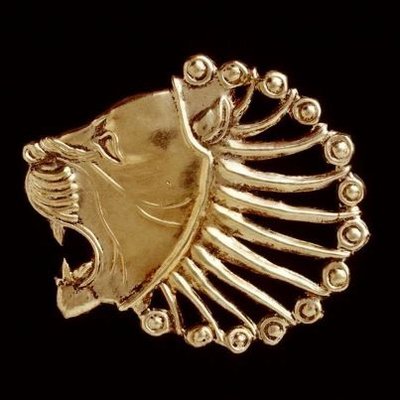
A section of the Douaumont Ossuary near Verdun, France, photographed by Alfred Eisenstaedt in 1964...
It holds the unidentified skeletal remains of approximately 130,000 French and German soldiers who perished during the grueling 1916 Battle of Verdun in WWI. Visitors can view the piled bones through small ground-level windows around the base of the monument.
. . .
The Battle of Verdun lasted 303 days, from February to December 1916, making it the longest battle of the First World War. Fought between French and German forces, it became a war of attrition in which both sides suffered staggering losses. Historians estimate there were roughly 700,000 casualties, killed, wounded, or missing, with more than 300,000 deaths.
The Douaumont Ossuary was built after the war to house the remains of soldiers who could not be identified. Behind its walls rest the bones of more than 130,000 French and German soldiers recovered from the battlefield. Through small windows, visitors can see piles of skulls and bones gathered from shell craters, trenches, and shattered fortifications where identification was impossible.
Verdun was subjected to some of the heaviest artillery bombardment in history up to that point. More than 60 million shells were fired during the campaign, permanently altering the landscape. Even today, parts of the battlefield remain within France’s “Zone Rouge” (Red Zone), areas so heavily contaminated by unexploded ordnance and toxic residues that development and farming remain restricted more than a century later.
The ossuary serves as a memorial to soldiers from both armies, reflecting the scale of loss endured by all sides during one of the deadliest battles of the war.
After the war, nine villages around Verdun were so completely destroyed that they were never rebuilt. The French government officially declared them “villages that died for France” (villages détruits). Although no one lives there today, each village still legally exists on maps and has a ceremonial mayor appointed to preserve its memory.
#drthehistories

jo lewis retweeted

Two men were stranded in the Arctic for almost two years without seeing another human being. At one point, they stopped speaking because of an imaginary love affair.
This is one of the strangest and most moving survival stories I have encountered.
In 1909, Danish explorer Ejnar Mikkelsen sailed to northeast Greenland aboard a ship called the Alabama.
His mission was to recover documents left behind by an earlier expedition whose leader, Ludvig Mylius-Erichsen, and two companions had died in the Arctic in 1907.
Their lost records contained valuable geographical observations.
Among them was evidence that the supposed Peary Channel, believed by some to divide northern Greenland from the rest of the island, did not exist.
In spring 1910, Mikkelsen set out with the ship's engineer, Iver Iversen, to find the missing documents.
They travelled hundreds of kilometres across an almost unimaginably hostile landscape.
They suffered from starvation, exhaustion and scurvy.
Their sled dogs died.
But eventually, they found the records.
What they did not know was that while they were struggling to return, disaster had overtaken their ship.
The Alabama had been damaged and sunk by the ice.
The remaining crew had salvaged supplies, constructed a small hut from the wreckage and eventually escaped aboard another vessel.
When Mikkelsen and Iversen finally returned to Shannon Island in November 1910, they found the ship gone and their companions gone.
Nobody was waiting for them.
Nobody knew when they might return.
For the next nineteen months, the two men lived in extreme isolation.
They survived on provisions, hunted animals and whatever they could salvage.
Their tiny shelter became almost their entire world.
They endured the Arctic winter, with its long stretches of darkness.
Outside were ice, polar bears, dangerous weather and vast distances separating them from everyone they knew.
Inside were two exhausted men.
They had to depend on each other for almost everything.
And then something extraordinary happened.
Among their few possessions was a postcard showing a group of young women from a Danish school.
To entertain themselves, the men began inventing personalities for the women.
They gave them names.
They imagined relationships.
Mikkelsen developed a particular fondness for one of the imaginary women, whom they called Miss Støt.
One day, Iversen composed a song about her.
Mikkelsen was furious.
He felt that his companion had behaved disloyally toward the woman he had imagined as his own.
The two men stopped speaking.
For two days, silence filled their tiny shelter.
Eventually, Iversen handed Mikkelsen a mock letter, apologizing and offering to surrender not only Miss Støt but all the other imaginary women.
They reconciled.
They promised not to let silence come between them again.
In September 1911, Iversen wrote in his diary about the unbearable slowness of time and his fading hopes that a ship might arrive.
The months continued passing.
Back in Denmark, many believed the men were dead.
But in the summer of 1912, a Norwegian sealing vessel finally reached them.
After nearly three years away from home, Mikkelsen and Iversen returned to Denmark alive.
The records they had rescued helped establish that the supposed Peary Channel did not exist.
The expedition had achieved its geographical purpose.
For nineteen months, two men occupied an almost unimaginably small human universe.
They were each other's entertainment, irritant, companion, witness and best hope of survival.
Even an imaginary romantic betrayal could become a genuine source of pain.
The photograph of the two men after their ordeal shows what the Arctic did to their bodies.
Their story tells us something about what prolonged isolation can do to a mind.
And what friendship, however strained or imperfect, can do to keep it alive.

jo lewis retweeted

breaking news: Jamie Lloyd has rediscovered the colour pink for Much Ado on Broadway

jo lewis retweeted

A wooden carving of a cat-like figure, historically known as a Puss-and-Mew machine. Created in 18th-century London (around the 1730s) by Captain Dudley Bradstreet. It acted as an early, covert alcohol "vending machine" to bypass the strict and heavy taxation laws of the Gin Act of 1736.
. . .
During the 18th Century London Gin Craze, the British government passed the Gin Act of 1729 and 1736 to heavily tax and curb gin consumption. But Captain Dudley Bradstreet found a clever way around the law. He hung a wooden carving of a cat (often called "Old Tom") in his window.
The customers would approach the cat, whisper "Puss, give me two pennyworth of gin", and drop a coin into its mouth. If the person inside the house had gin ready, they would meow back, and then pour the gin out through a small lead pipe hidden under the cat's paw. Because the buyer and seller never saw each other face-to-face, authorities could not legally prove who made the sale.
#archaeohistories

jo lewis retweeted

Just finished an extraordinary book 'When the Cranes Fly South' by Lisa Ridzén. Quite short, but beautiful, about an old man coming to terms with his son before he dies. Sounds bleak, but it's not. It's a warm, human read about family, food, friends, dogs, and the final journey.
jo lewis retweeted

A standing ovation for 50 years of the National Theatre.
It has challenged us, moved us, made us laugh, and brought millions together through the power of storytelling. An honour to join its anniversary celebrations on the South Bank.

ALT Mayor Sadiq Khan stands with a group of four women and four men, among them Dame Judi Dench, outside the National Theatre.
jo lewis retweeted

Why did God create evil? The answer struck me to the core of my soul!
A professor at the university asked his students the following question:
Everything that exists was created by God?
One student bravely answered:
Yes, created by God.
Did God create everything? - a professor asked.
"Yes, sir," replied the student.
The professor asked:
If God created everything, then God created evil, since it exists. And according to the principle that our deeds define ourselves, then God is evil.
The student became silent after hearing such an answer. The professor was very pleased with himself. He boasted to students for proving once again that faith in God is a myth.
Another student raised his hand and said:
Can I ask you a question, professor?
"Of course," replied the professor.
A student got up and asked:
Professor, is cold a thing?
What kind of question? Of course it exists. Have you ever been cold?
Students laughed at the young man's question. The young man answered:
Actually, sir, cold doesn't exist.
According to the laws of physics, what we consider cold is actually the absence of heat. A person or object can be studied on whether it has or transmits energy.
Absolute zero (-460 degrees
Fahrenheit) is a complete absence of heat. All matter becomes inert and unable to react at this temperature.
Cold does not exist. We created this word to describe what we feel in the absence of heat.
A student continued:
Professor, does darkness exist?
— Of course it exists.
You're wrong again, sir. Darkness also does not exist. Darkness is actually the absence of light. We can study the light but not the darkness.
We can use Newton's prism to spread white light across multiple colors and explore the different wavelengths of each color. You can't measure darkness. A simple ray of light can break into the world of darkness and illuminate it. How can you tell how dark a certain space is? You measure how much light is presented. Isn't it so? Darkness is a term man uses to describe what happens in the absence of light.
In the end, the young man asked the professor:
Sir. does evil exist?
This time it was uncertain, the professor answered:
Of course, as I said before. We see him every day. Cruelty, numerous crimes and violence throughout the world. These examples are nothing but a manifestation of evil.
To this, the student answered:
Evil does not exist, sir, or at least it does not exist for itself. Evil is simply the absence of God. It is like darkness and cold—a man-made word to describe the absence of God. God did not create evil. Evil is not faith or love, which exist as light and warmth. Evil is the result of the absence of Divine love in the human heart. It's the kind of cold that comes when there is no heat, or the kind of darkness that comes when there's no light.
The student's name was Albert Einstein.

jo lewis retweeted
50 years of the NT observer.co.uk/news/national…

jo lewis retweeted

The Green Man is one of the oldest and most mysterious figures found in England’s churches and ancient buildings.
A face formed from leaves, vines and branches, carved into stone and wood across the country for centuries. From village churches to great cathedrals, he appears watching silently from pillars, arches and roof bosses.
Some saw him as a symbol of life, renewal and the land itself. Old English customs like May Day celebrations and Jack in the Green processions still carry echoes of that same ancient connection between the people, the countryside and the changing seasons. 🏴


jo lewis retweeted

In the dark hours of a cold night in occupied France, a woman stripped off her clothes and squeezed her slender body through the tight iron bars of a Gestapo prison cell.
Holding her dress in her teeth, she fell silently to the street below and melted into the shadows of the night.
Her name was Marie-Madeleine Fourcade, and she was one of the most remarkable leaders of the French Resistance during World War II.
Marie-Madeleine grew up in a world of wealth and beauty.
Long before the war broke out, she lived an exciting life filled with fast cars, flying airplanes, and playing classical music on the piano.
Most people expected her to spend her life enjoying quiet luxury.
However, when German forces invaded and occupied France, everything changed.
She felt a deep call to protect her homeland, so she joined a small secret network dedicated to gathering intelligence against the enemy.
When the leader of her group was arrested in 1941, he handed total control of the operation over to Marie-Madeleine.
She was only thirty-one years old and a mother of two young children, but she stepped into the role without hesitation.
Under her guidance, that small group grew into the largest secret intelligence network in France, known as Alliance.
Over three thousand brave men and women joined her network, including ordinary doctors, shopkeepers, priests, and mothers.
Nearly twenty percent of her agents were women, which was almost unheard of for military intelligence at that time.
The network used animal code names to protect their real identities.
The Gestapo began calling them Noah's Ark because of this practice.
Marie-Madeleine chose the code name Hedgehog for herself.
She picked it because a hedgehog is small and quiet, yet its sharp quills mean that even a fierce predator will hesitate to touch it.
Her greatest advantage was that the Nazis could never believe a young, fashionable woman was running the entire operation.
They spent years looking for a male general or a hardened officer, completely unaware that the mastermind was standing right in front of them in disguise.
Leading this underground network came with painful personal sacrifices.
The enemy worked tirelessly to destroy her group.
Many of her close friends and fellow agents were captured, tortured, or killed.
To protect her own children from harm, she had to send them away to safe locations.
She could not even hug them goodbye for fear of revealing their whereabouts.
Instead, she stood quietly behind a curtain and watched her children walk down the street, unable to let them know she was standing just a few steps away.
Even after being captured twice by enemy forces, Marie-Madeleine managed to escape both times and rebuild her broken organization from scratch.
Her agents provided vital intelligence that helped Allied forces plan successful operations, including key details about enemy positions along the beaches of Normandy.
When the war finally ended, her extraordinary efforts were largely overlooked by history books.
The official lists of honored resistance leaders favored men, leaving her off the top lists of recognized national heroes.
Yet she never gave up or sought personal glory.
She spent the rest of her days helping surviving agents, supporting families of fallen fighters, and ensuring that the bravery of her team was recorded forever.
Near the end of her life, when reflecting on her purpose, she looked back on her journey and quietly said, "God gave me the strength to stand in the dark so that others could walk in the light."
jo lewis retweeted

The Goodbye
yusufcatstevens.lnk.to/Buddh…
jo lewis retweeted
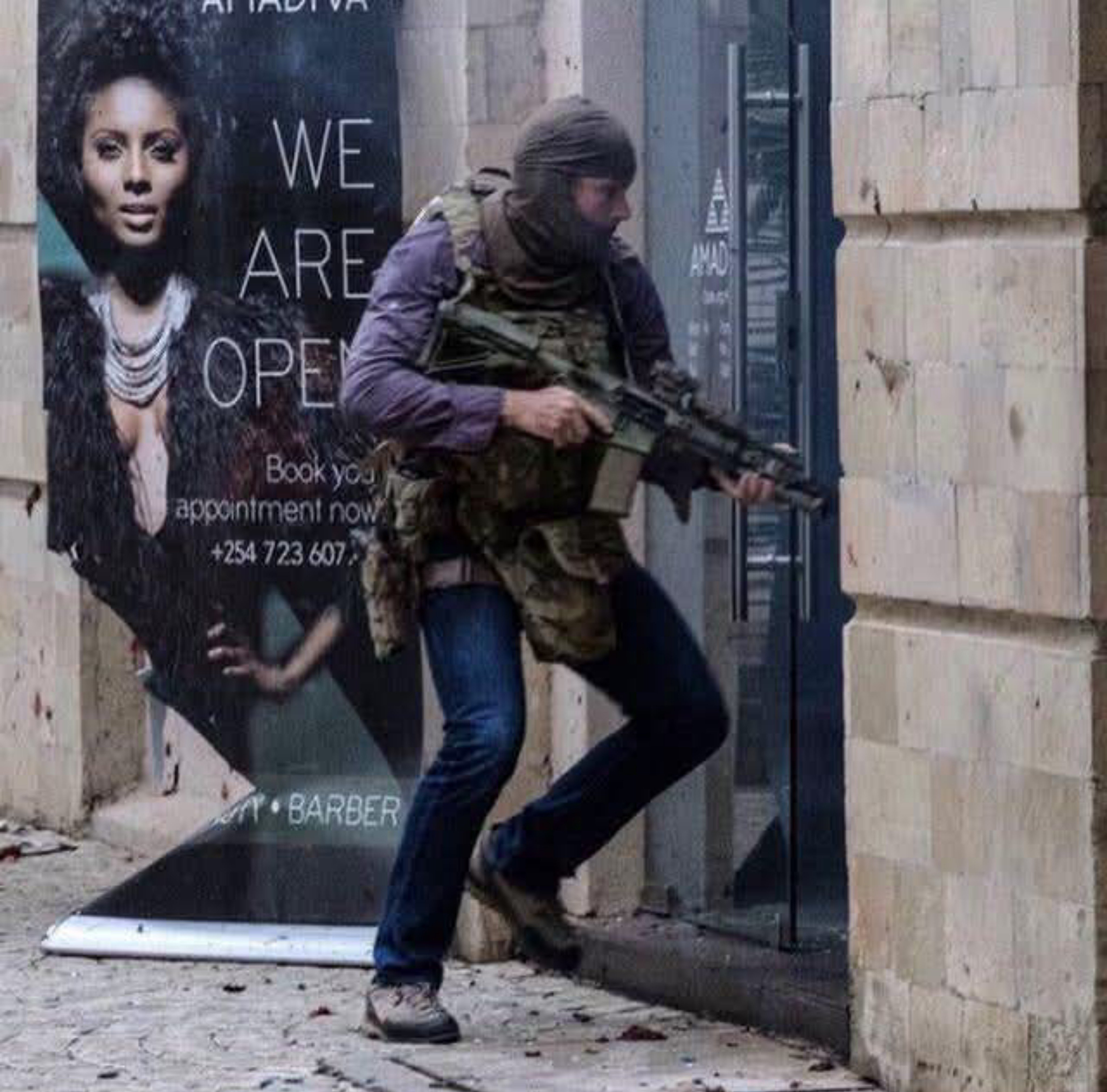
A former British SAS operator Christian Craighead responding to the January 2019 terrorist attack at the Dusit D2 hotel complex in Nairobi, Kenya 🇰🇪
On January 15, 2019, Nairobi. Craighead had just finished a morning of firearms training when the phone rang, a friend, a former British soldier, gunfire audible in the background. The address was 14 Riverside Drive, the DusitD2 hotel and office complex in Westlands. Al-Shabaab had begun a massacre. He threw his weapons case into his pickup and drove. He had never been to the complex. He didn't know how many shooters he was walking into. He went anyway.
The attack had started around 2:30pm, a suicide bomber detonating in the Secret Garden cafe, followed by four gunmen armed with AKs, grenades, and suicide vests splitting through the offices, hotel, and car park hunting civilians. Twenty-one people would die that day and overnight. Craighead arrived roughly 30 minutes later to chaos, no organized security line, body parts, screaming, sporadic fire. He wore a balaclava specifically because media were already present. In his Shawn Ryan appearance, he described the exact moment he decided to go in alone, a woman screaming, then automatic fire cutting the scream off. He understood she had just been murdered. He asked Kenyan forces if they were entering. They said no, boss. He went in without them.
He started in the restaurant, dragging terrified, wounded people toward safety, then ran alone across open ground under fire, clearing rooms and pulling together roughly 150 survivors. He picked up an improvised team along the way, Slovenian diplomatic protection officer Dan Prastalo, whose own side of this story we've also featured, and two Kenyan police officers. Together they cleared a 13-story car park, calling out to hostages with "Eagle, eagle, security forces." He thought his part was finished and went to brief the Kenyan commander, who asked him to lead his men. Craighead said yes, cleared a five-story office block from the front, and pulled out roughly 50 more people.
The remaining gunmen had moved into the eight-story hotel. Craighead linked up with a Kenyan police assault team on the seventh floor and stayed with them for the next 13 hours, no helmet, left behind in the truck, enduring grenades bouncing down marble stairwells, black smoke, and confined-space gunfire. In his book he writes about the blasts forcing the air from his lungs and repeating to himself, press on, push on, not yet knowing how many were still being killed elsewhere in the complex. Near dawn, the last pair of terrorists on that floor tried to break out. Craighead had already warned the team. They were killed the moment they left cover.
The hotel still wasn't clear. Kenyan police in the lobby said two men remained in the basement, and after a full night of fighting, few officers wanted to go back in. Craighead volunteered first. They pushed through smoke-filled storerooms and flooded service corridors, held a standoff behind a barricade for roughly an hour, and killed the final two attackers. Nineteen to twenty-two hours after the first blast, President Kenyatta announced the complex secure. All five militants were dead. Nearly 700 people were rescued.
He was awarded the Conspicuous Gallantry Cross. Who Dares Wins.
#archaeohistories