






As someone who does not have to imagine being a student graduating from UMD last week with a degree in aerospace engineering (I am one), I would appreciate it if fox news did not presume to know how we feel

I've been working on a fun project recently

ALT Kicad screenshot of board with text "danger: lethal voltage" and high voltage symbol

I think I've got a way to modulate (D)BPSK at the clk_hstx frequency with a configurable divider to set datarate and it uses 0 CPU cycles (only DMA and PIO). I preordered some pico 2s so I'll test it out when they come in.


I saw an article about using an FPGA as a strain gauge by looking at the frequency of a ring oscillator and I wanted to try it. Half an hour later, I had this graph. The two spikes are the times I was pressing on the FPGA, with maybe 3 lbs of force. FPGA is an Artix 7.

ALT DMM with a graph of frequency over time showing two spikes
I found out about here: voltagedivide.com/2024/03/18…
Original article: hackaday.com/2015/09/27/myst…
Nathan retweeted

For any spacecraft, there's one system that unifies them all: avionics.
In our latest engineering video learn how we approach avionics at Astranis.

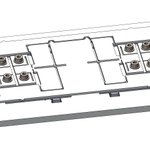
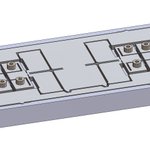
After seeing the video on MEMS IMUs from @BreakingTaps I wanted to make a similar model that's actually functional. Starting with the Z accel, a few changes make it suitable for laser cut aluminum, which is both denser and has more predictable properties compared to printed parts

Sims show a deformation of 95um at 10m/s2, so sensing will be tricky. I'm thinking interferometry might work, but only because I've done that before based on @BenKrasnow's video on self mixing laser interferometers.


Nathan retweeted

It's time! Kerbal Space Program is free on Epic Games Store from now until January 12th at 8am PST

Nathan retweeted

So you all remember back in 2020 when I had that thread on the cheap as chips $20 HDMI capture card that BLEW UP big time?
Well guess what? I'm back with another, this time it's next generation and better than before!
xitter.cf/Ascii211/status/126863…


Nathan retweeted

I started BPS.space almost 7 years ago in the fall of 2015 with the goal to propulsively land a model rocket. I had no background in aero, EE, coding, etc so it took a lot of trial and error, but today I finally stuck the landing 🚀🎉

I'm back to work on the Pico SDR, and I think I found a way to make RX doable. The AT86RF215 uses a DDR LVDS bus that runs at 64 MHz/128 Mb/s, and the Pico can't synchronize with an external clock (unless it's used as the main clock, which could work but not with my current PCB).

256.8 is ~3000 ppm above 256, so there's plenty of room for frequency instability and variations. And setting the clk-data skew to the lowest setting means it will always sample at around 3/4 of the way through each bit. This all means no lost bits due to clock desync, hopefully.