
retired old econ. prof. BajanCanadian
Joined November 2013
- Tweets29.2K
- Following901
- Followers634
- Likes123K






Aurelia Best, PhD retweeted

In 1850, under the scorching Georgia sun, a thirteen-year-old Black girl named Ella stood helplessly before an auction crowd. To the strangers examining her, she was property-not a child with dreams, tears, and a tuture of her own. A plantation owner purchased her, and her childhood disappeared into a life of forced labor.
For years, Ella worked under the harsh realities of slavery. She spent long days in the fields before eventually being assigned to the plantation kitchen.
Every sunrise brought another day of exhaustion, and freedom seemed like something that might never come.
Then, in 1865, everything changed. The Civil War ended, and slavery was abolished. At twenty-eight, Ella finally became free. But freedom did not mean life suddenly became easy. She had no land, no savings, no secure home, and few opportunities in a society still determined to keep Black Americans disadvantaged.
But Ella refused to let her past decide her future.
For the next twelve years, she worked as a snarecropper, caretully saving whatever money she could. Every dollar represented another step away from dependence and another step toward owning something of her own.
Then came 1877.
At forty years old, Ella accomplished something that once would have seemed unimaginable. She purchased forty acres of Georgia farmland for $400 in cash.
Think about that moment. The little girl once placed on an auction block, whose future had been decided by someone else, now stood on land that legally belonged to her.
She spent the tollowing decades cultivating her property, raising seven children, and building something greater than personal wealth. She was creating a foundation for generations who would come after her.
Before her death in 1907, her will reportedly carried a powerful instruction:
This land was bought with hands that were once sold. Do not sell it. Ever
Her descendants reportedly honored that wish, preserving the property for more than 140 years.
Ella's story is about more than forty acres of Georgia soil. It is about a woman who went from being treated as property to becoming a property owner, from having her future controlled by others to creating an inheritance for he

Aurelia Best, PhD retweeted

هشدار جدی!
اگر فکر میکنید ممکنه براتون پیش بیاد، این ویدیو رو تا آخر ببینید...
یک دختر جوان در دل جنگلهای انبوه، تنها و بدون هیچ کمکی، توسط دو رباینده تعقیب میشود. او فرار میکند، نفسهایش در سینه حبس و پشت یک سوله متروکه پنهان میشود، اما
Aurelia Best, PhD retweeted
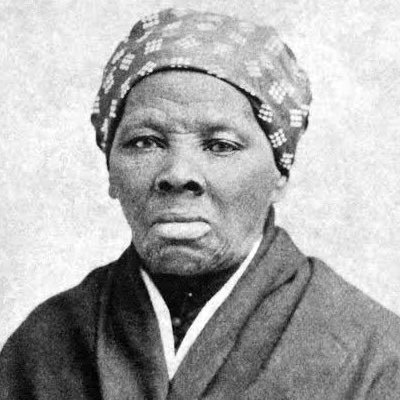
Selma Burke was a sculptor & member of the Harlem Renaissance movement, best known for her bas-relief portrait of President Franklin D. Roosevelt
She never received credit for her portrait of President Franklin D. Roosevelt which was later featured on the US dime.
—In 1943, Franklin D. Roosevelt sat for a portrait by a young African-American artist from Mooresville. That artist was Selma Burke.
However, John R. Sinnock’s signature is on the dime, and he receives credit for the work while Burke’s portrait, which she spent two years working on, is only recognized as an inspiration and model for the final image used on the coin. According to Lisa E. Farrington, author of “Creating Their Own Image, The History of African-American Women Artists,” Sinnock made “barely perceptible alterations.”
HONORS
As well as a sculptor, Burke was also a lifelong student and educator, winning numerous awards and fellowships. She earned her first degree from Winston-Salem State University in North Carolina and eventually graduated with a Master of Fine Arts from Columbia.
She started her first art school in 1940, eventually starting her second in 1946, and opened the Selma Burke Art Center in Pittsburgh, which operated from 1968 to 1981.
Burke is an honorary member of Delta Sigma Theta sorority. She received several honorary doctorate degrees during her lifetime, including one awarded by Livingston College in 1970 and one from Spelman College in 1988.
Milton Shapp, then-governor of Pennsylvania, declared July 29, 1975, Selma Burke Day in recognition of the artist's contributions to art and education. Her papers and archive are in the collection of Spelman College.
Burke was a member of the first group of women – along with Louise Nevelson, Alice Neel, Georgia O'Keefe, and Isabel Bishop – to receive lifetime achievement awards from the Women's Caucus for Art, in 1979. She received the award from President Jimmy Carter in a private ceremony in the Oval Office.
She received a Candace Award from the National Coalition of 100 Black Women in 1983 and the Pearl S. Buck Foundation Women's Award in 1987.
She died in 1995 at the age of 94.

Aurelia Best, PhD retweeted

In 1943, a Canadian soldier walked into a restaurant in his own hometown, in uniform, and asked for a meal.
The owner refused to serve him.
When he wrote to Ottawa to complain, the government told him there was no law against it.
The town was Dresden, Ontario.
It had been one of the end points of the Underground Railroad. People escaping slavery in the United States had settled there in the 1800s, and by the 1940s Black residents made up about 17 per cent of the town.
They went to school with white children. They lived on the same streets.
But they could not get a haircut in a single barber shop. They could not get a meal in a single restaurant. They could not shoot pool in a single pool hall.
One historian later described the discrimination in Dresden with one word.
Absolute.
The soldier was Hugh Burnett.
He was born on a farm just outside Dresden on July 14, 1918, a descendant of people who had escaped enslavement. He became a carpenter.
He had first felt it at 16. He stopped his truck to help a white motorist who had run out of gas. The grateful stranger insisted on buying him lunch in town.
Burnett thought that, in the company of a white man, maybe this time they would serve him.
They did not.
He decided then that he was going to do something about it.
When the war came, he enlisted. He was later discharged for medical reasons. In 1943, at 25, he was living in Windsor with his wife, Beatrice, and working at Ford. He came home to visit family, still in uniform, and was turned away.
So he wrote to the federal Minister of Justice, Louis St-Laurent.
Even in uniform, he wrote, a Black man could not be served in any restaurant in Dresden.
The reply from the Deputy Minister was simple. There was no law against racial discrimination in Canada.
Go and check. In 1943, that was true.
In 1948, Burnett moved his family back to Dresden. He joined his uncles in a small group of Black farmers and tradespeople called the National Unity Association.
He became its secretary, its organizer, and its voice.
They asked the town council for a bylaw banning discrimination in local businesses.
Council refused. Then it agreed to put the question to the voters.
In 1949, the people of Dresden voted on whether restaurants should be allowed to refuse service because of race, colour or religion.
The bylaw lost.
Five to one.
That was roughly the ratio of white residents to Black residents in town.
Burnett did not stop. He took the fight to Toronto, joining labour and human rights groups pushing for a provincial law.
In 1951, Ontario passed the Fair Employment Practices Act, banning discrimination in hiring. Burnett wrote to Premier Leslie Frost to point out that it still said nothing about restaurants.
In March 1954, he stood in front of the Premier and his cabinet and told them what Dresden was like.
Reports said Frost was moved.
That same year, Ontario passed the Fair Accommodation Practices Act. Refusing service because of race became illegal.
And in Dresden, nothing changed.
Two restaurants, Kay's Café and Emerson's Restaurant, kept refusing Black customers. So Burnett and his neighbours walked in, sat down, and asked to be served. When they were refused, they filed formal complaints.
These were sit-ins.
In 1954.
Years before lunch-counter sit-ins swept the American South.
The province was slow to lay charges. Some owners simply locked their doors when they saw the group coming. So the activists sent in out-of-towners the owners did not recognize, with a Toronto reporter along to watch. One test case went to court. The owner of Kay's Café was found not guilty.
They tried again.
In November 1955, two university students from Trinidad were refused at Kay's Café. The owner was charged again in early 1956. This time he was convicted and fined.
On November 16, 1956, members of the National Unity Association walked into Kay's Café.
For the first time, they were served.
Here is what it cost the man who led them.
His family received anonymous threats. The life of his school-age daughter, Patricia, was threatened. White residents boycotted his carpentry business until there was no work left.
That same year, Hugh Burnett was forced to leave Dresden.
He moved to London, Ontario, and kept a low profile for the rest of his life. His daughter later remembered her mother stretching meals with fewer potatoes and fewer onions as the money dried up.
"I think that he was on this earth to do what he did," Patricia said. "He had to do it."
Back in 1954, Burnett had explained what he expected the new law to do.
"It has been stated that you can't make a law to make one man love another," he said. "But it would eliminate the act of discrimination. And of course our personal feelings will come into it later. We will learn to like each other."
He died on September 29, 1991. He was 73.
Almost nobody outside Dresden knew his name.
On July 31, 2010, the Ontario Heritage Trust unveiled a plaque on the main street of Dresden, near the restaurant that had once turned him away. It credits Hugh Burnett and the National Unity Association with laying the groundwork for human rights law across Canada.
Think about the last time you walked into a restaurant and simply sat down.
Nobody asked who you were.
A carpenter lost his business, his town, and his home so that question would never be asked again.

Aurelia Best, PhD retweeted

A baby boy was strapped inside his stroller when a powerful gust of wind sent it rolling straight toward a busy road. His great-aunt desperately chased after him, but fell hard onto the pavement.
As cars sped past just ahead, she could only watch helplessly as the stroller kept rolling. But someone across the parking lot had spotted what was happening, and suddenly took off running.
It happened in Hesperia, California. A woman was standing beside her car with her great-nephew in his stroller when a sudden gust of wind pushed it away from her. She immediately ran after it, but lost her footing and fell hard onto the asphalt. She struggled to get back up, only to fall again, helplessly watching the baby roll farther away.
Just across the parking lot, Ron Nessman had been waiting outside a nearby car wash after a job interview. He spotted the runaway stroller and realized it was heading straight toward the road. Without hesitating, he took off running, desperately trying to close the distance before the stroller reached the passing vehicles.
The entire terrifying moment was captured on a security camera. As the stroller approached the edge of the parking lot, Ron caught up and grabbed the handle, stopping it before it entered the street. He then carefully brought the baby back to his shaken great-aunt, who was overcome with relief.
But what makes Ron’s story even more remarkable is what he had been going through himself. After losing his girlfriend, he had struggled with homelessness and was working to rebuild his life. That day, he had been trying to get a job. Instead, he found himself in the right place at exactly the right moment to save a little boy.
The rescue video spread across the country, and Ron later received news that he’d gotten the job he had interviewed for. A man who was trying to turn his own life around had just become someone else’s hero.
Men like Ron remind us all that good people still exist. Let’s make sure he gets the recognition he deserves.

Aurelia Best, PhD retweeted

The Republican-controlled board of elections shut down the 1 early voting site at North Carolina A&T University—a historically Black college—so students marched an hour to vote.
CONGRATULATIONS TO THESE STUDENTS FOR FIGHTING BACK. WE MUST ALL DO THE SAME.
Aurelia Best, PhD retweeted

More than FOUR HUNDRED families were thrown off the land in one Tennessee winter.
Not for a debt. Not for a crime. They had registered to vote.
So they spent the winter in army surplus tents, in a field, with children.
Fayette County, Tennessee, 1960. Sharecropping families — they did not own the land they worked, and
that was the whole lever.
They registered. The landowners evicted them, many without notice.
Then came the part that was meant to finish it. **The merchants closed ranks.** Names were circulated.
Families who had registered could not buy groceries. Could not buy seed. Could not get petrol. Credit
was cancelled. Insurance policies were cancelled.
And white doctors refused to treat their own patients.
Read that again. Not a mob. Not a night ride. A list, passed between shopkeepers, that meant a
pregnant woman could not see the doctor she had always seen.
John and Viola McFerren had started the civic league that ran the registration drive. A landowner
named Shepard Towles let the evicted families put tents on his ground, which took more courage than
most people will ever have to find.
They called it Tent City. Surplus army canvas, through a Tennessee winter, with no running water,
cooking outside, children going to school out of a tent.
In Haywood County next door, about thirty more families did the same.
They did not fold. The Justice Department came in. By December 1960 it had sued forty-five
landowners, twenty-four merchants and one bank. On 26 July 1962 the landowners were permanently
ordered to stop interfering with Black registration and voting.
So this one ends with a win — a federal injunction, won by sharecroppers living in tents.
But hold the price in your head. Four hundred families. Two winters. And the weapon was not a gun.
It was a grocery list.


Aurelia Best, PhD retweeted

The system spent years bouncing 12-year-old Andrew around foster care, leaving him behind while his siblings got adopted.
But his best friend Joc and the Gilliam family refused to let him become forgotten and adopted him.
They didn't just stay best friends, they became real brothers..Stop letting a broken system fail these kids.

Aurelia Best, PhD retweeted

Donald Trump family is immigrants. His kids moms are immigrants.. and you have never seen FBA criticize the president or his immigrant family. But they sure attack and abuse, black immigrants.. It got so bad with their xenophobic they attack black Americans as immigrants..
Aurelia Best, PhD retweeted

Our farmers cannot build their future on “we might buy”. When they grow, they must know they have a market.
That is why we are making $2 million available each quarter for contract buying through BADMC and Export Barbados, giving farmers greater certainty and strengthening agro-processing.
In Barbados and across the Caribbean, we must grow more of what we eat, process more of what we grow, and keep more value with our people. Less dependence on imports. More affordable food. Caribbean products reaching the world.
Food and water are the new oil. We must grasp that opportunity with urgency.
Aurelia Best, PhD retweeted
Understanding history requires looking beyond the surface events that usually make it into standard textbooks. While slavery is often depicted as a single, isolated era in history, the reality is that it formed the foundation for a vast network of oppression that spans centuries and continents. The visible institution of slavery was just the tip of an iceberg, supported by a massive underwater structure of institutional racism, economic exploitation, and social control. Concepts like Jim Crow laws, segregation, social Darwinism, and mass incarceration are not separate historical occurrences, but direct continuations of the same framework designed to disenfranchise Black communities.
When we analyze modern systemic inequality, we have to recognize that these issues do not exist in a vacuum. The deep-seated biases embedded within housing markets, justice systems, and political structures today trace their roots directly back to these historical systems. By examining the full scope of this impact rather than just the most obvious historical markers, we gain a clearer picture of why systemic reform remains so crucial today. True progress requires addressing not just the visible symptoms, but the foundational structures that continue to uphold inequality across society.
If you love our content and would like to support the page, you can buy us a coffee here: buymeacoffee.com/africanarch… (I also post blogs there and have a book club)—

Aurelia Best, PhD retweeted

Canada is one of our biggest trading partners.
Donald Trump is one of our biggest economic illiterates.
Now the rest of us are caught in the crossfire of an idiotic trade war that’s going to hurt regular people more than they’ll benefit.
Aurelia Best, PhD retweeted

Reminder: Canada is a sovereign country! 🇨🇦
We are not and will never be American in any form. 🍁
Retweet if you stand by Canada forever. 🦫

Aurelia Best, PhD retweeted

Prime Minister Mia Amor Mottley is calling on voices across Africa and the Caribbean to unite the continent and the region. cbc.bb/news/local-news/prime…


