

networking that doesn't feel like work
Joined March 2026
- Tweets112
- Following9
- Followers336
- Likes15






an inbox cannot tell noticed "this is a close friend" or "i would not ask them for this." the research @0xmacedo describes uses human corrections and real outcomes to improve relationship recommendations over time.
noticed.so/blog/who-deserves…

email, calendar, and social connections can show that two people interacted. @0xmacedo writes about why noticed also needs to understand trust, relevance, and what someone would be comfortable asking.
noticed.so/blog/who-deserves…
who can spot @simao_etc?

access to email, calendar and social accounts still leaves an agent with a hard problem: understanding who each person is and how relationships change. @0xmacedo connects recent research to the relationship intelligence noticed is building.

recent research shows ai agents still lose the thread between people, events and relationships over time.
an agent with access to your emails, calendar and social accounts still needs to understand who each person is and how your relationship has changed.

ALT An abstract atmosphere in blue, green and warm cream with a subtle, centered off-white headline on three lines: AI struggles to / understand / relationships.
relationship advice can be wrong even when every source is accurate in isolation. @simao_etc's benchmark tests whether noticed can reconcile meetings, CRM tasks and newer messages before recommending who should act next.
noticed.so/blog/building-a-b…
as AI gives advisers more time with clients, @0xmacedo points to the next decision: which client, prospect or professional relationship deserves it? noticed helps teams answer that from the networks they already have.

trust includes knowing someone chose to invest time in you. @0xmacedo explains why noticed's work on professional relationships leaves that human choice with the people involved.
human relationships will continue to decide deals, hires, and investments. critical business outcomes will still depend on people trusting each other.
part of that trust comes from knowing someone chose to invest their time in you. no ai agent can automate that choice.

ALT Two people in conversation, shown as a softly blurred abstract scene.
before noticed can suggest who might introduce you to a buyer, it needs to resolve who is who across email, calendar and social profiles. @0xmacedo explains why identity is a foundation of professional relationship judgment.
noticed.so/blog/who-deserves…
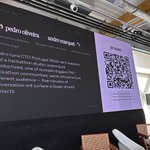
"human corrections show us what to improve," reads a slide in @simao_etc's event photo. noticed uses feedback about people and recommendations to improve how it helps teams find opportunities in their professional networks.


noticed's research partners use their team's network to find sales opportunities. @0xmacedo lays out the decisions behind that work: which customer needs a conversation, who could help reach a buyer, and which relationship has been neglected.
noticed's design system combines reusable components, lint rules and CI evals to help coding agents build its interface. @simao_etc describes the work behind a product for finding opportunities in professional networks.
we're building AI models for professional relationships and have put a lot of effort into (and struggled with) creating a design system our coding agents can use with little to no human input.
It's currently a mix of reusable components, strict lint rules and a set of evals that we run on CI whenever there's UI changes noticed.so/brand/system/
Would love to try elyx and provide feedback. If it helps, was a heavy sketch user way back in 2016-2018 back in uni :)

frontier labs can build connectors and workflow skills, @0xmacedo argues. noticed's research has to demonstrate better professional relationship judgment, such as deciding who could help and what is appropriate to ask.
4 days after openai launched chatgpt for financial services, anthropic launched claude for financial advisors.
connectors and workflow skills are not a durable moat. frontier labs can build them. noticed has to be measurably better at professional relationship judgment.

ALT Who deserves your attention? Article card by Filipe Macedo for noticed.
relationship feedback can teach noticed who matters and what an appropriate ask looks like. @0xmacedo also draws a boundary: private feedback should not automatically enter a shared or global model.
noticed.so/blog/we-built-too…

noticed used to ask for LinkedIn access before showing how its agent helps people use their professional relationships. @0xmacedo shares the onboarding change that shows the result first.
noticed helps people make use of their existing professional relationships. @0xmacedo wants a more specialized model to handle more of that work and reduce the screens and decisions people have to deal with.

Filipe wrote about how a networking agent that helps people use their professional relationships turned into a screen-heavy SaaS app. we're now rebuilding noticed around the agent again.
why did we build so much software around @noticedso?
noticed started as a networking agent. somehow, we ended up with a saas-like app...
our instinct was to solve every user problem with more screens and ui.
more on this 👇

most of your career is shaped by people in your network.
the colleague who became a co-founder.
the dinner host who turned into a hire.
these moments are rare because they depend on remembering the right person at the right time.
that's where noticed can help.