

Building Indexel | Driving Innovation in Energy Storage & Industrial Automation https://nitter.gq/t.co/g2xQzgHvxd https://nitter.gq/t.co/SK2vzSzj3c
Joined July 2021
- Tweets305
- Following154
- Followers9.5K
- Likes560





Pinned Tweet
My Journey in the Family Business : Six Months In
Phase 1 : Diving In and Making Sense of the Chaos
1. Six months ago, I joined my dad's business, diving into a world vastly different from my computer science background. Our company specialises in instrumentation, automation, and electrical solutions.
2. My first project involved implementing an HRMS to streamline HR, expense, and payroll processes. This initiative not only improved efficiency but also allowed me to connect with everyone in the company. Training the team helped me understand our daily operations and underscored the importance of technology in enhancing business processes.
3.Following this, I visited each department to gain a thorough understanding of our products and services.
Phase 2: Field Visits & Manufacturing Processes
To truly grasp our business, I joined our sales team on different field visits - Cement Plant in Kota, Textile Industries in Bhilwara, Nuclear Fuel Complex (NFC) and Nuclear Power Corporation of India Limited (NPCIL) in Rawatbhata.
Realising that our company plays a crucial role in essential industries like cement, power, water, oil, gas, and wastewater was fascinating and has motivated me even more to contribute to our work. These visits gave me valuable insights into the sales and procurement processes at these plants and allowed me to see firsthand how our products integrate into larger systems.
Phase 3: Next steps
I plan to conduct more industry visits, network with professionals in manufacturing, enhance my technical knowledge of the business, and upgrade our ERP software to streamline the entire manufacturing supply chain process.
I look forward to any tips or suggestions on how to better navigate this journey and connect with more people.❤️
30 GWh of BESS means a lot more than battery demand. Enclosures, thermal management, electronics, software, testing. An entire supply chain to build.
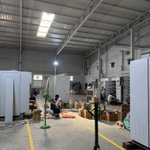
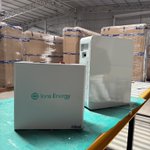
We’re building our small part of it at Ions Energy, right here in India! 🇮🇳


Store More → Import Less → Power India Round the Clock!
The Cabinet has approved a massive Rs 14,500 crore push to develop 92 GWh of energy storage capacity, supporting an estimate of almost 1 lakh crore investment!
Unique features are:
60 GWh of pumped hydro storage.
30 GWh of battery energy storage.
2 GWh through emerging technologies.
40% minimum domestic content for battery storage projects.
Truly, it is more reliable power, greater renewable energy integration and stronger energy security.
pib.gov.in/PressReleaseDetai…
Packaging folks on Twitter, need your help!
We’re improving packaging for our lithium battery products. How do we keep costs low without compromising on protection during shipping?
Would love suggestions, vendor recommendations or lessons from experience.


50 GWh BESS! That’s a lot to build. And definitely not something a few large companies can do alone.
Manufacturers, distributors, dealers, local businesses , India needs all of us to make this happen.
We’re doing our bit on the manufacturing side :)
Cleaner power. Stronger grids. More opportunities.
The Cabinet decision on the Green Energy Corridor Phase-III will ensure:
135 GW renewable energy evacuation.
50 GWh battery storage.
Stronger power grids across States and UTs.
More jobs in manufacturing, construction and energy storage.
Big push towards 900 GW non-fossil capacity by 2035.
pib.gov.in/PressReleaseDetai…


India already has 30+ GW of rooftop solar. Community batteries could be an interesting next step.
Store excess rooftop solar locally during the day and use it during evening peaks.
Less reverse power flow, lower stress on the distribution grid, and better use of the solar we already generate.
Maybe not every battery needs to sit behind the meter.
One thing I’ve noticed while working on energy storage:
For smaller places, backup is usually either a UPS that lasts too little, or a DG that is too much to run.
There should be a more practical middle.
That’s what we’ve been working on with Ions Edge.

One thing I’m learning in manufacturing , supply chain is probably one of the hardest things to control.
Prices change, quality varies, lead times move, and one wrong procurement decision can eat into margins fast.
You can have sales, but maintaining margins is a completely different game.
Anyone who’s been in manufacturing for a while , what has actually helped you manage this better?


Manufactured these electrical panels for an ongoing Electrical & Automation EPC project at a chemical plant in Dhule, Maharashtra.
The project includes 33 kV power connectivity, transformers, HT/LT switchgear, DG synchronisation, DCS/SCADA, process instrumentation, plant wide cabling and protection systems.


Renewables can generate electricity. But can they stabilise the grid?
Traditional power plants used the rotating inertia of synchronous generators to slow sudden frequency changes.
Most renewable and BESS inverters are grid-following, they need an existing grid reference.
A grid-forming BESS can help establish and stabilise that reference.
Grid-following follows the grid.
Grid-forming helps hold it together.