

Environmental Scientist @EggerResCons | Director of Environmental & Social Affairs @TheOceanCleanup
St. Gallen, Switzerland
Joined October 2014
- Tweets345
- Following526
- Followers767
- Likes332





Our new study is a critical call to action for policymakers. We need a robust Global Plastics Treaty addressing the entire lifecycle of plastic—from production to waste management and elimination of accumulated legacy pollution. iopscience.iop.org/article/1…


Matthias Egger retweeted
BREAKING: our latest research shows that the amount of plastic fragments (in mass) in the Great Pacific Garbage Patch has increased almost 5x in just seven years. (1/5)


Cleanups should be codified as an equal pillar into the Global Plastics Treaty,👉 nature.com/articles/s41467-0…


Matthias Egger retweeted
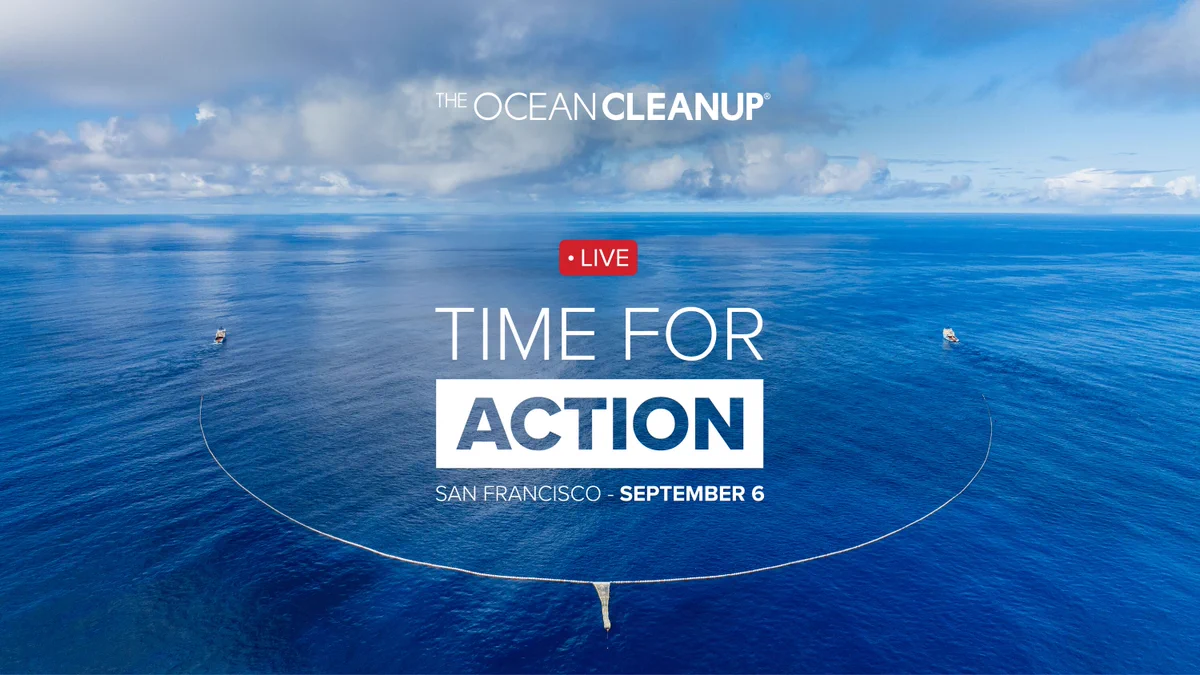
Update on our cleanup operations LIVE from San Francisco: xitter.cf/i/broadcasts/1OyJAZRPQ…
Matthias Egger retweeted

Read about the relationship between neuston and micro-plastics in the North Pacific gyre region and surrounding waters in Environmental Research: Ecology:
ow.ly/zrnF50SWUHK
@oceanegger @modellinghouse

Matthias Egger retweeted
BREAKING: We just made our largest ever plastic catch. Interceptor 006 in the Rio Las Vacas, Guatemala, stopped 272 truckloads of trash - equal to 1.4 million kg (3.1 million lbs) - from flowing into the Caribbean Sea. All in a single evening.
Matthias Egger retweeted
LATEST: The first flush of 2024’s rainy season and Interceptor 006 is already preventing tons of trash from flowing into the Caribbean Sea from the Rio Las Vacas, Guatemala.
Will this be our largest river catch ever? Keep an eye on our channels while our crew works round the clock with two excavators to remove all the waste! 👀
Matthias Egger retweeted
Learn more about the project in Kingston Harbour and its impact in our latest blog: theoceancleanup.com/updates/…

Matthias Egger retweeted
While the 7 Interceptors in Kingston Harbour gullies have been stopping hundreds of tons of trash from entering the ocean, we also witness the impact these deployments have on local communities, inspiring them to drive systemic change further upstream: youtu.be/dsyHYPTsjU8.
Exciting oppportunity in our team at @TheOceanCleanup! Help us ensure an environmentally sound cleanup of the Great Pacific Garbage Patch. Place of work: North Pacific Ocean (50%) and Rotterdam (50%). Apply now!
theoceancleanup.com/careers/…
Matthias Egger retweeted
System 03 is designed to catch plastic, not fish. We have incorporated years of technical and scientific learning into our technology to ensure maximum environmental benefits.
Our Senior Environmental Manager, Maíra Proietti, introduces how we ensure efficient cleanup operations in the Great Pacific Garbage Patch while keeping marine wildlife safe:
Our new study highlights the widespread and lasting harm caused by plastic in the ocean and the impact on marine ecosystems that could last for centuries. We can only resolve this environmental crisis by working together on multiple solutions - together.
theoceancleanup.com/updates/…

To end plastic pollution, a successful Global Plastics Treaty (#INC3) must address existing pollution alongside a systematic change in plastic production and use. Cleanups are key to prevent long-term ecological impacts in our oceans.
microplastics.springeropen.c…

To end ocean plastic pollution, we must find solutions along the entire value chain, from production to end-of-life. Environmentally sound cleanups such as by @TheOceanCleanup mitigate harm done by plastic that is already in the ocean today.
theoceancleanup.com/updates/…

Cleaning up the ocean garbage patches is essential to end plastic pollution, but it's vital to do so in an environmentally sound way. This is how we approach it: theoceancleanup.com/updates/….

Matthias Egger retweeted
Today, for the very first time, we will livestream a plastic extraction from the Great Pacific Garbage Patch. Tune in at 6pm CET/ 9am PST/12pm EST here on X.

Farewell Jenny, and welcome System 03! The newest cleanup system of @TheOceanCleanup is on its way to the Great Pacific Garbage Patch. It is replacing System 002 (aka Jenny) - a system that has helped clean an area of 8,352 km2 (1/5th of the Netherlands).
theoceancleanup.com/updates/…

Matthias Egger retweeted

Interesting new study from @UniUtrecht. Conclusions in line with our previous research:
1) most plastic in the ocean are large objects
2) the plastic in the ocean is very persistent & is mainly floating on the sea surface
3) inflow is much lower than the big numbers often quoted

#Plastic litter in oceans overestimated but could persist longer than expected, study suggests @NatureGeosci doi.org/gskf8s phys.org/news/2023-08-plasti…
Ocean garbage patches are high plastic exposure risk areas for oceanic birds, particularly for threatened species. Limiting plastic waste production, improving waste management and cleaning up legacy pollution are key to addressing impacts.
nature.com/articles/s41467-0…

Tracking data for 7137 petrels of 77 species reveal high plastic exposure risk in the Med/Black Seas, NE & NW Pacific, S Atlantic & SW Indian Oceans
Threatened species shared more of the risk, which occurred across many countries' waters & the high seas
nature.com/articles/s41467-0…

Had a great day #blokarting with the Environmental and Social Affairs team @TheOceanCleanup. Proud to be part of this fun, kind, and knowledgeable team. Together, we investigate the risks and benefits of cleaning up legacy plastic pollution in rivers and on the high seas.

Our latest research shows that coastal species can survive and reproduce on plastic debris afloat in the Great Pacific Garbage Patch, with as yet unknown consequences for species naturally living on the high seas.
nature.com/articles/s41559-0…

Great collaborative research between @TheOceanCleanup, @SmithsonianEnv, @SERCinvasions, @floateco, @oceancleanup and many more.