

Human rights defender from Belarus. In exile — but not in silence. I carry the names of those who could not speak. ✊ Director @Nash_Dom
Vilnius LT,had to flee Belarus
Joined May 2010
- Tweets2.7K
- Following1.2K
- Followers1.1K
- Likes1.4K






This Halloween, Our House was taken over by monsters.
A giant dinosaur roamed the stairs, ghosts and figures in gas masks haunted the rooms, and pumpkins became glowing monsters.
One creation was especially terrifying: a skull mask with enormous teeth and dark, hollow eyes. Straight out of a horror movie. And the children made it themselves!
They also prepared their own Halloween pizza, decorated with gruesome shapes cut from ham.
But something even more beautiful is happening.
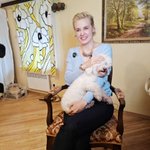
For years, our Yulia has been the fairy behind the children’s creative workshops. And now we see the results: children are inventing, experimenting, and creating at home, entirely on their own initiative.
They create simply because they want to.
For children who have experienced so much fear, that freedom to imagine and create is precious.
We carved pumpkins, played games, dressed up, cooked, laughed, and ate far too many sweets.
But there is another side to Halloween.
We invent monsters, wear frightening masks, scare one another, and laugh. Because everyone knows it’s pretend. Take off the mask, turn on the lights, hug your friends, and the fear disappears.
But some Belarusian children know monsters who don't take off their masks.
They remember armed men in black uniforms arriving at night. The shouting. The searches. Their parents being beaten and dragged away. Some are still waiting for their mother or father to return from a Belarusian prison.
For these children, fear was never a game. No one could simply turn on the lights and make it stop.
Even in safety, those memories remain. Then comes starting over: a new school, an unfamiliar language, a strange country, a life to rebuild.
We cannot give these children back the nights when they should have slept peacefully, the birthdays their parents missed, or the moments when childhood suddenly became frightening.
But we can help make sure fear is not the only thing they remember.
We can give them memories of carving pumpkins, creating monsters, making spooky pizza, laughing at ridiculous costumes, and running away from a dinosaur.
Memories of friends, warmth, and adults they can trust. Of discovering that life is more than surviving. That there is still room for imagination, mischief, laughter, and joy.
Halloween has become a tradition at Our House. We want more traditions like it. Small islands of happiness amid uncertainty. Something familiar to return to. Something wonderful to anticipate.
Because childhood should not be measured in arrests, prison visits, and nights of terror.
It should be measured in laughter, friendships, discoveries, and wonderful things made with their own hands.
And more than anything, we hope that one day, when these children remember monsters, they will think of Halloween at Our House — not the night someone came to take their parents away.
#OurHouse

On the Absence of a Mushroom Cloud
The mushroom cloud has become such a powerful symbol of nuclear catastrophe that its absence is almost automatically perceived as the absence of nuclear harm.
But between catastrophe and complete safety lies a vast territory of uranium mining, production, testing, waste, and contamination.
It simply works much less effectively on posters, because it has no single dramatic silhouette.

The Olga Karach Case: Five Episodes Attract Nearly 200,000 Views in Two Months
Five episodes featuring Olga Karach and Yevgeny Kudryats attracted nearly 200,000 views.
Around 180,000 views have been recorded across five September and October episodes of The Karach Case, a programme jointly created by Belarusian human rights defender Olga Karach and Germany-based Ukrainian blogger Yevgeny Kudryats.
The programme appears on Yevgeny Kudryats’s YouTube channel. It explores politics, human rights and security, examining events that are shaping our future and already affecting people’s lives.
What might Belarus look like after Lukashenko? How do hybrid warfare and disinformation work? How can we recognise false information and challenge double standards? What questions does Our House’s shadow report on threats to Lithuania’s national security raise? These were among the issues discussed in the September and October broadcasts.
The episode on hybrid warfare, broadcast on 9 October, attracted around 52,000 views. The 30 October broadcast discussing the shadow report had already reached approximately 44,000 views in less than 24 hours. Two September episodes recorded around 34,000 views each.
These figures reflect an interest in substantive discussion about the past, present and future of Belarus, Ukraine, Russia and Eastern Europe as a whole, as well as human rights, militarism and government accountability. We believe these issues must remain part of public debate, so that together we can find informed answers grounded in respect for human life, freedom and dignity.
#Belarus #OurHouse #Lithuania #UkraineWar

On Consequences Without War
We are used to discussing the consequences of nuclear weapons in the future tense: what will happen if they are used.
But environmental history forces us to use a less convenient verb — what is already happening while the weapons are not being used.
In politics, it is generally much more pleasant to debate a hypothetical catastrophe than to deal with actual waste: at least a hypothetical catastrophe has no budget estimate for the next financial year.
Notes on the Cuff
On National Security
I increasingly like the question “security for whom?”, because after it many very large words suddenly shrink to normal human size.
The security of the state, the security of a territory, the security of a person living near a contaminated site, and the security of a child who will inherit that land in thirty years may be connected, but for some reason they do not automatically become the same thing.

On Serious Questions
Military security has one remarkable advantage: it is considered serious in advance.
Environmental security still has to prove that contaminated water, radioactive waste and land that cannot be safely used for decades are serious enough too.
Perhaps the problem is not the environment, but our habit of recognising as a real threat only one that knows how to march.
Notes on the Cuff
About What We Are Defending
After the war, Europe will probably be much better prepared for defense: after a crisis like this, new systems, strategies, technologies, and budgets are hardly surprising.
But alongside the question “how do we defend ourselves?” I would still keep another one: “what exactly are we defending?”
Because it is possible to build an extraordinarily sophisticated defense system and one day discover that defining peace itself has become more difficult than calculating the range of a missile.
Notes on the Cuff

About Your Neighbor’s Security
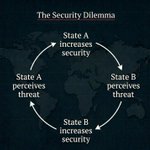
Security has an unpleasant feature: if my security is arranged in such a way that my neighbor constantly feels threatened, sooner or later they begin actively providing for their own.
Then I start feeling uneasy.
I strengthen my defenses, they respond — and before long, both of us have convincing evidence that the other is dangerous.
This is how an arms race can sometimes grow out of two entirely sincere desires to feel safer.
Notes on the Cuff

About Reconciliation at the Wrong Time
“Now is not the time to talk about reconciliation — there is a war” sounds reasonable: when a house is on fire, you put out the fire first.
But thinking about future reconciliation does not mean asking people to forget the war, forgive violence, or immediately shake hands.
It means preserving, already now, the people, knowledge, connections, and spaces without which, after the war, there may simply be no one left to talk to.
Societies prepare for war for years. For some reason, they expect peace to start being built the very next day — preferably by lunchtime.
Notes on the Cuff

About Disagreement
I do not need a world in which everyone thinks alike. After living in Belarus, I tend to regard universal unanimity with a certain professional suspicion.
I need a world in which disagreement is not treated as the first stage of hostility, and the words “I completely disagree with you” do not lead to artillery fire.
The bar does not seem particularly high. And yet humanity still falls short of it.
Notes on the Cuff

About the Vocabulary of War
Our language of war is rich: deterrence, escalation, superiority, strategic depth, first strike, retaliatory strike.
For some reason, the language of reconciliation is considerably poorer.
This may seem like a minor matter of linguistics until you notice that words do not merely describe decisions — they also shape which decisions we are capable of imagining in the first place.
If ten pages of the menu are devoted to war and only one line to peace, it is hardly surprising what gets ordered.
Notes on the Cuff

27 Oct — Dmitry Gulin’s birthday
Today is Prisoner for Peace Dmitry Gulin’s birthday. A former military topographer, he spoke out against security-force brutality and the regime’s violence against peaceful civilians — and was sentenced to 14 years in prison.
Please support Dmitry with a letter:
IK No. 3, 211322, Vitebskaya oblast, p. Vitsba, Dmitryu Gulinu
#NashDom #PrisonersForPeace #Belarus #NoWar

About Twenty Years from Now
During a war, everyone is forced to think about next week, the budget, and the immediate threat.
So a person who asks how Belarus, Ukraine, Russia, and the rest of Europe will live alongside one another twenty years from now may seem a little untimely — even slightly odd.
The problem is that the future will arrive anyway, even if no funding was ever allocated for it. It is rather inconsiderate that way: it shows up without checking anyone’s calendar.
Notes on the Cuff

Olga Karach Receives Prestigious International Poeta Sociale 2026 Award in Italy
VERONA, ITALY — 23 October 2026. Belarusian human rights defender and Director of the Our House Human Rights Centre, Olga Karach, has received the international Premio Poeta Sociale 2026 – “Per il Bene Comune” (“For the Common Good”) for her outstanding contribution to human rights, peace and civic solidarity.
The award ceremony took place at Verona’s historic Palazzo della Gran Guardia during the third Poeti Sociali (“Social Poets”) festival, organised by Fondazione Toniolo under the patronage of the Municipality of Verona. This year’s theme was “Peace, the Face of Humanity.”
The award recognises individuals who defend human dignity and turn humanitarian values into meaningful action.
Olga Karach was honoured for more than 20 years of human rights advocacy, supporting victims of political repression, refugees and people affected by war.
Through Our House, she has particularly championed the right to conscientious objection to military service, defending Belarusian, Russian and Ukrainian conscientious objectors, deserters and people persecuted for refusing to participate in war.
Her work combines international advocacy, legal assistance and humanitarian support to protect fundamental rights and promote peace.

About Authoritarian Efficiency
Authoritarian regimes deal with the problem of independent intellectuals quite efficiently: first they make it difficult for them to work, then difficult to live, and eventually people leave at their own expense.
The state then declares them traitors who have lost touch with their homeland.
It is an almost waste-free system: the brains evacuate themselves, and all the authorities have to do is express outrage at their insufficient patriotism.
Notes on the Cuff

25 Oct is Prisoner for Peace Sergey Shpak’s birthday. A retired lieutenant colonel who urged security forces to refuse violence against peaceful protesters, he’s now persecuted and imprisoned.
Please support Sergey with a letter:
Tyurma No. 4
212011, Mogilev,
ul. Kropotkina, 99A
Sergeyu Shpaku
#NashDom #PrisonersForPeace #Belarus #NoWar

On Two Columns
Imagine a company that sells a product for one hundred euros and then demands another thousand to clean up the pollution created by producing it.
Few accountants would say that the thousand has nothing to do with the cost of the product. Yet in nuclear policy such a system somehow looks perfectly respectable: weapons in one budget column, cleanup in another.
The important thing is not to put them side by side, or arithmetic may begin asking political questions.
Notes on the Cuff
About Brain Drain
The phrase “brain drain” makes it sound as though someone simply forgot to turn off a tap.
But in reality, when a single professor leaves, students, seminars, laboratories, research traditions, and books that have not yet been written may disappear with them.
War and authoritarianism destroy not only the present, but possible futures as well.
You just cannot always see that a university has already been destroyed while its walls are still standing.
Notes on the Cuff

On the Peaceful Life of Radioactivity
Political eras end beautifully: documents are signed, flags come down, archives are opened and documentaries are made.
Radioactivity behaves less ceremoniously and may continue to exist long after the era itself has acquired a name in the history books.
Unfortunately, some consequences of the Cold War are under no obligation to end at the same time as the Cold War.
Notes on the Cuff

About People with Suitcases
A person can spend twenty years as a researcher, journalist, filmmaker, or teacher, then cross a border because of war or repression — and suddenly become simply “a refugee.”
A biography, knowledge, and networks disappear behind a single word on a form.
If Europe sees such people only through their migration status, then migration status is all it will get from them.
And yet sometimes, along with a suitcase, an entire school of thought crosses the border.
Notes on the Cuff
