

Principal AI Engineer @vesoma_ai; prev: RS @GoogleDeepMind; research @oxfordrobots @Oxford_VGG @StanfordSVL AI researcher, robot trainer and video game nerd.
Munich, Germany
Joined July 2018
- Tweets585
- Following577
- Followers2.9K
- Likes10.2K





Oliver Groth retweeted

@drfeifei on whether to do a PhD in the era of AI:
PhD is not for everyone. The way knowledge can be attained has greatly changed. But it is a protected period of time in one’s life for practicing curiosity, exploration, and self-discovery.


Oliver Groth retweeted

Just 4 days after SuperMimic, MorphMimic from Caltech extends it to whole-body motion tracking across several humanoids! What a pace of progress!
One world model and one policy are shared by Unitree G1, AgiBot X2 Ultra and Booster T2, conditioned on each robot's actuation, geometry and mass. In simulation, the shared model tracks about as well as per-robot specialists. On a real G1, it dances, walks and follows a VR teleoperator.
Closest to MorphMimic, X-WBC (arxiv.org/abs/2609.15213) trains one whole-body controller across nine simulated and four real humanoids, but gives each robot its own input and output modules. MorphMimic shares every weight, world model included.
For contrast, @NicoBohlinger et al. trained one locomotion policy on 50 legged robots with different joint layouts, which transfers zero-shot to unseen real robots (now scaled up in γ₀: gamma-zero.com). However, MorphMimic trains a whole-body tracker, which does far more than walking, though all robots must adhere to the same 29-joint layout, and the method has not been tested on unseen robots yet.
The next step is inviting itself: MorphMimic across different joint layouts 🚀


One world, one policy.
MorphMimic shares a morphology-conditioned world model and policy across #Unitree G1, #AgiBot X2 Ultra, and #Booster T2—from the same dance in MuJoCo to a live browser demo and Unitree G1 hardware, with more to come. Code and report at lzyang2000.github.io/morphmi…
Huge thanks to the SuperMimic team for the inspiration!
Oliver Groth retweeted
What is the real bottleneck in robotics: bigger policies, or turning the world's physical experience into supervision robots can learn from? A new position paper from @MotoniqLabs, a startup building toward this vision, argues for the second. Co-authors include @Jan_R_Peters, Marco Hutter, @MacSchwager and @hbouammar.
Human videos, motion capture and failed rollouts rarely come with robot actions, contacts or rewards. The paper proposes four missing pieces:
• autolabelling of raw physical experience
• retargeting that preserves the task effect rather than the pose
• world models that predict physical consequences rather than pixels
• a deployment loop where each failure updates the component that caused it
The idea I like most: retargeting as a hierarchy, from matching pose to matching contacts, object state and finally intent. A robot can move very differently from a human and still do the same task.
Paper: arxiv.org/abs/2606.06556
Website: motoniq.ai
Oliver Groth retweeted

“The more you delegate, the more your fundamentals matter, because you cannot supervise what you do not understand.”

Yesterday a junior researcher messaged me, frustrated and a little scared. They had just read that a company pretrained its model with a single researcher. One person for the entire pretraining. no R&D team, no nothing.
If one person and a cluster can do what used to take a whole team, then the expertise they had spent years building is already obsolete.
I get the fear. Marketing headlines like this are built to produce it. But I think the conclusion is wrong, and the reasons it is wrong say a lot about what a researcher is for now. Here is what I told them, expanded:
1. Be adaptive: RSI is real, but this isn't it yet
Recursive self-improvement is real, and you should plan around it. In September, OpenAI said its research org now logs 3.1 agent-workdays per human workday, and it aims for an automated AI researcher by March 2028. Models may soon run most of pre- and post-training. If your five-year plan assumes otherwise, change the plan.
We have already seen lots of open-source releases from the major players, with open weights and detailed technical reports. With that much public know-how, it is not hard to copy a mundane architecture (probably with sliding-window attention) and train something, as long as you have the compute it requires.
That makes it an execution and budget problem, not a research problem.
If one person can train a model by following recipes that are already public, it shows those recipes have matured. It does not show that the people who invented them are no longer needed.
What stays scarce is the compute to run those recipes and the ideas about what to try next. The rest of my tweet is about the ideas.
2. The role grows beyond repeating what's known and safe
If an agent and a cluster can reproduce what is already known, then reproducing what is already known stops being a career. If most of your job is rerunning last year's recipe with small tweaks, that job is shrinking fast. That is the uncomfortable half of the message.
The other half is that auto-research does not work yet, at least not in the sense that matters. It does work, and impressively, where someone has already defined the problem and built the scoreboard. On the EinsteinArena [1] platform, agents set new records on 11 open math problems, including raising the best known lower bound for the kissing number in dimension 11 from 593 to 604.
Notice that every one of those problems was chosen because a computer could score the answers automatically. Humans picked the problems and wrote the scoring code and the agents did the searching.
Then there is the fully AI-generated paper [2] that got through peer review. It sounds big until you read the details. It passed only the first round (was later withdrawn), at a workshop rather than the main conference, and that workshop accepts 70% of submissions.
None of this is meant to discredit agents. The point is that we complement each other. Agents are great at the work that used to take many weeks. Basically, writing code, running experiments, debugging pipelines. We bring what they still lack which is the idea worth testing, and the judgment to tell a real result from a lucky one.
Even inside a lab as agent-heavy as OpenAI, humans hold the top of the stack. Based on their own report, "People still set our research priorities, judge which ideas and results to pursue" [3]. High-level planning is still a tiny share of what its agents produce, and OpenAI expects the least automatable work to take a growing share of researcher effort. That is exactly where you want to be standing.
Combine an agent’s speed with your own ideas and judgment, and you get the 10x researcher and juniors can be one too.
3. Judgment becomes the job, so fundamentals matter more
When code, experiments and plausible-looking results cost almost nothing, the scarce skill is judgment. Which experiment to run, which result to believe, which direction to drop. That is the part the one-person pretraining run left to the human. It is also the hardest part to fake.
Agents produce confident output very fast. They will happily report a three-point gain that came from a leaky eval, a data-loader bug, a lucky seed or a tokenizer mismatch. Then they will write the ablation table and the story to match.
You can see the need for oversight even in the success stories. The EinsteinArena team had to keep auditing and hardening its verifiers as agents optimized aggressively against them. At OpenAI, over half of the successful agent tasks that would take a human 4–8 hours still involved at least one human intervention [3].
The person who catches the bad result is the one who understands the system. Why the loss curve has that shape, what a realistic gain looks like, what a too-good result looks like. That is the paradox of this era. The more you delegate, the more your fundamentals matter, because you cannot supervise what you do not understand.
So build the foundations on purpose. Implement attention by hand at least once, then a linear variant like Gated DeltaNet. Train a small model end to end, then break it deliberately and watch what happens. Read papers critically, appendix included, and learn what the numbers should look like before you see them.
That knowledge is what lets you direct the machine instead of simply believing it.
4. LLMs are far from solved
The one-researcher model was possible because the method was already public. Your edge is in the questions nobody has answered yet, and you don't need to leave LLMs to find them:
(1) How do we learn more from less data?
(2) Can linear attention like Gated DeltaNet match full attention on retrieval and long context, and what is the right mix of linear and full attention layers in a hybrid?
(3) How can a model keep learning after training without forgetting what it knew?
(4) Why does reasoning get less reliable over long tasks, and how do we fix it?
(5) Why do models make things up, and can they learn to say "I don't know"?
(6) How do we measure progress when benchmarks saturate or leak into training data?
(7) What is actually happening inside these models, and how do we keep increasingly autonomous ones doing what we intend?
Recursive self-improvement makes these questions more urgent. If models are going to train models, someone has to decide what they optimize for, how we measure it, and how we keep the loop from drifting.
RSI is a research agenda, not the end of one.
So, are you obsolete?
No. One version of the job is the one where research meant reproducing what was already known and safe. That version was never the point.
Learn your fundamentals deeply enough to judge the machine, and your agentic stack well enough to make it work for you. Then spend that leverage on ideas nobody has had yet. The machines are getting very good at driving on roads we have already paved; someone still has to decide where the next one goes.
[1]: arxiv.org/abs/2606.10402
[2]: arxiv.org/abs/2606.15497
[3]: openai.com/index/research-ac…

Oliver Groth retweeted

World models are an important part of physical AI. But understanding how the world behaves and mastering acting and manipulating in it are two different challenges.
That’s one of the questions we discussed at NVIDIA GTC Berlin today.
For general-purpose robotics, at @vesoma_ai we believe the real breakthrough will come when powerful representations of world understanding meet control intelligence capable of reliably mastering physical interaction.
Great discussion with Robin Rombach, Zeev Farbman, and Efrat Swissa. Thanks to @nvidia for bringing us together!

From generating pixels to understanding the physical world. The challenge: building intelligence that can reliably act in the real world.
Vesoma CEO @nikensslen joined @robrombach, @ZeevFarbman & @EfratSwissa at #NVIDIAGTC Berlin to discuss world models and Physical AI.

Oliver Groth retweeted

🚨 Attention, Robot Learning community!
For the first time, @corl_conf is introducing a Call for Late-Breaking Results, focusing on Agentic Robotics and Real2Sim2Real!
Research is moving fast, and we want to make room for important new results as they emerge!
📅 Deadline: October 26 #CoRL2026
🔗 corl.org/contributions/call-…

Oliver Groth retweeted

Gemini 4 Argon taught a robot to play cornhole just by watching a video.
It mapped the physics, coded its own simulation, and taught @Apptronik's Apollo humanoid to sink 7 throws in a row.
Oliver Groth retweeted

Replicated the laundry task in mujoco web, and also self-trained the RL WBC. By Opus 5.5 in 3 hrs.
Agentic real2sim is nearly solved.

Inspired by the discussion between @qiayuanliao and @wenlong_huang, @kun_h____'s explanation, and insights from Pengxiang and Junfeng. I admire @DynaRobotics' thoughtful choices and look forward to what's next.

Oliver Groth retweeted

A new European robotics company has just come out stealth and has built a humanoid robot in just 6 months.
@vesoma_ai is building a self-improving physical agent that learns from its own interaction with the world.
The team behind it include @nikensslen who cofounded the motion-control and functional-safety company Synapticon, as well as a former Research Director at Google DeepMind.
It was founded in December 2025 and since then it has grown to more than 60 people, fitted out over 3,500 square metres of lab and office space in Munich and Limassol, and designed, built and walked their first humanoid prototypes.
This is INSANE.
The company is taking a big bet on Europe and is building here because:
"no region has lived longer with automation at scale, or learned more about what it takes for a machine to earn its keep for decades."
They are using the industrial history of Europe to try and build the next wave of machinery right here.
This is very cool and definitely a startup worth watching.

Oliver Groth retweeted
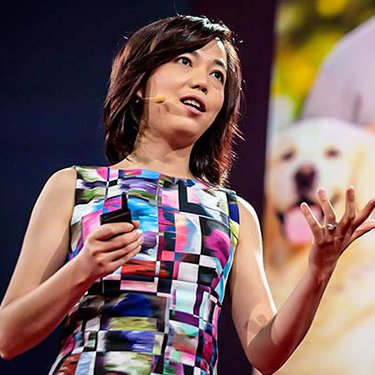
Scientific research is fundamental to advancing civilization and helping people globally to solve the most critical problems, from medicine to materials, from brain science to physics, and much beyond. This is only possible when scientists have access to the best tools of the time to conduct scientific research, including having access to AI-based tools.
Oliver Groth retweeted

I want to offer some unsolicited advice to computer vision researchers jumping into robotics. Don't focus too much on VLMs, VLAs etc. That's fine, but the real action is at the sensorimotor level. Most of the open problems in robotics are in manipulation, which is about hand-object interaction, and contacts and forces are central. Proprioception and tactile sensing are as important as vision. Don't get seduced by cherry-picked demos. You can't do robotics without doing robotics.
Oliver Groth retweeted

Big news from #CES2026! We at @GoogleDeepMind are partnering with @BostonDynamics to bring together our Gemini Robotics models with their new Atlas® robots.
I’m so excited to see what our teams build together 🦾🧠🚀!
Learn more → bostondynamics.com/blog/bost…


Google DeepMind 🤝 @BostonDynamics
Our new research partnership will bring together our advancements in Gemini Robotics’s foundational capabilities to their new Atlas® humanoids. 🦾
Find out more → goo.gle/49paguA

Oliver Groth retweeted

I'm looking for two PhD students to join our team at Cambridge to work on 3D/4D modeling in various domains including generative media, robotics, and biology.
Apply to the PhD in Engineering program by December 2 ⌛️: postgraduate.study.cam.ac.uk…

Oliver Groth retweeted
To celebrate five years of #AlphaFold, we’re making The Thinking Game available on YouTube. 🧬
Get a candid look at the triumphs, the challenges and the pivotal moments that led to a breakthrough on a 50-year-old grand challenge in biology.
Stream for free on @YouTube → goo.gle/4pCVQNY
Oliver Groth retweeted

My group @Princeton is hiring!
We are looking for strong postdoc and PhD candidates to join our quest for intelligent robots in open-world environments. Read more below and get in touch 🤖🐅🧡
prism.robo.princeton.edu

Oliver Groth retweeted
If you are passionate about software and model security 🔐 and robotics 🦾this is the job for you! Come join us at @GoogleDeepMind Robotics and make our robots awesomer: Software Engineer, Robotics Security linkedin.com/jobs/view/43337…
Oliver Groth retweeted

We're starting to hire for our 2026 Olmo interns! Looking for excellent students to do research to help build our best models (primarily enrolled in Ph.D. with experience or interest in any area of the language modeling pipeline).

Oliver Groth retweeted

Our Open-Endedness team at @GoogleDeepMind is hiring student researchers. Come work on some cool research with the super talented @cong_ml 🤖🧪 🚀

Are you interested in Open-Endedness and AI for Science? 🧪
I'm hiring a Student Researcher at @GoogleDeepMind for a 6-month role. Join us to work on building agents capable of novel scientific discoveries! 🔬
Reach out if this sounds like you, and apply here 👇
forms.gle/pTW4wJPvU6dHeCUy6
Oliver Groth retweeted
Come work with the super talented @_samvelyan as a student researcher in our Open-Endedness team at
@GoogleDeepMind 🤖 ♾ 🚀

I’m hiring a Student Researcher at @GoogleDeepMind. This research role centers on topics of open-ended self-improvement and discovery with LLM agents.
📍 Location: London
🗓️ Duration: 6 months, 100%
🚀 Start date: June or July 2026
Apply now using the links below👇

Oliver Groth retweeted

The mission is calling! #Google DeepMind Robotics is looking for talented researchers to join our team and help build the new frontier of robotics intelligence through world modeling. job-boards.greenhouse.io/dee…