

OpenSource Cardiology is a physician-led, open access, peer reviewed journal designed for physicians, authors, reviewers, and scientists.
Joined June 2026
- Tweets77
- Following85
- Followers497
- Likes66





Pinned Tweet
New in OpenSource Cardiology: the SENTINEL-BVF study.
Bioprosthetic valve fracture has changed what valve-in-valve TAVR can
deliver. By fracturing the surgical valve ring with a high-pressure
balloon inflation, BVF allows the transcatheter valve to expand fully — converting a
procedure that often left patients with a meaningful residual gradient
into one with durable hemodynamics.
🆕 in OpenSource: Cardiology
Your patient has an LVEF of 42% and late gadolinium enhancement on CMR. Should scar alone earn them a primary-prevention ICD?
CMR GUIDE was the first randomized test of that question. A new Critical Appraisal from Mayo Clinic argues the answer is "not yet."
• The primary endpoint was neutral: HR 0.76 (95% CI 0.37–1.58)
• Sudden death fell (HR 0.26), but total mortality didn't move: 11.1% vs 11.0%
• The scar-selected patients were lower risk than expected: about 1.1%/yr sudden death in the control arm vs 4%/yr projected
• The ICD arm had more device complications and worse quality of life
The authors' verdict: on current evidence, scar alone should not yet prompt a primary-prevention ICD.
The under-70 subgroup (3.3% vs 10.0%, HR 0.28) is worth pursuing but remains hypothesis-generating.
opensourcecardiology.org/doi…
Free to read, no paywalls
@ramziw_
@tamarappoo

OpenSource Cardiology retweeted
🆕 in OpenSource: Cardiology
Can IV digoxin loading help get low-output HFrEF patients off inotropes?
Cardiac glycosides are the only oral agents with positive inotropic effects. Yet guidelines don't address their use in acutely decompensated HF or cardiogenic shock.
Research letter: Hemodynamic Impact with Intravenous Digoxin Loading in Low Output Heart Failure
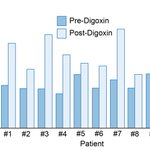
This single-center HF ICU series reviewed 10 consecutive patients with PA catheters and Fick CI <2.2 L/min/m². Each received IV digoxin 0.5 mg, then 0.25 mg at 6 hours and 0.25 mg 6 hours later. Four were on stable dobutamine or milrinone, with the aim of weaning.
At 24 hours:
• Median cardiac index 1.45 → 2.70 L/min/m² (p=0.002)
• All 4 weaned off IV inotropes, with no decrement in CI or SvO₂
• No significant atrial or ventricular tachyarrhythmia or bradyarrhythmia during the ICU stay
The authors' read: IV digoxin loading may have contributed to the rapid CI improvement and may help facilitate inotrope weaning. The series is small, mostly young and uncontrolled, and concurrent vasodilators and diuretics also affected the hemodynamics, so a randomized trial is needed.
By @maz_hanna, Rajakrishnan Vijayakrishnan, Rodolfo Benatti, @ChonyAlbertMD, @WilsonTangMD, @NutritionHF, Guilherme Oliveira & @rcstarling
opensourcecardiology.org/doi…
Free to read, no paywalls

🆕 in OpenSource: Cardiology
An infant with pulmonary vein stenosis gets an Onyx stent. Even at maximal dilation, the stent will eventually be too small for the vessel. Can it be intentionally fractured later?
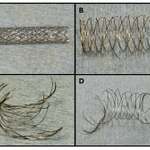
On the bench, Chelsea Miller, MD, and Michael Shorofsky, MD (@mjshorofsky), of the University of Virginia found that 20 of 21 Resolute Onyx and Onyx Frontier stents (2.0–5.0 mm) demonstrated:
• Complete fracture on 6–10 mm high-pressure balloons, median pressure 25 atm
• Most fractured linearly (16/20). That is the desired pattern, because it allows complete relief of obstruction and straightforward placement of a larger stent
• Smaller stents needed higher balloon-to-stent ratios: 3 for 2 mm stents vs 1.8–2 for 5 mm stents
• Only one stent, a 3.5 mm, napkin-ringed and never fractured
In vivo, the balloon needed for fracture may be too large to inflate safely in a small vessel. The authors stress that serial dilation remains the clinical standard.
opensourcecardiology.org/doi…
Free to read, no paywalls

When Recognition Outpaces Access: How Treatment Gaps in Resource-Limited Settings Shape ATTR-CM Diagnosis
This essay by @Carlos_Penate6 argues that in countries where treatment is out of reach in ATTR-CM, disease recognition falters. Increased access is needed in developing countries to improve patient outcomes.
opensourcecardiology.org/doi…
In a series of 10 low-output HFrEF patients, IV digoxin loading and vasodilator titration were associated with increased median cardiac index from 1.45 to 2.70 L/min/m² at 24 hours; all four on IV inotropes were weaned off. Time for an RCT with digoxin in low output HF.
opensourcecardiology.org/doi…
@maz_hanna @ChonyAlbertMD @WilsonTangMD @NutritionHF @rcstarling
🆕 in OpenSource: Cardiology
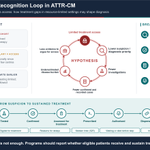
Do we look less for ATTR-CM when we can't treat it?
"When Recognition Outpaces Access: How Treatment Gaps in Resource-Limited Settings Shape ATTR-CM Diagnosis," an essay in The Long View by @Carlos_Penate6, Kenia M. Padrón, Andrew Dzebu and Orlando Henríquez Italín.
The authors draw on their experiences from Cuba, Mexico, and Ghana and note that limited access may lower suspicion, which means fewer recorded cases and less evidence to argue for access.
They propose an audit. Of the people in whom ATTR-CM is suspected, how many are tested, confirmed, assessed for treatment, prescribed, authorized, dispensed treatment, and still on it at 12 months?
opensourcecardiology.org/doi…
Free to read, no paywalls

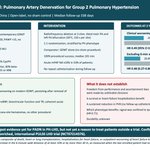
PADN-HF-PH randomized 264 patients with PH due to left heart disease: pulmonary artery denervation cut clinical worsening (HR 0.49; 95% CI 0.30–0.82), but the trial was open-label with no sham arm.
Our critical appraisal looks at what the trial shows, what it doesn't, and why the sham-controlled PULSE-LHD trial matters before PADN is widely adopted.
@a_h_ghoneem @vikasaggarwalmd
opensourcecardiology.org/doi…
Do SGLT inhibitors meet the bar for a geroprotector? Across 13 placebo-controlled trials (90,413 patients), all-cause mortality HR 0.88 (95% CI 0.83–0.94); the authors call SGLTi the most promising candidate geroprotector, and call for a primary-prevention trial in low-risk middle-aged adults to test it.
opensourcecardiology.org/doi…
@DRJamesOKeefe; @MichaelNassifMD; @AndrewJSauer
Did CARDIO-TTRansform fail, or did it answer a different question? The effect of eplontersen depended on background stabilizer therapy.
New article at @opensourcecardiology walks through the monotherapy signal, the pooled silencer data, and why percent knockdown is harder to compare than it looks.
@BrettSperryMD @HamzahAliMD
opensourcecardiology.org/doi…
🆕 in OpenSource: Cardiology
Can IV digoxin loading help get low-output HFrEF patients off inotropes?
Cardiac glycosides are the only oral agents with positive inotropic effects. Yet guidelines don't address their use in acutely decompensated HF or cardiogenic shock.
Research letter: Hemodynamic Impact with Intravenous Digoxin Loading in Low Output Heart Failure
This single-center HF ICU series reviewed 10 consecutive patients with PA catheters and Fick CI <2.2 L/min/m². Each received IV digoxin 0.5 mg, then 0.25 mg at 6 hours and 0.25 mg 6 hours later. Four were on stable dobutamine or milrinone, with the aim of weaning.
At 24 hours:
• Median cardiac index 1.45 → 2.70 L/min/m² (p=0.002)
• All 4 weaned off IV inotropes, with no decrement in CI or SvO₂
• No significant atrial or ventricular tachyarrhythmia or bradyarrhythmia during the ICU stay
The authors' read: IV digoxin loading may have contributed to the rapid CI improvement and may help facilitate inotrope weaning. The series is small, mostly young and uncontrolled, and concurrent vasodilators and diuretics also affected the hemodynamics, so a randomized trial is needed.
By @maz_hanna, Rajakrishnan Vijayakrishnan, Rodolfo Benatti, @ChonyAlbertMD, @WilsonTangMD, @NutritionHF, Guilherme Oliveira & @rcstarling
opensourcecardiology.org/doi…
Free to read, no paywalls
OpenSource Cardiology retweeted

Our editorial, published today in the inaugural issue of @opensourcecards, examines both the promise of these findings and the important unanswered questions that should be addressed before PADN enters routine clinical practice. @vikasaggarwalmd @pulnovo_medical

🆕 in OpenSource: Cardiology
Should pulmonary artery denervation be offered to patients with PH due to left heart disease?
PADN-HF-PH (264 patients, 25 centers in China): 2-year clinical worsening 25.7% vs 51.5% with PADN + GDMT vs GDMT alone (HR 0.49), and the effect held after removing 6-minute walk decline (HR 0.48).
But the trial was open-label with no sham arm, and neither death (6 vs 7 patients) nor HF hospitalization reached significance on its own.
In a critical appraisal, @a_h_ghoneem, Rosa Cruz Torres and @vikasaggarwalmd answer: not yet. More studies are needed, and we specifically await the results of the sham-controlled PULSE-LHD trial.
opensourcecardiology.org/doi…
Free to read, no paywalls

OpenSource Cardiology retweeted

SGLT2 inhibitors have transformed how we treat heart and kidney disease. Could they also change how we approach healthy aging?
In our first review in @opensourcecards, we explore their potential as geroprotectors: therapies that may influence the biology of aging and extend the years we live in good health.
Across 13 placebo-controlled trials involving 90,413 participants, SGLT inhibition reduced all-cause mortality by 12% relative to placebo (HR 0.88; 95% CI 0.83–0.94). These therapies also reduce heart failure hospitalizations and slow chronic kidney disease progression in the populations studied.
Preclinical and translational studies suggest effects on cellular recycling, mitochondrial function, inflammation, and cellular senescence—processes closely connected to aging.
SGLT2i deserve a prominent place in the healthy-aging research agenda. The next step is to test whether their benefits extend to preserving healthspan before disease develops.
Congratulations to my colleagues @BrettSperryMD and @jtsaxon for developing @opensourcecards truly an amazing innovation for our field for disseminating science.
opensourcecardiology.org/doi…

🆕 in OpenSource: Cardiology
Should pulmonary artery denervation be offered to patients with PH due to left heart disease?
PADN-HF-PH (264 patients, 25 centers in China): 2-year clinical worsening 25.7% vs 51.5% with PADN + GDMT vs GDMT alone (HR 0.49), and the effect held after removing 6-minute walk decline (HR 0.48).
But the trial was open-label with no sham arm, and neither death (6 vs 7 patients) nor HF hospitalization reached significance on its own.
In a critical appraisal, @a_h_ghoneem, Rosa Cruz Torres and @vikasaggarwalmd answer: not yet. More studies are needed, and we specifically await the results of the sham-controlled PULSE-LHD trial.
opensourcecardiology.org/doi…
Free to read, no paywalls
🆕 in @opensourcecards
Rapamycin, metformin, SGLT inhibitors: which is the most promising candidate geroprotector?
A new review argues SGLT inhibitors. The case for metformin and rapamycin rests largely on animal models and surrogate biomarkers; SGLTi have reduced hospitalization, CKD progression, cardiovascular death and all-cause mortality in RCTs enrolling more than 90,000 participants.
• All-cause mortality, 13 placebo-controlled trials (90,413 patients): HR 0.88 (95% CI 0.83–0.94)
• Mendelian randomization: genetically proxied SGLT2 inhibition linked to 22% lower all-cause mortality and 31% lower risk of HF
• Generic dapagliflozin: approximately $25 to $55 cash for a 90-day supply
Not yet done: a placebo-controlled trial in low-risk middle-aged adults with healthspan or biological-aging endpoints. The authors call for one.
Evan O'Keefe, @DRJamesOKeefe, @MichaelNassifMD, @AndrewJSauer
opensourcecardiology.org/doi…


OpenSource Cardiology retweeted

🔥 Our thoughts on all things CARDIO-TTRansform
A lot of nuance to unpack here, and hopefully more analyses of this study will shed light on the monotherapy vs combination therapy subgroups.
Attached is our reproduction of the all cause mortality curves for the monotherapy populations across all 4 ATTR-CM trials (Panel A) and the overall study populations (Panel B).
Good news for patients is that we keep creeping closer and closer to the age expected survival in the modern era!

🆕CARDIO-TTRansform, the largest treatment trial yet in ATTR-CM (1,432 patients), missed its primary endpoint: rate ratio 0.89 (95% CI 0.73 to 1.09).
But baseline stabilizer use modified the effect of eplontersen (P for interaction = .017):
• Not on a stabilizer at baseline: RR 0.71 (95% CI 0.54 to 0.93), a nominally 29% lower rate of CV death and recurrent CV events
• Already on a stabilizer: RR 1.14 (95% CI 0.85 to 1.53)
In a Critical Appraisal, @HamzahAliMD, Andrew A. Girard, and @BrettSperryMD argue this reflects the limited incremental benefit of adding a silencer to a stabilizer, not an ineffective drug.
They also unpack why percent TTR knockdown is hard to compare across silencers and reflect on where combination stabilizer and silencer therapy goes from here.
opensourcecardiology.org/doi…

OpenSource Cardiology retweeted

A thoughtful commentary by @BrettSperryMD et al
Lots of lessons to learn from cardio ttransform that will inform the whole field and practice
🆕CARDIO-TTRansform, the largest treatment trial yet in ATTR-CM (1,432 patients), missed its primary endpoint: rate ratio 0.89 (95% CI 0.73 to 1.09).
But baseline stabilizer use modified the effect of eplontersen (P for interaction = .017):
• Not on a stabilizer at baseline: RR 0.71 (95% CI 0.54 to 0.93), a nominally 29% lower rate of CV death and recurrent CV events
• Already on a stabilizer: RR 1.14 (95% CI 0.85 to 1.53)
In a Critical Appraisal, @HamzahAliMD, Andrew A. Girard, and @BrettSperryMD argue this reflects the limited incremental benefit of adding a silencer to a stabilizer, not an ineffective drug.
They also unpack why percent TTR knockdown is hard to compare across silencers and reflect on where combination stabilizer and silencer therapy goes from here.
opensourcecardiology.org/doi…
In this descriptive comparison of real-world transition practices from SNP to PO vasodilators, a protocol-guided transition with short acting PO vasodilators was feasible, with broadly similar short-term tolerance and clinical outcomes compared to a provider-directed approach. These findings support the feasibility of a standardized, protocol-guided transition strategy, which may promote broader and more consistent implementation of vasodilator therapy across practice settings.
opensourcecardiology.org/doi…
🆕CARDIO-TTRansform, the largest treatment trial yet in ATTR-CM (1,432 patients), missed its primary endpoint: rate ratio 0.89 (95% CI 0.73 to 1.09).
But baseline stabilizer use modified the effect of eplontersen (P for interaction = .017):
• Not on a stabilizer at baseline: RR 0.71 (95% CI 0.54 to 0.93), a nominally 29% lower rate of CV death and recurrent CV events
• Already on a stabilizer: RR 1.14 (95% CI 0.85 to 1.53)
In a Critical Appraisal, @HamzahAliMD, Andrew A. Girard, and @BrettSperryMD argue this reflects the limited incremental benefit of adding a silencer to a stabilizer, not an ineffective drug.
They also unpack why percent TTR knockdown is hard to compare across silencers and reflect on where combination stabilizer and silencer therapy goes from here.
opensourcecardiology.org/doi…
CHIP-BCIS3 demonstrated mechanical action without clinical protection. Low LVEF identifies vulnerability, not device responsiveness. Until a prospectively defined physiology-selected subgroup shows net benefit, planned Impella CP should not be routine in CHIP-BCIS3-like patients.
@ihtanboga @BrettSperryMD @jtsaxon
The SENTINEL-BVF study
Captured debris was noted in all VIV-TAVR with BVF cases, with a higher number of small particles as compared with native valve TAVR. Whether these findings impact clinical stroke rates merits further evaluation.
@jtsaxon @chetanhuded @djc795