

AI strategy, agent governance & responsible automation. Founder @ Master 22 Solutions. Creator of ClawMaven. Building AI with purpose.
Delaware, USA
Joined September 2021
- Tweets9.4K
- Following5.5K
- Followers2.3K
- Likes17.4K









Pinned Tweet
I run a SaaS suite, a plugin business, a charity and an animal sanctuary. One person, twelve AI agents.
The agents aren't the hard part. Keeping them from emailing the wrong people or spending money I didn't approve is.
I'm giving away one complete agent blueprint and the 15 rules every agent lives under. Free, 8 pages:
paulrodturner.gumroad.com/l/…

2
3
165
Cyrus Shepard blocked one site from Google's AI Overviews and AI Mode. Clicks from AI impressions were tiny, about 0.9%. But while the site was blocked, its regular organic clicks dropped too.
One site isn't proof. Still, if someone tells you AI Overviews don't matter because nobody clicks them, this is the counterexample to show them.
peekai.us/blog/ai-overview-i…

3
4
62

Most AI coding goes wrong in the same place: you ask for code before the idea has been tested.
Google engineers just open-sourced a fix called the Elephant-Goldfish Model. It works in two roles:
The Elephant is your main AI session. It holds the full context and helps you write the design doc.
The Goldfish is a fresh AI session with zero memory. It only sees the finished doc. If it can't understand the plan or poke holes in it, the plan isn't ready.
Code only gets written after the design survives that review.
This is the same principle behind ClawMaven: AI agents do better work when there is a clear contract, independent review, and a human making the final call. Speed without guardrails just means you produce mistakes faster.
Our take after running a one-person company on governed agents:
•Always restart a crashed session from the written spec, never from the messy chat
•Write down the ideas you rejected, or the next session will suggest them again
•Save the full review for big features. Small changes just need a quick check
Repo: github.com/google/elephant-g…
How do you review AI-written code before it ships?
#AIGovernance #AIAgents #ClaudeCode #SoftwareEngineering #ClawMaven


Most developers start an AI session by begging for code, then spend hours babysitting broken outputs.
Google's Elephant Goldfish Model flips that order completely: you only unlock coding in Phase 3 after your design survives 2 rounds of strict scrutiny.
The framework splits your AI workflow into 2 opposing roles:
> The Elephant: Built on the saying that an elephant never forgets, this is your heavily prompted, context rich session and the Design Doc it helps write, holding all institutional knowledge, debates, and micro decisions.
> The Goldfish: A brand new AI session with 0 memory that only sees the finished document placed right in front of it.
The golden rule is simple: feed the Elephant, then test it against the Goldfish.
After covering Phase 1 on growing the Elephant (nitter.gq/ethanwalkerman/status/…) and Phase 2 on testing against the Goldfish (nitter.gq/ethanwalkerman/status/…), here is how Phase 3 finally turns your blueprint into production code:
8. Coding with Guardrails
Now, and only now, do you write code. You hand the finalized Design Doc to the AI and command it to follow the plan exactly.
Because every target file and change is explicitly listed, the AI writes much cleaner code, and if the session ever crashes or spins out, you just open a fresh tab, hand it the spec, and get back in business in 30 seconds.
9. The "Mean" Code Review
When the code is finished, feed it back to the AI and tell it you strongly suspect the code is poor quality, asking it to tear the implementation to shreds and tell you all the ways it sucks.
Force it to flag any stretch of 10 lines lacking a comment, and repeat the loop until its critiques shrink to trivial nitpicks.
When your written spec explicitly maps out every file and design decision, raw code stops being fragile guesswork and becomes a reproducible byproduct.
When an AI coding session crashes or spirals halfway through a feature, do you try to rescue the messy chat history or restart from a written spec, and how harsh are your prompts when making AI review its own code?
1
3
54

ClawMaven Spend Desk on NEAR: an AI agent that pays without holding the keys
Built at NEAR HACKATHON: ClawMaven Spend Desk.
An AI agent pays contractors from a NEAR treasury contract, but never holds the keys. Its key can only call payout. Caps, a payee allowlist and an audit log live on-chain, and the owner has a kill switch.
Testnet demo below.
@NEARProtocol #NEARHackathon
Code: github.com/foodyogi/clawmave…
Built by Paul Rodney Turner, Master 22 Solutions.
1
1
71

This is hilarious
Bro Defeated AI 🤣 youtube.com/shorts/aYJdfO0Xq… via @YouTube

18
Interesting for the one-person company crowd too. If your agents can spend and sign, the policy pack has to exist before they do either. Free sample of my playbook paulrodturner.gumroad.com/l/…


SITUATION DETECTED: Delaware is drafting a proposal for a new form of corporate entity called an Artificial Intelligence Company (AIC). An AI managing an AIC would be able to provide services, sign contracts, hold property, and even file or defend lawsuits in the company’s name.
24
Apple is now capping some engineers at $200 a day on AI, down from $300, and some teams outside engineering may drop to $25.
If Apple needs a daily limit, a small shop running agents on one credit card needs one too. Set it before the bill shows up.
macrumors.com/2026/11/04/app…

27
Most of us walk around assuming our instinctive reactions to stress are our own choices. In Soul Power, I examine the way corporate messaging subtly trains us to respond with anxiety or artificial desire. When you pause to watch that initial impulse to react, you gain the space to decide if it truly serves your inner nature. By repeatedly using the affirmation yantras mapped to the Sun, you stop letting the environment dictate your internal state. It is a quiet process of dismantling false programming to uncover the inherent greatness underneath. You do not need to be a product of your culture when you have the capacity to monitor your own mind. Get your copy: a.co/d/awtwJvO Book website: soulpowerbook.com
#mindfulness #selfempowerment

33
You are standing at the table, the shot is mapped out, and your bridge hand feels steady. Yet, in that exact second before you drop into your stance, a flicker of doubt slides into your mind. Maybe it is the weight of the match, or the simple geometry of the cut, but that mental hesitation often costs more than a loose grip ever could. I wrote The Yoga of Pool to address those moments that happen behind the eyes, long before the cue tip makes contact with the leather. It is not a collection of technical diagrams for your stroke; it is a roadmap for the internal mechanics that hold a game together under pressure. Many players spend their entire lives chasing the perfect follow-through, ignoring the fact that the most important space in the room is the three inches between their ears. After all these years, I still see players repeating the same patterns of tension and distraction because they view the game as a series of physical puzzles to solve, rather than a state of mind to inhabit. If you have ever wondered why your best practice sessions refuse to show up during a tournament, the answer is likely waiting in these pages. Get your copy: a.co/d/ciIttyc Book website: billiardstraining.com
#billiards #mentalgame billiardstraining.com

28
Auditing the bots first is the right call. Most usage burn I see comes from agents nobody has looked at in weeks: duplicate jobs, retry loops, and context bloat that never gets trimmed. One thing that helped me was giving every agent a monthly budget cap and a simple scorecard, so the waste shows up before the usage limit does. I built @clawmaven partly for this reason. Great breakdown @AlexFinn
youtu.be/V7dsUn8xh6Y?si=yfHD… via @YouTube

1
1
54
Reddit says search referrals dropped by more than 1 million a week in October, and Huffman put most of it on Google's AI Overviews and AI Mode. "The reality is, AI Mode does not drive traffic."
If Reddit can't hold its Google clicks, a small business site won't either. Your name has to show up in the AI's answer now, because fewer people click past it.
theverge.com/tech/1022848/re…

11
3
97
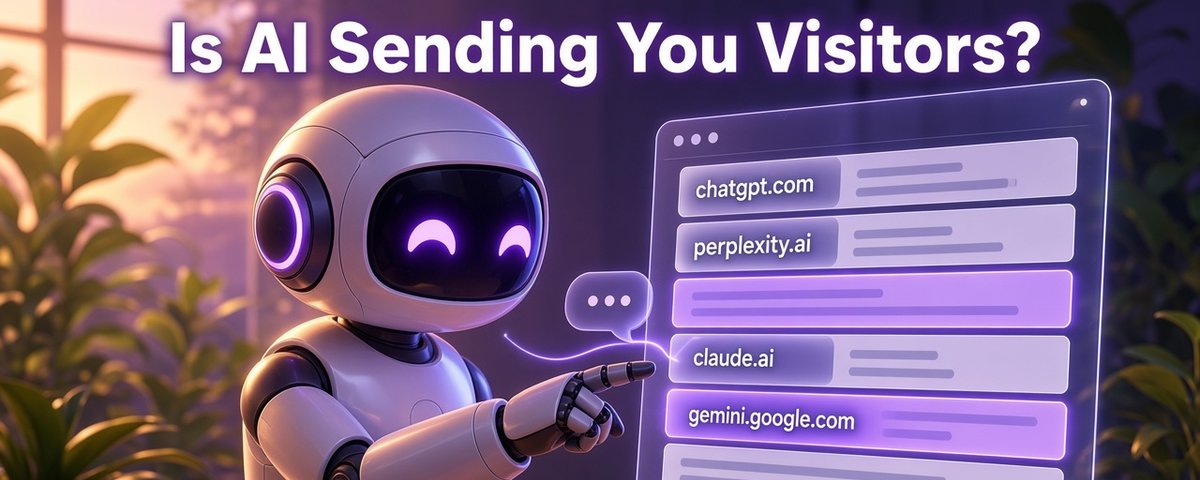
Ahrefs asked five AI tools the same questions every day for 20 days. Half the sites Google AI Overviews cited on day one were gone the next day. And about 75% of the ones that dropped out came back before the study ended.
So a screenshot showing you're cited in ChatGPT proves nothing, and neither does vanishing for a day. Ahrefs suggests counting how many of the last 7 days you were cited. That's the number worth tracking.
ahrefs.com/blog/how-stable-a…

1
1
51
Giving Tuesday is December 1. If your store runs a "we donate part of every sale" promo, work out now how customers can check the money reached the charity. A public proof for each confirmed donation beats a line in the footer. #GivingTuesday omguarantee.com

1
19
The part I'd copy first isn't the token bill. It's the judges.
Two years of founder decisions turned into written principles, so agents stop waiting on one person's taste. In eight days: 7,296 questions decided, 1,863 held for a human, 27 that needed his word.
That's the lesson for a one-person company. Write your judgment down once, let it answer the repeat questions, and keep the new ones for yourself.
Free sample of my playbook: paulrodturner.gumroad.com/l/…

i've been building the most ai-pilled company in the world for 2 years. let's trade notes:
- spawn is ten people
- we spend 30x payroll on AI tokens
- and ship almost as much as anthropic
- our agents pick their own names
- and profile pics
- and remember everything
- they dream
- and have time off on sundays to relax
- (not joking)
- agents fix every error hit by a user
- and verify their own work
- with no human in the loop
- we don't care if they break production
- only that they fix it fast
- we let bugs design how we work
- not code bugs, ants
- only anthropic's models can do the job
- openai makes reward hackers
- xai and google make village idiots
- i wrote an article with all the sauce
- but you'll scroll tiktok instead of reading
1
37
A Harvard study of 700+ firms using coding agents: 30% more code, 23% more pull requests, review time up 49%, finished work flat.
Writing got cheap. Approval didn't. Plan the review gates before you add agents. @clawmaven
arstechnica.com/ai/2026/10/a… #AIGovernance

This is what the one-person company looks like now. One server, one agent, every business and even your sleep data in the same place.
The part I'd add before anyone copies it: write down what the agent may do without asking you. Reading data, fine. Spending money, emailing customers or deleting anything should wait for a yes.
One person can run a lot of systems. One person can't watch them all at once.
I wrote up how I set those rules. Free sample: paulrodturner.gumroad.com/l/…

Everything I do runs on my VPS servers
The only interface is Termius SSH and then Claude Code on the server
All my businesses but also my health stuff, calories, sleep etc. all my data is pulled into there
Then the output is either chat responses from Claude Code on the server or websites it builds
So I can ask "did magnesium last night improve my sleep" and it pulls my sleep from WHOOP, nutrition from my food tracker, and even bedroom temperature and air quality data to check confounding factors etc
All server side!