

changed too often, will leave it as is
Joined February 2014
- Tweets1.3K
- Following123
- Followers1.9K
- Likes8.1K

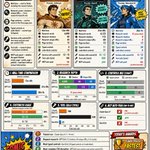




Its interesting to observe comments about the launch of another AI product, many of which with a level of hate, from “I can do it myself” to “How disconnected you have to be to need an AI family assistant” or that its only for a small subset of users.
All may be true, but does it really matter?
At this point, teams can build and ship product in fraction of time, some may find their fit other won’t, the teams will move on. We are so vocal about every little thing now, maybe spend more time building something of your own, so that you can get a few hateful comments.

AI can now make you a great parent.
Introducing Ollie: the world’s first AI family assistant that manages your family life better than any human.
Here’s how it works:
1
1
498
There is a bunch of slop in AI code, which especially becomes visible when you bring AI coding into existing product that was built without it, stop looking at the output, and then accidently peak in 😂
However, too much emphasis on the slop in communities of experienced engineers, because:
- most likely newer versions will clean this and more in near future. Yes, it can be ugly, some say “how to maintain this”, etc. but by the time this argument will gain more traction, the new models will remove with one pass through.
- majority of products, and I mean vast majority, never will grow neither in the codebase, functionality, nor customer impact from usage as people think, so might as well embrace the slop, as long as its secure, and if that product lucky (or unlucky, depending on how to look at it), it will grow to millions $ in revenue and dozen or more engineers needed to maintain it to worry about that slop later down the line.
last time I heard someone be concerned in person about scaling, security, and AI slop managment, was already unemployed, from C level tech position, probably in favour of some slop.

1
52
This is correct, but publically mentioning this to a person you know even slightly, doesn’t say much of your engagement approach either.
Hiding their name behind the cut off doesn’t help in exposing the individual if someone will go to your linkedin, hurting their reputation further as part of this rant.

A person I know (and who is? was? a good professional al) left an AI-generated comment under my LinkedIn post. Full-on AI slop.
I asked: why do this?
He replied. It’s because of “engagement.”
People are burning their profession al reputation, paying for AI tools, for nothing

82
OpenAI's new frontier model, GPT-5.5, dropped sixteen hours ago. Already running tests.
As I said in the first test run, the benchmarks that ship with model releases are general-purpose capability benchmarks (SWE-bench, HLE, etc.) and often won't reflect the tasks you actually run them against. These tests show exactly that - switching models based purely on benchmarks would give completely unacceptable output.
Added a new "creative" mode to the page builder for this run, which tells agents to put more of a personal touch on deliverables instead of sticking strictly to the specs and examples in existing templates.
Three models tested on page building, following a built-in page builder's guidelines. Working on neutral text examples for the next runs so I can share full page outputs if anyone's interested.
Clear winner is still Claude - consistency, output quality, ability to follow rules, creativity without going off the rails, and research that puts it ahead on content generation.
This run, Kimi K2.6 just gave up - the rabbit went off course, found Japanese text in the context, and refused to jump any further.
Most surprising though is the new GPT-5.5 - creative mode shows up as huge letters, repetitive design across different contexts, and pretty distasteful color palettes.
Overall: clear guidelines with a bit of creativity is the best strategy for page generation. Claude Opus 4.7 still wins for this use case. Open source performed poorly here with a small context window.
This is one specific use case - it doesn't reflect what any of these models can do outside of it. But one thing's for sure: if you're running agentic tasks, this kind of research matters. With how fast AI is moving, spending a percentage of your time on R&D is a must.
P.S. Guidelines also restrict models from leaning on the design principles, frameworks, and examples they were trained on. Building without constraints usually falls back to the training set - you'll see similar color themes and elements across models. If you've played with this, you probably already recognize which elements came out of which model.
P.P.S. We can all agree though — OpenAI's Image-2 is a visual monster :)
🤖 Made with AI


69
LLM stats are shiny objects — we're drawn to them and rush to try new models the moment they drop.
But standard benchmarks putting a new model above existing ones don't mean it'll perform the same on your specific use case. If your setup works well now, it shouldn't be upgraded without being thoughtfully tested.
Just like @simonw's pelican test, you need your own evals against your actual tasks. Coding against the Linux kernel (30+ years of code) is a different problem than running a process based on your input parameters.
One business I operate has a page builder that's gotten quite good and consistent - working with both Claude and Codex against a defined set of rules, supported components, layouts, and rendering options.
Last night I ran the same prompt against Opus, Codex, and the latest open-source release, Kimi K2.6. The subagent builds a page from the input prompt combined with company research kicked off during the build.
Here are the stats that matter for this process. On the UI side, the Awards section delivers pretty much the same verdict.
Gives me an idea: extend the test by running against the full set of guidelines and supported components to compare UI output too.
🤖 Made with AI

1
40

I shared this interview with others, who are not likely to see it otherwise. Its a very well written story, with historical references to Lenny’s newsletters, which I would like to catch up on.
One interesting fact that really got to me is Lenny’s live and work space, which is captured super nicely throught the photos in the article.
There is something to learn for myself from
it, as most recently the environment where I spend majority of my time in work, isn’t as pleasant. I would give myself an excuse for being in a rented space, less than a year, with upcoming move, but that would not be the truth.
Over past years I’ve worked in both a personal office that isn’t my home, a home office that is a living room (least favorite), and a private home office now…but none were specifically made to be a comfortable and thoughtful environments - a possible reflection of my state of mind.
After reading the article, I want to pay more attention to my surroundings. It would be nice to have a good and comfy spot to listen to Lenny’s podcasts from.

I rarely do interviews or talk about my personal life, but I made an exception for the team at @firstround.
Their writer spent hours at my house. We talked about why I started Lenny's Newsletter, what motivates me to keep building it, and a lot of things I don't usually share publicly.
It's an intimate look at what my life is actually like outside of what most people see on the podcast.
Check it out: review.firstround.com/reluct…

56
really nice updates from teams at openai and anthropic. I found that keeping both max usage version is the best way to work so far.
Claude 4.7 is a good upgrade from what was left of 4.6 most recently. Majority of my code in that period was done with Codex, which now needs to catch up to Opus because it degraded in how tasks were completed most recently, so comparing current opus to codex now isn’t a proper benchmark anymore.

We are super excited to launch the in-app browser inside Codex with comment mode!
View any web pages & iterate with your agent quickly with just point and click.
Codex will automatically capture a screenshot, the DOM element, and feed it as precise context to your next chat.
No more switching between browsers, dragging screenshots, and wrangling with underspecified prompts.
It's great for front-end development of apps/pages, but also very useful if you have documentation pulled up on the side and just want to ask a question!
98
mac mini is mac mini, great by definition.
a trend is a sustained, recognizable pattern of movement in ANY direction.
openclaw trend isn’t dead if at some point is not an up direction.
if it was, you wouldn’t talk about it.

People who bought mac minis for their OpenClaw, just because some influencers here told you so, how do you feel right now ?
Openclaw trend its really dead
50
Considering how popular @openclaw has become, in addition to killer speed of shipment, there should be (automated or semi automated) a way to filter through bullshit takes, such as the one attached 👇vs. real user feedback.
I do not yet have a suggestion on how to do this and without this suggestion my post is also like an unsolicited feedback, but…
If you are using openclaw for something over than content scheduling, soccer practices, and email summarization feel free to DM and maybe the issues I’ve been having are similar, where we can at least discuss and maybe draft up some good bug requests based on shared effort and logs, just for the purpose of efficiency and time saving + help to contribute as I am using openclaw in production for multiple companies.

I have to say something...please don't be mad.
OpenClaw has been nearly unusable for the past week. Something changed and now everything is broken.
Looking forward to testing Personal Computer.
2
56
second, with some overlaps.

this platform about opinions, so here is mine.
I don't know what folks are doing with their claws, but my experience with updates completely different even after hours and hours of various tests, across 5 different claws, not counting those of my immediate network.
- the responses are slow, fast modes or not, if you want it on high (which is probably the minimum for high impact tasks, its slow).
- commands aren't finished. "do this" quite often becomes "I've done almost this, you want me to do this now". Tried many patches from community, removing plan mode, harness changes which didn't go well by the way.
- memory-wiki in bridge mode still doesn't work for me, I gave up figuring this out between the rest of stuff that needs fixing. Prompted memory puts questionable entires into main memory md.
- subagents default to fallback model from codex, while the main continue to work on it.
Regardless of this, the agent is working, not perfectly and lots of time goes into fixing and tweaking, but such is the space right now.
Here is what's helping me personally, I think at this point everyone using them often has their own cheat sheet or tools:
- Removed fallback models after update for claws that work primary with codex. I'd rather them fail, then continue with another model at this point, as for every function or a subagent you develop on one model, you need to verify on another, not talking about check my email or write a draft type of stuff, real long-term work.
- I have my own patch to Google Chat channel, its forgotten and no offense to contributors because if my team hasn't used this, I would not even bother. Today was the first time after the update, run the fix, and didn't waste the hours - every update since beginning of march broken google chat, fix it yourself.
- I would argue that every installation doing non trivial work will need it own memory system, implemented by the user for their claw. memory-wiki, promoted memory, dreaming and shit is good globally, but it pollutes the memory for now. I've adopted @karpathy initial draft for wiki when it came out and kept it across instances, works better so far.
Which brings me to the next point...
- One main function = one subagent, if we are talking about openclaw, frankly now I think it should be a separate instance even. We have a team setup for some claws, user dump memory left and right, key prompts are not being addressed when something else in memory is preventing it via some rule. Educating people on how to speak to it makes a difference, but constant clean up :)
Personal claws are best: trivial but helpful tasks, out-of-the-box good enough even with updates that could be experimental, but systems that do a bit more are high-touch.
39
one set of common issues for me:
This will get burried on the comments but probably something many people could see and realize: the nature of openclaw is to support those 100s of channels, but in doing so, updates cannot be reliable for some use cases, simple as that, because supporting so much functionality will cause things to break.
There is also a case of engagement, where people will jump in to say stuff is broken without clear description of what, in majority of cases like this OPs take, its just a rant.
For me: openclaw became more problematic with updates since end of March, and while its usable, it takes more time to configure, validate, fix, and most importantly debug. And while I have had a few open contributions to github issues section, in combination of running several business cases with openclaw I simply don’t have enough time to contribute unfortunatly and I wish I could.
If this get’s seen, then:
1) Google chat is broken by default on audience mismatch when its there, on thread responses, and at some point on hook service being available. Low priority I am sure, and I would never use it myself honestly, but partners want it, so I had to create my own patch to run every time after update - its not fully correct for reposity, so no reason to contribue.
2) Memory wiki didn’t work in bridge mode for several updates and I just stopped trying. Prior to it, following the post from @karpathy I’ve implemented our own, nothing fancy, just a structure of what agent and subagents need to do, accessible and searchable during runs. The promoted memory is quite strange also, it appends to main memory file, but we use one claw a lot for business use case, and three (3) memories promoted made no sense, I had clear them to keep Memory smaller.
3) The one point OP mentioned: openclaw doesn’t finish responses sometimes, both telegram and unreliable google chat. Not long running operations, but responses in everyday conversations, this was not the case with version from early-mid March. Takes a ton of time to debug, but got used to this making prompts smaller and separating more logic, cleaning memory files.
4) sub agents stop don’t finish tasks and this (and possibly above) seems to be related to codex, harnesses or not, codex has been performing worse than it used to both on openclaw and off. things like “Let me this” end up quite often “well, I haven’t done shit, want me to” and naturally its fraustrating. This isn’t a standard codex behavior, so I place it in openclaw category, because I use codex daily for code tasks and subagents there don’t have this behavior.
5) I used to remote upgrade one of my bots, it never works now, and just don’t can’t put time to investigate, because its easier to just go to the office and finish it, so naturally will be skipping updates for many of them if I am away for instance.
I had a few minor issues as well, majority are possibly related to memory files being too large, which I think a person needs to control, but in combination of above, its just more work with recent updates and unreliable behavior of existing processes which contributes to people mentioning “unusable”, but then again, someone just blasts the terms without providing a single clue, which I know from my own work is fraustrating on its own, especially when its an open project.
18
i would love to see a one-off conversations in claude. ask one thing or a series of questions, close the app, and its deleted on its own. keeps “recents” clean.
31
this one is true for many of us:
* Unanimous sense that everyone is working more than ever before. AI is not causing anyone to do less work right now, and similar to Silicon Valley people feel their teams are the busiest they’ve ever been.

Another week on the road meeting with a couple dozen IT and AI leaders from large enterprises across banking, media, retail, healthcare, consulting, tech, and sports, to discuss agents in the enterprise.
Some quick takeaways:
* Clear that we’re moving from chat era of AI to agents that use tools, process data, and start to execute real work in the enterprise. Complementing this, enterprises are often evolving from “let a thousand flowers bloom” approach to adoption to targeted automation efforts applied to specific areas of work and workflow.
* Change management still will remain one of the biggest topics for enterprises. Most workflows aren’t setup to just drop agents directly in, and enterprises will need a ton of help to drive these efforts (both internally and from partners). One company has a head of AI in every business unit that roles up to a central team, just to keep all the functions coordinated.
* Tokenmaxxing! Most companies operate with very strict OpEx budgets get locked in for the year ahead, so they’re going through very real trade-off discussions right now on how to budget for tokens. One company recently had an idea for a “shark tank” style way of pitching for compute budget. Others are trying to figure out how to ration compute to the best use-cases internally through some hierarchy of needs (my words not theirs).
* Fixing fragmented and legacy systems remain a huge priority right now. Most enterprises are dealing with decades of either on-prem systems or systems they moved to the cloud but that still haven’t been modernized in any meaningful way. This means agents can’t easily tap into these data sources in a unified way yet, so companies are focused on how they modernize these.
* Most companies are *not* talking about replacing jobs due to agents. The major use-cases for agents are things that the company wasn’t able to do before or couldn’t prioritize. Software upgrades, automating back office processes that were constraining other workflows, processing large amounts of documents to get new business or client insights, and so on. More emphasis on ways to make money vs. cut costs.
* Headless software dominated my conversations. Enterprises need to be able to ensure all of their software works across any set of agents they choose. They will kick out vendors that don’t make this technically or economically easy.
* Clear sense that it can be hard to standardize on anything right now given how fast things are moving. Blessing and a curse of the innovation curve right now - no one wants to get stuck in a paradigm that locks them into the wrong architecture. One other result of this is that companies realize they’re in a multi-agent world, which means that interoperability becomes paramount across systems.
* Unanimous sense that everyone is working more than ever before. AI is not causing anyone to do less work right now, and similar to Silicon Valley people feel their teams are the busiest they’ve ever been.
One final meta observation not called out explicitly. It seems that despite Silicon Valley’s sense that AI has made hard things easy, the most powerful ways to use agents is more “technical” than prior eras of software. Skills, MCP, CLIs, etc. may be simple concepts for tech, but in the real world these are all esoteric concepts that will require technical people to help bring to life in the enterprise.
This both means diffusion will take real work and time, but also everyone’s estimation of engineering jobs is totally off. Engineers may not be “writing” software, but they will certainly be the ones to setup and operate the systems that actually automate most work in the enterprise.
33
i think in near future every individual that works in depth with ai agents will have their own framework.
i also feel that open sourcing your products and tools will also become a way more common deal, considering that majority of such product can be built quickly now.
thanks for sharing Nico

3 months ago I started building a coding agent that runs in the cloud.
It's since written every line of code I've shipped, including itself.
Today, I'm open sourcing it. Introducing Open Agents.

1
1
338
this platform about opinions, so here is mine.
I don't know what folks are doing with their claws, but my experience with updates completely different even after hours and hours of various tests, across 5 different claws, not counting those of my immediate network.
- the responses are slow, fast modes or not, if you want it on high (which is probably the minimum for high impact tasks, its slow).
- commands aren't finished. "do this" quite often becomes "I've done almost this, you want me to do this now". Tried many patches from community, removing plan mode, harness changes which didn't go well by the way.
- memory-wiki in bridge mode still doesn't work for me, I gave up figuring this out between the rest of stuff that needs fixing. Prompted memory puts questionable entires into main memory md.
- subagents default to fallback model from codex, while the main continue to work on it.
Regardless of this, the agent is working, not perfectly and lots of time goes into fixing and tweaking, but such is the space right now.
Here is what's helping me personally, I think at this point everyone using them often has their own cheat sheet or tools:
- Removed fallback models after update for claws that work primary with codex. I'd rather them fail, then continue with another model at this point, as for every function or a subagent you develop on one model, you need to verify on another, not talking about check my email or write a draft type of stuff, real long-term work.
- I have my own patch to Google Chat channel, its forgotten and no offense to contributors because if my team hasn't used this, I would not even bother. Today was the first time after the update, run the fix, and didn't waste the hours - every update since beginning of march broken google chat, fix it yourself.
- I would argue that every installation doing non trivial work will need it own memory system, implemented by the user for their claw. memory-wiki, promoted memory, dreaming and shit is good globally, but it pollutes the memory for now. I've adopted @karpathy initial draft for wiki when it came out and kept it across instances, works better so far.
Which brings me to the next point...
- One main function = one subagent, if we are talking about openclaw, frankly now I think it should be a separate instance even. We have a team setup for some claws, user dump memory left and right, key prompts are not being addressed when something else in memory is preventing it via some rule. Educating people on how to speak to it makes a difference, but constant clean up :)
Personal claws are best: trivial but helpful tasks, out-of-the-box good enough even with updates that could be experimental, but systems that do a bit more are high-touch.


after a small back injury, it seems i’ve found my equivalent of @simonw’s pelican test


I'm a big fan of the pelican GLM-5.1 drew me today, it even animated it! simonwillison.net/2026/Apr/7…

1
1
85