






solana:56DeqXiADWY2Y3iD8pdbpTi9jhXXneofTY5dp4Xjpump OpenAI claims to have proved existence of a consistent interacting quantum field theory, likely SU(5) in 4D cont. spacetime with UV completion?
is this right?

$ANT Anthropic went from essentially zero revenue few years ago to a business doing 16.8bn in the latest quarter, reached positive 1bn GAAP operating income, and through H1 2026 had only about $6–7B of cumulative free cash flow burn since inception!
That’s extraordinary capital efficiency!
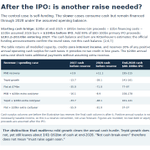
100bn IPO leaves it with 232bn - 240bn cash balance (reasonable for them to add 8bn in cash flow since June), just under half their whole current 7-10 years compute spend of 520bn+ !
And growing rev at 1100%+ y/y growth rate even up to THIS nominal level of revenue and incredible 21% free cash flow margin as of H1 2026!
cash conversion: $3.45B of FCF on $16.29B revenue in just six months, so 2-2.8bn q3 FCF scenario is reasonable.
Simply incredible metrics for humanity’s corporate history.
And you’d think that would be what the consensus is right? “Nothing to see here”.
Except… the consensus is the polar opposite.
It’s quite rare regardless of opinion and bias to witness such a disconnect between objective financials, and what the market narrative is about them.
Profits and FCF is what matters in the end all the noise and storytelling aside, and on this most relevant metric in an environment where rates are high and credit is expensive, the official S1 did not disappoint!

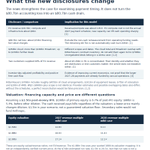
$ANT Anthropic S1 (S-1) official release changes what we know from prior leaks and Investor Day.
Profitability is the biggest positive surprise. $ANT was already GAAP operating profitable in Q2, with $974M of operating income, while adjusted operating profit was $2.24B / 19% margin.
Q3 remained adjusted-profitable at >11% margin, making this look like a sustained. Importantly, the adjusted metric still includes training spend and channel fees; the main exclusions are stock comp, non-cash charity expense and the Bartz settlement. So much better than what we previously thought was included on the cost side.
FCF looks even better. The S-1 shows roughly +$3.4B of FCF in H1'26, meaning $ANT reached positive cash generation substantially earlier.
Q3 appears to show margin compression. Using the Investor Day figures, $16.8B revenue at ~$1.70 of revenue per $1 of compute implies roughly $9.9–10.5B of compute spend, up about 78–89% QoQ versus revenue growth of ~45%. Adjusted operating margin appears to have fallen to roughly 11–12%, from 19% in Q2, making Q2 the margin peak disclosed so far.
Seasonality matters. The S-1 explicitly warns of summer and winter usage dips, which helps explain some of Q3’s slowdown and should temper Q4 run-rate extrapolation.
Costs are worse than expected. Channel-partner fees are roughly 2× prior assumptions, and training/R&D spend equals about 60% of revenue, which is lower than my prior conservative 75/25 split assumption that Q3 figures seemed to potentially imply.
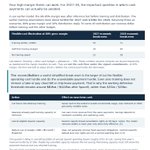
full table here.
PL retweeted

Pretty much.
As of the past few weeks, debt markets have almost entirely shut off access to money for any company that doesn’t have substantial revenue independent of AI data centers.
SpaceX closed $40B of debt for GPUs, but we’re investment grade and have Starlink & launch revenue.
That means the 200+ neoclouds are going to see guppy-level death and consolidation. Some will make it through, but not many.

"mixture of experts" is such an interesting approach.
Consider the idea that you can model 10 different ways of looking at the same trading phenomenon.
Each "way" is something i'd call an "aspect", like a scale/dial/grade. the Ssale is generated by some kind of objective function you pick which is a defined over some observables of the trading phenomenon you're looking at.
so alot of the time, there's no linear gradient along the whole scale and it's easy to just jump to "nothing to see here" conclusion. But it may be that most of it is a wash, but the very extreme (can be either or both extremes) gives signal.
Non random ones have two common shapes:
subtle linear gradient across the whole scale,
OR no gradient but its a "polarizer" - ie the extremes contain information.
On its own, it may have a marginal edge maybe even <0.08R per trade. Looks like noise right? Well, this is where first principles come in...
Point is you can end up with 10 different aspects that on their own dont look like much.
But when you combine them, you get a "profile" ie across 10 of these dials, what the sweetspot looks like.. if there are hilltops and plateaus rather than "all over the place", that means you're getting somewhere.
so a high edge setup is just a "profile" that hits sweet spot across these 10 different aspects. in way, you can think of each aspect as an "expert" on one particular metric.
when 10 different experts are telling you a setup is scoring highly on their different metrics at the same time. you get a high edge.
PL retweeted

As someone with a portfolio of energized land assets here is what I am seeing:
1. Neoclouds are disorganized and poorly capitalized. Some are definitely better than others however.
2. Hyperscalers are intractable, bureaucratic organizations that take 3 months to do an NDA and want 18mo escrow periods. We built our portfolio by competing against these terms because of our speed and simplicity. The more future assets orgs like ours win, the bigger the problem for the hyperscalers downstream (see 3).
3. There are delays in the existing pipeline that will catch people off guard in 2027. Hyperacalers will (obviously) react by focusing on their own internal compute needs over any third party. If the third party is a model company, they will tell them to go through their model router where they will also take a non-trivial vig. Them telling Ant they have no compute for them (rumored in Ant’s S-1) if true is a huge tell that this is already happening.
All of this is to say that it does look like there will be a lot of partially stranded compute and compute sitting in inventory in 2027 than is currently forecasted. This is bought and paid for but effectively underearning (below total cost of capital) or collecting dust. We see this as true for everyone - model companies, hyperscalers, neoclouds except ONE (you can guess which one).
This dislocation will benefit two kinds of orgs: the non-bureaucratic big scalers who can build industrial scale quickly and the nimble, well capitalized players feeding them.
2027 will be a turbulent year because it will clear out a bunch of wrong/bad bets. It will also be a consolidation year for a few.


"mixture of experts" is such an interesting approach.
Consider the idea that you can model 10 different ways of looking at the same trading phenomenon.
Each "way" is something i'd call an "aspect", like a scale/dial/grade. the Ssale is generated by some kind of objective function you pick which is a defined over some observables of the trading phenomenon you're looking at.
so alot of the time, there's no linear gradient along the whole scale and it's easy to just jump to "nothing to see here" conclusion. But it may be that most of it is a wash, but the very extreme (can be either or both extremes) gives signal.
Non random ones have two common shapes:
subtle linear gradient across the whole scale,
OR no gradient but its a "polarizer" - ie the extremes contain information.
On its own, it may have a marginal edge maybe even <0.08R per trade. Looks like noise right? Well, this is where first principles come in...
Point is you can end up with 10 different aspects that on their own dont look like much.
But when you combine them, you get a "profile" ie across 10 of these dials, what the sweetspot looks like.. if there are hilltops and plateaus rather than "all over the place", that means you're getting somewhere.
so a high edge setup is just a "profile" that hits sweet spot across these 10 different aspects. in way, you can think of each aspect as an "expert" on one particular metric.
when 10 different experts are telling you a setup is scoring highly on their different metrics at the same time. you get a high edge.


PL retweeted

Nick Patterson (Renaissance Technologies)
"[...I joined a hedged fund, Renaissance Technologies, I'll make a comment about that. It's funny that I think the most important thing to do on data analysis is to do the simple things right. So, here's a kind of non-secret about what we did at renaissance: in my opinion, our most important statistical tool was simple regression with one target and one independent variable. It's the simplest statistical model you can imagine. Any reasonably smart high school student could do it. Now we have some of the smartest people around, working in our hedge fund, we have string theorists we recruited from Harvard, and they're doing simple regression. Is this stupid and pointless? Should we be hiring stupider people and paying them less? And the answer is no. And the reason is nobody tells you what the variables you should be regressing [are]. What's the target. Should you do a nonlinear transform before you regress? What's the source? Should you clean your data? Do you notice when your results are obviously rubbish? And so on. And the smarter you are the less likely you are to make a stupid mistake. And that's why I think you often need smart people who appear to be doing something technically very easy, but actually usually not so easy.]"
1. news.ycombinator.com/item?id…
2. robohub.org/talking-machines…
Market = complex system
dynamics at play rn:
Ai is profitable it needs infra ->
Infra needs capex -> capex needs all of hyperscaler FCF and starts going into debt
-> debt affects credit -> debt glut relative to “demand” pushes corporate bond yields up ->
(We are here)
Sensitivity + variance around the true long term Expected Value of the “infra spend on AI” bet rises.
The EV becomes highly dependent on the accuracy of your long term forecast on GPU compute price. The issue is the volatility around that is extremely high due to the marginal cost of inference driving prices into freefall in a glut scenario and very quickly, thus rendering the whole pile of infra investments “made in a rush” unprofitable.
-> market pricing this goes on a semis selling spree effectively saying “it’s possible this is peak growth” hence the P/E compression.
For choice makes sense to look for “deep value” on non hardware dependent stuff that’s going to print off money from harnessing lower prices of compute.
Model providers themselves benefit from this massively whilst simultaneously getting stung on the EV of the infra buildout they paid for themselves and any fixed price of GPU compute they precommitted on.
But any biz taking compute and “wrapping it” to serve AI related or themed “application layer” stuff at high margin continues to benefit.
Hyperscalers become a mixed bag, they get stung on infra spend but earn on serving.
Market pricing starts to make abit more sense;
Market is calling top on AI hardware earnings multiples basically at THIS level of gross profit AND this margin. Maybe it’s years early but … doesn’t matter.
If this thesis holds, we are past a stage 3 base already and reclaim attempts will largely hold June highs. Ie volatile multi month stage 3 base before the ultimate top. This can take a year. See my post on $SOX in dotcom for reference.
But demand for AI is still there and will be, so cheaper cost of compute makes it even better for a cloud business to serve to end customer.
Again different from dotcom here, where we had fibre that nobody needed (initially).
So all this means:
- semis are broken leaders and done vs June highs.
- holding equity in a business who’s main asset is AI hardware which it already paid for and worse borrowed for is the worst place to be right now -> Neocloud stocks may surprise us even more to the downside even from here.
Funnily, holding neocloud debt may actually be better off and +EV if they aren’t levered to the point of going bust. Neocloud is most similar to “2000 dark fibre” right now.
- hyperscalers get stung on infra but benefit from cheaper compute prices down the line on all their software layer stuff. So effect is mixed but bad for their balance sheet quality .
Swapping FCF for an infra punt. Risk on equity is highest it’s ever been in megacap land. But lending to them may turn out to be the surest thing, as “too big to fail”. (Just like lending to European governments was at peak of EU crisis, by buying their bonds I mean at 8%+).
A lot of interesting dynamics unfolding.
Whilst I see sentiment as bearish and entrenched I also see retail on X in “cognitive dissonance” : looking at semis beats and then in disbelief at what the price of the stocks is going. About to relearn the timeless lesson of markets - there is no promise in the market pricing mechanism that it has to reflect current fundamental calculations you’re doing on a sheet of paper at home.
All this probably means semis capitu under Léopold lows and 200day MA and huge expanding range candles is ever likely.
Trading wise there is zero to do on long side, hoping for the capitulation to eventually give the 5* iteration and bank.
For swing, seems sensible set an alert at the 20day MA and chill until then.
Magnitude of 20day EMA down slope is one of the most reliable market regime filters I’ve tested to date.
Who are the beneficiaries of this?
Cloud and entreprise software businesses which did not pre commit on fixed compute price, as they are able to capture their margins.
AI software companies that buy inference capacity and sell applications, automation or completed work at a much higher value. They don't need to own GPU farms or train frontier models.
The best candidates aren't necessarily hyperscalers or even traditional cloud providers. They're companies that can turn cheaper intelligence into higher gross margins, more usage and new revenue streams.
Good ol cloud:
$SNOW $FIVN $NOW $TEAM
And cybersec ofc
$CRWD $NET
Few unexpected “boomer stocks” like
$DUOL $CRM $HUBS
$NICE
In a recent interview Ken Griffin from Citadel makes valid point re a period of “investor discernment” setting in on AI.
If GPU is ever oversupplied, the marginal cost of serving inference on GPU is close to zero. So in an oversupply, GPU rental costs race to zero v quickly.
Similar dynamic happens in airlines, ie the net cost of an extra unused seat on a plane.
So whilst this scenario is not happening now, it is possible to project that into the near future which is driving alot of the current market fear.
In this scenario, the worst bag to hold is equity stake in a neocloud, because they invest in the infrastructure so they wear the full depreciation of the GPU’s value. And it still makes economic sense for them to rent compute at a very tiny margin beating their opex whilst still rendering the whole model grossly unprofitable because of depreciation they wear on their infrastructure and GPU purchases.
The question I asked is -
What’s the order of vulnerability in this scenario, ie who faces the heat first:
1) neocloud equity holders.
Equity investors in hardware-intensive GPU operators suffer as expected asset returns and residual values collapse.
2) Lenders financing those assets become vulnerable if contractual cash flows cannot support the debt.
So private credit focused on AI and friends.
3) Large cloud providers face depreciation losses and pressure to renegotiate existing contracts.
Hyperscalers + neoclouds.
4) Model providers with substantial non-cancelable minimums or equipment leases may share those losses, depending on renegotiation outcomes.
OAI ANTH. Hard to determine the extent of their exposure because their contracts for compute are “minimum amount commitments” over X years, not necessarily a fixed price per unit of compute. With sudden volatility and drop in prices of compute, they won’t be expected to pay 2x+ the prevailing market rate.
The owner of the GPU and infrastructure asset and the bearer of the capex IS the most obvious stakeholder at risk from this.
PL retweeted

from MS just now: MSZZTMTM has posted a +/-5% move in a single session 65x in '26 alone, 1 in 3 trading days YTD. We saw just 9 such moves during the height of COVID volatility in '20, the previous record. That's >7x the prior record, with over two months still left in the year.

PL retweeted

Biggest two week net selling ever
According to @Goldmansachs PB, global technology stocks saw the largest two-week net selling on record (10+ years) between October 5 and 16, a staggering 3.3 standard deviations below normal.
Selling was driven by both long liquidations and fresh shorting.
