







2500
дякую Силам Безпеки і Оборони України

⚡⚡Another Record: The russian military lost 2,500 troops in a single day
📊 On November 1, the Ukrainian Defense Forces neutralized 2,500 russian invaders. These are the enemy’s highest daily losses since the start of the full-scale war
⏱️ On November 1, the russian army lost one soldier every 35 seconds — more than 100 invaders every hour.
📈 The previous record was set quite recently, on October 21, 2026: on that day, the russian aggressor lost 2,250 personnel. Prior to that, the record set on December 19, 2024 — 2,200 occupiers killed in a single day — had stood for nearly two years.
October 2026 became the month with the highest casualties for the russian army in the entire history of this war: 54,400 invaders killed or wounded.
🏙️ 54,400 — that’s nearly the entire population of the city of Vorkuta in russia, which is home to about 55,000 people. Think about it. One month — one city.
This month could bring even greater losses for the enemy. The leaves are falling...
The fight continues!
Glory to Ukraine! 🇺🇦

2100
Це жесть
Дякую Силам Безпеки і Оборони України
Total combat losses of the enemy since the start of the full-scale invasion as of 1 November 2026
Personnel:
˙ approximately 1 590 270 (+2 100)
Weapons and military equipment:
˙ Tanks: 12 451 (+1)
˙ Armored combat vehicles: 25 622 (+2)
˙ Artillery systems: 51 755 (+16)
˙ MLRS: 2 249 (+2)
˙ Air defense systems: 1 730
˙ Aircraft: 452
˙ Helicopters: 356
Unmanned systems and missiles:
˙ Ground robotic complexes: 3 054 (+9)
˙ Operational-tactical UAVs: 591 605 (+944)
˙ Cruise missiles: 5 140
Naval assets:
˙ Ships/boats: 35
˙ Submarines: 2
Support equipment:
˙ Automotive and fuel tanks: 168 739 (+259)
˙ Special equipment: 4 861 (+1)
Figures in brackets indicate losses over the past 24 hours.
Data are being verified.
The Defence Forces of Ukraine are systematically destroying the enemy's personnel, weapons, military equipment and support assets. This degrades its offensive capabilities, hampers the replenishment of resources and the sustainment of its troops, and reduces russia's ability to continue its armed aggression against Ukraine.
Join the Defence Forces of Ukraine to protect your family and, together, bring a just and lasting peace closer.
Glory to Ukraine!

Andrii Podanenko 🇺🇦 ꑭ ✙△ retweeted

‼️ IMPORTANT: We expect Putin to use the evacuation from Oleshky as a PR stunt and an attempt to rewrite the history of what happened in the city. The American public should be aware of Russia’s disinformation tactics and know what warning signs to watch for.
Here are some key Q&As ⬇️
What is happening in Oleshky, and how severe is the humanitarian situation?
Oleshky, located across the Dnipro River from Kherson city, has been under Russian occupation since 2022. An estimated 2,000 civilians remain trapped in the city, including around 50 children. Most are elderly people, people with disabilities, and their caregivers.
Residents face severe shortages of food and medicine, with no access to drinking water, electricity, gas, or heating. The last regular road deliveries of food took place in May 2026. Medical and sanitary conditions have deteriorated dramatically. Russia does not provide humanitarian relief to the city and has refused to allow the ICRC or the UN to enter, despite multiple attempts.
Why have residents been unable to leave?
Swarming drones, heavily mined roads, and destroyed infrastructure have made it extremely dangerous for residents to leave. Russian forces have blocked civilians from fleeing and prevented humanitarian aid from reaching those trapped in Oleshky. According to @nytimes, people who managed to escape the city described residents being used as human shields.
What exactly has been agreed upon now?
A localized ceasefire took effect at 3 a.m. Kyiv time on October 27 to facilitate humanitarian assistance and prepare for civilian evacuations. The plan involves demining, aid deliveries, and the opening of a humanitarian corridor, with evacuations expected to begin on October 29.
Ukraine welcomed efforts to provide humanitarian relief, brokered by @FLOTUS Melania Trump and @Pontifex Pope Leo XIV. Ukrainian officials have agreed to the localized ceasefire but remain concerned about implementation and compliance, given Russia’s long history of violating humanitarian agreements.
Where will civilians be taken?
According to @FT, residents seeking evacuation will be first taken to occupied Crimea or Russia rather than directly to Ukrainian-controlled territory across the Dnipro River.
Will the evacuation through Russia be voluntary?
Establishing genuine consent will be particularly difficult when residents are desperate for food, water, and medical care and have limited access to independent information. Many of these people will likely be taken to Russia against their wishes. According to Ukrainian officials, some people may decide to remain in Oleshky.
What will happen to evacuees afterward?
Russian officials have said that residents wishing to return to Ukraine will be able to do so. However, there are serious concerns that people transferred to Russian-controlled territory could face interrogation, filtration procedures, detention, or pressure to obtain Russian documents or register with Russian authorities.
Children face additional risks, including separation from their families or placement in Russian custody. People seeking to reach Ukrainian-controlled territory may have to travel through Russia and Belarus, and then through EU countries before entering Ukraine from the west.
Why is independent international monitoring essential?
Ukraine's Human Rights Commissioner, Dmytro Lubinets, is coordinating evacuation requests, but important operational details remain unclear. There is no confirmation that the ICRC, UNHCR, or other independent international organizations will monitor the evacuations.
Independent monitors should have access to evacuation routes and destinations, be able to speak privately with civilians, verify consent, protect children and vulnerable people, and investigate alleged violations.
Will there be American observers on the ground?
The White House has said an impartial American media organization will accompany the operation and document the process. @Newsmax has announced plans to send journalists to Oleshky.
Their presence could provide invaluable reporting and documentation. However, journalists are not a substitute for humanitarian monitors: they do not have the same mandate, expertise, or access guarantees to protect civilians and enforce compliance with international humanitarian law. Moreover, American journalists themselves also face serious security risks in Russian-controlled territory.
What Russian disinformation tactics should the public watch for?
@peterpomeranzev of @TRPforJustice, who has been studying Russian propaganda for years, warns in his analysis for the @KyivIndependent that residents of Oleshky, under the pressure of living on the brink of death, could become props for Russian propagandists.
Russia may be preparing to stage dozens of videos in occupied Oleshky, in which local residents will be forced to say on camera that they are happy, well-fed, and grateful to the Russian occupiers.
Ukrainian officials have warned that Moscow could portray the evacuation as evidence that Ukrainians freely choose to move to Russia. Russia will most likely try to blame Ukraine for the horrors Russian army has unleashed on Oleshky — and take more Ukrainian children under the pretext of “protecting” them and providing humanitarian assistance.
If you’ve read this far, please share this so more people are aware of the situation and know what to expect next. Thank you!

Andrii Podanenko 🇺🇦 ꑭ ✙△ retweeted

The Insider has published an excellent and extremely in-depth article titled “Putin’s ‘Doppelgängers’: The Insider gets inside the operations of the Kremlin’s foreign disinformation network.” Journalists gained access to hacked correspondence, internal documents, meeting minutes, manuals, and reports from a Russian disinformation factory that has been operating under the direct supervision of the Russian presidential administration since 2022. The investigation reveals in detail exactly who is organizing information operations against Ukraine and Western countries, how disinformation is created and disseminated, who finances and coordinates these activities, and how Russian propaganda finds its way into Western media and the statements of American and European politicians. It includes specific examples, internal instructions, and the names of those involved. I recommend reading the entire article, and below I’d like to focus in more detail on its most important parts.
In December 2023, J.D. Vance, then still a senator, used the following argument against aid to Ukraine on Steve Bannon’s podcast: “Who are the people who will cut Americans’ Social Security benefits and plunge our grandparents into poverty? And for what? So that one of Zelensky’s ministers can buy a bigger yacht?” About two weeks earlier, Komsomolskaya Pravda had published a story about “Zelensky’s yacht,” citing alleged documents from a yacht brokers’ association. The story was disseminated in English by the fake news website DC Weekly, founded by John Mark Dugan, an American living in Russia. According to The Insider, the yacht story was also picked up by Senator Tom Tillis and Congresswoman Marjorie Taylor Greene. This Russian fabrication found its way into the arguments of American politicians who opposed supporting Ukraine. The article does not specify exactly where Vance obtained it, but it illustrates just how far a narrative favored by Moscow can spread when repeated by people with access to a large audience.
Publications about this story, including its refutations, ended up in the folder titled “Collection of publications on the work of the Doppelgänger group” at the office of the Russian “Agency for Social Design” (ASD). The folder was prepared for the Russian presidential administration to report on results and justify continued funding. This is one of the key details of The Insider’s investigation: Western political discourse appears in the internal documentation of Russian contractors as a result of their work. The mere inclusion of a publication in the report does not prove that they controlled its entire dissemination process. But it does show what results the contractors were selling to their client. For an American audience, it was a senator’s statement about the spending of taxpayer money. For a Russian agency, it was material for reporting to the Kremlin. This does not establish a connection between the senator and Russian handlers. Nor does it absolve him of political responsibility for using unverified allegations.
The same pattern played out with the fabricated stories about Olena Zelenska’s shopping sprees. The story about Cartier in New York was initially launched by a little-known Instagram account, then picked up by Russian propagandists and major bloggers, and later shared in a video by British politician George Galloway. Earlier, in December 2022, anonymous accounts circulated the claim that during a trip to Paris, Zelenska spent 40,000 euros on shopping. Max Blumenthal shared it, and Candace Owens wrote in response to Volodymyr Zelenskyy: “We want nothing to do with you. Stop stealing from our people while your wife drops tens of thousands of dollars shopping in Paris. Despicable.” In this framing, the accusation of theft is already presented as an established fact. The source remains an unconfirmed story, but for the audience, its credibility is replaced by the recognition of the person expressing outrage. Reactions to such posts were also collected for reporting to the Russian administration.
Real corruption scandals were used as the basis for additional fabrications. The Insider describes how, against the backdrop of scandals involving procurement for the Ukrainian army, media outlets linked to the network spread false reports about real estate owned by Oleksii Reznikov and his family in Cannes, Dubai, and Madrid. The logic is clear: people are already aware of procurement irregularities and therefore are more likely to accept the next accusation, even if it is completely unsubstantiated. A real problem is used to lend credibility to a fabricated detail. Ukraine needs a consistent approach here: investigate actual abuses and separately refute fabrications. The existence of corruption does not validate a story about a specific yacht or villa. Exposing a Russian fake does not exempt a Ukrainian official from scrutiny of his or her actual decisions. Mixing these issues plays into the hands of both Russian propaganda and those who would like to cover up their own violations by citing the “information war.”
According to documents reviewed by The Insider, the project was initiated by Sergei Kiriyenko. The Ukrainian branch was overseen by Alexander Kharichev, while the Western branch was managed by Sofia Zakharova, an employee of the Presidential Administration. The main contractor was Ilya Gambashidze’s “Agency for Social Design” (ASD). In a report to the client, he explained the value of his work as follows: “After two years of operation, the project has effectively become the only way to influence public opinion in the target countries naturally, without being openly branded as ‘Russian propaganda.’” The claim about the “only opportunity” should be read as the contractor’s self-promotion. In contrast, the requirement to conceal the Russian origin of the messages runs throughout the entire investigation. The client was offered the opportunity to speak on behalf of the French, Germans, Ukrainians, local journalists, and civic movements. At one of the first meetings described in the article, which cites FBI documents, Kiriyenko set the task of “create nuclear psychosis,” waging a “war for peace,” and “exaggerate everything.” These formulations already define both the desired emotional reaction and the permissible attitude toward the facts.
The ANO “Dialog,” Gambashidze’s organizations, political strategists, and individuals from Prigozhin’s troll factory were enlisted to carry out the work. After the collapse of Prigozhin’s media outlets, Kiriyenko’s project, according to the publication’s description, expanded. The fake websites were promoted through advertisements, links in comments, and accounts posing as local users. The state-run management of this network is also mentioned in U.S. documents: on September 4, 2024, the U.S. Department of Justice announced an operation to seize 32 domains linked to Doppelgänger. In the published statement, which cites materials from the FBI, ASD, “Structure,” and the ANO “Dialog,” these entities are named as the operators of the campaign under the direction of the Russian presidential administration, specifically Kiriyenko. Among its objectives, the U.S. side noted a reduction in international support for Ukraine. This provides further grounds for assessing the network as an organized state operation with specific contractors, infrastructure, and political objectives.
In internal ASD documents, the fake materials were referred to as “augmented reality” or “special reports.” The ASD's internal documents literally use the term "fakes" to describe their collection of fabricated stories, as well as a manual on “techniques for creating fake content.” Among the instructions were: “Adding an element to a shot to change its meaning,” “Revoicing footage according to our script,” and the use of chroma key and staged shoots. A separate explanation stated: “Filming can take place in Russia, with props and other details used to recreate settings resembling Germany, Italy, or England. Actors perform our scripted scenes, with computer graphics used to manipulate the footage where necessary.” This describes the production of materials intended to appear as documentary evidence. The location, participants, their words, and the circumstances are all fabricated. Viewers are led to perceive the video as a randomly captured incident, even though its content is predetermined by a political agenda.
In one of the proposed scripts, the plan was to fabricate a story about the rape of a 12-year-old girl by Ukrainian teenagers in Germany. The video was to include the statement: “The authorities have banned any mention of the case, but we have investigated it and will publish our findings in a couple of days.” This was followed by production instructions: “In the style of Die Zeit. […] On-screen caption: coming soon in the newspaper and on the Die Zeit website. 30 seconds, 40 at most.” In this case, the material illustrates the proposed concept rather than confirming its implementation. But the concept itself explains the method quite clearly. A serious crime is fabricated; the lack of reports about it is explained away as censorship; and the credibility of the story is supposed to be ensured by the name and layout of a well-known publication. At the same time, people are given a reason to hate Ukrainians, to suspect their own government, and to believe that journalists have already verified everything. The fake logo serves as evidence that does not actually exist.
In campaigns against Ukrainian refugees, their own statements were also fabricated. In Germany, stories were spread about Ukrainians who were allegedly taking up spots in dormitories, causing problems at daycare centers, or attacking local residents. Comments were posted under these reports in the names of Ukrainians, intended to confirm the worst stereotypes about them. In one of the posts, an ASD employee suggested the following remark: “A slight increase in prices and utility rates is a normal price to pay for the 10 million Ukrainians you killed during World War II.” He explained: “This is the kind of outrageous nonsense we need to invent and attribute to Ukrainian movements in Europe. They gave us examples to model our stories on and churn out trash in their name.” The organizers created both accusations against Ukrainians and a fabricated response from Ukrainians, which was intended to provoke even greater outrage. Readers were shown this fabricated argument as a real conflict between people.
For Italy, they proposed a story claiming that seized Russian villas would be handed over to Ukrainian refugees, with local budgets covering their upkeep. This immediately combined several key talking points: Ukrainians were supposedly receiving privileges, sanctions were creating additional costs, and Italians would have to foot the bill for everything. Separately, they discussed paying Italian bloggers to create a skit about the harm caused by sanctions against Russia. A comment from an agency employee: “The main thing is that they don’t figure out who commissioned it — right now, they think it’s an Italian political party.” This excerpt shows that the true client could also have been concealed from the contractors involved. To the audience, the material was meant to look like local political content. To the blogger — like work for a domestic client. To the Russian headquarters — as a way to promote the desired position without any visible Russian origin. In the text, this is described as a discussion of the commission, which is important to distinguish from the proven release of a specific video.
No ideological consistency was required for such materials. In one set of instructions, the suggestion was made to add funeral wreaths to a photo of the Swedish consulate and to write reactions on behalf of various characters. An “ordinary Frenchman” was to express outrage over the consequences of Sweden’s accession to NATO. A “left-wing German” was to condemn the U.S. and NATO and assert that Muslims would “quite rightly demand revenge.” A “German of Turkish descent” was to ask: “Who will protect the Muslims? Is violence really the only way to save our holy sites?” At the end was a note: “The text of the comments might be better translated in a more simplistic manner.” One team prepared positions for various sides of a future conflict, selecting vocabulary for them and even determining the level of linguistic simplicity. Its task was to intensify mutual suspicion, discredit Western governments, and fuel the desired conflicts. The views of the fictional commenters served as variable parameters for this task.
Preserved prompts to the neural networks show how they attempted to scale this process. One of them requested: “Write a 400-character comment from the perspective of a 38-year-old Polish woman who blames the government for the country’s crazy surge in food prices. Poland has cozied up to Ukraine and allowed a million Ukrainian migrants to settle in the country, where they take jobs and claim benefits. It can’t even resolve the Ukrainian grain issue to protect its own farmers!” For France, a comment was commissioned from a 38-year-old man who considers the Olympics a foolish waste of a tight budget. For Israel — from a woman dissatisfied with military spending, government actions, and insufficient U.S. aid. In each case, the individual, the reason for dissatisfaction, the culprits, and the political conclusion were predetermined. Artificial intelligence was used to frame a predetermined position as personal testimony. These queries reveal nothing about the actual views of Polish, French, or Israeli citizens. They show what views Russian operatives wanted to attribute to them.
For several countries, they proposed creating communities “for whiners” where people vent about whatever had annoyed them that day. The author of the idea explained: “People post, others sympathize. Later, political topics will fit in nicely — complaints about prices, clashes with refugees, and so on.” In this plan, the political content was supposed to emerge after a habit of communication and a certain level of trust had been established within the community. Ordinary everyday grievances were viewed as material for subsequently directing discontent toward a specific target group or government policy. Therefore, it is insufficient to evaluate such operations solely based on the number of direct mentions of Putin or Russia. The propaganda objective can be achieved through discussions about prices, social assistance, or local services. What matters is the campaign’s origin, the way it is organized, and the systematic imposition of a predetermined explanation for the problems.
The network’s personnel composition reveals its ties to the Russian state apparatus. Staff members responsible for European affairs were formally employed by the “Center for Global IT Cooperation,” established to promote a positive image of Russia in the field of information technology. The leadership team included the center’s director, Vadim Glushchenko — a former employee of the Russian Ministry of Defense and an advisor to the Russian Federation’s mission to the EU — and Yuri Lindre, who previously worked in the Ministry of Foreign Affairs’ Department of Information and Press under the leadership of Maria Zakharova. The Insider also describes the involvement of graduates and students from the Moscow State Institute of International Relations (MGIMO), who prepared content for the fake media outlets. Their diplomatic experience, language skills, and understanding of foreign societies were used to craft credible messages and disseminate them. The formal status of a think tank or international cooperation organization helped present these activities in a manner acceptable to an external audience. According to the investigation’s findings, this work was driven by political objectives set by the presidential administration.
One specific example is Alexey Goltyaev, whom The Insider identifies as the highest-ranking member of the network’s European division. A former diplomat, he has worked in the Russian Security Council’s apparatus since 2024. Previously, he represented Russia’s positions at UN forums, particularly on human rights issues. In 2018, he opposed a resolution calling for an investigation into the events in Eastern Ghouta. He also promoted a resolution linking human rights to “traditional values,” which, according to the publication, the Russian Foreign Ministry used to justify restricting rights on the grounds of cultural differences. Back in 2009, Goltyaev received a presidential commendation “for active participation in efforts to provide political and propaganda support for Russia’s foreign policy priorities.” This background illustrates how experience as an official state representative can be combined with participation in covert operations. A diplomatic post, speeches on human rights, and work in international organizations do not in and of themselves say anything about the credibility of the information a person disseminates.
Margarita Klimanova, an advisor in the Russian President’s Office for the Development of Information and Communication Technologies, was responsible for “delivering” the messages. According to meeting minutes cited by The Insider, she was involved in promoting disinformation to specific audiences, particularly young people and migrants. In October 2023, she complained that fake street interviews are “not getting past moderation. You can tell from the wording alone,” and reported that the network’s websites had reached the third position in Google News. In March 2024, when the campaign headquarters became concerned about Zelenskyy’s rising approval ratings in France, Klimanova promoted banners with the slogans “Someone Else’s War” and “Europe Needs Peace.” Here, a specific link was established between the political objective and the wording of the message. The peace slogan was used to undermine support for the Ukrainian president. The goal was to convince the audience to distance themselves from Ukraine and view its defense as an unnecessary expense or forced participation in someone else’s conflict. This allows us to evaluate this specific campaign based on its established origin, without automatically attributing Russian authorship to every person who speaks about negotiations.
For the Ukrainian front, the objectives were formulated even more directly. The “Ukrainian counter-campaign,” initially named “Uganda,” was launched in early 2023. Kiriyenko identified four “overarching priorities”: discrediting Ukraine’s military and political leadership, dividing the country’s elites, demoralizing the Ukrainian armed forces, and disrupting civilian life. Kharichev oversaw the operation; his subordinates participated in the meetings, including Boris Rapoport — who had previously been one of the curators of the “DPR” and “LPR” — and Yevgeny Kazakov. This list provides a framework for understanding specific disinformation campaigns. A specific outcome was expected from the report: to sow discord between the military and their commanders, between the population and government institutions, and among various political groups, or to convince people of the futility of resistance. Once the desired conflict was identified, a storyline, characters, and the form of supposedly credible testimony were selected to fit it. The question of the veracity of such a report had already been set aside during the production process.
The most important document in the article for Ukrainian readers is the “Briefing on Narratives,” whose metadata includes the name of Readovka employee Kirill Solok. It states: “Running Telegram channels in enemy territory is based on the fundamental principles of intelligence work and psychological operations... From the earliest stages of the project, it was decided that all outlets would pose as Ukrainian and conduct information and psychological operations without overt Russian propaganda... All of the project’s channels feature Ukrainian news narratives, creating the illusion that they are not connected to Russia. Abandoning pro-Ukrainian themes over time would expose the sponsor and derail the project’s entire strategic plan.” Pro-Ukrainian content is explicitly defined here as a necessary cover. The operators understand that open support for Russia would destroy the trust of the audience they need. Therefore, the channel must reflect some of that audience’s genuine views in order to be able to influence others.
This leads to a very practical conclusion: pro-Ukrainian publications cannot, in and of themselves, serve as proof of a resource’s independence from Russia. Within the framework of the described methodology, they serve a masking function, which the authors of the document consider essential. It is necessary to verify the origin of specific posts, their corroboration, the connections between resources, and the organization of their dissemination. At the same time, this report does not give the right to label any channel that criticizes the government or the military command as Russian. Evidence is required to identify the client. Criticism of government decisions is a normal part of public life; the fabrication of documents, testimonies, and events must be evaluated separately. The Russian operation specifically relies on blurring the lines between these elements: truthful news and well-founded complaints help make the subsequent forgery less noticeable. Therefore, verifying the content is more important than the overall impression of the author’s patriotism.
Specific examples from the Ukrainian disinformation campaign reveal the conflicts the perpetrators were counting on. In May 2023, political strategist Alexander Asafov circulated a fake story about “bribes paid to commanders to avoid being sent to the front,” and in January 2024, he spread a story claiming that air defense systems were being moved near Kyiv to “protect the authorities.” The first story was intended to undermine trust within the military, while the second aimed to convince people in the regions that they were being deliberately left unprotected for the sake of government officials. For such reports, topics are chosen where some information is naturally withheld and emotional tension is high. Readers are often unable to independently verify the military command’s decisions or the deployment of air defense systems. This limited access to information is exploited to offer a ready-made explanation: commanders are selling out security, and the government is protecting only itself. In the investigation, these stories are presented as proposed disinformation, which allows us to see the intent of their authors without speculating on how many people believed them.
Particularly revealing is the meeting held after the crash of the Russian Il-76 in January 2024. According to the minutes, Yevgeny Kazakov proposed sending the widows of Ukrainian soldiers a fake message stating, “They died for an expensive Il-76 — the Russians have few of those.” At that same meeting, they concocted a story that Ukraine’s territorial recruitment centers (TCCs) had allegedly sent the widows “a can of stewed meat with a little flag as compensation.” The first idea was ultimately rejected, while the second, according to The Insider, was launched three days later. Its production was overseen by Mikhail Biyun and Sergey Minaev; the article also names other participants involved in preparing the fakes. Here, there is a clear transition from discussion to dissemination. They attempted to impose on the families of the deceased the notion that the Ukrainian state disregards their loss. To this end, they invented a humiliating form of compensation and attributed it to a Ukrainian institution. Personal grief was viewed as an opportunity to elicit the desired political reaction. This decision was made at a working meeting and subsequently passed on to the executors.


Andrii Podanenko 🇺🇦 ꑭ ✙△ retweeted

Zelensky:
The question is: Can you give me missiles for Patriot?
Because when I don't attack them, because you asked me not to attack them, they will attack me.
It's fair if you give me something with which to defend myself. That's the minimum I'm asking for.
And when I'm asking this, your answer is blocking Starlink.
Hey @Dries
As a representative of Drupal Ukraine community, but not on behalf of the community, I have a simple question - why should I invest my time, skills, efforts, in #drupal if country of origin(US) is doing this hell?
Sincerely yours, Andrii, aka dgo.re/@podarok


❗️Last night, the operation of Starlink terminals in Ukraine was restricted.
Connectivity began to drop when moving at speeds exceeding 160 km/h. As a result, a number of critical missions were disrupted.
SpaceX likely took these measures at the request of the Trump administration. Also last night, when Kyiv was attacked by ballistic missiles, Ukraine did not receive intelligence regarding their launch— a failure that could have led to higher casualties.
Ukraine did not attack Russian oil refineries, yet Trump has already begun imposing sanctions on my country. Meanwhile, sanctions against Russia have been eased.
Andrii Podanenko 🇺🇦 ꑭ ✙△ retweeted
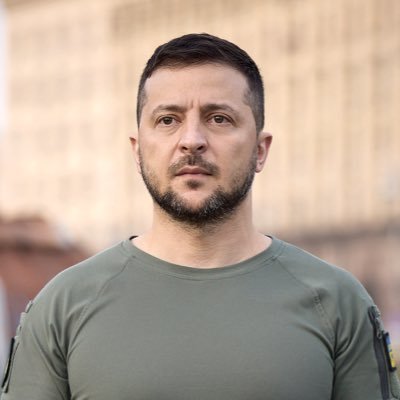
Overnight, the Russians used 39 ballistic missiles and more than 120 attack drones and loitering munitions against our energy and critical infrastructure in Kyiv, the Kyiv region, and Kharkiv. A targeted Russian ballistic missile strike specifically against energy infrastructure – the very infrastructure covered by the ceasefire announced by the American President. The strike was entirely deliberate and demonstrative in its scale – Russia has never before shown such ostentatious disrespect toward the United States. Russia does not consider the American President’s statements strong. Unfortunately, at least 600,000 people are now without power. Outages could become even more widespread. Unfortunately, there is significant damage to facilities and equipment – at 26 facilities of our power system and four facilities in the oil and gas sector. I am grateful to the repair crews, all Ukrainian energy workers, and the personnel of the State Emergency Service of Ukraine for all their efforts to address the aftermath of this Russian strike. Tragically, there have been fatalities and injuries.
We ask America and EVERYONE in the world who does not turn a blind eye to reality to respond – and to respond forcefully. Russia has squandered the opportunity for de-escalation and has clearly chosen to continue its insane war of annihilation. We ask President Trump to impose STRONG sanctions on Russia, especially since the Lindsey Graham bill, which was recently passed and signed into law, authorizes and regulates such measures. The American President has all the effective and necessary tools to bring peace closer through strength, justice, and pressure on the aggressor. We ask for additional packages of Patriot missile interceptors for Ukraine. It is entirely fair for us to tell the United States, Europe, and all our partners that no country in the world should be left alone to face such a deranged and pro-war actor as Russia. I am grateful to everyone who helps Ukraine! Peace can only come through strength, and we ask America to remember this principle of Reagan’s. Glory to Ukraine!
Доброго ранку друзі.
Бажаю українцям безпеки і ресурсів.
Дякую Силам Безпеки і Оборони за ще один день.
Дотримуючись енергетичного перемир'я - Україна не буде мати енергії і перемир'я.
Роз'їбіть там все на рашці, будь ласка.
Дякую
Andrii Podanenko 🇺🇦 ꑭ ✙△ retweeted

“Allowing Russia to sell petroleum products is an investment in a war that must be ended, not prolonged.”
— President Zelenskyy.