

Neurologist | Expert in Parkinson’s & Movement Disorders | IPMDS - MDS AOS | Founding Member MovementDisordersIndia | GP2 Parkinson Genetics | Bangalore, India
Bengaluru, India
Joined December 2009
- Tweets500
- Following234
- Followers1.4K
- Likes813




I’m inspired by Dr Siddharthan Chandran’s @UKDRI leadership. CBR’s AI conclave underscored the need for clinician-scientists and AI scientists to co-lead a common platform linking @Scaniitb Mumbai, @CBR_IISc Bangalore, @BraincentreIITM Brain Centre Chennai and other funded groups—shared goals, coordinated and federated work across India. – at Bengaluru, India


Published in Movement Disorders Clinical Practice
Progressive Supranuclear Palsy in India: Insights from Project PAIR-PSP
1,035 patients. 18 centers. Pan-India recruitment.
A major step toward placing Indian PSP data on the global tauopathy map.
#PSP #Tau #Parkinsonism #PAIRPSP

movementdisorders.onlinelibr…
@MDCP_Journal @movedisorder @CurePSP @PSPAssociation – at Bengaluru, India

What can #hypoglycemia, #hyperammonemia , #WilsonDisease, rare encephalitides, toxins—and even a lesion involving a DBS electrode—have in common? Each can reveal itself through a surprising movement disorder.
The IPMDS #VideoChallenge Showcase brings these clinical puzzles to life. Prof. Lang and Prof. @kailashbhatia orechestered a memorable session on how careful observation can change the diagnosis.
1. Complex behavioral disorder due to hypoglycemia
2. Hyperammonemia secondary to portal hypertension, presenting with a dementia with Lewy bodies phenotype
3. Adult-onset Rasmussen encephalitis
4. Syphilitic gumma involving the STN DBS electrode
5. Attenuated non-ketotic hyperglycinemia (glycine encephalopathy)
6. ND4 genetic mutation associated with severe neurological complications and death following sevoflurane anesthesia; maternal ancestry from Carabobo, Venezuela
7. Tiletamine-induced toxic encephalopathy, associated with e-cigarette use and presenting predominantly with myoclonus
8. Wilson disease presenting as paroxysmal kinesigenic dyskinesia
9. Anti-IgLON5 disease, with truncal myorhythmia and sleep-related orthopnea
10. CNS lupus encephalitis, presenting with aseptic meningitis and belly-dancer dyskinesia
and more...
#IPMDS #MDSCongress
@movedisorder – at Songpa-gu, Republic of Korea


Dr Bernard Brais delivered a masterclass on #SCA27B , weaving together its history, serendipitous discovery, clinical evolution, genetic penetrance and therapeutics. A compelling story of how clinical curiosity advances science—and a must-hear for every clinician caring for ataxia. #SCA27B #Ataxia
@TheNeuro_MNI @movedisorder @Ron_Postuma – at Songpa-gu, Republic of Korea


At #MDSCongress, Dr Tohru Minamino (Japan) delivered a thought-provoking keynote on immuno-gerotherapeutics. Could we help the immune system recognise and clear senescent cells before their persistent inflammatory signals contribute to age-related disease?
He described two promising approaches in preclinical models: SAGP vaccination to direct immune clearance, and SGLT2 inhibition, which appeared to activate AMPK, reduce PD-L1 on senescent cells and enable T-cell-dependent clearance. The reported benefits spanned metabolic dysfunction, osteoporosis, brain inflammation, amyloid accumulation, cognition and frailty.
The talk also highlighted how much remains to understand: the role of lysosomes in senescent-cell survival, and how specific CD4 T-cell responses might be harnessed. Human-targeted antibodies and tools to identify relevant senescent cells are in development.
A compelling question to take away: can we move from treating the consequences of ageing to modifying some of the biology that drives them? These findings are preclinical; translating them safely to people is the next challenge.
#CellularSenescence #Neurodegeneration
@movedisorder @juntendo1838
@RaviManjithaya – at Songpa-gu, Republic of Korea


New genetic clues to PSP from India!
At the IPMDS #MDSCongress? Visit our late-breaking abstract, LBA 3, to explore the PAIR-PSP findings and connect with our team.
We are proud to share the first South Asian genome-wide association study (GWAS) of progressive supranuclear palsy (PSP)—bringing an underrepresented population into the search for answers to this devastating disease.
🔬 From discovery to replication
Our discovery study included 800 genotyped PSP cases, with 784 analyzed against 3,184 South Asian controls. Six reported loci reached genome-wide significance.
We then evaluated the findings in a separate cohort of 200 PSP cases and 200 controls. Two loci showed replication evidence:
• CD2AP, chromosome 6
Discovery p=9.9×10⁻¹⁰ | Replication p=0.0071
• PPARGC1A, chromosome 4
Discovery p=3.1×10⁻⁹ | Replication p=0.0033
These findings strengthen the evidence for these associations and support further investigation into tau-related processes, cellular transport and mitochondrial biology in PSP.
🌏 Why ancestry matters
The prominent MAPT association reported in European PSP studies was not detected in our Indian cohort. This does not mean MAPT is absent or irrelevant in Indians. Differences in allele frequencies, genetic architecture and statistical power need careful consideration.
It raises an important question: what might we learn when more populations are represented in genetic research?
For me, PAIR-PSP demonstrates the value of building deeply characterized cohorts in India and connecting them with global scientific collaboration. Discovery followed by replication is an important milestone; understanding how these findings contribute to disease biology is the next step.
🤝 The people behind the findings
My sincere thanks to the patients and families who participated, our collaborating clinicians across India, and colleagues at the Parkinson’s Research Alliance of India (PRAI), @MedGenomeLabs and the Global Parkinson’s Genetics Program (GP2 @ASAP_Research ).
This is a shared achievement, built on trust, participation and sustained teamwork.
Please visit LBA 3—we would welcome your questions, perspectives and opportunities to collaborate.
#PSP #GWAS #PAIRPSP #Neurogenetics @movedisorder @curepsp – at Songpa-gu, Republic of Korea


@KristopheDiaz sharing the collective effort bringing new insights into PSP genetics from India. Would love to hear your thoughts!
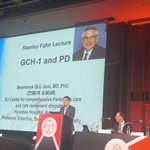
A memorable Presidential Lecture session at #MDSCongress: the C. David Marsden Lecture by @VincenzoBonifa3 on how pedigrees and family studies have shaped our understanding of movement disorders, preceded by Beomseok (BJ) Jeon’s Stanley Fahn Lecture on GCH1 and Parkinson’s disease. – at Gangnam-gu, Republic of Korea


Prof. Shigeo Murayama’s presentation revealed the scientific value of a remarkable brain resource: 2,560 brains systematically collected and studied over decades. This is more than an impressive collection—it reflects a lifetime of dedication to brain donation, neuropathology and building a pathway towards globally standardized research. Such shared resources can accelerate our understanding of Lewy body disease and age-related co-pathologies. A remarkable legacy. #MDSCongress


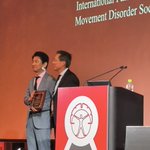
A memorable moment at #MDSCongress. It was a privilege to witness the recognition of Kibra Kebede, Victor Fung, A. Jon Stoessl and @MichaelOkun for their service and contributions to our field. Congratulations to all four—you have inspired and strengthened the global movement disorders community. @movedisorder – at Gangnam-gu, Republic of Korea


The #MDSCongress starts today in #Seoul! Looking forward to catching up with friends, meeting colleagues, and sharing the latest in movement disorders.
@movedisorder
@mdsieditor
#MDSAOS


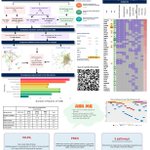
🏆 Proud to share that our poster, “From genes to pathways: Genetic Convergence in Early-Onset Parkinson’s Disease in India,” received the Best Poster Award at the GP2 RIM meeting.
In the GOPI-YOPD cohort of 668 people, 336 (50.3%) had a reportable genetic finding. Across many genes, three pathways stood out: mitochondrial organization, autophagy/mitophagy, and synaptic vesicle trafficking.
A recognition of the patients, collaborators, and teams behind this India-led work. #Parkinsons #Genetics #GOPIYOPD #GP2RIMseoul
@movedisorder
@mdsieditor
@CureParkinsonsT
@mjffoundation
@iaprd @medgenomeLabs – at Songpa-gu, Republic of Korea


GWAS tells us where to look. The next challenge is understanding what it means. 🧬➡️🧠
A fascinating look at the next phase of @GP2_org: moving from Discovery → Mechanism → Subtyping → Environment (DMSE).
Great vision from @SingletonNeuro, @cornelisblauw, @huwmorris – at Songpa-gu, Republic of Korea


Integrating genetics with transcriptomics, epigenetics, proteomics, metabolomics, immune profiling & microbiome data — from 1,000-brain RNA studies to ancestry NULISA.
The future of PD genetics is increasingly about connecting the variant → pathway → biology → phenotype. – at Songpa-gu, Republic of Korea


Great to be part of the GP2 panel on “Opportunities within Asia/Oceania – How to Get Involved in GP2.” A lively discussion on expanding participation, strengthening collaboration, and ensuring Parkinson’s genetics reflects the diversity of our populations. #GP2 #Parkinsons – at Songpa-gu, Republic of Korea


Thailand/Malaysia at #GP2 Asia 🇹🇭🇲🇾🧬
The Chulalongkorn PD cohort has recruited 564 participants, including 301 PD cases—with 104 YOPD—alongside prodromal, control and atypical parkinsonism
Also exciting to see CHECK PD, a national screening strategy.
#GP2 #ParkinsonsGenetics – at Songpa-gu, Republic of Korea


Sri Lanka at #GP2 Asia 🇱🇰🧬
An impressive nationwide effort: 1,815 participants recruited—1,225 PD, 521 controls & 69 family controls.
Presented by @ManjulaCaldera, from the Sri Lankan program led by Dr Darshan Sirisena.
#ParkinsonsGenetics #GP2 – at Songpa-gu, Republic of Korea

