

The AI Biology Company
London/San Francisco
Joined March 2025
- Tweets85
- Following27
- Followers1.8K
- Likes168




Introducing In-Context Module discovery (ICM): interpretable gene modules for comparing cell states across datasets. ICM is the latest advance for our virtual cell modelling framework: Parthenon.
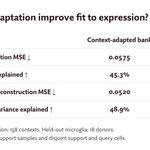
ICM learns from primary human cells across 66 datasets and adapts its modules to new contexts without retraining.
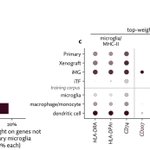
In microglia, ICM recovers known state signatures, reveals unexpected cellular features in experimental models, and helps explain why a specific perturbation strongly shifts gene expression in one model and barely in another.
This gives biologists better tools choose perturbations and design better in vitro experiments.
ICM modules explain perturbation effects:
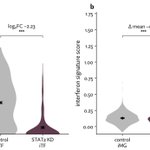
In iTF (transcription factor induction), module activity was high before STAT2 knockdown and fell sharply afterward.
In iMG (directed differentiation), it was low and changed little. An independent interferon signature showed the same pattern.

These results suggest that module composition and baseline activity could guide model selection before a perturbation screen.
Up next, we're generating extensive perturbational datasets from tri-cultures of microglia, neurons, and astrocytes. We aim to understand how combinatorial perturbations affect cell state and gene modules across our in vitro models.
Parthenon is Prima Mente's virtual platform. We model cell responses to find drug targets for neurodegenerative disease.
Work led by: @ShirsathOne, @_Anooj, Kerrigan Blake, Jonathan Hoover, @fmmartinz, @PouyaYanki, @ravi_sola
Full blog: primamente.com/blog/icm

Introducing Pleiades-Neuron: a new model that can identify neuronal cell-free DNA in blood, achieving a part-per-million threshold.
When neurons die, they release fragments of DNA into the bloodstream but at extremely low concentrations.
Our model distinguishes neuron-derived cell-free DNA at levels as low as one part-per-million. It is 4.4× more sensitive than existing methods, and in early tests across patient samples demonstrated utility across a number of brain-related conditions.
Performance improved as we scaled the size of our training corpus. It also improved with model size, with no plateau yet based on probing experiments up to 7B parameters.
This could enable simple blood tests for earlier detection, prognostic monitoring, and treatment response determination in diseases of and injuries to the brain.
Early results in real clinical samples: detected neuron-derived cell-free DNA rises with potential injury to the brain, in measles patients (2.7× vs healthy controls) where often the virus affects the brain, neuro-ICU patients (5.4×) and donors after brain death (451×).
Patients with non-neurological conditions barely differ (1.1×), so it isn’t just picking up illness.
In spinal fluid, which naturally carries more neuron-derived cell-free DNA, it detected 1,827× more than in healthy blood, against 121× for the baseline.

Next: we are expanding this work to other brain cell types like microglia and astrocytes, neurodegenerative conditions, and tracking patients over time as well as treatment response determination.
Full research blog: primamente.com/blog/pleiades…
Led by @poojakathail, @Gupta_Saumya_ and @NLoyfer. With thanks to co-authors Yuval Dor, @GanbatJay, Anjeet Jhutty, Husam Babikir, @fmmartinz, @_Anooj, @giacomonill, @PouyaYanki and @ravi_sola.

Congratulations to @thernabio on the launch of RNA-Logix™ and BioReason-RNA today. We are proud to support Therna and their customers in turning biological questions into testable hypotheses.

Meet RNA-Logix™, our AI RNA Biologist. It proposes why an RNA behaves as it does, then checks the answer against tens of millions of our measurements.
Its reasoning model, BioReason-RNA, was developed in collaboration with @NVIDIAHealth .
Thank you to @PrimaMente and @tamarindbio for hosting BioReason-RNA exclusively for our customers
businesswire.com/news/home/2…
#RNA #AIinBiotech

We are excited to announce that @nvidia has committed to an investment in @PrimaMente.
Built upon years of close collaboration, this investment deepens our partnership and strengthens our ambition to tackle complex diseases.
Neurodegenerative diseases such as Alzheimer’s, Parkinson’s, and ALS remain among medicine’s greatest unmet needs. Making real progress requires global coordination around data, foundation models, and experimental and clinical validation.
We are grateful to @nvidia for their commitment and look forward to deepening our partnership as we pursue breakthrough discoveries for these diseases, and beyond.

Today we're launching the Alzheimer's Translation Challenge, a global AI competition to discover new therapeutic hypotheses for Alzheimer's disease.
At its core is a new 150M cell atlas of neurons, astrocytes, and microglia across different genetic backgrounds under combinatorial perturbations, with multi-modal readouts.
The data will be made available through the AD workbench, Hugging Face and Prima Mente's modeling platform.
The challenge is led by @PrimaMente and @AlzData in collaboration with @nvidia, @huggingface, @nebiusai, Talisman Therapeutics, @UltimaGenomics, @cellanome, @PrimeIntellect, @GoodfireAI, and @boltz_bio.
In 1906, Alois Alzheimer described a new disease of the brain. After 120 years of progress, we still don't fully understand what drives this disease. We want to change that.
Participants will use the dataset to build AI models, assessed through a series of evals from general benchmarks to more complex tasks.
Top teams will be shortlisted, and their experimental hypotheses tested in Prima Mente's wet lab. Teams win when their hypotheses demonstrate the predicted molecular and functional effect.
Registration is now open and free to enter, the competition starts in spring 2027. More details on prizes, community and competition milestones will be shared in the coming months.
More details on prizes, community and competition milestones will be shared in the coming months.
Register here: primamente.com/challenges

Each dataset becomes a source of evals for model development and testing.
These three gave us six new tasks for prima-bench, our soon-to-be-released suite of evals.
These included isoform prediction, splicing change in disease, cancer detection from plasma, and chromatin accessibility from DNA sequence.

How long did this take? 5, 9 and 6 days.
Against modelled one-person manual schedules that's up to 10x faster and an estimated 89% cheaper, showing how efficient and affordable well-designed AI workflows in the sciences can be.
Directing AI tools with no framework around them can end up slower and pricier than doing it by hand.

We'll open-source Prima Daedalus very soon!
Read the full technical piece here: primamente.com/daedalus
Work by @GanbatJay and @fmmartinz, with thanks to @union_ai, @SeqeraLabs and @nebiusai for the infrastructure behind it.
This is the first of several deep dives into how we build at @PrimaMente. More soon.
