

Used-to-be int'l trade analyst, author, official. Now a student of classics, photography, music. Images at https://nitter.gq/t.co/XtGPrJzlNx
Melbourne, AU
Joined October 2007
- Tweets8.3K
- Following173
- Followers724
- Likes6.5K



Peter Gallagher retweeted

Man responsible for the invasion of Ukraine is "my friend"
Man responsible for the Russian army raping and slaughtering women and children in Ukraine is "my friend"
Man responsible for the Russian army kidnapping 20,000 Ukrainian children is "my friend"
Madness: 'we should stop improving this fabulous technology lest our competitors also learn how to improve this fabulous technology'. It's a counsel of poverty: anti-capitalism at its nuttiest. Worse: it also undermines collaboration that is essential for minimizing mistakes.

27
"We don’t have a good test for consciousness whether applied to the past, to other animals, or to machines."
....Or even a settled 'theory of other minds.' Only J S MIll's argument: by analogy to his own experience.

Was Achilles Conscious? What about Claude? marginalrevolution.com/margi…

19
"Academic publishing is dead. It was already a very stupid way to record and promulgate knowledge... Now AIs can generate thousands of novel, correct papers per day, it is no longer meaningful for humans to consider a research paper a "unit of science"

In my ongoing quest to find the limits of Opus 5.5, I directed it to audit my old scientific field, theoretical astrophysics. We indexed about 150,000 papers, audited 50,000 for issues, and did progressively more thorough checks on thousands more. We found nearly 1000 major errors that got cited many times, most are still uncorrected. This survey enabled me to estimate the efficacy of peer review for correcting errors (not very good) and to identify dozens of open questions that anyone with spare Claude Max tokens could answer today (.md context files included).
Bottom line: AI can speed up quantitative science by >1000x with no further model improvement required. But I'm seeing no evidence of this being pushed within universities, only academics complaining about labs dropping math proofs.
Among my fellow reformed academic high agency founders, however, several are speed running entire disciplines.
This survey has implications for how science will be run in the very near future. Hint: Academic publishing is dead. It was already a very stupid way to record and promulgate knowledge, and had been so for decades, even before all that publicly funded knowledge was locked behind paywall cartels. Now AIs can generate thousands of novel, correct papers per day, it is no longer meaningful for humans to consider a research paper a "unit of science" or to even bother much with the 99.9% of science which, up to this point, was necessary drudgery. Time to discover something like General Relativity or Evolution every week. LFG!!
Enjoy: science.caseyhandmer.com/phy…

2
78
Peter Gallagher retweeted
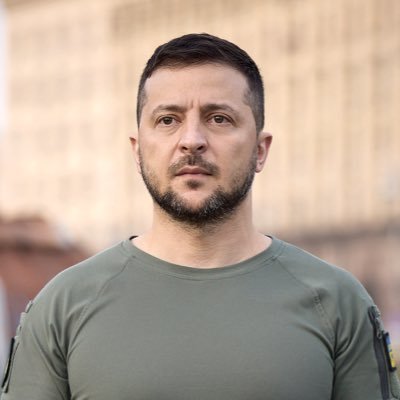
Unfortunately, Russia is receiving dozens of ballistic missiles a month from North Korea. This is a grave threat not only to Ukraine. North Korea is honing its ballistic missiles by having them used in this war. This creates additional challenges for the entire region surrounding Korea. It is also a challenge for us in Europe.
If Russia has an ally that supplies it with ballistic missiles, then Ukraine also needs clear parity so that we can respond to the Russian threat on equal terms. Europe has missiles capable of carrying out effective strikes. Germany, France, the United Kingdom, Italy – we are discussing how countering Russia’s global banditry, supported by its ally in Pyongyang, must be backed by greater supplies of comparable weapons to Ukraine.
Responding in kind is fully justified. We also need to return to the discussion of destroying Russia’s ballistic missile launchers. The Western world has the technology to do this, and to bring Russia to peace sooner and guarantee security more reliably, we must have these technologies here in Ukraine.
From today’s evening address.
I've been using Fable 5.1 as I re-cast part of Virgil's Aeneid into a 3-beat line of english blank verse. Not rocket science but not trivial: it demands both skill and taste. Fable does OK. But I'm not wowed. It's still a mixture of brilliant, dumb & stubborn but mostly... OK.
24
"Trump told reporters on Monday that he would support Huang being reinstated... “I would certainly not mind seeing that,” Trump said, adding that he believed Huang had “learned a big lesson.”"
That the press is malicious and his Board censorious dopes?
::wsj.com/tech/the-campaign-to…

1
36
If @elonmusk were degrading the Starshield signal (contracted by Poland), would he be an accessory to Russian murder in UKR? Rubio says don't talk law to men with swords (i.e. the Russians?). But bombing schools, shops, shelters & heating plants are criminal acts, not warfare.

This past week alone, Russia has used more than 2,300 attack drones, 1,590 aerial bombs, and 15 missiles of various types against Ukraine. Brutal strikes that are difficult to counter. Overnight and into this morning, the Russians targeted energy infrastructure in Zaporizhzhia and the Sumy, Odesa, Zhytomyr, and Kirovohrad regions. Railway infrastructure in the Dnipro, Kharkiv, and Zaporizhzhia regions also came under attack. Russia also carried out strikes on the Donetsk and Kyiv regions. Sixteen people have been reported injured.
The Russians are targeting substations with “shaheds.” And many of these strikes are getting through because restrictions on the operating speed of Starshield terminals along the front line and in the temporarily occupied territories are still there. Our interceptor drones lose connection with their operators at a speed of 161 kilometers per hour (100 miles per hour) and simply cannot catch up with Russian jet-powered “shaheds.” We are counting on these restrictions being lifted. The protection of lives and Ukraine’s energy infrastructure ahead of winter directly depends on this. The teams of the Ministry of Foreign Affairs, the Ministry of Defense, and the Presidential Office have been instructed to work as closely as possible with the American side and SpaceX. It is important to be on the right side of history. It is essential to help Ukraine. Thank you to everyone who supports our defense.
1
45
Peter Gallagher retweeted

Instead of a Roman general who was later beheaded with a sword, I prefer to cite an American Founding Father, John Adams, who called a republic, "an Empire of Laws, and not of men". When people in power tell you they believe might makes right, believe them.

Rubio quotes Plutarch's story about brutal general (young Pompey), then working for a murderous authoritarian (Sulla), attacking the city of Messina that had a treaty-guarantee of independence. A sordid betrayal. Is that really how he wants to project US power?

28
"Of the world’s five largest greenhouse gas-emitting nations – China, the US, India, Russia and Japan – a total of zero will have their leaders in Turkey. Australia produces 1 per cent of global greenhouse emissions but our contingent is the fifth largest visiting delegation."::theaustralian.com.au/inquire…
1
40
"Mr. Huang’s downfall started with exposure of his sexual relationship with Alice Huang... Nvidia’s board had to act after details of a second romantic entanglement emerged, this time with one of his subordinates."
Exposure? He didn't hide it. Details? Not that I've seen.
@WSJ shamefully stoking a witch-hunt about things that don't matter. Bad judgement, terrible journalism.
37


"The Leaf is true. I do not see how it can therefore be false. This is not Criticism, I admit. It is something older, and the Ancients called it φιλοστοργία, the love that a father has for his own."

THE MEMOIRES of Dr. Theophilus Periwinkle Hulse
CHAPTER THE EIGHTH
Of a Stranger from the Isle of Syme, and the Wonders in his Box; of Homer's own Hand, a Palimpsest of Uranius, and a Leaf of Apollonius; of four Tests, one of them by the Tongue; of the Reception the Stranger deserved; and of a Leaf that I have kept
The Critick and the Forger are brothers, as Cain and Abel were brothers. Both spend their nights over old parchment by a bad candle. Both love Antiquity more than is good for them. Both have, in their hearts, a strong opinion of what the Ancients ought to have written. The one difference between them is that the Forger writes it down on old parchment, and the Critick writes it in the margin and signs his name. My enemies have said that this difference is not great. I have answered them, in the margin.
I set down here how I met the greatest Forger of my Age, and what came of it.
I. Of a Stranger from Syme
It was in the Spring of the year 1613. Mr. Gudgeon had lately come back from Padua, with his eyebrows partly restored and his Greek not improved, and the College was at peace, which in St. Polyrots' means that the Fellows were plotting slowly instead of quickly.
One morning the Porter came up to my study with the news that a Greek was at the Gate.
I went down. In the Lodge stood a man of perhaps thirty years, in a long black gown of the Eastern fashion, with a great black beard, a tall black hat without a brim, a string of amber beads in one hand, and in the other a Box of olive-wood bound with brass. Over his shoulder was a net bag full of Sponges. He bowed, very low and very gracefully, and presented me with a Sponge. Then he said, in Greek:
Κωνσταντῖνος Σιμωνίδης, ἐκ Σύμης.
Constantine Simonides, of Syme. At least, I was told afterwards that this was what he said. He pronounced it in the modern manner, which turns half the vowels of the Greek tongue into ee. I pronounced my answer in the manner of Erasmus and Sir John Cheke, as we do at Cambridge. In consequence, for the first quarter of an hour, neither of us understood one word of the other's Greek, and each of us concluded that the other had none. We fell back upon Latin. His Latin was very bad. Mine was very good. This gave me an advantage I never afterwards lost.
I knew Syme at once, however, for it is in Homer. It is a little rocky island lying off the coast of Caria, a short sail from Rhodes, the island of my own Apollonius. In the Catalogue of Ships it sends three vessels to Troy, under its prince Nireus:
Νιρεύς, ὃς κάλλιστος ἀνὴρ ὑπὸ Ἴλιον ἦλθε τῶν ἄλλων Δαναῶν μετ᾽ ἀμύμονα Πηλεΐωνα· ἀλλ᾽ ἀλαπαδνὸς ἔην.
Nireus, the most beautiful man who came beneath Ilium of all the Danaans, after the peerless son of Peleus; but he was a weakling (Iliad 2.673–5). I gloss it:
κάλλιστος. The handsomest man at Troy but one. Homer gives him three lines and three ships, and then never mentions him again, which is the usual fate of handsome men in Epic.
ἀλαπαδνός. Feeble, of no strength. Syme, it appears, has been exporting persons of fine appearance and no substance since the Trojan War. I have since learned that it also exports Sponges, which are of the same description.
Mr. Simonides told me that he had come from the Holy Mountain of Athos, by way of Venice, Paris, and the Low Countries; that he had in his Box treasures of Antiquity such as no man in the West had ever seen; and that, having heard of my learning even in the Islands of the Aegean, he had come to offer them first to me. I asked him how my learning came to be known in the Islands. He said that a copy of my Broadside had come to Rhodes in a bale of English cloth. I thought this very likely, and was pleased. I have since learned that the Broadside had never been out of Cambridgeshire, and that he had read it nailed to the College Gate that morning.
I took him up to my study, with his Box.
II. Of the Wonders in the Box
Mr. Simonides opened his Box upon my table with the care of a man laying out the Holy Relics. I give its contents in order, as he gave them to me, with his account of each and mine.
The First Wonder: the Autograph of Homer. A roll of very old and very brown parchment, written in great square capitals running from left to right and then back from right to left, as the ox turns at the end of the furrow, which the learned call boustrophedon. It began:
ΜΕΝΙΝ ΑΕΙΔΕ ΘΕΑ …
At the foot, in a fine flowing hand, it was signed Ὅμηρος ἔγραψε, Homer wrote this. I observed to Mr. Simonides that Homer, by the unanimous testimony of Antiquity, was blind. He answered that Homer had dictated the poem to a scribe, and had signed it himself. I asked how a blind man came to sign his name in a hand so much finer than the scribe's. He said that blind men are known to have very beautiful handwriting, having nothing else to occupy them. I set the Homer aside.
The Second Wonder: Eumelos of Malona. A small book in a hand of the tenth century, containing the Complete Works of Eumelos of Malona, an epic poet of Rhodes. Mr. Simonides said that Eumelos had been the greatest poet of the island before Apollonius, and that his works were wholly lost, no single fragment of them being quoted by any ancient Author. I observed that an Author of whom no fragment survives cannot properly be said to be lost, since nobody can have missed him. Mr. Simonides said that this was the very reason his discovery was so valuable: nobody could contradict it. I own that I was struck by this argument, and set Eumelos aside also, in a separate pile.
The Third Wonder: the Palimpsest of Uranius. This was the chief treasure of the Box, and Mr. Simonides drew it out last but one, very slowly. It was a thick book of the Lives of the Saints, in a late hand. But beneath the Lives, said he, faint, brownish, and visible only when held to the light, lay an older writing that had been scraped away: the lost History of the Kings of Egypt, by Uranius, in three Books. He held a leaf to the window, and sure enough, beneath Saint Pachomius there swam up the ghostly letters of an older Greek. Here were the names of the Pharaohs from Menes onward, every King with his length of reign, all in perfect order, filling up every gap in Manetho, and settling every question that the learned of Europe have disputed for a hundred years.
The Fourth Wonder. This he did not take out of the Box himself. He laid his hand upon it, looked at me sideways, and said that it was too precious to be shown to any man in England but one. It was a single leaf. He said it had been found in a monastery upon Rhodes itself, and that it bore Scholia, written in the margin in the hand of Apollonius of Rhodes himself, upon the Hylas episode of the First Book of the Argonautica.
I asked to see it. My hand, I confess, was not quite steady.
The Scholium read:
Ὁ Ὕλας οὐκ ἀπέθανεν ἀλλὰ ἔγημε τὴν Νύμφην καὶ ἔσχεν υἱὸν Ὑλαΐδην, ὃς ἐν Σφεφιέλδῳ τῆς Βρεττανίας ᾤκησε.
Hylas did not die, but married the Nymph and had a son Hylaides, who settled at Sheffield in Britain.
I shall not pretend to the Reader that I was not moved. I had maintained my descent from Hylas at High Table for twenty years against all comers. Here it was in the hand of Apollonius. Mr. Simonides watched me. I watched the Leaf. The candle burned down a full inch. Then I laid the Leaf, very gently, with the others, and said that I would examine them all in the morning.
III. Of the Fellows, and of Oxford
By the morning the whole College knew that a Greek had come with the lost Kings of Egypt in a Box. The Fellows were beside themselves. Mr. Gudgeon, who had brought back from Padua an Italian passion for Antiquities and an Italian indifference to whether they were genuine, declared at once for Uranius. He said that the College must buy it, whatever the price, and that he would edit it himself and have it printed at Oxford by subscription, with a Latin Preface by himself and a Dedication to the King.
The Bursar, having learned the price, fainted, as Bursars do. On coming round he learned that the price could be raised by subscription, and that the subscribers would pay before the book was printed. He pronounced the Uranius genuine, and went off to have the subscription papers drawn up.
Mr. Simonides, meanwhile, had made himself very agreeable in the Combination Room. He gave every Fellow a Sponge. He made the Fellows a hot black bitter drink of the Turks, called kahve, in a little brass pot, which I tasted once and have no wish to taste again, though I am told that it will one day be drunk in every street in London. And he told stories of Athos, and of Sinai, and of the Patriarchs of Constantinople, all of whom, it appeared, were his close friends and owed him money.
Within three days Mr. Gudgeon's subscription list had a hundred names, and the printers at Oxford had begun to set the Preface.
I said nothing. I was examining the Box.
IV. Of Four Tests
Now I come to my method. I set it down at length, because these Memoires are meant for the instruction of Criticks in ages to come. I make no doubt that, in some later century, a man of this same Simonides blood will carry some such Box about the Universities of Europe, and that some learned German will believe him, and some Press print him. Let them read this Chapter first.
The First Test: by the Tongue. I took a leaf of the Uranius, wetted my finger, and touched the ancient writing beneath Saint Pachomius. It came off on my finger. I then tasted my finger. Ancient ink, made of soot and gum, tastes of nothing but dust and Time. This ink tasted of oak-galls, copperas, and, very faintly, of the Turkish kahve. I gloss the test, for it is my own invention:
oak-galls and copperas. The common writing-ink of Christendom, which any stationer sells. The Ancients did not use it. Mr. Simonides had used it within the month.
kahve. Conclusive.
The Second Test: by Grammar. I read the first sentence of Uranius. It ran:
Ὁ βασιλεὺς Μήνης εἶναι ὁ πρῶτος τῶν Αἰγυπτίων.
King Menes is the first of the Egyptians. I gloss it:
εἶναι. In the Greek of Antiquity, εἶναι is the infinitive, to be. The ancient author would write ἐστί. But in the Greek that is spoken today in the markets of the Archipelago, εἶναι is used for he is. A King who to be the first of the Egyptians is a King in Grammar only. This is not the Greek of Uranius. It is the Greek of a man selling fish at Syme.
I found forty such modern forms in the first Book alone. Mr. Simonides, when I showed him them, said that Uranius was a writer before his time. I agreed with him heartily, and said that he was a writer about fifteen hundred years before his time.
The Third Test: by Scaliger. This was the test I enjoyed most, and the Reader shall see why. Thirty years ago Joseph Scaliger published his great work upon the reckoning of Time, De Emendatione Temporum, in which he set out the Kings of Egypt and the lengths of their reigns. For thirty years I have kept, in a little book of my own, a List of every error that Scaliger made in that work. I call it my Errata Scaligeri. It is now in its fourth volume, and is the only book in my study that I read for pleasure.
I laid the Kings of Uranius beside the Kings of Scaliger. They agreed throughout, as no two ancient authorities have ever agreed about anything. Then I laid them beside my Errata Scaligeri. Uranius had every one of Scaliger's errors. He had Scaliger's wrong reigns. He had Scaliger's two Kings who are one King. He had Scaliger's King who never reigned at all, whom Scaliger invented in 1583 out of a misreading of Eusebius. A historian of Antiquity who agrees with the most learned man of my own Age even in his blunders is not an ancient historian. He is a man who has bought Scaliger's book at Paris and copied it out under Saint Pachomius.
The Fourth Test: by the Light. Last, I held the palimpsest to the window at noon. In a palimpsest the old writing lies underneath and the new writing lies on top, as the dead lie under the living. But in one place, at the bottom of the twelfth leaf, the tail of a letter of Uranius ran clean across the stroke of a letter of Saint Pachomius, on top of it, and not beneath. Uranius had been written after the Saint. The Dead were lying upon the Living. I called in the Porter, who cannot read, and showed it him, and even he saw it.
I put the tests aside, and took up the Leaf of Apollonius. I tasted it. It tasted of kahve. I read it again. The word for Sheffield was Σφεφιέλδῳ, which Apollonius, who had never been north of Alexandria, could not have known. I laid it down very gently, and said nothing about it to anybody, and turned to my duty.
V. Of the Reception the Stranger deserved
I asked the Fellows to the Combination Room that evening, and Mr. Simonides with them, and the Box. I laid out my four Tests upon the table, with the inky finger, the forty modern forms, the Errata Scaligeri in four volumes, and the twelfth leaf held up to a candle. I spoke for two hours. I have seldom been happier.
When I had done there was a silence. Then Mr. Simonides, so far from being abashed, rose, bowed to me very low and very gracefully, and said in his bad Latin a thing that I have never forgotten:
Domine doctissime, verum dicis. Ego ipse scripsi Uranium, anno aetatis meae sexto decimo, exercitationis gratia. Opus est iuventutis meae, et pauperculum.
Most learned sir, you speak the truth. I myself wrote the Uranius, in the sixteenth year of my age, as an exercise. It is a work of my youth, and a poor little thing. I gloss it:
ipse scripsi. A confession, but of a curious kind, for it is also a boast. He did not deny that the thing was false; he claimed credit for the falsehood. I have known Criticks do the same with their conjectures.
anno aetatis meae sexto decimo. At sixteen. If true, he was at sixteen a better scholar than Mr. Gudgeon at fifty, and he knew it, and so did Mr. Gudgeon.
pauperculum. A diminutive of false modesty. It is the only word in the speech that I believe to be a lie.
I answered him: "Sir, you are a better scholar than Mr. Gudgeon, and a worse liar than Scaliger. Neither is a recommendation in this College."
As to the Reception he deserved, I had given it some thought. A Fellow who offends me goes down the Great Staircase. But Mr. Simonides was not a Fellow, and I did not wish to flatter him. I resolved instead to give him the Reception that this College reserves for its own young Gentlemen. I set him the Michaelmas Examination.
He sat it in Hall that night by candlelight, under the eye of the Dean. He did very well in Greek Composition, which he wrote faster than any man I have seen, and in a hand that was, I observed, exactly that of Uranius. He failed Question 3, the declension of γραῦς, because he declined it in the modern manner. And when he came to Question 9, and found a Fleet reported as 130 Ships, he supplied not one nought but three, and wrote beneath that he possessed the original Spanish document, and could let me have it for forty pounds.
The Undergraduates, who had heard the whole affair through the Hall door as usual, then escorted Mr. Simonides and his Box to the river, singing the Ballad of the Master's Deliverance with a new verse of their own. I had intended only that he should be put into a boat. But the men of Syme are divers for Sponges from their childhood, and before anybody could stop him he had tied his Box upon his head with his amber beads, dived in, and swum away downstream towards the sea, very fast and with great elegance, like Nireus. He was last seen passing Ely.
It remains to say what became of Mr. Gudgeon's Uranius. The Preface had already been printed at Oxford, with the first Book of the text, and the Dedication to the King. The edition was suppressed by order of the Vice-Chancellor, and the sheets were sold for waste paper. I am informed that Mistress Spigot bought the greater part of them at a halfpenny the quire, and that the College pies have since been lined with the Kings of Egypt. I have myself eaten Menes. He was very dry.
Three copies of the Oxford Uranius escaped the pies. One is in Mr. Gudgeon's study. One is in the Bodleian, where nobody will read it. The third I have bought for my own library, and keep on the shelf beside the Errata Scaligeri. Its company does it good.
VI. Of a Leaf that I have kept
Mr. Simonides took everything with him down the river, except one thing.
The Reader will remember the Fourth Wonder: the Leaf of Apollonius, with its Scholium upon Hylas and his son. I had tasted it, and it tasted of kahve. I had read it, and it had Sheffield in Greek. I knew it, upon every principle of my Art, to be as false as the rest.
I did not lay it out with the others in the Combination Room. It had somehow fallen into the drawer of my writing-table, under the Errata, and I had forgotten to mention it. It lies there still. I have examined it many times since, by the light of a candle, alone. I have found that it improves upon examination, as some Wines do, and as no Uranius ever will.
My enemies will say that I have convicted the whole Box upon four Tests, and acquitted one Leaf upon none. I answer that the Box was false because it was not true. The Leaf is true. I do not see how it can therefore be false. This is not Criticism, I admit. It is something older, and the Ancients called it φιλοστοργία, the love that a father has for his own.
N.B. This morning a letter came, bearing the seal of the Venetian Post and smelling of kahve. Mr. Simonides writes from Leyden, in excellent spirits and bad Latin. He is now selling the Complete Works of Eumelos of Malona to the University there, and asks whether he may name me as a reference. He adds a postscript: that his grandson's grandson's grandson will one day bring Uranius to Oxford again, and that the Germans will believe him. I have answered that the Germans may believe what they please, but that Oxford has been warned. I have written the warning in the margin of the Bodleian copy. Nobody will read it.

31
"Because nuclear submarines are much larger than the Collins class boats now being used by the Navy, they can’t operate in the shallow water around our northern coast.
They are designed to help the US Navy threaten its Chinese counterpart."

AUKUS verdict is in, time Australia to back away thenewdaily.com.au/opinion/2…

"Reagan said he hoped history would record that “I appealed to your best hopes, not your worst fears, to your confidence rather than your doubts”.
Trump has made the opposite wager, and the returns are coming in."

1
81
"The AI control crowd also gets what they want. As an advocate for open source, Jensen was the loudest one pushing back on tighter restrictions and the more closed approach. And all this all happens right before the Anthropic IPO? Mmm."

Look, I’m one of the hawks that Jensen clearly doesn't like. I’ve long thought he's been bad on China policy for a while now as he pushed for more engagement, trying to keep the door open for chips and all that.
That said, the way this whole thing went down is highly sus. I agree with @PalmerLuckey here.
The info was out there if you knew where to look. Intelligence had this for a while and earlier in the year, Trump himself was briefed and got the memo.
Then suddenly it all drops at once through the usual IC-to-media pipeline. Jensen admits the affair, the board starts looking into it, and then almost immediately the second story about the alleged internal affair with the direct report hits. And just like that he resigns. The timing and the sequencing feel off, like they sat on it and then let it all go at once.
Don’t get me wrong, I respect the guy as an engineer and as an incredible founder who built one of the world's greatest companies. The problem here is that we still don’t really know how bad the exposure was, so the way it has played out just feels so... orchestrated.
Even assuming the spy stuff is overstated or false, China still ends up with a lot of what it wanted - more GPUs, a big hit to the US market, and the sudden decapitation of an AI figurehead. Jensen leaving is clearly a net negative for the company and that company happens to be a great asset to the United States.
The AI control crowd also gets what they want. As an advocate for open source, Jensen was the loudest one pushing back on tighter restrictions and the more closed approach. And all this all happens right before the Anthropic IPO? Mmm.
Could also just be a political hit - perhaps a power struggle inside the admin to sideline the doves on China. Or the other side using it as a pretext to go after a Trump ally and donor, open the door to more inquiries, and hand more influence to the people who want stricter AI controls.
I don’t know which of these it is or if it’s some mix.
We still do not have a clear public accounting of what, if anything, was actually compromised. The board’s investigation was only days old when the resignation happened which just feels rushed.
I have major policy disagreements with Jensen on China but the manner and timing of how this played out is a red flag, and I wish he hadn't resigned so quickly.
He's an American hero and will always be
74