

Investing in a concentrated portfolio of the highest quality companies in the world. All opinions my own. Not financial advice.
United States
Joined July 2022
- Tweets9.8K
- Following1.2K
- Followers10.6K
- Likes17.2K





Pinned Tweet
Quality Equities portfolio at the end of October 2026.
Here is what I own:
- About 40% is in the big platforms: $AMZN Amazon, $META Meta, $GOOG $GOOGL Alphabet, and $MSFT Microsoft. They run the places where people shop, advertise, work, search, and rent computing power.
- About 25% in chips and chipmaking equipment: $NVDA Nvidia, $ASML ASML, and $KLAC KLA. Nearly every advanced AI chip depends on what these 3 make.
- About 19% in payments: $MA Mastercard and $V Visa. They take a small cut of trillions of dollars in spending and need very little capital to grow.
- The rest is $SPGI S&P Global, $UBER Uber, and $BN Brookfield.
Payments now makes up a bigger share, and Alphabet a smaller one based on how the market has decided to rate these companies.
The goal stays the same. Own a small number of the highest quality businesses in the world.

$ANT Anthropic grew quarterly revenue 45x in 6 quarters, to $16.96B.
But growth this fast costs money up front: chips, data centers, long contracts.
Tomorrow at 8:30 AM ET my full report:
• Moat breakdown
• Valuation work, bull vs. bear
• The bills behind the growth
On November 17, Ed Zitron wrote that "the NVIDIA Bubble has popped." His argument was that $NVDA Nvidia had become the "Central Bank of AI," funding its own customers, and that without Jensen Huang, there was little left keeping the whole thing afloat.
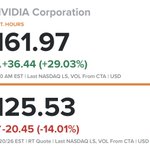
Six days later, Nvidia's board voted unanimously to bring Jensen back. The stock rose 31.48% in a day to $165.05, its best day since 2003.
Ed deserves credit for one thing. The circular financing he describes is real, and it's right there in Nvidia's own Q3 numbers:
- Receivables: $81.0 billion, more than double January's $38.5 billion
- Customers now take 64 days on average to pay, up from 60
- Guarantees: up to $118.0 billion, $105 billion of it backing an Ohio data center campus leased to OpenAI
- Supply commitments: $390 billion, up from $279 billion in one quarter
Here's what the bubble case leaves out. That same quarter, Nvidia booked $115.8 billion of revenue (up 103%) and $43.8 billion of free cash flow. It has made zero payments on any of those guarantees. Five days after Jensen resigned, management guided to $130 billion for a 14-week fourth quarter and raised next fiscal year's growth outlook to about 75%.
A few of Ed's numbers need a fix:
- Anthropic's "$141 billion in cash" is the total capital it had raised. Its cash and short-term investments were $131.8 billion on September 30. After the IPO it holds roughly $241.8 billion.
- Nvidia's "$99.4 billion in total liquidity" matches its Q2 cash and debt securities ($56.6 billion) plus publicly traded stock it owns in other companies ($42.8 billion). The cash figure today is $53.5 billion.
- The $4.8 billion, $7.5 billion and $12 billion Megaspeed figures come from three different reports measuring three different things.
- The $500 billion financing was announced as non-binding from day one.
Jensen's return is good for shareholders. The person who built the ecosystem is back running it. But the real test was never who sits in the CEO chair. Receivables grew 28% last quarter while revenue grew 20%. The question is whether that turns into cash, and whether any guarantee ever gets called. So far: $43.8 billion of free cash flow and zero guarantee payments.

Free Newsletter: The Megaspeed affair has begun the collapse of the NVIDIA Bubble, a financial mania manufactured, maintained and sustained by Jensen Huang using NVIDIA’s balance sheet to brute-force the markets and the media into believing in anything.
wheresyoured.at/the-nvidia-b…

I remade the viral investor tier list.
This time, returns drive the ranking (long-term, after fees, against the market). Then, I adjust for how verifiable each record is and how it was earned. Finally, I add some of my own qualitative judgement.
Tier by tier below:

3
6
1,857
X: Convicted of fraud
Madoff, Stanford, Belfort, Bankman-Fried. Off the list. If returns look too smooth to be true, ask why.
1
168
$MS Morgan Stanley's Mike Wilson and team told clients Monday, per reports: "This is the fat pitch we have patiently been waiting for, and we're not going to miss it."
Per reports, it's their most bullish short-term stance since early April. Here's their case:
"Markets bottom on bad news and deleveraging. We have had a lot of both."
Areas they favor: AI compute hyperscalers, industrials, quality cyclicals with improving revisions, and AI adoption beneficiaries. The risk they name is a more hawkish Fed.
$FICO Fair Isaac, fiscal Q4 to Sep 30, reported Nov 4: revenue $657.0M, +27% from $515.8M. GAAP EPS $8.12 vs $6.42. Scores revenue +33%, software +19%.
Then this line: "we are not providing fiscal year 2027 guidance at this time."
1
5
1,325
Per FHFA, since Sept 9 every Fannie Mae and Freddie Mac approved lender may use VantageScore 4.0. On Sept 30 the two set the same upfront fees for both models.
The stock closed Nov 20 at $694.31, about 62% below its 52-week closing high of $1,844.98 on Dec 12, 2025 (my calc).
1
314