

AI & Automation • African Lead #TronEcoStar • Ambassador • Product Ads • KOL • BD • Growing Web3 through strategy, content & partnerships.
Somewhere in Web3
Joined December 2023
- Tweets25K
- Following25.9K
- Followers30.1K
- Likes6K







Pinned Tweet
Imagine turning a $100 token purchase into a chance to win a Lamborghini Urus SE.
That's one of the perks of joining the @1winToken Sale.
Every full $100 spent during the sale earns you 1 Lucky Drive ticket, putting you in the running for a car worth hundreds of thousands of dollars.
The sale has already raised $6.44M, attracted 2,700 participants, and reached 1.65x oversubscription.
With $1WIN priced at $0.03, you can participate in the sale and get a shot at something much bigger.
The sale closes October 30, and the draw takes place November 15.
Buy tokens at 1wintoken.com
The sale closes October 30. The draw happens November 15.
Join the sale at 1wintoken.com


Buy 1win Tokens and get tickets to win a Lamborghini Urus SE in 1win Lucky Drive
Until October 30, every full $100 spent during the Token Sale gives you 1 Lucky Drive ticket
Maximum: 32 tickets per user total, including tickets you already earned in Lucky Drive
Already bought 1win Tokens? Those purchases count too
To qualify:
- Buy tokens at 1wintoken.com
- Register or log in to 1win.com
- Make a $10+ SOL deposit from the same wallet you used for the Token Sale
The draw takes place on November 15
Available to both new and existing 1win players

📢 ANNOUNCEMENT: $1WIN COMMUNITY OPEN MIC
The $1WIN Token team is set to host a community Open Mic featuring @EvoOnChain, Head of Crypto.
The session will give community members an opportunity to ask questions and get insights into upcoming updates, listings, and other developments surrounding the project.
📅 Date: October 28
⏰ Time: 3 PM UTC
📍 Venue: X Spaces
Get your questions ready and join the conversation!
To get app visit: 1win-pro.app
#1WIN #1WINToken
🤝 Paid partnership

ATTENTION: $1WIN updates | Open Mic
We’re hosting a community Open Mic with @EvoOnChain (Head of Crypto)
to answer your questions about upcoming updates, listings, and everything else you want to know
- Live on X Spaces
- October 28
- 3 PM UTC
Bring your questions, see you soon


Thanks to @CryptoSlate for covering the update.
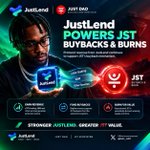
The JST Buyback & Burn Program has completed its initial five rounds, exhausting the historical revenue reserves from JustLend.
JUST DAO has outlined an upgraded mechanism to support the program’s long-term sustainability and continuity.
Season 1 on @rarelistio is live! Join creator campaigns for curated projects and compete for a $50,000 prize pool.
Verifying my account: RL-QPTLP9


JST Buyback & Burn Upgrade: Expanding Value Across the JUST Ecosystem
JST has completed five rounds of buybacks and burns. Now, JUST DAO is expanding the mechanism beyond JustLend to connect JST more closely with revenue generated across the wider JUST ecosystem.
Multiple Revenue Sources: JustLend will continue contributing eligible revenue from sTRX staking, SBM, and other services. GasFree is planned to join in Q4 2026, following approximately $12.027 million in cumulative revenue through Q3 2026. USDD's net revenue exceeding $10 million may also support buybacks, subject to applicable conditions.
Treasury Protection: JUST DAO will maintain a minimum $50 million treasury safety reserve for risk management, emergency redemptions, and liquidity needs. An additional $20.34 million in excess funds is planned for deployment across four buyback phases beginning in Q4 2026.
Unified Governance and Transparency: JUST DAO will coordinate buybacks across JustLend, GasFree, and USDD. Repurchased JST will be permanently burned through the designated TRON burn address, with transaction records published on the official dashboard for on-chain verification.
This upgrade builds a broader revenue-to-burn model, linking lending, staking, payments, and stablecoin services to JST's long-term supply management. Its effectiveness will depend on sustainable revenue, transparent execution, and ecosystem adoption. Buybacks and burns do not guarantee price appreciation.
Official announcement:
support.just.network/hc/en-u…
#TRONEcoStar
@justinsuntron
@DeFi_JUST
#JST #JUSTDAO #TRON #DeFi #BuybackAndBurn
📢Announcement: Upgrade to the JST Buyback & Burn Mechanism
The JST Buyback & Burn Program is entering a new phase.
The upgraded mechanism introduces unified governance under JUST DAO, a minimum $50 million treasury reserve for risk mitigation, emergency redemptions, and liquidity support, and a buyback model based on sustainable quarterly revenue across the JUST ecosystem.
Remaining surplus funds above the reserve threshold will be released in phases to supplement future buybacks.
🔗Read the full announcement for the updated mechanism and implementation details: support.just.network/hc/en-u…

JustLend Continues to Support JST's Buyback Framework
The JST buyback upgrade does not remove JustLend from the equation. Instead, it preserves the lending protocol's role while broadening the sources that can contribute to future buybacks.
JUST DAO states that protocol revenue generated through sTRX staking, SBM, and other services will continue to support JST buybacks.
This arrangement connects activity within JustLend's product ecosystem to the wider JST token mechanism. As the protocol generates eligible revenue, part of that revenue can contribute to market purchases of JST, followed by periodic token burns.
The expanded model is significant because JustLend can remain a foundational contributor without carrying the entire responsibility for funding the mechanism.
For observers, the important indicators will include the amount of eligible revenue generated, the portion allocated to buybacks, and the frequency of completed burns. These details help distinguish an operational revenue-based mechanism from expectations based solely on token-market sentiment.
support.just.network/hc/en-u…
#TRONEcoStar
@justinsuntron
@DeFi_JUST

From Five Completed Burns to a Broader JST Strategy
JST has completed five rounds of buybacks and burns, establishing a foundation for its evolving token supply management strategy.
According to the JUST DAO announcement, historical revenue reserves from JustLend have been deployed as planned. The latest upgrade builds on that experience by expanding the funding framework beyond the lending protocol.
This transition matters because a sustainable buyback mechanism needs more than completed transactions. Its longer-term strength depends on the consistency of eligible revenue, disciplined treasury management, transparent execution, and the ability of the underlying products to remain useful.
The next stage introduces GasFree and qualifying USDD revenue alongside continued contributions from JustLend. It also establishes a treasury safety threshold and plans a phased deployment of excess funds.
Five completed rounds provide historical context, but they do not guarantee future buyback sizes or price appreciation. The important question now is how consistently the expanded mechanism operates as the JUST ecosystem develops.
support.just.network/hc/en-u…
#TRONEcoStar
@justinsuntron
@DeFi_JUST

JST Is Moving Toward a Broader Ecosystem-Based Buyback Model
JUST DAO is upgrading the JST buyback and burn mechanism to connect the token more closely with revenue generated across the wider JUST ecosystem.
Previously, the buyback mechanism relied significantly on JustLend revenue reserves. Following five completed buyback and burn rounds, the upgraded framework introduces additional funding sources, including GasFree and eligible net revenue from USDD.
This represents an important structural development. Rather than depending primarily on one protocol, JST's buyback mechanism is being designed to benefit from multiple business lines spanning lending, staking, payments, and stablecoin services.
Eligible revenue will support future buybacks, while repurchased JST will be periodically burned. The mechanism creates a clearer link between ecosystem business activity and token supply reduction, although the actual impact will depend on revenue growth, buyback execution, and market conditions.
The key development is diversification: JST's long-term value capture is increasingly tied to the broader JUST ecosystem rather than a single revenue source.
support.just.network/hc/en-u…
#TRONEcoStar
@justinsuntron
@DeFi_JUST

I'll be live at @Web3FestAfrica 2026! 🚀 Join me and thousands of builders across Africa in Uyo, Nigeria (Nov 26–28 at Teckcocoon).
Grab your pass here: wfa-2026.eventcrib.com/regis…
#Web3FestAfrica2026 #Web3FestAfrica #Web3InUyo

📊 JST Price Journey: Five Buybacks, Five Burns, One Deflationary Strategy
How has JST performed since its first buyback and burn? And how has its price moved as the program progressed through five completed burns?
To understand the bigger picture, we need to track three key indicators together:
📈 JST Price Trend: Follow price performance from the first burn through the latest milestone.
🔥 Five Buyback & Burn Events: Mark the dates of all five completed burns to show how the program has progressed over time.
📉 Cumulative Burn Ratio: Show the total JST burned relative to the relevant token supply, making the cumulative impact of the program easier to understand.
The goal is to connect JST’s ongoing deflationary strategy with its long-term market performance. Burns can reduce token supply, but price also depends on demand, liquidity, market sentiment, and broader market conditions. Tracking these metrics together gives the community a clearer, more balanced picture.
📢 Official announcement on the fifth JST buyback and burn:
support.justlend.org/hc/en-u…
🔗 On-chain transaction:
tronscan.org/#/transaction/0…
#TRONEcoStar @justinsuntron @DeFi_JUST

🚀 BitTorrent: From P2P File Sharing to a Comprehensive Infrastructure Platform
BitTorrent’s brand evolution reflects a broader vision: building infrastructure that connects content distribution, decentralized AI computing, and blockchain interoperability.
The ecosystem brings together three key product lines:
🔹 BitTorrent: One of the world’s largest peer-to-peer networks, built to distribute content efficiently across a decentralized network of users.
🔹 BTTInferGrid: A decentralized AI inference compute network designed to help power AI workloads through distributed computing resources.
🔹 BTTC: BitTorrent Chain, a cross-chain scaling network connecting blockchain ecosystems and supporting interoperability.
Together, these three pillars represent an evolution beyond file sharing — connecting decentralized content delivery, AI infrastructure, and blockchain technology under one ecosystem.
The brand upgrade helps communicate this expanded vision, while BTT’s on-chain activity provides another part of the story. Sustainable ecosystem growth depends on real utility, adoption, and transparent tokenomics.
🔎 Brand upgrade: bittorrent.com/btt/brand-voi…
📢 Buyback & Burn announcement: bittorrent.com/btt/buyback-b…
🔗 On-chain transaction: tronscan.org/#/transaction/4…
#TRONEcoStar @justinsuntron @BitTorrent

📊 Tracking $WIN: From Buyback Announcement to First Burn
WINkLink announced its long-term $WIN Buyback & Burn plan in July, marking a new milestone in its tokenomics strategy.
📅 July 6: Buyback and burn plan announced
📈 July onward: Track $WIN’s price movement following the announcement
🔥 October 19: First buyback and burn completed, with 67,357,364,510 $WIN burned.
The price chart should highlight the full journey from announcement to execution, with October 19 clearly marked so the community can compare market performance across the timeline.
The key is to track both price action and the execution of the plan. A token burn reduces supply, but price performance also depends on demand, liquidity, market sentiment, and broader market conditions.
🔎 Announcement: winklink.org/#/announcement/…
🔥 Buyback & Burn Tracker: winklink.org/#/win-buyback-b…
🔗 Verify the on-chain transaction: tronscan.org/#/transaction/c…
#TRONEcoStar @justinsuntron @WinkLink_Oracle

Displaying token balances on TRON requires more than reading an account’s basic information.
TRON’s account documentation notes that TRC-20 balances are not stored directly in the basic account object. Applications generally need to query the token contract’s balance function or use an appropriate token-balance API or indexing service.
That distinction matters when building portfolios, exchange dashboards, payment apps, and token explorers. A query that works for a TRX balance may not be enough to show a user’s full token holdings.
Developers should also make token identity clear in the interface. A token name or ticker alone may not uniquely identify an asset, so the relevant contract address and trusted token metadata are important safeguards.
Accurate balance displays begin with the correct data source, careful token identification, and transparent handling when information is unavailable or delayed.
@trondao @justinsuntron #TronEcoStar

A useful TRON transaction-history screen must match the type of activity it claims to show.
TRON’s API documentation distinguishes ordinary TRX and TRC-10 transfer history from contract-related history, including TRC-20 and TRC-721 activity. Internal transactions triggered by contracts may also require a separate query.
This matters because a basic transfer feed might not represent every action associated with a wallet. If an application promises a complete asset history, developers should identify which transaction categories are indexed and which require additional data sources.
Clear labels help users understand whether they are viewing transfers, token movements, contract interactions, or a broader activity timeline. Good pagination and transparent date filters also make large histories easier to explore.
Build the history view around the user’s actual question: what happened, which asset was involved, and where can the record be independently checked?
@trondao @justinsuntron #TronEcoStar

On TRON, an externally owned account and a smart contract account are not the same kind of account.
An externally owned account is controlled by a private key. A contract account executes code according to its programmed logic and access rules. Both can hold TRX and tokens, but the way they initiate actions differs.
This distinction becomes important when building explorers, wallets, payment systems, and dApps. An interface should not assume that every address represents a person or that every transfer to a contract necessarily triggers its application logic.
TRON’s account documentation notes that a direct TRX transfer to a contract address can increase its TRX balance without executing the contract’s receive() or fallback() function on Mainnet.
Developers should design deposit instructions around the actual contract behavior, not assumptions based only on an address.
@trondao @justinsuntron #TronEcoStar

When a TRON transaction is submitted, the user still needs to know what happened afterward.
TRON’s transaction workflow documentation explains that a successful broadcast response does not, by itself, prove that a transaction was included in a block, executed successfully, or solidified.
That is an important design lesson for wallets, merchant checkouts, and exchange deposit systems. Avoid displaying “completed” simply because a broadcast request returned without an error. Track the original transaction ID and query its status through the appropriate confirmation stages.
The interface should distinguish between submitted, included, successful, and solidified states where relevant. If a transaction fails or remains pending, explain that status rather than leaving the user guessing.
Reliable transaction tracking builds trust because the app communicates the difference between sending a request and confirming an outcome.
@trondao @justinsuntron #TronEcoStar

Wallet security is not only about protecting a private key. It is also about deciding where that key is allowed to operate.
TRON’s developer recipes include an offline-signing workflow in which a transaction can be prepared and signed on an isolated machine, then broadcast from a separate online machine. This can be useful for certain high-security or operationally sensitive environments.
Separating signing from broadcasting reduces the need for the signing environment to have direct network access. It does not eliminate every risk: teams still need to verify transaction details, protect offline devices, control how unsigned and signed transactions move between systems, and secure backups.
Developers should choose an architecture appropriate to their threat model and operational needs. For some use cases, a hardware wallet or hardware security module may be more suitable.
Security is strongest when the process is designed deliberately, documented clearly, and tested before real funds are involved.
@trondao @justinsuntron #TronEcoStar

A wallet confirmation screen should help people understand the action they are approving.
Before signing a TRON transaction, users should have a clear view of the destination, asset, amount, and relevant network or contract details. For smart-contract interactions, the action may be more complex than a simple transfer, so the interface should explain what it can reliably identify instead of presenting an unclear approval prompt.
This is especially important when a user is interacting with an unfamiliar dApp. A familiar logo or polished website does not prove that a transaction is safe. Users should verify the site, review the requested action, and pause if the wallet prompt does not match what they intended to do.
Builders can support safer decisions with readable transaction summaries, clear warnings, and links to trusted documentation. A good confirmation flow makes careful review easier rather than treating it as an obstacle.
@trondao @justinsuntron #TronEcoStar
