Rame (@rainmakerspod) header
Rame (@rainmakerspod) profile picture

Learn from the world’s best investors how they made their returns.

Los Angeles
Joined March 2015
Photo by Rame (@rainmakerspod)Photo by Rame (@rainmakerspod)Photo by Rame (@rainmakerspod)Photo by Rame (@rainmakerspod)Photo by Rame (@rainmakerspod)Photo by Rame (@rainmakerspod)Photo by Rame (@rainmakerspod)Photo by Rame (@rainmakerspod)Photo by Rame (@rainmakerspod)Photo by Rame (@rainmakerspod)
New Rainmakers on Robert Holmes à Court out now. He quickly went from a lawyer in Western Australia to the country’s first billionaire in 15 years, but he lost that status even quicker. In this episode we break it all down.
2
4
26
6,835
"Throughout my business career I have frequently made investments that seemed counterintuitive at times - that seemed pretty desperate for the business involved. And those have been the ones that generally have worked out the best for me." - Phil Anschutz
1
7
815
We are back with a new episode on Henry Hillman. Hillman inherited a Pittsburgh empire and turned it into a fortune that quietly sat behind some of the most successful funds of the last century. In this episode we break it all down.
1
15
1,836
After 9 years of one way conversations with history’s greatest founders, they’ve now joined David to tell their stories even further. I can't wait to listen. Subscribe!
Nine years ago, I launched Founders (@FoundersPodcast). Today, I'm launching a new podcast called David Senra. The first episode goes live this Sunday. Subscribe wherever you watch or listen to podcasts. Founders will still come out every week. @scicomm // @hubermanlab
11
1,368
Rainmakers is back with a deep dive on Ross Perot. We break down how he went from salesman at IBM to building EDS into a billion dollar giant with one of the boldest IPOs of the 1960s.
2
6
1
43
4,636
In a world fixated on squeezing every dollar out of square footage, the best RE investors did the opposite (gardens in warehouses, grass fields in malls, atriums in hotels). Built to keep people lingering and spending more, they had the highest rents and endless waitlists.
1
2
1
12
1,258
Rainmakers is back with a new episode. This time on Clint Murchison. Before he controlled over 100 companies, he was a small town Texan learning the art of the bluff in cattle trading. Today, we break it all down.
4
4
2
39
5,184
Rainmakers is back with a deep dive on Thomas Tull. We break down how he went from running laundromats and tax franchises to building one of Hollywood’s top production companies.
2
5
42
4,037
Rainmakers is back with an episode on Chris Sacca. He built one of the greatest seed funds ever and became a billionaire in the process. In today's episode we break down how he did it.
4
5
1
58
5,484
Attention all Rainmakers listeners: Take a 2-min survey to help make the show even better. As thanks, you’ll be entered to win The Power of Fastenal People. To win a copy: 1. RT 2. Like 3. Reply “Rainmakers” I’ll DM the survey link + winners emailed directly.
37
29
1
74
18,298
Rainmakers is back with a new episode. This time on Joe Liemandt. Before he pioneered software buyouts with ESW capital he was an entrepreneur who struggled to get his company Trilogy off the ground. Today, we break it all down.
9
15
1
99
18,685
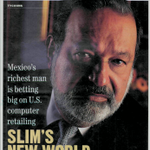
Rainmakers is back with a deep dive on Carlos Slim. We break down how he became one of the world's richest men while steering through Mexico's volatile economy.
8
10
3
126
21,158
Rainmakers is back with a new episode. This time on the Chandler brothers. Before they turned $10M into $5B, they spent years studying what was broken in public companies and used that research as their investing playbook. Today, we break it all down.
13
28
4
207
50,549
“You’re still an employee, even if you’re working for yourself.” Dennis Washington built an empire by keeping his word and never thinking he was smarter than everyone else.
1
10
732
Front page news in 1986: Rainwater leaving the Basses Turns out the Disney deal was the last deal the family did as one unit and Bob ended up leaving to start his own group in 1985. By the time Rainwater left, he was only managing money for Sid and Lee.
2
3
17
2,367
How Jay Pritzker looked at deals: “If the initial venture is only moderately successful that can be good enough for us because it can be used as a keystone to build another company. The entity itself must pay off what we borrow to acquire it though.”
2
13
1,453
How Jay Pritzker looked at deals: “If the initial venture is only moderately successful that can be good enough for us because it can be used as a keystone to build another company. The entity itself must pay off what we borrow to acquire it though.”
1
20
2,437
Buffett called book value “money put into a company and left there.” Jay figured out how to get it out: – Unlock stuck assets creatively – Use each deal as a launchpad for rollups or other acquisitions @RockwoodNotes' Rockwood writeup is the best case study on how he did it.
Many know the story of Jay, Buffett, Graham & the Rockwood cocoa arb. Less seem to know what happened to after. I named my project after Rockwood not only because it involves the most creative deal, but was arguably Jay’s most important. New article out. Free for all to read.
1
10
1,260
Rainmakers is back with another episode. This time on the legendary investor Jay Pritzker. In his father's first ever TV appearance he tells a panel of fellow businessmen why he disdains the media for the ways they portray his family. 41 years later, I give it my own shot.
10
22
9
133
48,223
When we look at the best investors we tend to think they had a thesis that was rigidly followed which ultimately led to their successful outcome. But after studying some of these outliers, the common pattern I actually see are investors who get the initial thesis wrong but creatively find ways to dig out of their mess. No one exemplifies this more than Phil Anschutz. In 1984 Phil Anschutz saw an opportunity to be an industrialist in the railroad industry but did not want to pay for it. Thus began his journey of creatively structuring deals where he took on massive amounts of leverage to own Rio Grande and Southern Pacific railroads. He ended up getting control of a little over $1.5B worth of assets by only putting up $90M himself. But creatively structuring deals does not payoff if you cannot fix the businesses. By 1990, Anschutz's partners wanted out but did not have the control to do anything. Anschutz did not flinch at the ever so bad prospects. He famously said: "Throughout my business career I have frequently made investments that seemed counterintuitive at times-that seemed pretty desperate for the business involved. And those have been the ones that generally have worked out the best for me." So how did this all work out? He opportunistically looked at the assets the railroads owned and: -sold off land to payoff the debt -spun off the fiber optic cable installation business which later became Qwest communications -turned a failed arena development in Denver into his entertainment empire AEG. One wrong move into railroads turned him into one of the richest people on the planet where most of his net worth came from these very deals. I'd say he turned out okay.
4
18
1,672