
A human being who wishes to make a difference in the lives of people around him, and contribute to our Nation. Tweets are personal.
Joined July 2009
- Tweets27.7K
- Following654
- Followers432
- Likes75K


R Srikanth retweeted

ಬೆಂಗಳೂರಿನ ಸುಸ್ಥಿರ ಅಭಿವೃದ್ಧಿಗೆ ಸಮರ್ಥ ಮತ್ತು ಬಲಿಷ್ಠ ಸಾರ್ವಜನಿಕ ಸಾರಿಗೆ ವ್ಯವಸ್ಥೆ ಅತ್ಯಗತ್ಯ. ಮೆಟ್ರೋ ಜಾಲದ ವಿಸ್ತರಣೆ ಹಾಗೂ ನಗರದಲ್ಲಿ ಉತ್ತಮ ಸಾರಿಗೆ ಸಂಪರ್ಕ ಕಲ್ಪಿಸುವ ನಿಟ್ಟಿನಲ್ಲಿ ರಾಜ್ಯ ಸರ್ಕಾರ ನಿರಂತರವಾಗಿ ಹೂಡಿಕೆ ಮಾಡುತ್ತಿದೆ. ಕೇಂದ್ರ ಸರ್ಕಾರದ ಸಹಭಾಗಿತ್ವವೂ ಮತ್ತಷ್ಟು ಬಲಗೊಂಡಲ್ಲಿ, ಮೆಟ್ರೋ ವಿಸ್ತರಣೆಗೆ ಹೆಚ್ಚಿನ ವೇಗ ದೊರೆಯಲಿದ್ದು, ನಗರದ ಹೆಚ್ಚಿನ ಜನರಿಗೆ ಸುಗಮ, ಸುಲಭ ಹಾಗೂ ಪರಿಣಾಮಕಾರಿ ಸಾರಿಗೆ ಸೌಲಭ್ಯ ಒದಗಿಸಲು ಸಾಧ್ಯವಾಗಲಿದೆ.
1/2


R Srikanth retweeted

Let me put the issue in perspective @dp_satish
1. Karnataka’s Road Transport Corporations (RTCs), though among the best in the country, have been facing commercial challenges long before the launch of Shakti scheme. Therefore, blaming free travel for women under Shakti for the problems of RTCs is not borne out by facts.
2. In fact, Shakti has resulted in much needed assured cash flow of about Rs 5600 crores per year to the four RTCs. In turn, the RTCs are experiencing better capacity utilisation for the same operational cost, thus the cost per kiolmeter (CPKM) actually reduces.
3. The problems of RTCs have longer history. More than 3/4th of the total cost of RTCs consists of 2 items: fuel & staff. (79.8 % of KSRTC cost, 73.8 % of BMTC cost, 83.3 % of NWKRTC cost and 80.6 % of KKRTC cost is fuel & staff). The cost of these two items has been rising and the fares have not risen over the years. Between 2014 and 2025 the BMTC fares were not increased. Between 2020 and 2025 the fares of KSRTC and other RTCs were not increased.
4. Whereas the diesel prices have increased by about 64% between 2014 & 2026 and 53% between 2020 & 2026. Similarly, staff salaries have risen over the years. When 75% of your cost is fuel and staff and those rise every year, how are the RTCs supposed to make ends meet without fare revision or govt subsidy? You either revise the fares or the state subsidises the RTCs by giving grants. The later method is not sustainable, given the other social policy commitments of the Government. The third alternative is for the RTCs to increase their non-fare revenues. This has been recommended by the M R Sreenivasa Murthy committee a long ago, but not much progress has been achieved.
5. The Government must invest more in public transport as it carries enormous positive externalities. Though over the years investment in RTCs like buying more new buses has come down, since 2023 the Government has introduced / committed to introduce 6034 new buses. In addition, the Government of Karnataka has agreed to deploy 4500 e-buses on GCC under PM-e Drive for BMTC.
6. Of course, the RTCs have been asking for higher reimbursement under Shakti. Government has also been short releasing under student free bus pass schemes. These issues need to be settled in favour of RTCs.
7. To conclude, Shakti is not the problem but a solution. However, this scheme needs to be combined with reasonable reimbursement of the costs and more investment in new buses. With the introduction of smart card the issue of short reimbursement, if any, can be settled.
8. Karnataka’s RTCs are among the few public transport companies in the country that do well. We need to make them perform even better.
Happy Deepavali to all!!

Mismanagement in recent years, and now the free bus rides for women, have all but killed our pride — KSRTC and its sister corporations, NWKRTC, KKRTC and BMTC. The buses are creaking: still breathing, but only just. The staff are demoralised. Unless the government takes a tough, unpopular decision, a great public transport system built over 75 years will collapse. That would be a tragedy.
Free public transport is a fine idea, but only when there is money to pay for it. Personally, I favour free travel for the poor and for students.
In my Malnad region, the private bus network — once among the best and most vibrant anywhere — has become collateral damage. Passenger numbers are dwindling, because of this scheme and other factors, and with them the revenue.

R Srikanth retweeted

India is waging a war against its own researchers:
In Careers360’s Research Summit, Prof. Ram Gopal Rao, Vice Chancellor of BITS Pilani described India’s lack of investment in research beautifully. He said “India’s Higher Education is described as African Budgets, American ambitions, Russian methods, Chinese opacity and Indian Bureaucracy.
In the past decade, we have seen a slide in scientific temper and investments in research.
1. Non-NET fellowship are stuck at ₹8,000 a month since 2012, for 16,270 scholars in 45 central universities.
2. JRF stipend: In 2014, the JRF was Rs.25,000 per month. In 2019, it was revised to Rs.31m000. it is ₹37,000 PM. The hrowth hasn’t even kept pace with inflation and in real terms, it has FALLEN. IISc scholars even went on a hunger strike demanding an increase.
3. Maulana Azad fellowship: where more than 1,400 scholars have had stipends stalled since January 2025.
4. OBC fellowships: lists for three NET cycles in 2024-25 were held back, which the social justice ministry put down to insufficient funds.
5. INSPIRE: fellows have their stipends unpaid for 3 to 9 months. The schemes now under Vigyan Dhara fell 67.5% between 2016 and 2025.
6. KVPY: scrapped in 2022, after nearly two lakh students a year had taken its test.
7. JRF bottleneck: only 5,108 of 7,35,614 candidates (0.7%) got JRF in December 2025. Minister Sukanta Majumdar gave no year-wise data when asked.
8. The University of Hyderabad stopped Rohit Vemula’s ₹25,000 stipend in July 2015, and his last letter said he hadn’t been paid for seven months. He later committed suicide.
9. India’s R&D spending: fell from 0.82% of GDP in 2009-10 to 0.64% in 2020-21. PMRF spending was revised to ₹290 crore, less than half its ₹600 crore outlay.
10. SC fellowships: fell 61%, from 4,841 to 1,872, between 2020-21 and 2022-23.
If India indeed wants to be a Vishwa Guru, India should be investing in research, in creating quality Higher-Ed institutions. We cannot be cutting down on stipends, not paying our researchers, holding back payments, scrapping scholarships, not increasing fellowship amounts even to match inflation and still expect students to choose research.
R Srikanth retweeted

Great reporting by @nytimes. The US Commerce Dept was approving sales of Nvidia chips to companies in China which either did not exist, were on the sanctions list, and/or had ties to China's military. A brief visit by journalists in China found that two of the offices were just empty shells.
Was Jensen Huang a "victim" of a honey trap or was he just trying to make as much money as possible? Was his $25 million donation to Trump's ballroom the price of pay to play? In the US - China tech competition, has the Commerce Dept been co-opted by other interests? Here is a gift article which raises deeply troubling questions.
Explore this gift article from The New York Times. You can read it for free without a subscription. nytimes.com/2026/11/07/busin…

R Srikanth retweeted

"The water purifiers, the UPS/inverter and the air purifiers in our homes are not signs of success. They are symbols of failure."
h/t @soumyadip
R Srikanth retweeted

Energiewende - wir fassen zusammen.
Die Grundzüge der deutschen Energiewende gehen auf die Anti-Atom Bewegung in den 1970er Jahren und die geplante Abkehr von Erdöl in den 1980er Jahren zurück. Die Förderung privater Solaranlagen begann 1991 mit einer Einspeisungsvergütung von knapp 9 Cent/kWh, die ab 2000 auf stolze 50 Cent/kWh erhöht wurde. Die Ökosteuer, der Vorläufer von Energiesteuer und CO2-Abgabe, wurde 1999 eingeführt. Was danach geschah – Ausbau Windkraft und PV-Anlagen, vorübergehend geplantes Verbrennerverbot, Gebäudeenergiegesetz, Wärmeplanung der Kommunen und so weiter, ist bekannt.
Und jetzt prüfen wir, welche Ziele erfüllt wurden.
Ist der Strom dadurch billiger geworden (Sonne und Wind schicken keine Rechnung)? Nein. Im Gegenteil, die Stromkosten für private Haushalte gehören weltweit zu den höchsten.
Sind wir unabhängiger in der Energieerzeugung geworden? Nein. Wir importieren immer noch sehr viel Erdöl, Erdgas und Treibstoffe. Zusätzliche Abhängigkeiten durch die Seltenen Erden und die Solarpanels aus China wurden eingegangen.
Ist unsere Industrie wettbewerbsfähiger geworden? Nein, ganz im Gegenteil. Wegen hohen Energiekosten und Bürokratie wandern ganze Industriebereiche ab.
Haben wir in Solarenergie, Windkraft und E-Autos, die neue Schlüsseltechnologien laut den Grünen, Spitzenpositionen inne? Jein. Solarpanels sind Massenware aus China. Nur bei Windkraft haben wir Firmen wie Nordex und Siemens Energy, die Gewerke oder Komponenten liefern. Bei E-Autos sind deutsche Hersteller durch die hohen Herstellerkosten im Nachteil.
Sind die CO2-Emissionen gesunken? Nein, der kleine Beitrag Deutschlands ist verpufft. Die Zunahme der CO2-Emissionen in China und Indien bestimmt die globale Bilanz im Wesentlichen.
Haben wir durch die Energiewende Geld gespart? Nein, im Gegenteil. Die Kosten für Energiewende und weitere Klimaschutzmaßnahmen belaufen sich auf mehr als 1.000 Milliarden Euro. Mit diesem Geld in einem Staatsfonds angelegt, hätten wir heute einen sehr viel höheren finanziellen Spielraum im Bundeshaushalt.
Sind wir ein Vorbild für die Welt geworden? Deutschland wird gerne als Negativ-Beispiel angeführt, warum die Energiewende nichts bringt bzw. wie man es nicht machen sollte. China mit einem offenen Ausbau aller Energieträger, egal ob Kohle, Atomstrom, Solarenergie oder Windkraft wird in Bezug auf Erneuerbare Energien deutlich positiver wahrgenommen trotz der immer noch sehr hohen CO2-Emissionen.
R Srikanth retweeted
Viksit Bharat or Broken Governance? - article by @PrashantTewar11 @TheDailyPioneer dailypioneer.com/opinion/vik…

R Srikanth retweeted

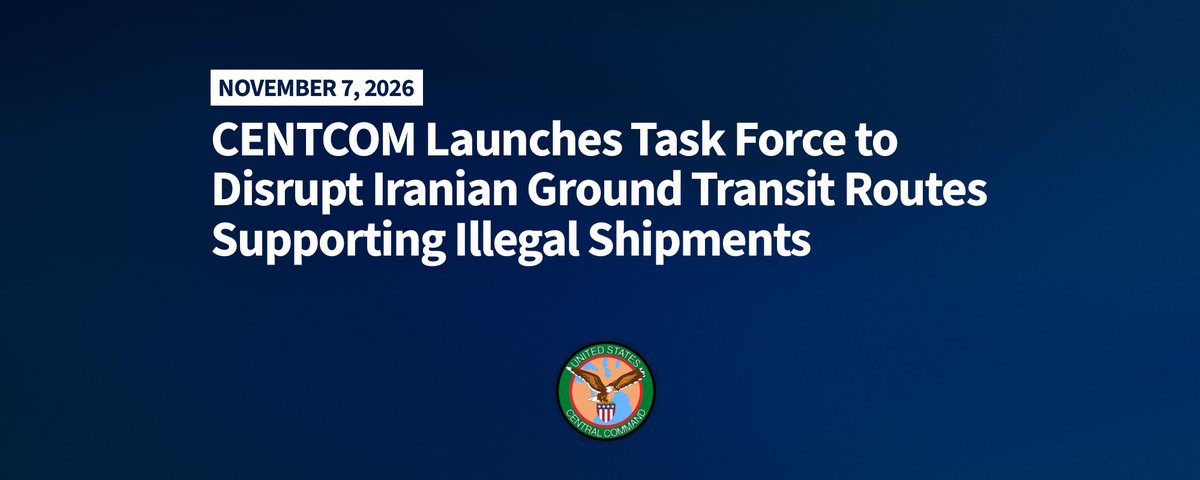
This is CENTCOM inviting Iran to escalate while the Vice President is attempting to negotiate with the Iranians. This is, as CENTCOM calls it, “policy by CONOP,” when the military finds a way to subvert the White House without blatantly disobeying the President, by taking actions that will ensure a war escalates or perpetuates.
This tactic was implemented over & over again in the War on Terror in Iraq, Syria, Afghanistan, etc. Many Americans died, needlessly.
The Iranians have made it clear that they won’t accept negotiations while under threat of escalation. Iranian leadership has stated there will either be war or there will be peace, but they will not sit idly by and wait for the next attack & they won’t tolerate being slowly strangled by sanctions.
Imposing more sanctions, & publicly broadcasting that we’re imposing more sanctions, is brash provocation.
The midterm results sent a message that the President should find impossible to ignore: the American people do not support this war. We want out. The VP is currently in negotiations to end it, & a new Chief of Staff was chosen under the auspices of helping the President do just that.
CENTCOM announcing this escalation is the military working directly against what President Trump is attempting to accomplish. If the President had any desire to escalate, he’d simply do it. Instead, thankfully it appears he is attempting more diplomacy, and CENTCOM must support that.
It’s become abundantly clear that the President needs to install a new national security team, one that’s not tied to starting the war and that can instead end it. To do that, he needs people who can & will get the national security state under control, not submit to it.

R Srikanth retweeted

Yes, I am proud to be Panje Mangesh Rao’s great-grandson. Kannada is a global language & Kannadigas are a proud, talented people. They don’t need “activists”. Your parochial duplicity will be called out.

And @ShivAroor you are grandson of a Kannada literary figure. Great to see you speaking against Kannada, Kannadiga and Karnataka without evidence.
R Srikanth retweeted

Simple solutions will be overlooked by New Delhi and the regulators(RBI and State Charity Commissioners) because of malafide intentions built into this project. The larger business community is keeping quiet as it is scared. What is happening to Tatas can also happen to other large groups. They also have multiple and layered family owned unlisted holding companies which could be potentially be defined as Core investment company by RBI which is bent upon interfering with ownership pattern. Listing is a bogus excuse we all know. Tata Sons converting to a manufacturing entity is a simple and elegant solution. If it is disregarded, one can say good bye to serious FDI in India which in any case is not forthcoming. Remember Tatas have a global reputation and many transnational companies want to do local JVs only with Tatas because of their reputation. Imagine how they will react.

The merger between Tata Sons and Tata Electronics + Tata Consulting Engineers will solve the listing issue as raised by the RBI. This is the legally doable solution and courts ultimately will have to accept this, say lawyers. RBI cannot force a listing. Now the rebels would certainly try to sabotage this solution at the November end meeting. The solution is suggested by India's top notch lawyers at AZB to Tata Trusts. + SP group gets Rs 25,000 cr to sell part of its stake in Tata Sons and solves its liquidity problem.
If a 🐪 enters the Tata tent, it will certainly barge in a few years.
R Srikanth retweeted

Mr. Kannan, with all due respect, I don’t think your tweet fully captures the reality of professional badminton.
A first-round exit at Wimbledon earns £80,000. Winning the China Open, one of badminton’s richest tournaments, earns $140,000. Lose in the first round? Just $2,000.
Yet our expenses are largely similar. Travel, coaches, physios, trainers and support teams. I’ve had long conversations with Rohan Bopanna about this very disparity.
I agree that established athletes should strive to be financially independent. I’ve been fortunate to have wonderful sponsors, but not everyone has that privilege. That’s also why organisations like @OGQ_India are so important.
More importantly, if you read Mihir’s article in full, you’ll see that younger players had to compete without coaches, while several withdrew from tournaments.
I can find ways to fund my tour. But what about the 18-year-old chasing her dreams, hoping to become the next Sindhu or Lakshya?
And I must acknowledge the tremendous support the Government of India and @Media_SAI have extended to athletes like us over the years. Their contribution to Indian sport cannot be understated.
Accountability is absolutely necessary. But supporting athletes isn’t bleeding the system. It’s investing in India’s sporting future. And we shouldn’t lose sight of that.

How long will our elite athletes, who are professionals, bleed the system.
I mean, can not a PV Sindhu or Lakshya Sen fund own tours.
Look at a sport like tennis, players get nothing.
I will not find fault with @Media_SAI here
R Srikanth retweeted

The Supreme Court on Tuesday ordered an immediate freeze on the November salary of Brihanmumbai Municipal Corporation (BMC) Commissioner Ashwini Bhide and other civic officials while initiating contempt of court proceedings against her for failing to clear encroachments from government land.
The three-judge bench also rejected the civic body's request for an additional 30 days to comply with its earlier directions to clear the land earmarked for a Brihanmumbai Electric Supply and Transport (BEST) bus station in Mumbai's Borivali and imposed costs of Rs 5 lakh.
#SupremeCourt #BMC #BMCCommissioner #AshwiniBhide | @journovidya
Read More: intdy.in/qu2p48

R Srikanth retweeted

The economics segment of the recently introduced NCERT textbooks for Social Science (Grade 9, Part 2) now has a chapter on personal finance. Students are taught basics about fixed deposits, mutual funds, EMI, taxes, risk-return and so on. The idea is to provide them with useful life skills. 1/2


R Srikanth retweeted

Mr Sharda.
1. More than touched, amused that you still don't know the difference between support and report -maybe not propogandists but it's the basic job of journalists to report what they see be it anarchic or democratic...also as the lot of you is still fixated on numbers - ramilia maidan was packed to capacity (capacity of ramlila maidan is 50 to 75 k )
2. To document a political rally is not anti - BJP 🙂 to misreport or block it is surely anti democratic.
3. There is a huge market for truth- telling out there ready to be tapped.. Try it !
4. Also factual correction, not an independent journalist duly employed and proudly so with my network 🙂
Lastly, having authored a few books on ideology does not give you the authority to classify our religion. On the contrary, those who are quick to slot everything into “pro-Hindu” and “anti-Hindu” categories are an insult to the very religion they claim to protect... Jai Shri Krishna ! .. Oh ! And happy diwali:)

I am touched by @PreetiChoudhry 's "independent" journalistic efforts to support "Anarchic dissent" of #RahulGandhi. I have an idea. Why don't @sardesairajdeep & she start a new "independent" channel? They can give employment to many "independent" youtubers. There is a huge anti BJP & anti Hindutva market ready to be tapped.😊🌹
R Srikanth retweeted

In the year 1999, I was running a large tech business out of Bangalore. Mr @ncbn invited me to move our venture to Hyderabad. He spoke to me directly. When our then CM Shri SM Krishna heard about this he sent the CS of Karnataka Mr Bhattacharya and IT Secretary Sanjay Dasgupta to take me out for lunch at the Bangalore Club. We discussed various matters at length and SMK ensured no one moved out of Karnataka. I don’t understand why the present Government is permitting such intimidation. Private sector runs on merit across the country and not just in Karnataka. Karnataka Government should put an end to such direct intimidation tactics.
@DKShivakumar
@CMofKarnataka
@PriyankKharge
@DgpKarnataka
@CPBlr
@TVMohandasPai
@naralokesh

Pro Kannada activists entering IT companies in Bengaluru are seeking these details through their memorandum 👇🏼
"1. The total number of employees currently working in your organisation and the proportion of employees who are local candidates from Karnataka.
2. Details of employment opportunities provided to candidates from Karnataka in the recruitment conducted by your organisation over the past three years.
3. The criteria and standards used to prioritise candidates' educational qualifications, professional capabilities and experience during the recruitment process.
4. The measures taken by your organisation to ensure that qualified local candidates receive employment opportunities.
5. Your organisation's position on complaints raised by Kannada employees and job seekers regarding discrimination, denial of opportunities and inequality in recruitment.
6. The plans formulated by your organisation to increase skill development, training, internships and employment opportunities for the youth of Karnataka."


R Srikanth retweeted

It was bound to stall as its already known before 2014 that green energy is not as reliable as traditional one but then who cared to look at that data before going to frenzy to increase green energy?
R Srikanth retweeted

The buyer is buying the bank. The bank is expected to buy the buyer's businesses. And the money from the second deal is part of the funding plan for the first. It is a remarkable way to finance a bank takeover.
Yet another story on @IDBI_Bank bank privatisation in @BWBusinessworld
businessworld.in/article/is-…

R Srikanth retweeted

In an interview with The New Indian Express, I spoke on some key issues. Particularly about the need to encourage long-term investment in #India, I expressed by views that tax policies should incentivise reinvestment of capital gains rather than discourage it.
I strongly believe that retaining and recycling capital is key to deepening our markets and building investor confidence for the long-term growth of our country and attracting capital on a sustained basis. newindianexpress.com/busines…

R Srikanth retweeted

India not yet a preferred arbitration seat, cultural shift needed across judiciary and Bar: Justice Manish Pitale
reports @Neha_Jozie
barandbench.com/news/india-n…

R Srikanth retweeted

The New York Times just published an editorial admitting something remarkable: Lula da Silva is the most important political leader in the Americas in the 21st century.
For a media outlet that traditionally champions the Western establishment, this is a profound shift. Why is the institutional voice of the liberal world suddenly praising a former factory worker from the Global South?
They aren't doing it out of charity. They are doing it because they are witnessing the undeniable force of the Brazilian working class.
When the algorithms and the polls said he would lose, millions of ordinary people—from the favelas of Rio to the small towns in the Northeast—took to the streets. They didn't just vote for a politician; they mobilized for their own dignity. They voted for public hospitals that actually work, for wages that cover the cost of living, and for a country that belongs to its people.
Lula represents a vision of the world that the old powers are struggling to accept.
He represents a Latin America that is not a backyard, but a sovereign partner. A vision where a nation's wealth—its oil, its rare earth minerals—is used to build local infrastructure and fund social programs, rather than being quietly extracted to feed foreign supply chains. A vision where a country can advocate for peace, stand in solidarity with Palestine, and help build a multipolar world.
The Western establishment is realizing they can no longer dictate Brazil's future through economic pressure, digital censorship, or proxy politicians. They are forced to respect Lula because the people who elected him refuse to be marginalized.
But the true measure of Lula’s importance isn't found in the praise of foreign newspapers.
It is found in the missing finger from a metalworking press. It is found in the millions who organized digitally to bypass censorship. It is found in a working class that looked at impossible odds and decided to build a better world.
When the world's most powerful institutions have to acknowledge a metalworker, you know the old order is changing.
And it is the people who are leading the way.
